
 AS/RS Handling Robot
 Vertical Storage Module
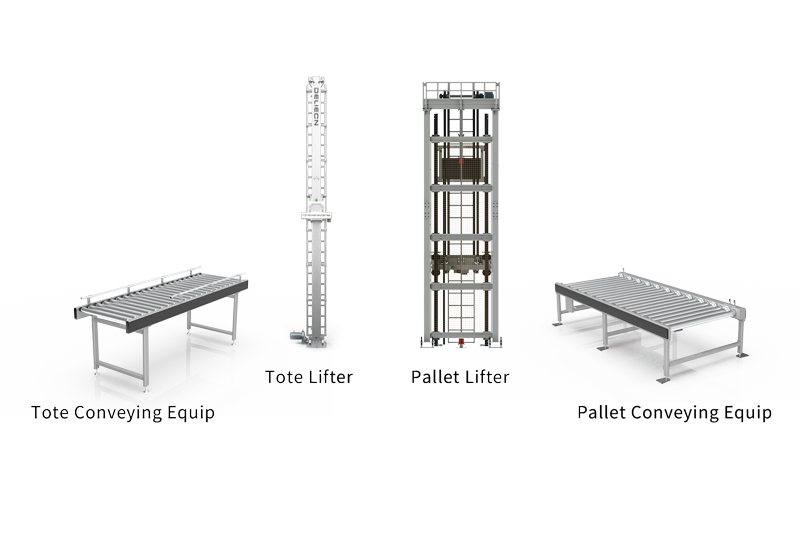 Conveying Equipment
 Smart Warehousing System
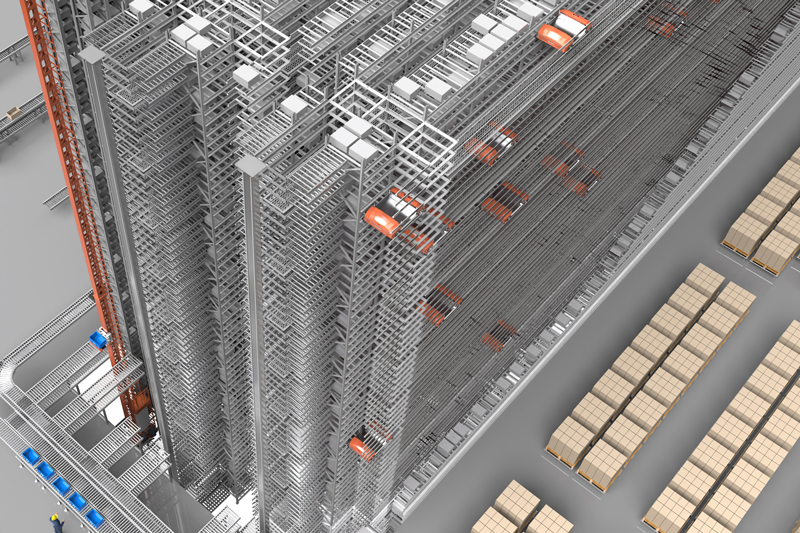 Warehouse Racking
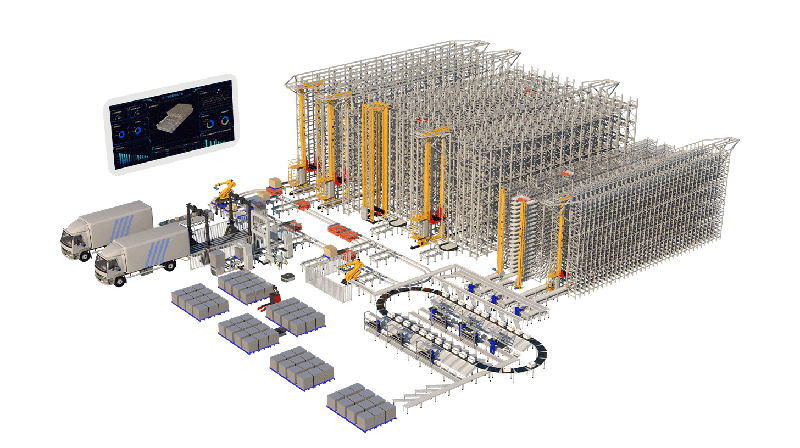 Industries
 Services
 About Us

Upper Storage, Lower Picking: How Shuttle Robots and Pallet Latent AMRs Solve Paper Packaging Warehouse Challenges
In paper packaging, Warehouse Automation is often discussed in terms of storage capacity or handling speed. But after looking at how materials actually move inside a corrugated packaging plant, the challenge is more complicated.
A paper packaging warehouse is rarely just a place where finished products wait for shipment.
Finished cartons are continuously coming off production lines. Semi-finished products may need to return to another process. Tail pallets need temporary storage. Empty pallets have to be collected and supplied back to production. At the same time, outbound orders are being picked, staged and loaded.
All of these activities compete for the same space.
how do you increase storage capacity without taking away the floor space needed for material movement?
At YFY's Nanjing plant, this question became one of the starting points for the smart warehousing and logistics upgrade. Instead of simply adding more storage equipment, the project reorganized the warehouse around an “upper storage, lower picking” concept.
The upper levels concentrate inventory. The ground floor is released for high-frequency material flow.
Behind this layout is the coordination of two very different types of automation: pallet four-way shuttle robots for high-density storage and pallet latent AMRs for flexible transportation.
The Real Constraint Is Not Always Warehouse Area
When storage becomes insufficient, the natural response is to look for more space.
For an operating factory, however, adding warehouse area is rarely simple. Production areas have already been defined, logistics routes are already in use, and expanding the building requires additional land, construction and investment.
Paper packaging creates another problem: floor storage grows horizontally.
As output increases, more pallets occupy the floor. More forklift routes are then needed to access them. Temporary staging takes additional space. Eventually, a significant part of the warehouse is being used not to store goods, but simply to make stored goods accessible.
This is why we believe storage density should not be evaluated only by asking how many pallet locations a rack can provide.
A more useful question is:
How much floor space must be sacrificed to support those pallet locations?
In YFY Nanjing, the answer was to move a large part of the inventory upward.
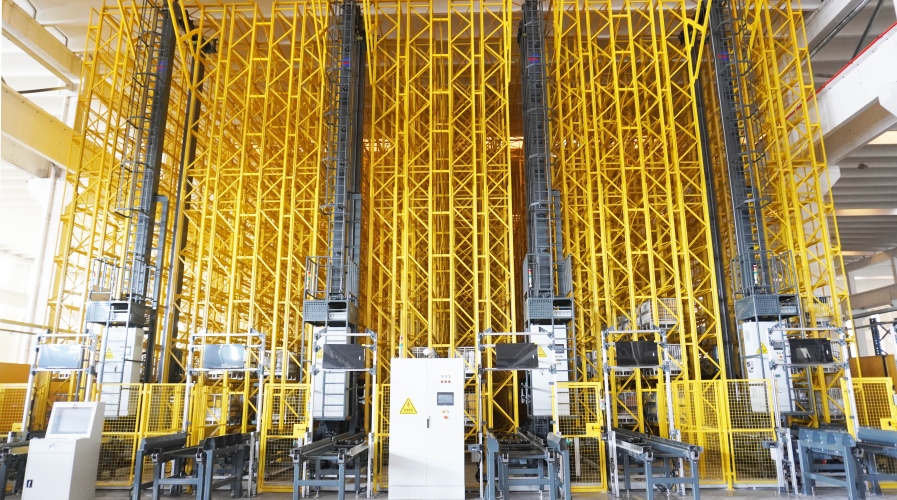
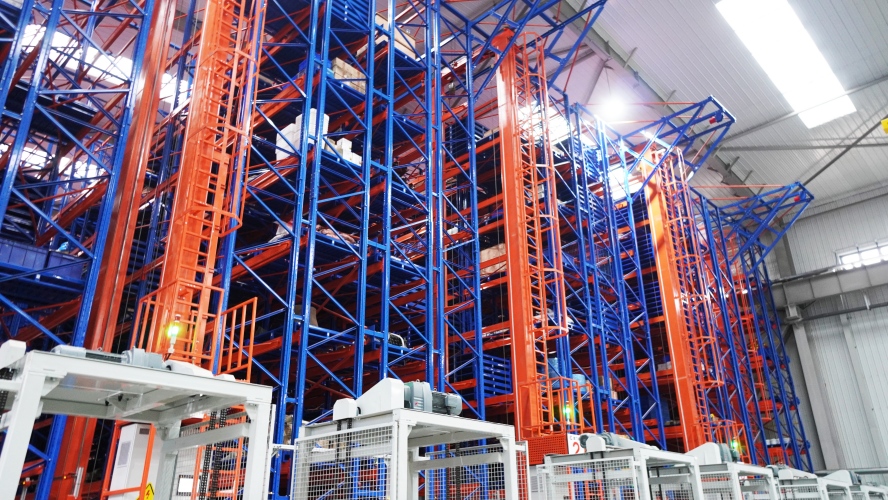
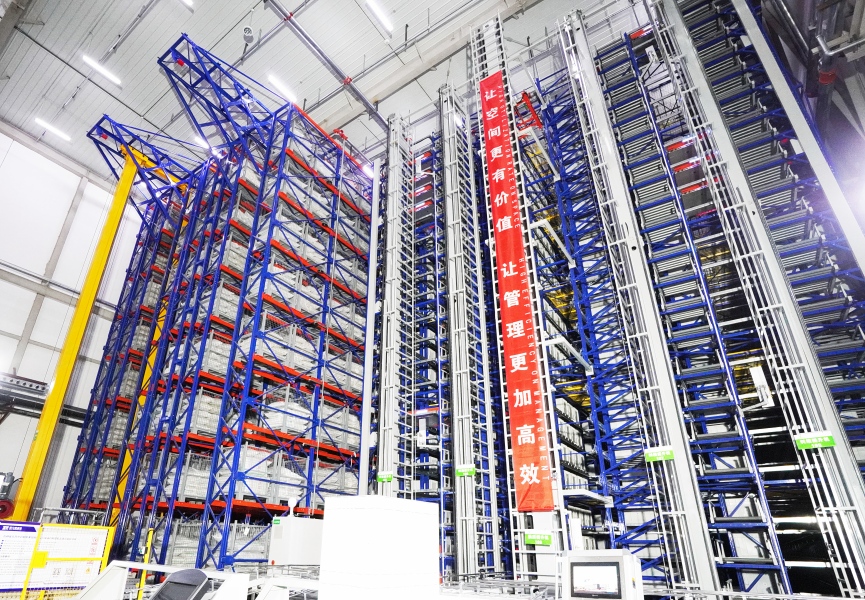
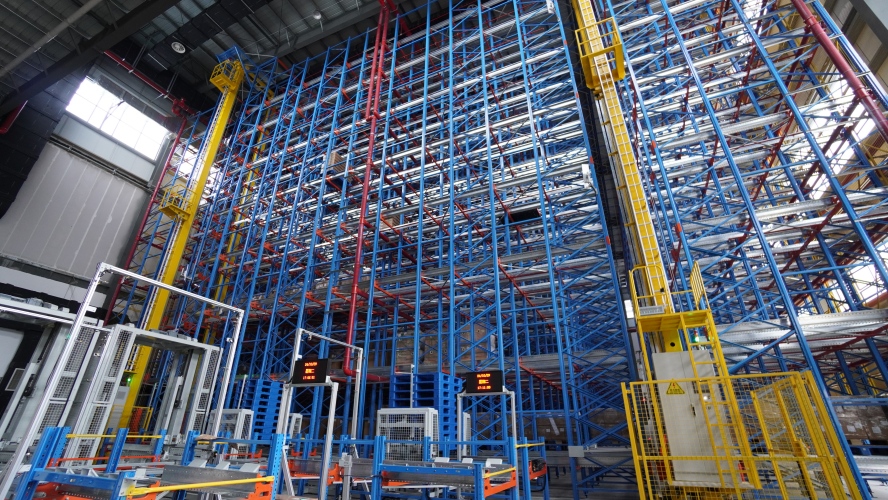
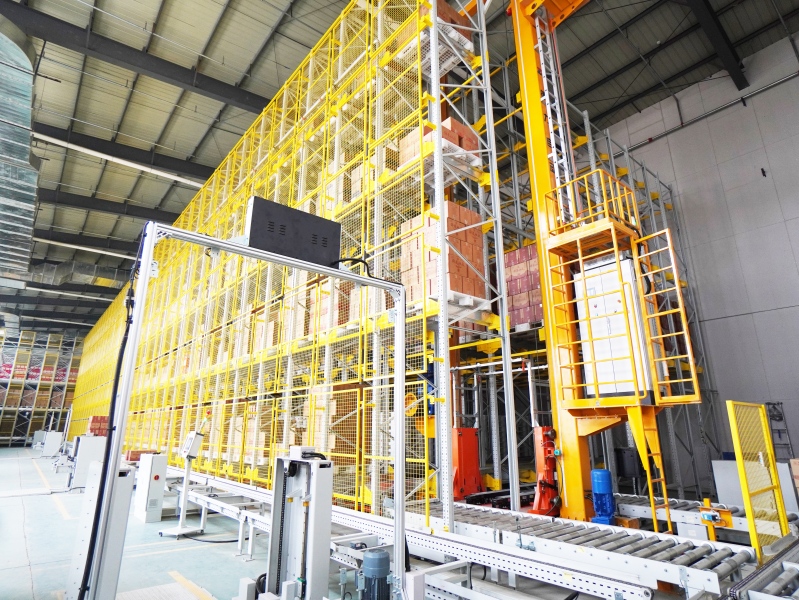
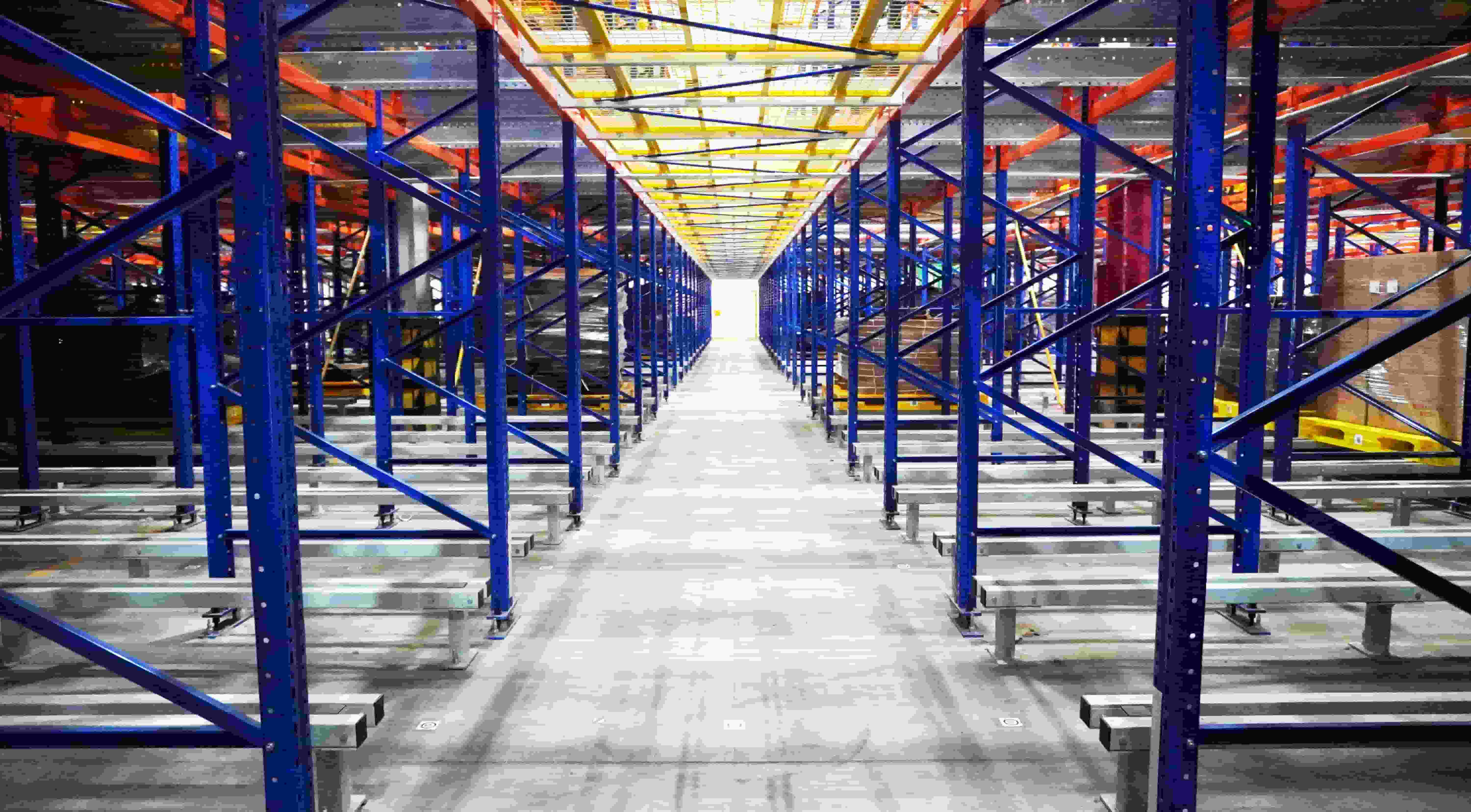
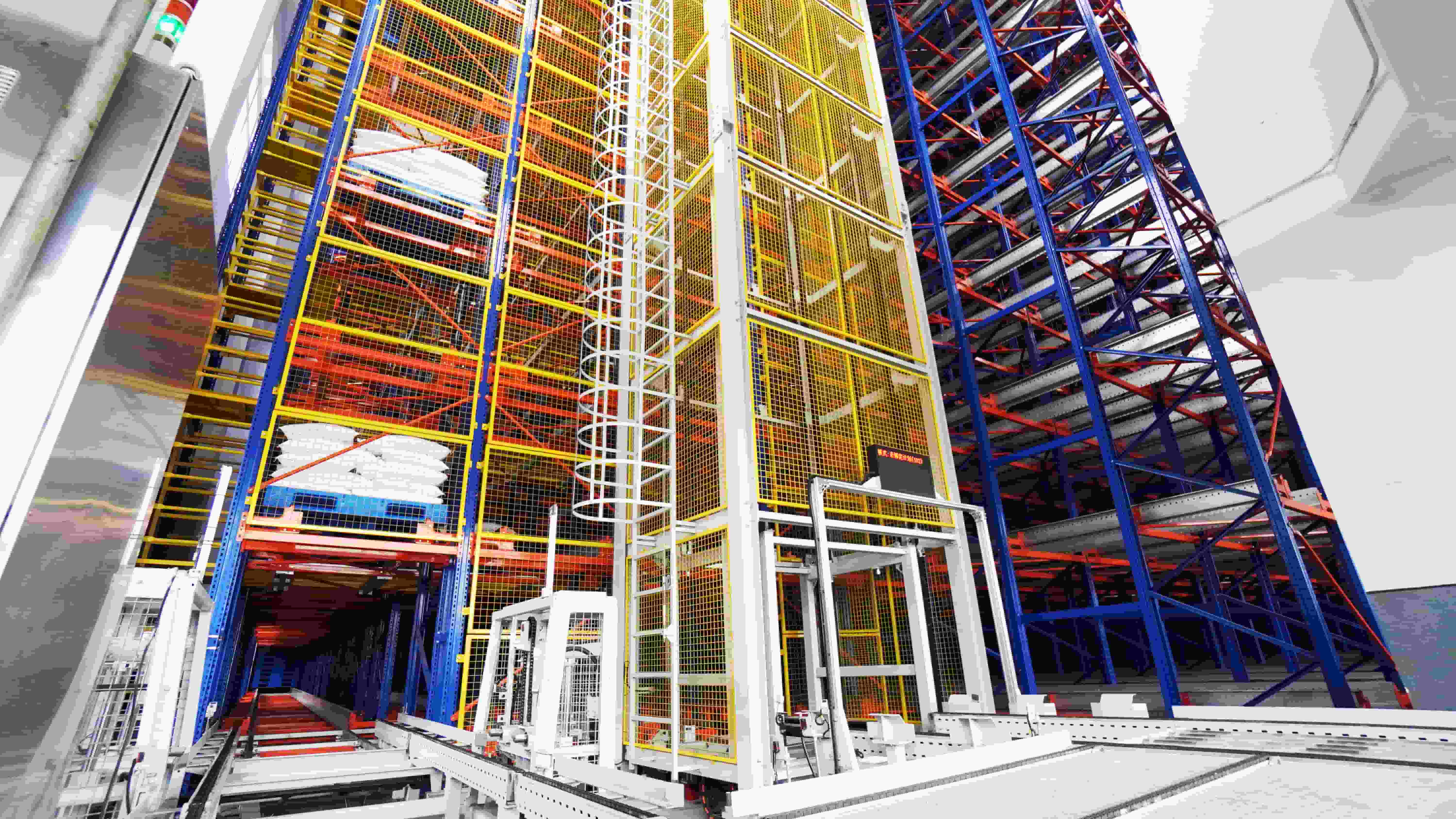
The second to fourth levels use 7 pallet four-way Shuttle Robots and 4 level-changing lifters for Automated Pallet Storage and retrieval. The project provides approximately2,700 effective pallet locations, doubling space utilization within the existing warehouse.
For an existing paper packaging plant, this is more meaningful than simply adding another row of racks. The warehouse gains capacity while preserving the lower level for operations that actually need floor space.
Why Pallet Four-Way Shuttles Fit the “Upper Storage” Side
The advantage of a pallet four-way shuttle system in this project is not simply that the robot can travel in four directions.
Its value comes from what that movement allows engineers to do with the rack layout.
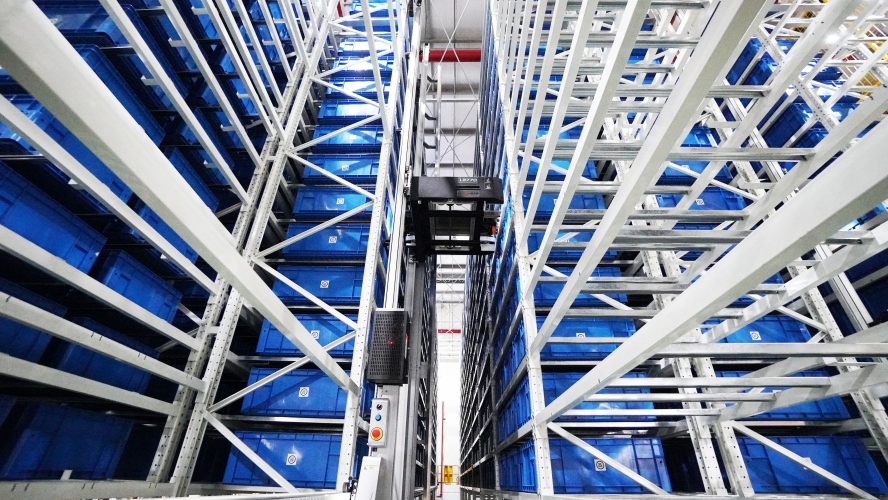
The robot operates inside the storage structure, so the system can reduce the dependence on conventional forklift aisles and make greater use of rack depth. Multiple storage levels can then be connected by lifters rather than reserving ground-level access for every pallet position.
This becomes particularly valuable in an existing building where usable height is already fixed.
DELIECN's pallet four-way Shuttle Robot has a125 mm ultra-slim body. In a greenfield warehouse, a small difference in equipment height may not appear significant. In an existing plant, however, every part of the vertical envelope competes with the rack, pallet and load for the same limited height.
Reducing the space occupied by the shuttle helps leave more room for actual storage.
The project also illustrates another issue that is common in paper packaging but easy to miss during early equipment selection: the pallet is not always standard.
The Nanjing plant handles carriers including 1.2 × 1 m, 1.5 × 1.5 m, 2 × 1.2 m and 2.4 × 1.2 m.
Large-format pallet loads change the way a shuttle needs to support the load during handling. DELIECN therefore extended and customized the lifting structure to improve support stability for larger carriers.
This is an important engineering lesson. A high-density storage concept only has value if it works with the customer's real loads, not just a standard pallet used during equipment comparison.
Why More Storage Alone Would Not Have Solved the Problem
If the project had stopped with a high-density shuttle AS/RS, one major issue would have remained.
Paper packaging materials move frequently.
The pallet coming off a production line has to reach storage. The pallet retrieved from storage has to reach picking or shipping. Semi-finished goods may follow another route. Empty pallets eventually have to travel back toward production.
A high-density warehouse can therefore create a new bottleneck if the front-end logistics cannot keep up with the storage system.
This is where the “lower picking” part of the design becomes important.
Instead of filling the first floor with more static inventory, YFY uses it as a flexible logistics layer. Fourteen latent pallet latent AMRs move between production lines, line-side buffers, AS/RS interfaces, picking positions and shipping buffers.
The pallet four-way Shuttle System concentrates inventory.
The pallet latent AMR system distributes material.
One is designed around storage density. The other is designed around changing material destinations.
The two are more valuable together than either would be independently.
Paper Packaging Material Flow Is Not a Fixed A-to-B Route
This distinction matters because paper packaging logistics contains a high degree of variability.
Not every pallet coming off a production line immediately enters long-term storage.
Some finished products need buffering before shipment. Some semi-finished materials continue to another processing area. Tail pallets may wait for a later order. Empty pallets move against the direction of finished-goods flow.
Order changes also affect where materials need to go.
This makes the ground floor different from the upper storage area.
Inside the AS/RS, storage positions and equipment routes can be highly structured. On the factory floor, the logistics system needs to respond to production and shipping tasks that change throughout the day.
pallet latent AMRs are useful here because the transportation relationship is defined by the task rather than permanently fixed by the physical route.
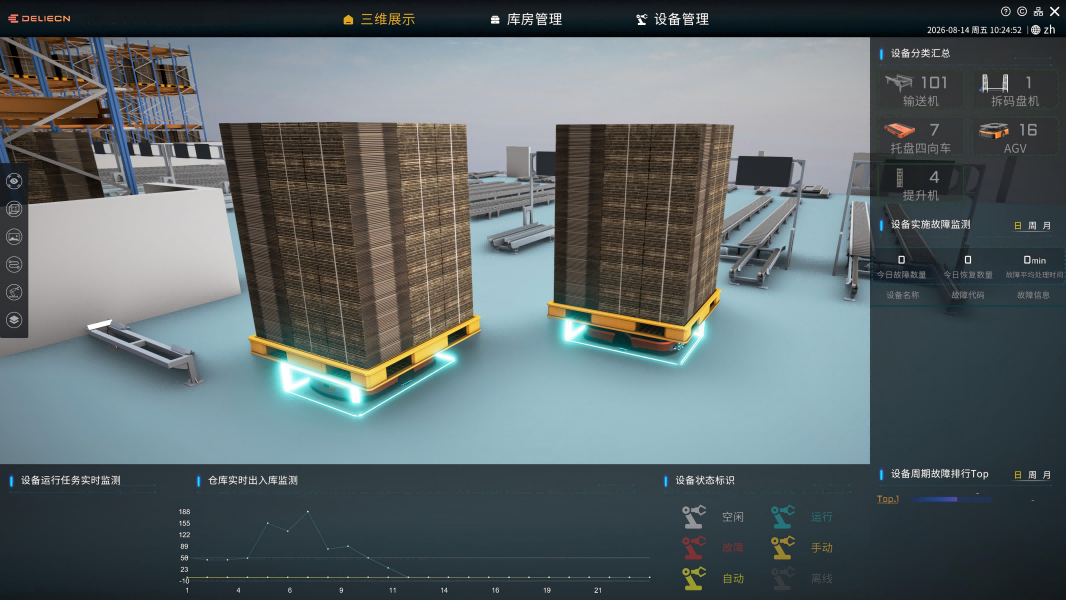
The same pallet latent AMR fleet can serve several production and logistics nodes under WCS scheduling.
For a paper packaging plant, that flexibility has practical value. When a production process, buffer point or logistics priority changes, not every change requires a new fixed transportation line.
The Key Is Not Shuttle Speed or pallet latent AMR Speed
When companies compare Warehouse Automation solutions, equipment speed is naturally one of the first specifications they look at.
But system throughput is rarely determined by the fastest machine.
Imagine that several outbound pallets are required at the same time.
The shuttle robots retrieve them from the upper storage levels. The lifters bring them to the interface. pallet latent AMRs then move them toward picking or shipping.
If the pallet latent AMRs cannot clear the interface quickly enough, pallets begin waiting.
The shuttle may still have available capacity, but it cannot translate that capacity into more completed outbound tasks.
The opposite situation is equally possible.
A project can add more pallet latent AMRs, but if the shuttle system, lifters or downstream workstations cannot release and receive enough pallets, the additional vehicles spend more time waiting.
This is why we consider system rhythm more important than isolated equipment speed.
The engineering problem is to balance storage and retrieval, level changing, ground transportation, picking and shipping around the customer's actual peak demand.
At YFY Nanjing, the 14 latent pallet latent AMRs can handle more than 3,000 pallet transfers per day during peak periods.
The significance of this number is not simply pallet latent AMR productivity. Those transfers connect several different operating processes across the plant.
WCS Is What Makes the Two Systems Work as One
Physically, a shuttle robot inside a rack and an pallet latent AMR moving across the ground floor have little in common.
From the perspective of an order, however, they are completing different stages of the same logistics task.
This is why multi-equipment coordination becomes central to the “upper storage, lower picking” model.
The project's WMS/WCS connects with the customer's ERP and FEMS. WMS manages materials, inventory, locations and warehouse tasks, while WCS coordinates the execution of automated equipment.
Consider one outbound pallet.
The system first has to determine which inventory should be released. The appropriate shuttle retrieves it. The pallet then needs to reach the correct level-changing lifter and interface. An pallet latent AMR must be available at the right time to continue the task. Its destination may be a picking position, buffer or shipping area.
If these steps are managed separately, waiting appears between processes.
When they are scheduled as one task chain, the warehouse begins to operate as a continuous flow rather than a collection of automated machines.
This is also why adding robots does not automatically increase throughput. WCS must consider the capacity of the whole path.
The First Floor Becomes a Logistics Operating Layer
One of the more interesting results of the “upper storage, lower picking” concept is the change in how the first floor is valued.
In a traditional warehouse, floor area is primarily measured by how many pallets it can hold.
Here, the ground floor has another purpose.
It gives the factory room to move.
Production-line pickup, temporary buffering, AS/RS transfer, picking, outbound staging and empty-pallet return can all take place on this operating layer.
This becomes particularly useful during concentrated shipping periods.
Paper packaging orders can create strong outbound peaks, and retrieving pallets quickly from the AS/RS does not help if they simply accumulate near the dock.
At YFY Nanjing, 18 non-powered dock bridges connect with 12 shipping docks, supporting outbound staging and dispatching. pallet latent AMRs continue the material flow from storage and picking toward the required shipping area.
The design therefore looks beyond the AS/RS boundary.
That is an important distinction between automating a warehouse and improving factory logistics.
Even Empty Pallets Need to Be Included in the Calculation
Empty pallets are a good example of why automation planning needs to follow the entire material cycle.
They do not create sales value by themselves, so they can easily receive less attention during system design.
On the factory floor, the situation is different.
Production needs carriers continuously. After shipping, empty pallets need to be collected, stacked, organized and returned. If this process remains heavily manual, an automated finished-goods warehouse still leaves a repetitive handling task for operators.
The YFY project therefore includes empty-pallet return within the logistics loop.
pallet latent AMRs can bring empty pallets back to storage or the required production position after they have been collected and organized.
This may not be the most visually impressive part of the automation system, but it reflects a more mature approach to warehouse planning:
follow the material until the operating cycle is actually complete.
What Paper Packaging Companies Can Learn from “Upper Storage, Lower Picking”
The YFY Nanjing project should not be understood as a standard configuration that every paper packaging plant needs to copy.
Building height, production rhythm, pallet dimensions, SKU structure and shipping patterns can lead to very different designs.
The more useful insight is the planning logic behind it.
When floor space is limited, do not immediately ask how to fit more storage onto the floor. First determine which activities genuinely need that floor space.
Inventory that is waiting can often be concentrated vertically.
Material that is moving needs accessibility and flexible routes.
That distinction creates a natural division between pallet shuttle AS/RS and pallet latent AMR transportation.
The shuttle robots make better use of the warehouse volume. The pallet latent AMRs make better use of the operating floor. WCS connects both around the actual production and order rhythm.
At YFY Nanjing, this approach has created approximately 2,700 effective pallet locations, doubled space utilization and improved labor efficiency by 200%, while peak pallet latent AMR operations exceed 3,000 pallet transfers per day with 99.9% operational accuracy.
But these figures are not the most important lesson from the project.
The more valuable question for another paper packaging manufacturer is:
Are storage and material movement currently competing for the same space?
If the answer is yes, simply adding racks, forklifts or individual robots may not remove the underlying bottleneck.
Separating where materials wait from where materials move, and then reconnecting the two through automation, can lead to a very different warehouse design.
That is the real value behind “upper storage, lower picking”: not a particular combination of equipment, but a way of reorganizing the warehouse around how paper packaging materials actually flow.