
 AS/RS Handling Robot
 Vertical Storage Module
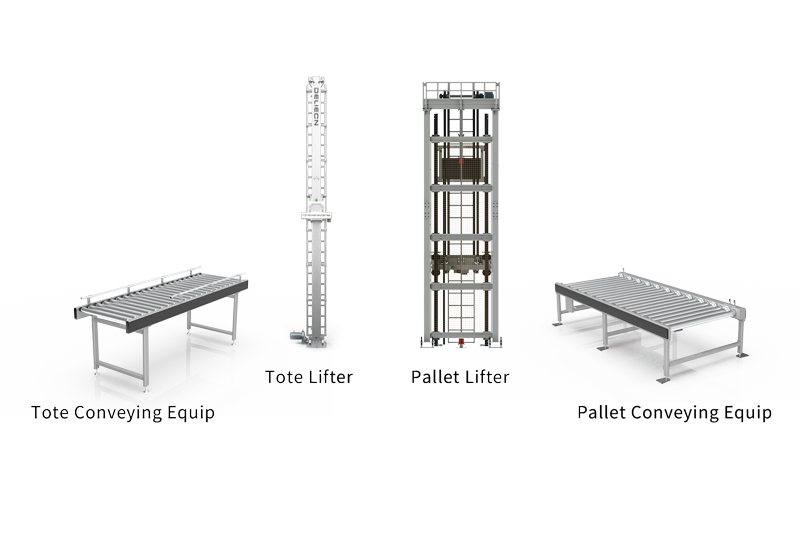 Conveying Equipment
 Smart Warehousing System
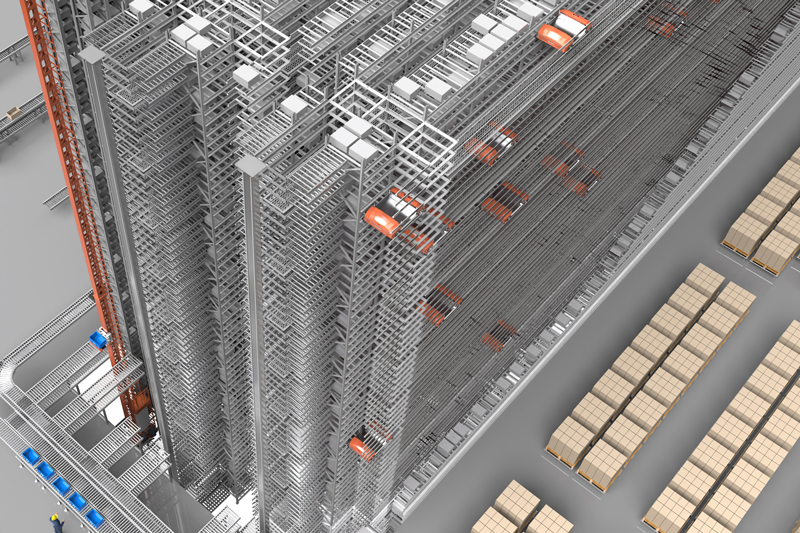 Warehouse Racking
 Industries
 Services
 About Us

How Toyota Rebuilt Spare Parts Fulfillment Around 45,000 SKUs
Spare parts warehouses rarely become difficult because of one slow machine or one crowded aisle.
The harder problem is usually hidden in the SKU structure.
Some parts are small but picked constantly. Some parts do not move as often, but take up too much space. Some are long, irregular, or hard to standardize. Some items need to be collected from different zones before one dealer order can be completed.
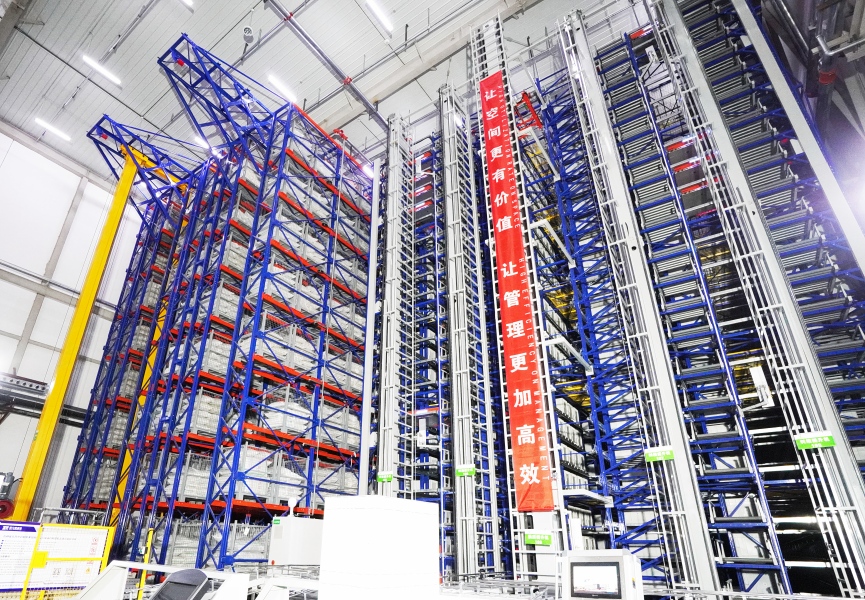
As a key spare parts logistics hub, the warehouse supports parts supply for hundreds of dealers. With nearly 45,000 automotive spare parts SKUs, the project was not simply about adding more storage capacity. The warehouse needed a shorter and more reliable path from inventory to fulfillment.
After the upgrade, the spare parts supply cycle was shortened from 8 days to 2 days.
That result did not come from one piece of equipment. It came from reorganizing how different types of spare parts were stored, picked, transferred, and managed.
The Project Started With Material Classification
A spare parts warehouse cannot be planned like a standard finished goods warehouse.
In Toyota’s case, the material mix included small parts, large storage-cage parts, long parts, irregular items, low-frequency parts, oil products, and return-related materials. These parts did not have the same size, weight, packaging format, or turnover rhythm.
One practical decision was clear from the beginning: not every part should enter the same Automated Storage system.
The purpose of zoning was not to make the layout look more organized. It was to reduce unnecessary movement, shorten picking paths, and make different material flows easier to coordinate before outbound.
Large Parts Needed Density, But Not at the Cost of Flexibility
Large automotive spare parts create a different kind of pressure from small items.
They may not generate the highest number of order lines, but they consume more space and usually require more stable carriers. If these parts are stored mainly on the floor or handled by forklifts across a wide area, the warehouse quickly loses both density and control.
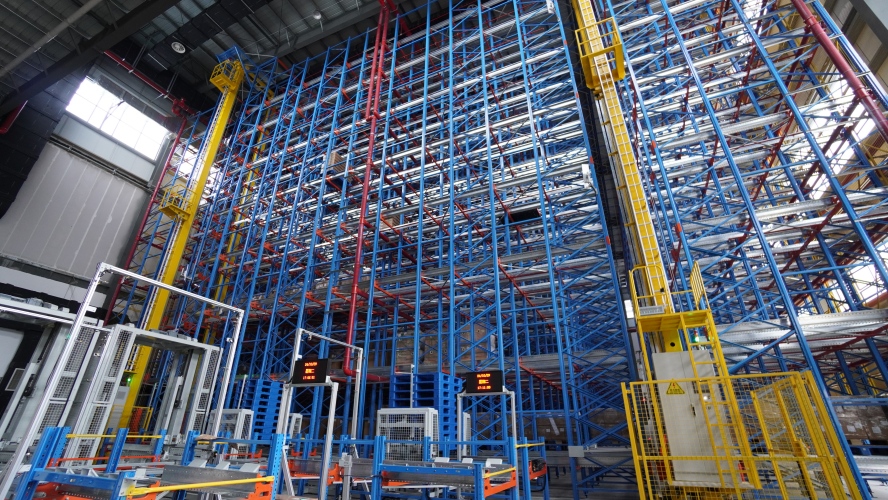
Toyota’s large-parts area included H1200 mm and H1675 mm storage cages. It also had long parts, irregular parts, and low-frequency items with different dimensions and handling requirements.
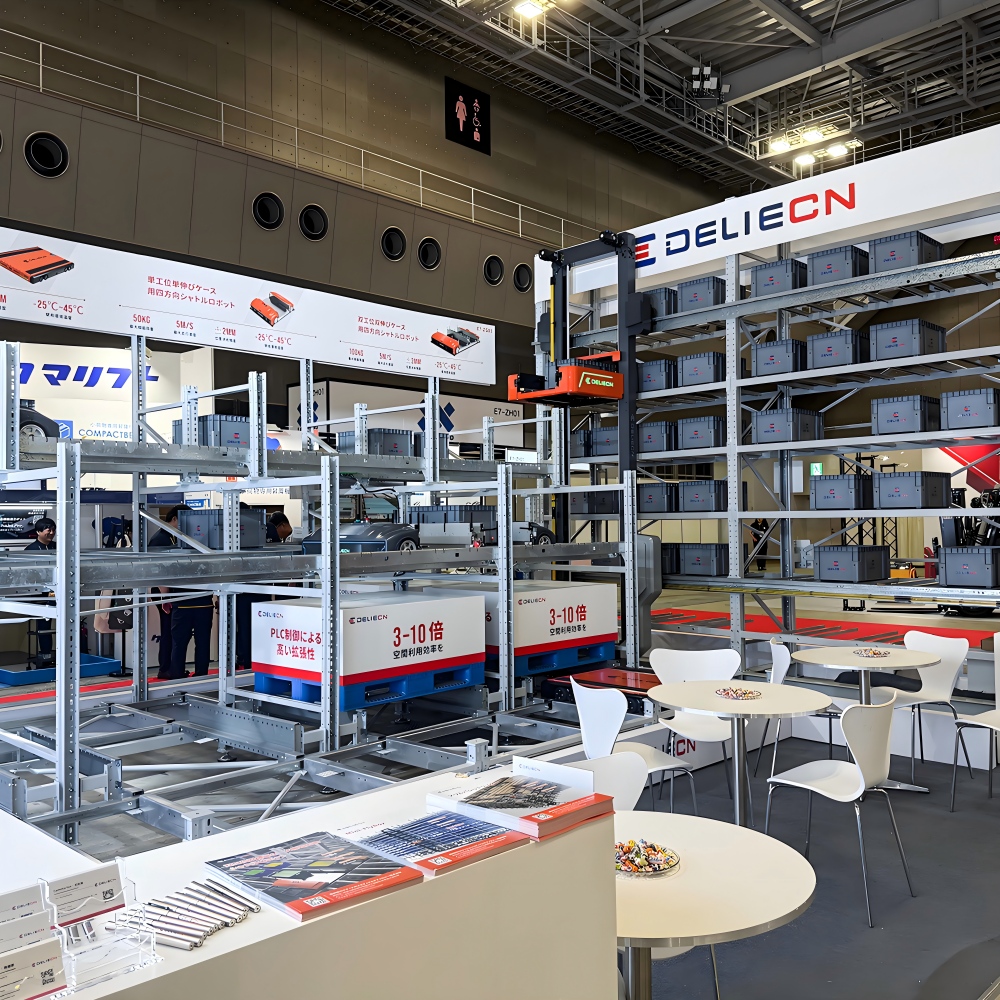
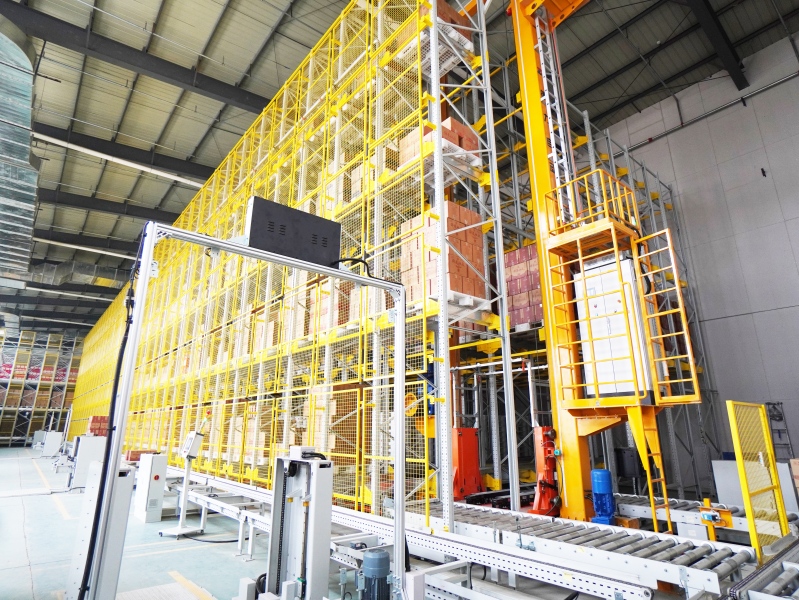
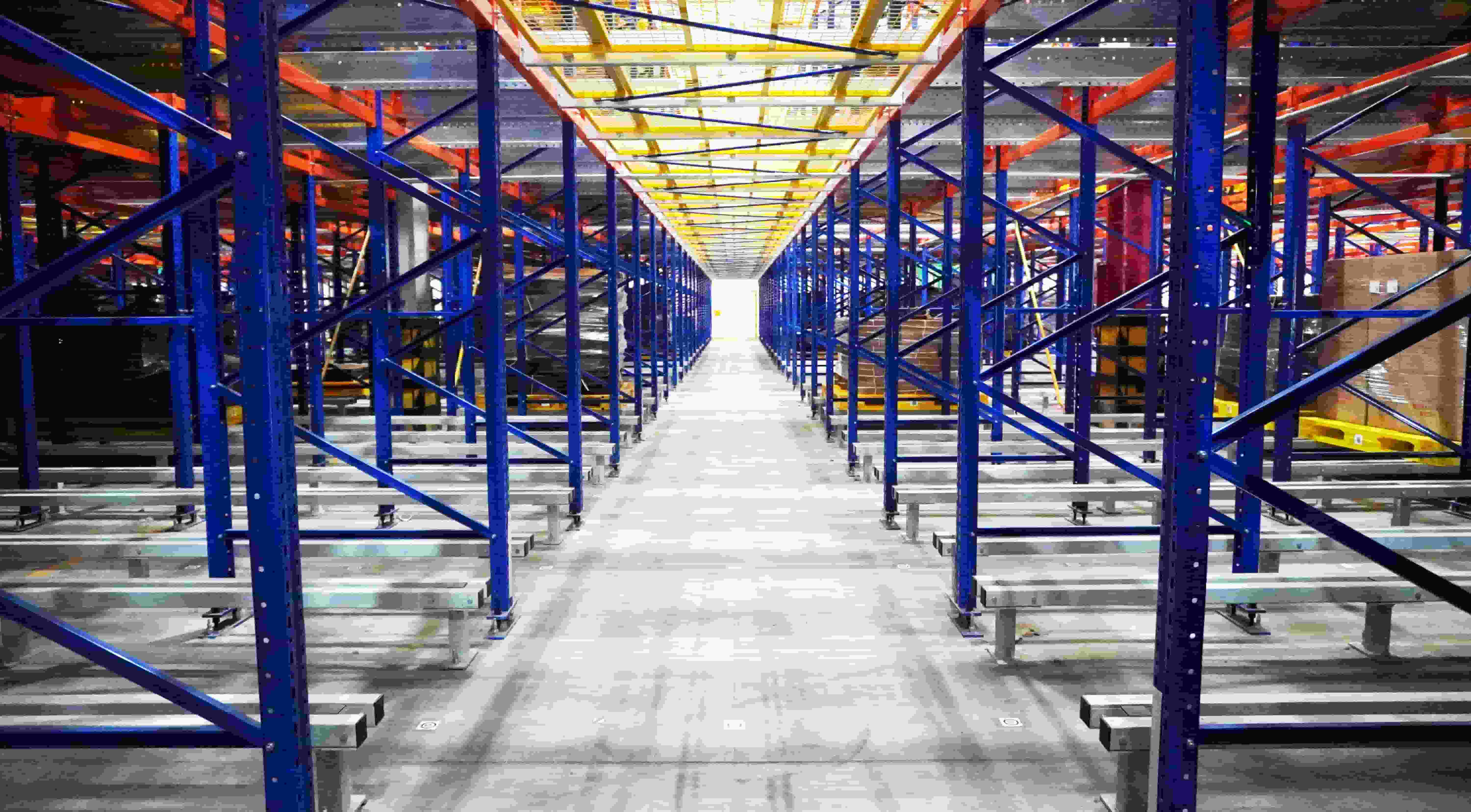
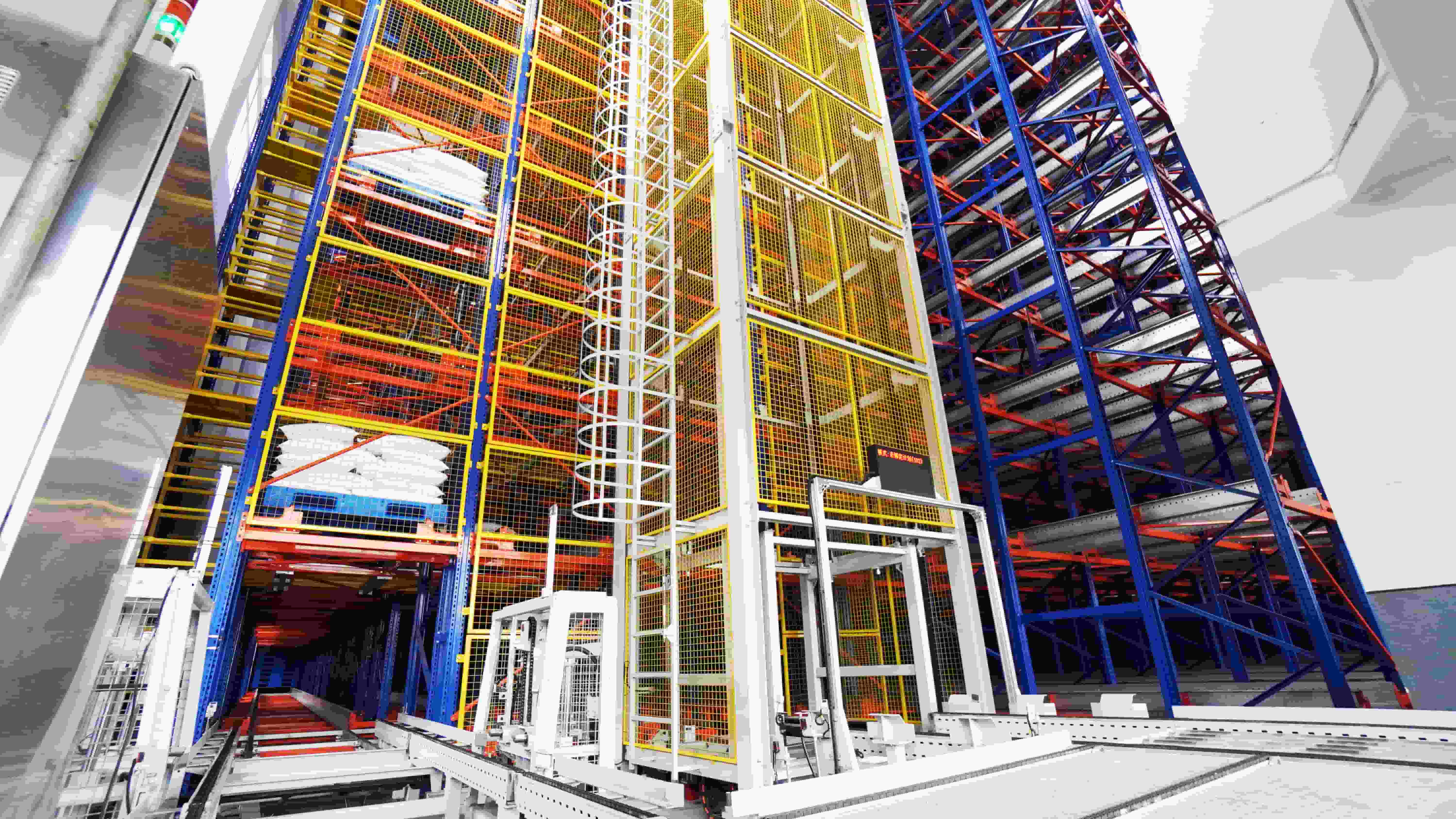
For storage-cage materials suitable for dense Automated Storage,DELIECN applied 125 mm ultra-thin pallet four-way shuttle robots.
In this area, 14 pallet four-way Shuttle Robots work with level-changing liftersto support multi-level Storage And Retrieval. Under the project configuration, the large-parts area was designed to support about90 lines/hourfor Storage And Retrieval tasks.
The point of using pallet four-way Shuttle Asrs was not just to move pallets in four directions. The more important value was that large carrier-based parts could be stored more densely while still allowing flexible access across the rack system.
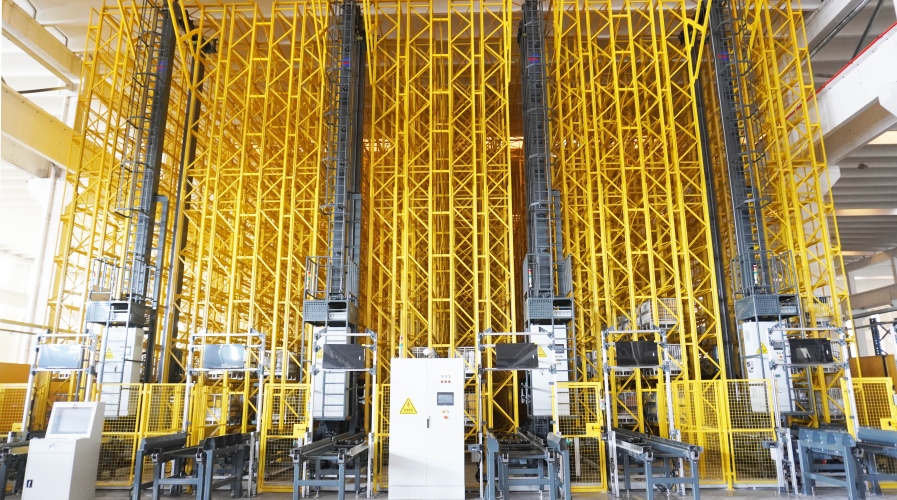
At the same time, Toyota did not force every large part into the Shuttle System. Long and large parts that still needed flexible forklift operation were stored in narrow-aisle racking. Irregular or low-frequency parts were handled through mezzanine racking.
Small Parts Were a Picking Problem, Not a Storage Problem Alone
The small-parts area had a different bottleneck. Small parts do not always take up much space, but they create frequent picking demand. Orders are fragmented. SKUs are numerous. Operators spend time walking, searching, checking labels, and confirming materials.
In Toyota’s original operation, one worker could walk up to 30,000 steps per day. The main issue was not that people could not pick. It was that too much time was spent before the actual picking happened.
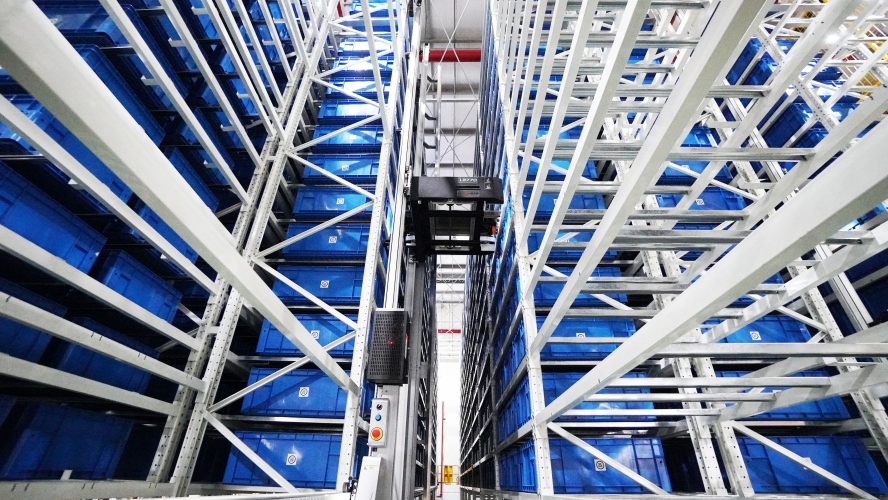
For this reason, Toyota selected DELIECN Mini-FlyBox ASRS for high-SKU small spare parts.
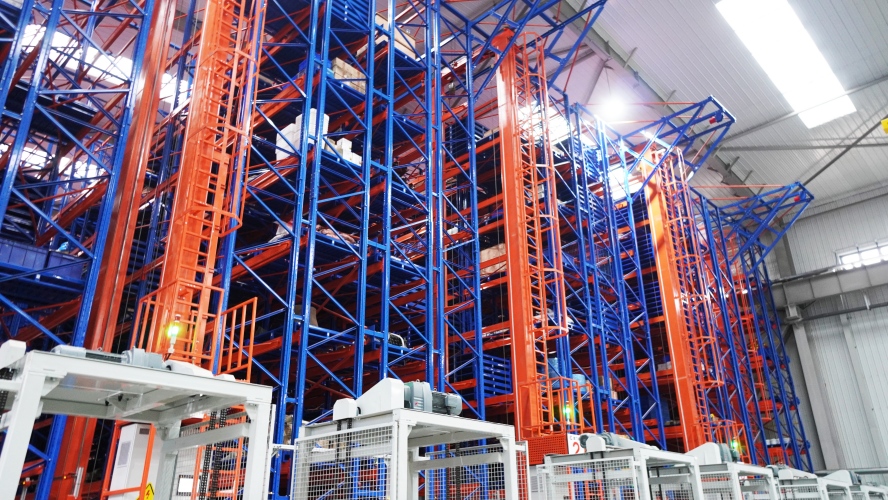
The system provides more than 17,000 tote locations, including H300 and H450 tote storage areas. In the project, 18 Mini-FlyBox units operate in narrow aisles and work together with 54 TOTE AMRs. The total inbound and outbound throughput reaches 870 lines/hour.
Cross-Zone Transfer Was the Link That Could Not Be Ignored
A dealer order may contain small electrical parts, large mechanical parts, irregular items, and other spare parts at the same time. Even if each zone works efficiently by itself, the order is not complete until these items meet at the right outbound node.
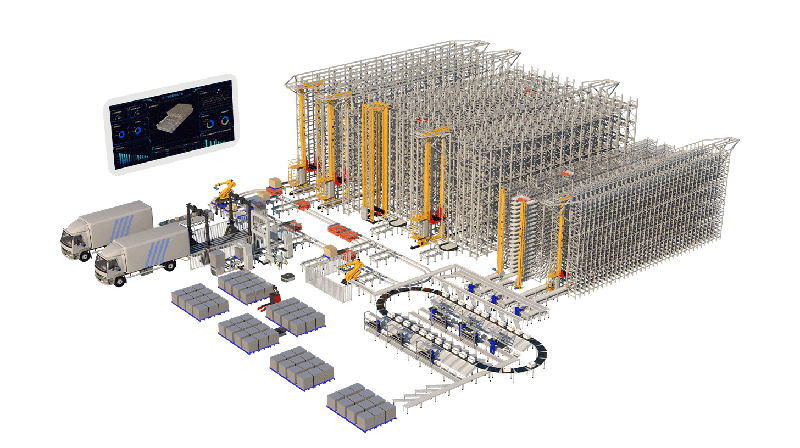
Toyota used 54 TOTE AMRs and 24 AGVs to connect different warehouse zones. Their roles were separated clearly: TOTE AMRs handle small-parts order flow, while AGVs support heavier loads and cross-zone movement.
The Software Layer Made the Zones Work as One Warehouse
In the Toyota project, DELIECN WMS is integrated with Toyota’s TOPSS sales system and upstream WMS. Business requirements are converted into executable warehouse tasks.
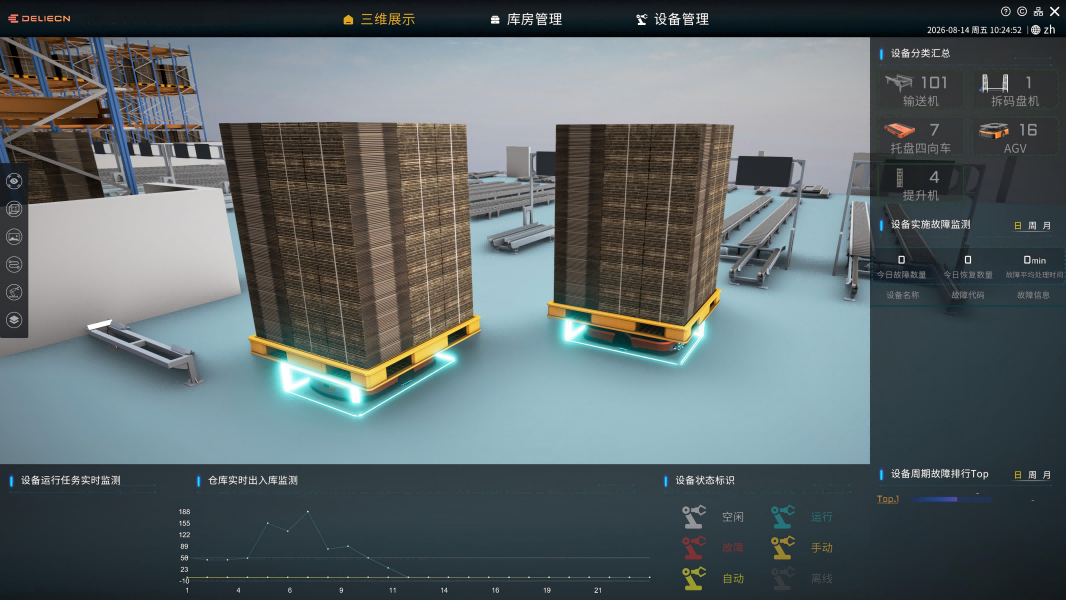
The 3D Visualization Central Control System added visibility to the operation. Through a large LED screen, managers could view zone layout, material flow, task progress, inventory status, and equipment operation.
Why the Supply Cycle Changed
Toyota’s supply cycle was reduced from 8 days to 2 days. The change was not caused by a single machine becoming faster. It came from several improvements happening together:
According to the project summary, DELIECN’s multi-zone automation solution helped shorten the supply chain process by about 80%.
What Toyota Gained from This Upgrade
The value of this project was not only higher storage density or faster equipment movement. For Toyota, the bigger change was that different spare parts flows became easier to manage as one fulfillment process.
Large storage-cage parts could be stored more densely and retrieved with better control. Small parts moved from manual searching to goods-to-person picking. Irregular and low-frequency parts were kept in more suitable storage areas instead of being forced into the automated high-density storage system.
Cross-zone transfer also became more stable. With TOTE AMRs and AGVs connecting different areas, small parts, large parts, and other spare parts could move toward sorting and outbound nodes with less manual handling and less waiting.
The software layer made this coordination more reliable. WMS and WCS connected inventory, locations, order tasks, equipment status, and material movement, helping the warehouse operate as one connected system rather than several separate storage zones.
For a spare parts warehouse serving hundreds of dealers, this means faster response, clearer inventory movement, more stable order fulfillment, and better support for dealer service operations.
For other automotive spare parts warehouses, the lesson is clear: automation should not start from choosing one type of robot. It should start from understanding how different materials are stored, picked, transferred, and consolidated before outbound.