
 AS/RS Handling Robot
 Vertical Storage Module
 Conveying Equipment
 Smart Warehousing System
 Warehouse Racking
 Industries
 Services
 About Us

Pharmaceutical Warehouse Automation for 2,000+ Material Specifications
A pharmaceutical warehouse with more than 2,000 material specifications can still look orderly from the outside.
The difficulty usually appears during daily work.
One material arrives in a larger handling frame. Another is stored in a tote. Some materials are picked frequently, while others stay in stock much longer. Batch information has to remain clear, inventory needs to match the physical material, and operators still have to find the right item quickly when a task comes in.
In one pharmaceutical warehouse project, the manufacturer was handling around 35,000 tons of annual production capacity.
The original issue was not simply that there was not enough room.
The warehouse needed a better way to separate different material flows without making storage and picking more complicated.
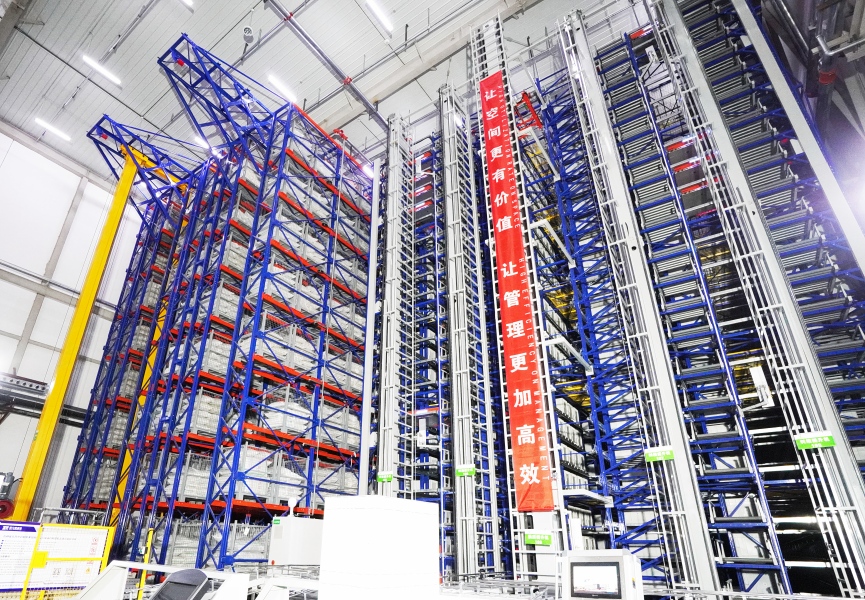
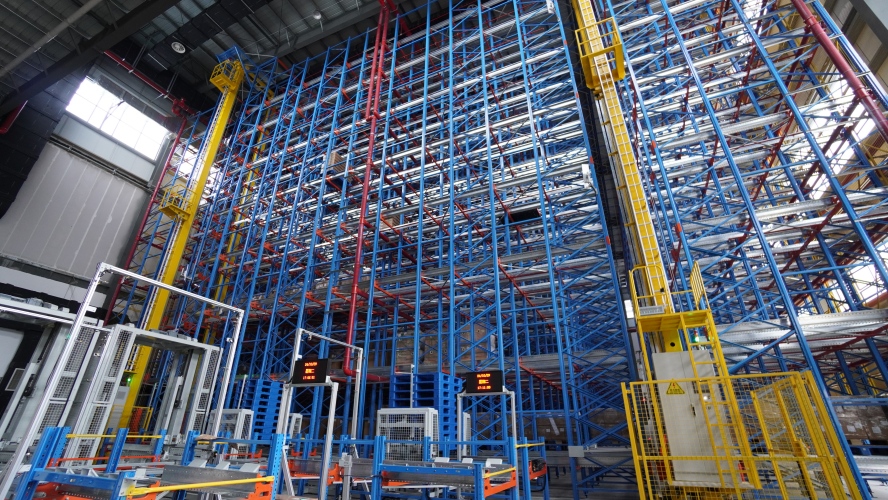
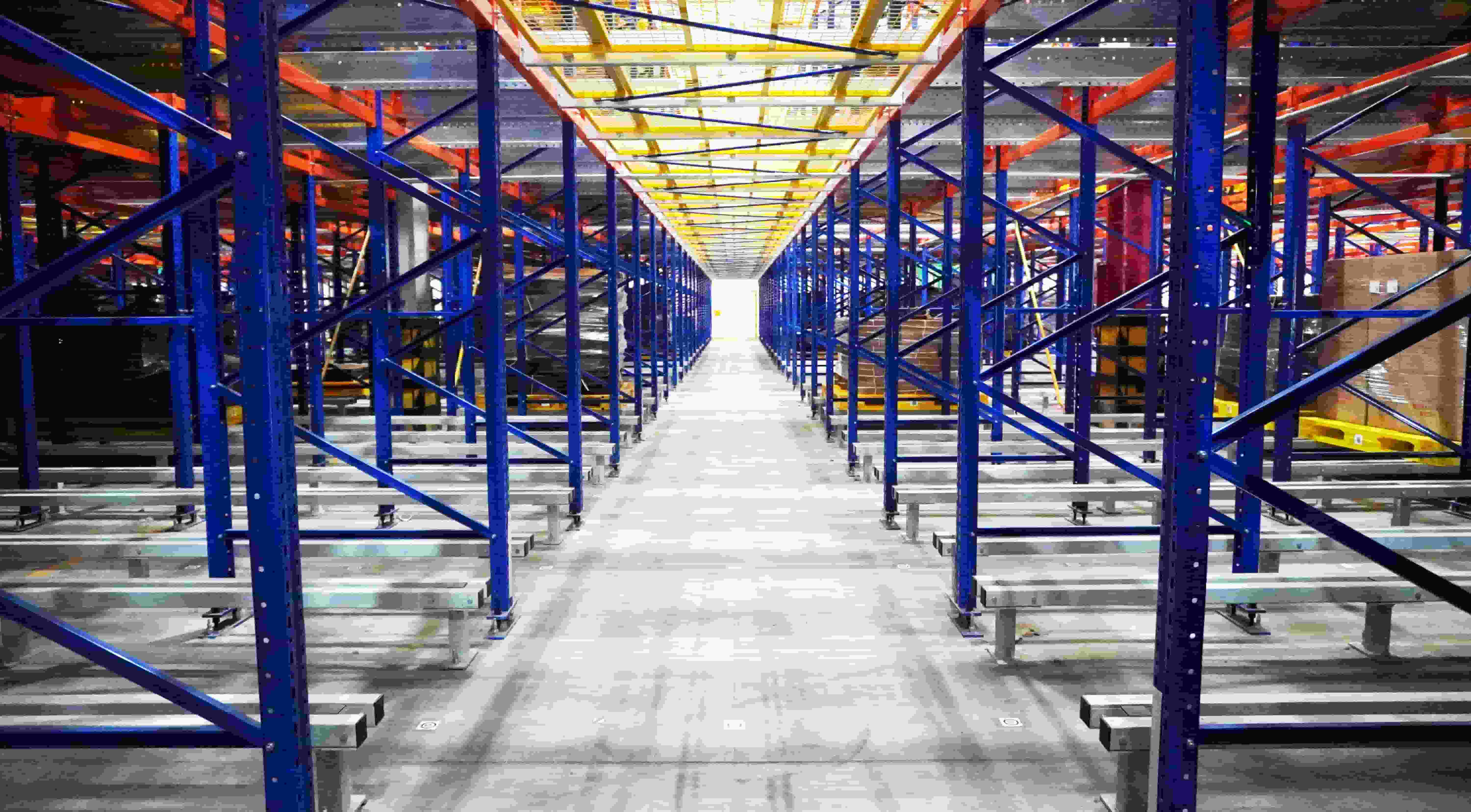
The final design provided 24,400 effective storage locations. Most of them were tote locations, while larger material units remained in a pallet-based ASRS.
That split turned out to be more important than the total location count.
Two Material Types, Two Storage Logics
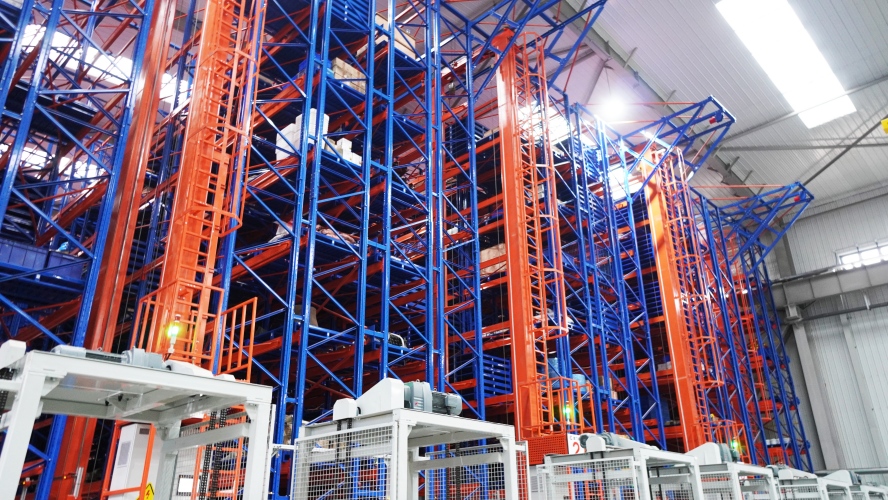
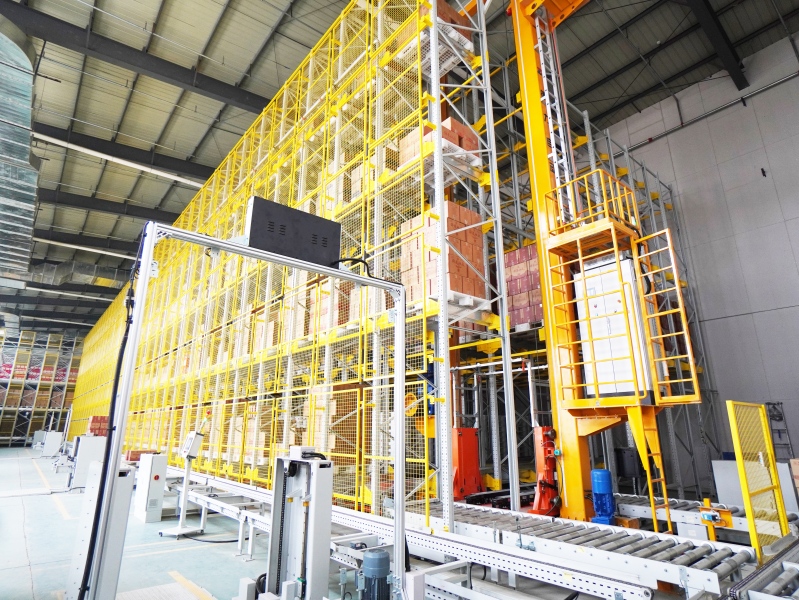
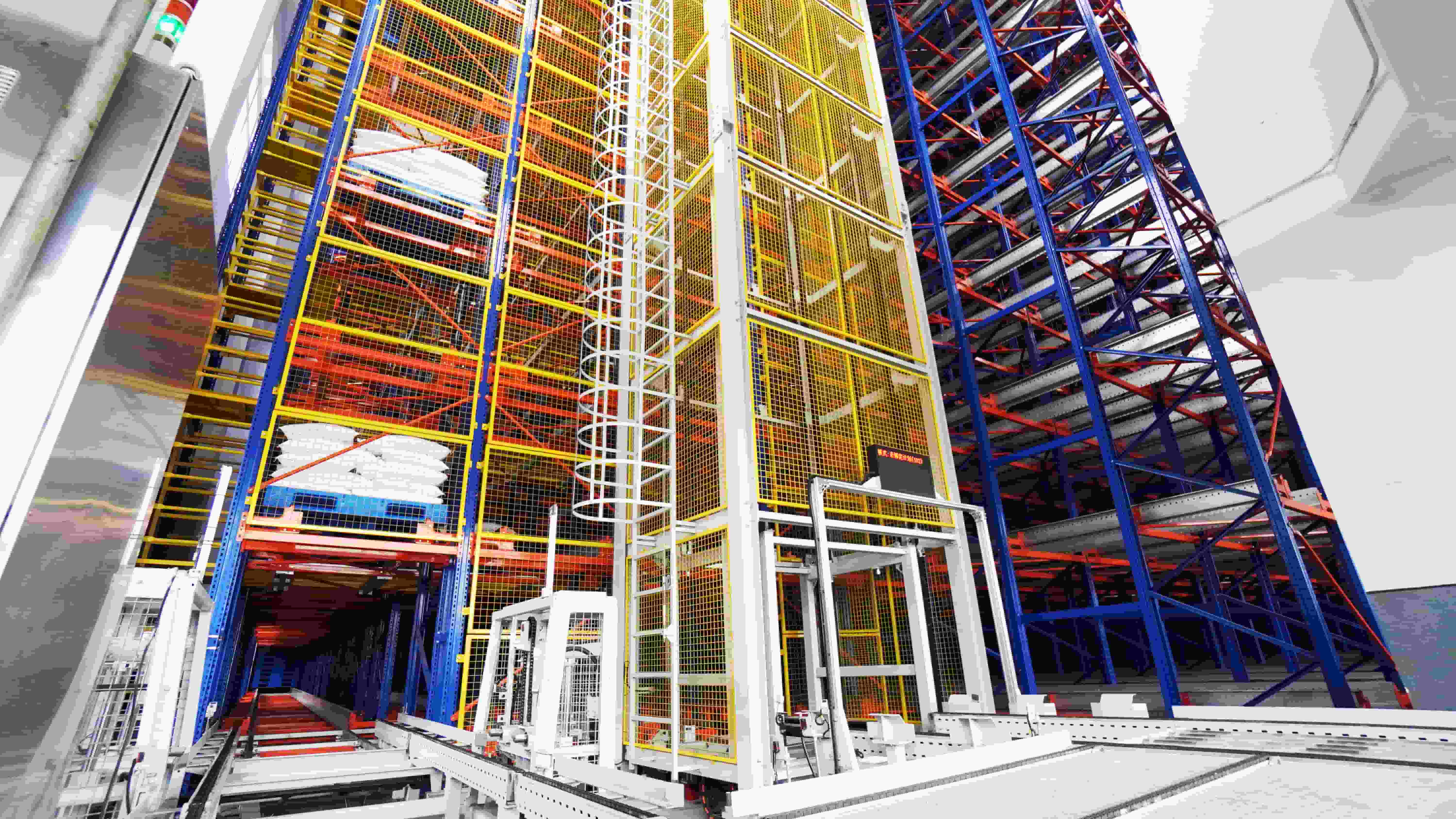
The pallet storage area contains 2,400 effective locations.
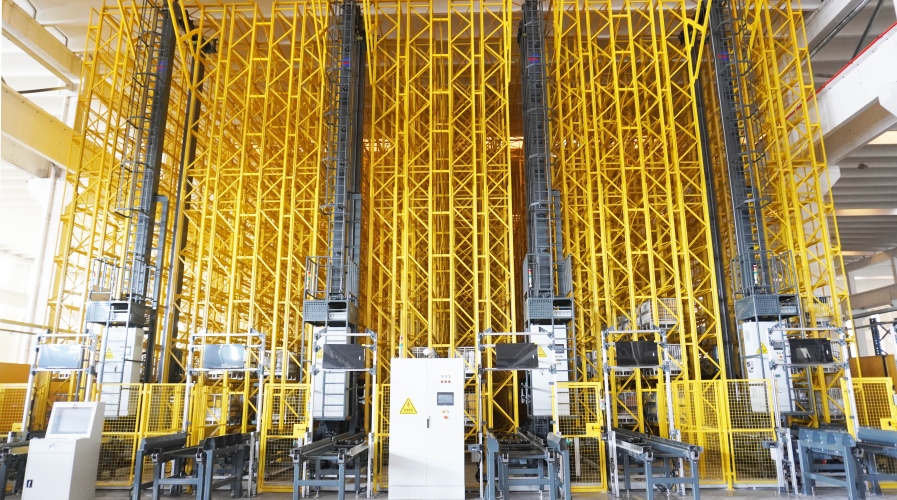
It uses two stacker cranes, one in a single-deep configuration and one in a double-deep configuration.
The material frames are about 1000 × 1000 mm, with heights from 1000 to 1300 mm, and the project load is up to 400 kg including the frame.
Those materials already move naturally as larger units, so there is little reason to break them down further just to fit another storage technology.
The smaller materials are different.
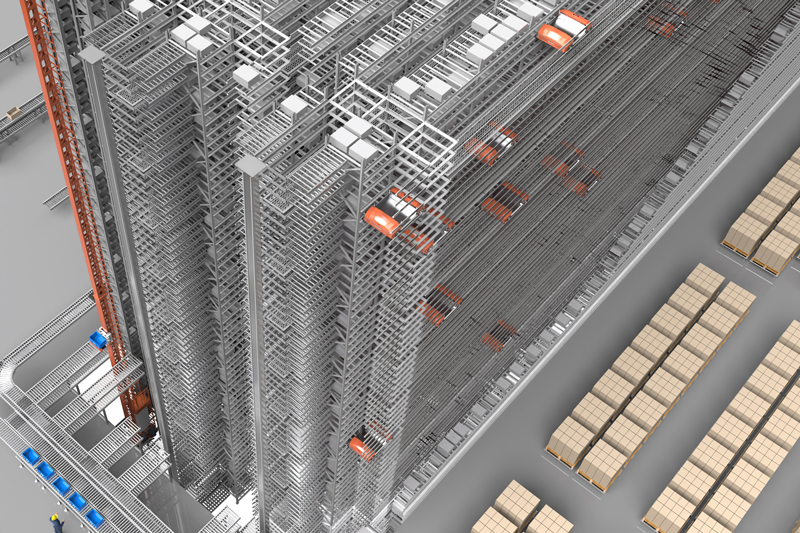
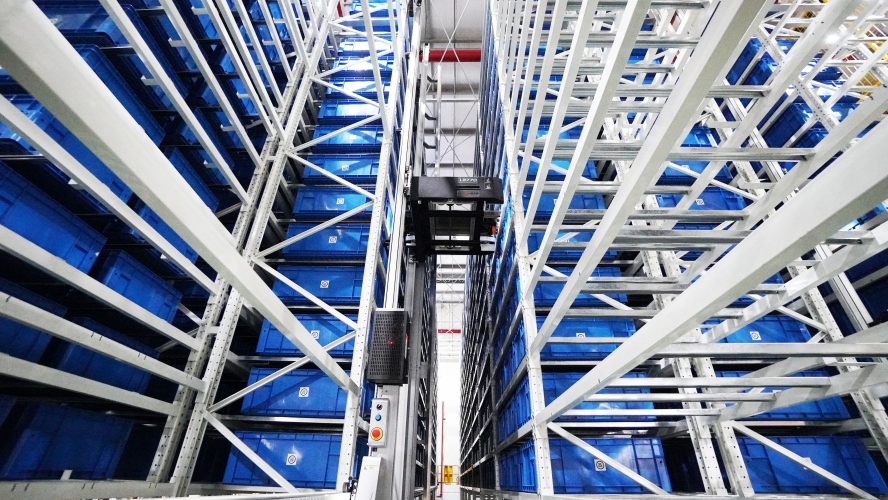
They account for most of the SKU complexity, so they were placed in a tote four-way shuttle ASRS with 22,000 effective locations.
The project tote size is 600 × 400 × 400 mm, with a load of up to 30 kg including the tote.
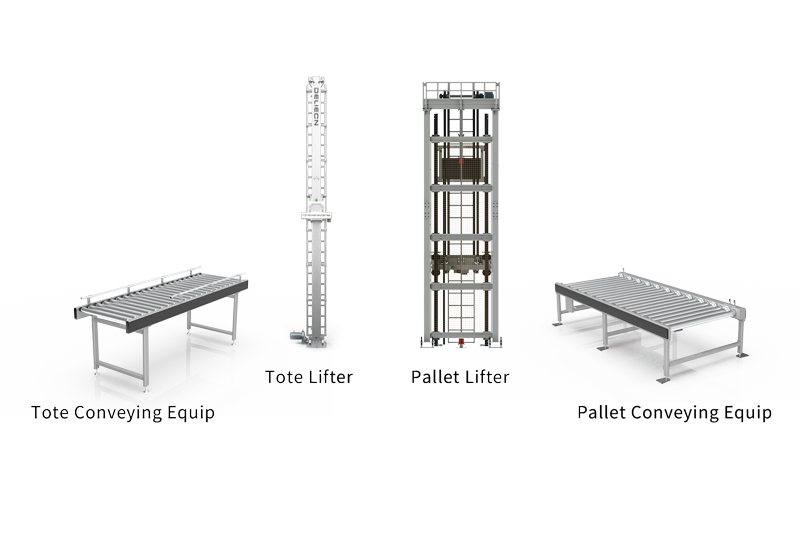
The tote area uses 12 tote four-way shuttle robots, one level-changing lifter and four high-speed tote lifters.
Keeping these two storage methods in the same warehouse may look more complicated on the equipment list, but operationally it is simpler.
Larger materials stay in a handling unit that suits them.
Smaller materials use a system designed around dense location management and frequent retrieval.
The Tote Area Was Really About Reducing Search Time
With 22,000 tote locations, manual picking would quickly become a walking problem.
That is common in pharmaceutical warehouses with a large number of specifications.
The item itself may be small, but the distance between storage locations is not.
Operators spend time moving through aisles, checking labels and confirming the correct material before the actual pick even starts.
The tote system changes that routine.
Once a task is released, the required tote is retrieved from storage and moved toward the picking side. The operator stays near the workstation instead of repeatedly walking through the storage area.
The project was designed for around 450 boxes per hour of inbound and outbound handling.
That figure is useful, but only when viewed as part of the picking process.
A shuttle can move quickly inside the rack, but that does not help much if totes begin to queue at the vertical transfer point. The same problem appears if the lifters are fast but the picking station cannot keep up.
This is why the 12 Shuttle Robots, level-changing lifter and four high-speed tote lifters have to be treated as one flow.
The system is not trying to make every individual machine run at its maximum speed all the time. It is trying to keep totes arriving at a usable rhythm.
Compared with the previous flat-warehouse operation, the project recorded an 80% improvement in operating efficiency.
Much of that improvement came from removing time that used to be spent searching and walking rather than from asking operators to work faster.
A Small Inbound Detail That Matters in Pharmaceutical Storage
Before a palletized material enters the automated warehouse, it does not go straight to the Stacker Crane.
The material frame first passes through appearance inspection, barcode identification and weighing.
Only after those checks does the conveyor move it toward the Stacker Crane pickup point.
This part of the system is not visually impressive, but it is one of the more important details in a pharmaceutical project.
Automated equipment can move the wrong material just as efficiently as the correct one.
If material identity, weight or carrier condition is wrong at the inbound point, the problem becomes harder to deal with after the load has already entered Automated Storage.
Checking the material before storage therefore protects everything that happens later.
It also keeps the physical material tied to the correct digital record from the beginning.
Dense Storage Leaves Less Room for Inventory Guesswork
The completed warehouse reaches approximately 95% space utilization under the project layout.
At that density, location control becomes more important rather than less important.
An operator cannot simply look through the warehouse and remember where thousands of materials are stored.
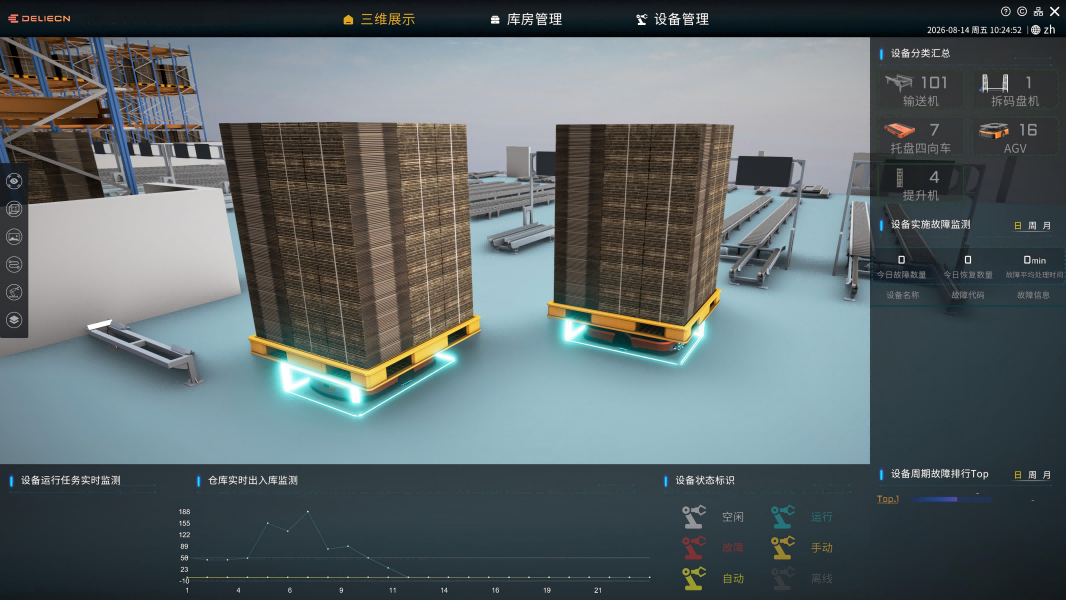
The project uses WMS and WCS to manage storage locations, inventory, inbound and outbound tasks, stocktaking and equipment execution.
The reported data accuracy reached 99.99%.
For pharmaceutical materials, that number is not only an inventory KPI.
It supports the relationship between the material, its location, its batch information and the task being executed.
When the system asks for a certain material, the warehouse needs to retrieve the correct unit rather than merely something stored nearby with a similar description.
The same information also supports later stocktaking and traceability.
As the number of specifications grows, this becomes one of the main reasons to automate the information flow together with the physical warehouse.
The Project Was Not Designed Around One Machine
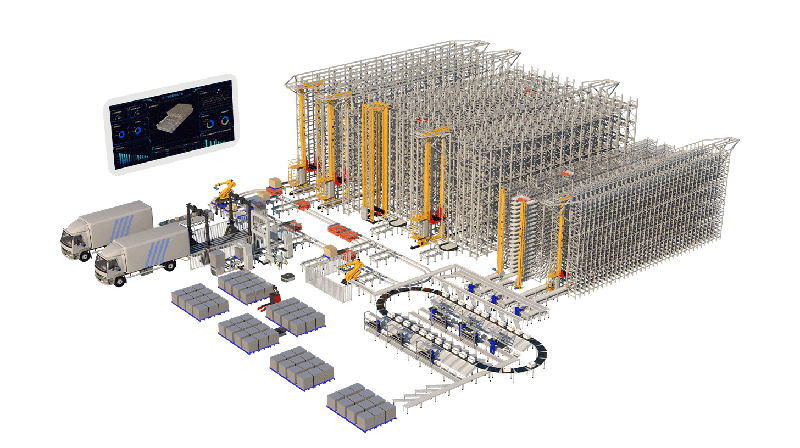
The finished system includes:
Looking at the numbers alone, it would be easy to call this a high-density ASRS project.
That description is not wrong, but it misses the more useful part.
The warehouse works because different materials were not forced into the same handling method.
Larger units stayed in pallet storage. Smaller materials moved into tote-based storage. High-frequency picking shifted toward goods-to-person operation. Inbound checks were connected to the storage process, and inventory information stayed tied to the physical material.
The system reached the required conditions for acceptance approximately three months after implementation began.
For a pharmaceutical warehouse, this kind of integration is usually more meaningful than simply installing more robots or building taller racks.
The real improvement comes when receiving, storage, picking and inventory control stop behaving like separate jobs.
That is what this project changed.
For pharmaceutical manufacturers and distributors working with a mix of palletized materials and high-SKU small items, storage design should usually begin with material size, batch structure, picking frequency and daily throughput rather than choosing one ASRS type for the entire warehouse.
Follow DELIECN on LinkedIn for more warehouse automation project experience.