
 AS/RS Handling Robot
 Vertical Storage Module
 Conveying Equipment
 Smart Warehousing System
 Warehouse Racking
 Industries
 Services
 About Us

How Pallet Four-Way Shuttle AS/RS Supports Digital Transformation in Discrete Manufacturing
Warehouse Automation in a manufacturing plant is rarely only about finding more storage space.
Materials have to arrive in the right form, be stored safely, remain traceable and return to production when they are needed.
That becomes more difficult in discrete manufacturing, where materials may vary considerably in size, carrier type and handling method.
How to move different types of materials smoothly into the Automated Storage process was also one of the issues this project needed to address.
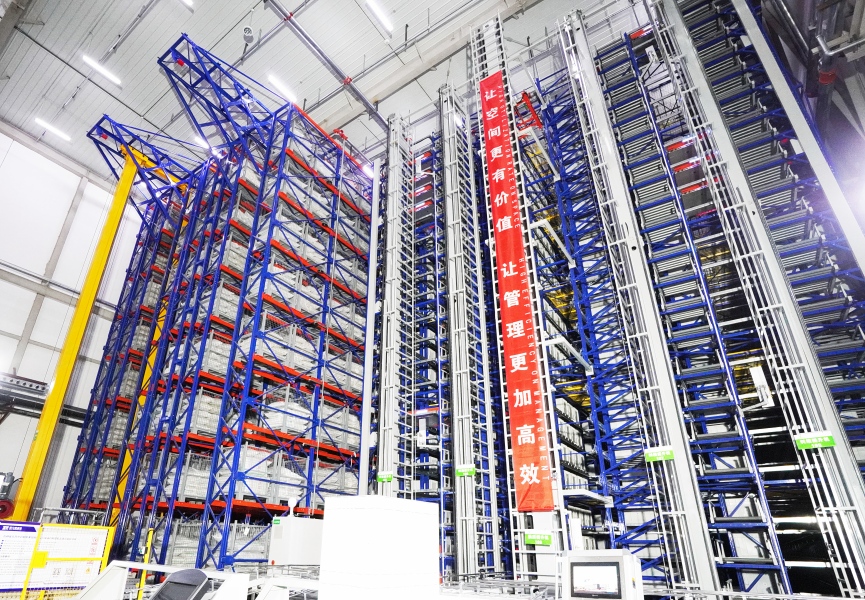
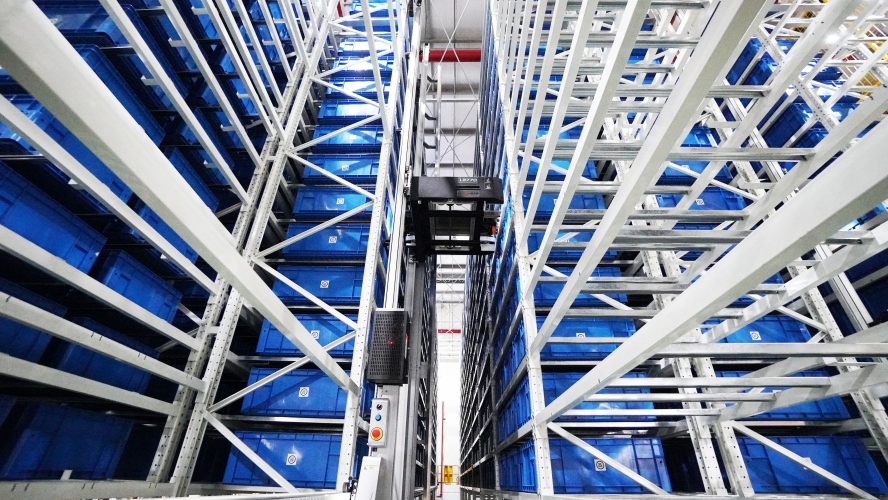
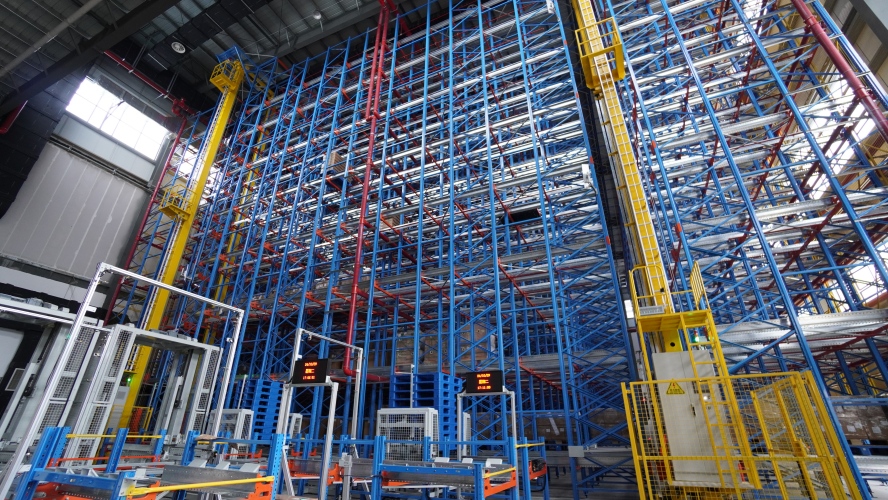
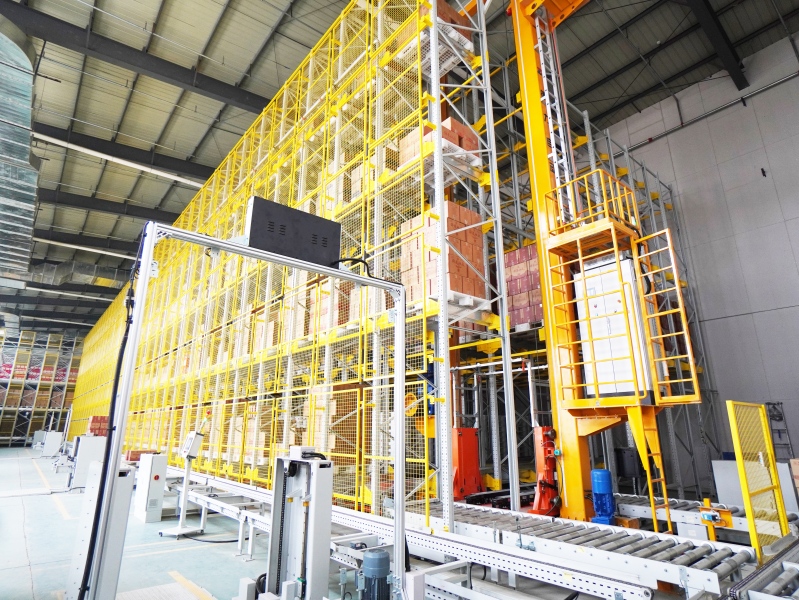
The project used a Pallet Four-Way Shuttle AS/RS to connect Automated Storage with material handling and digital warehouse control.
Rather than starting with a standard warehouse configuration, the layout was developed around the materials that actually had to move through it.
A Compact Warehouse for Heavy Production Materials
The available warehouse height was approximately 6.9 meters.
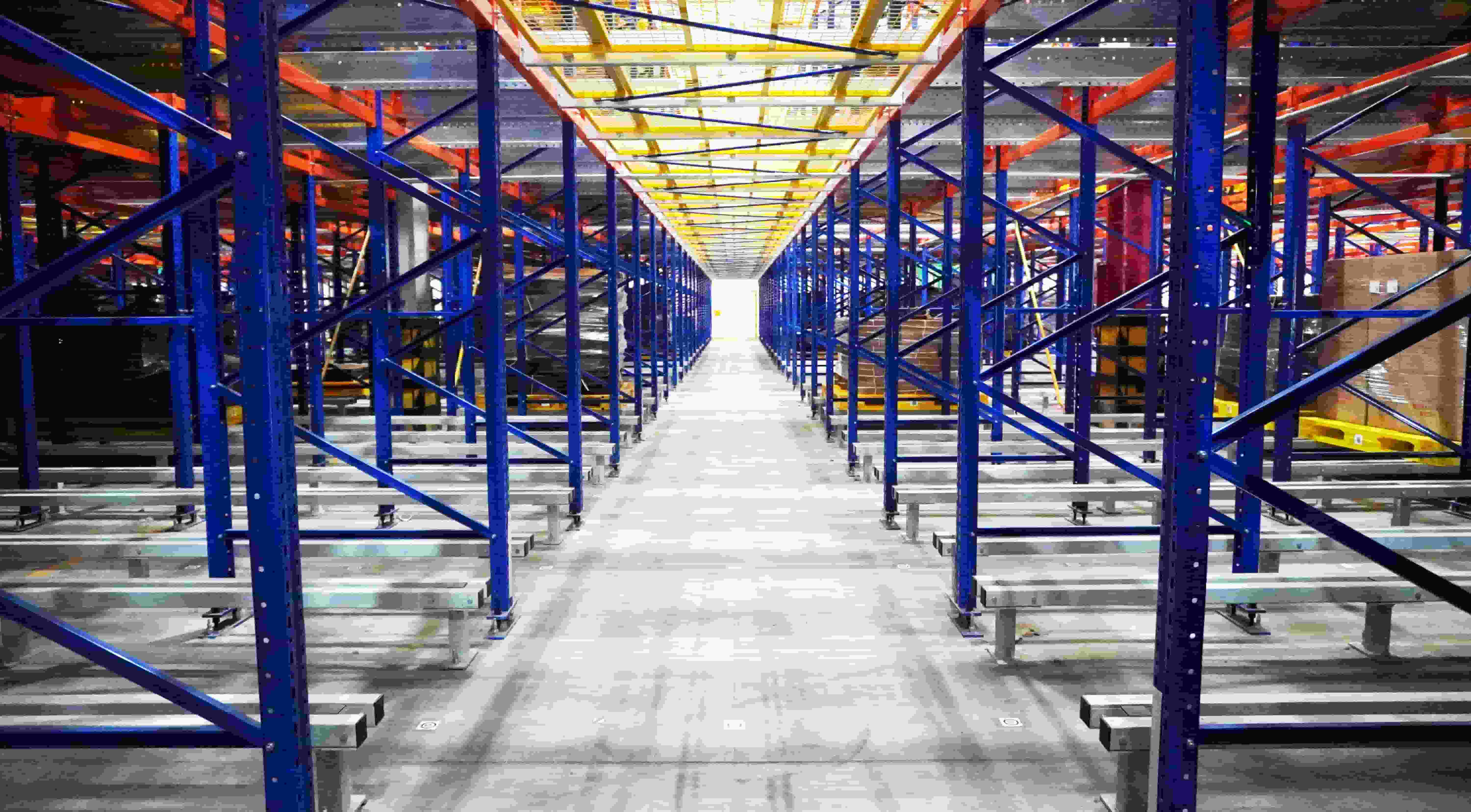
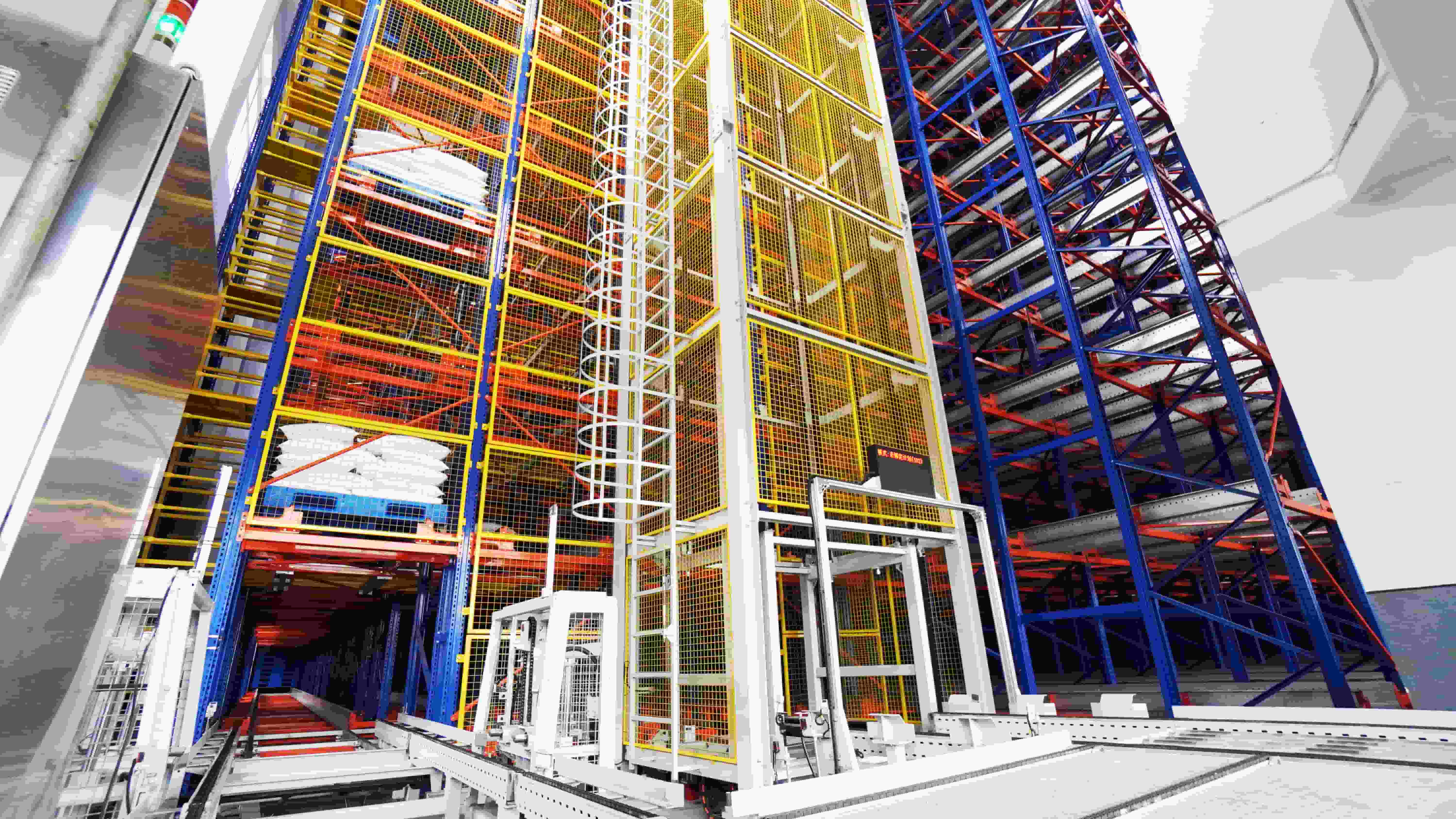
Within that space, the AS/RS was arranged across five storage levels, providing 893 effective storage locations.
The warehouse handles welding wire and steel material frames with different load-unit heights. Each pallet location was designed around a load requirement of at least 1,000 kg.
That combination—limited height, relatively heavy loads and different carrier formats—meant that simply adding conventional pallet racks would not solve the whole problem.
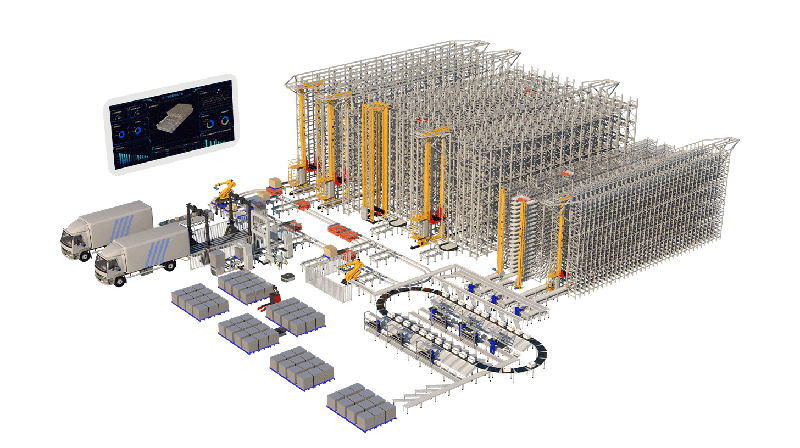
The final system combined:
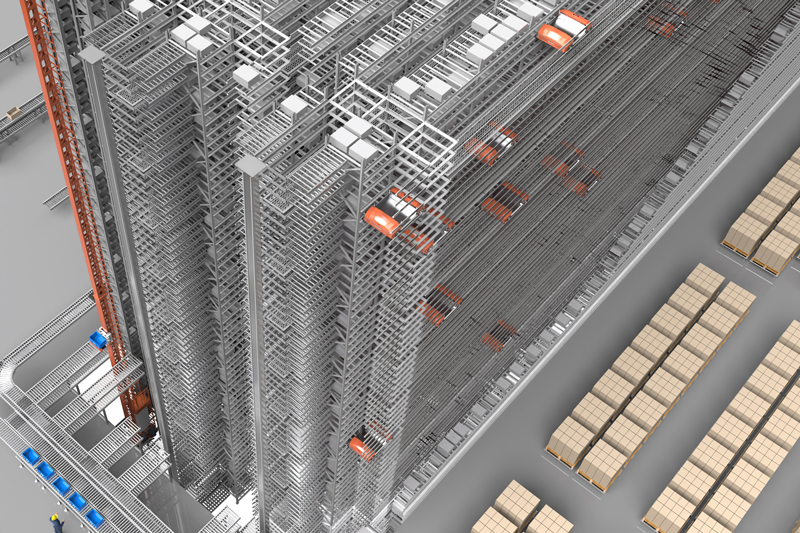
- Pallet Four-Way Shuttle Robots;
- Lifters;
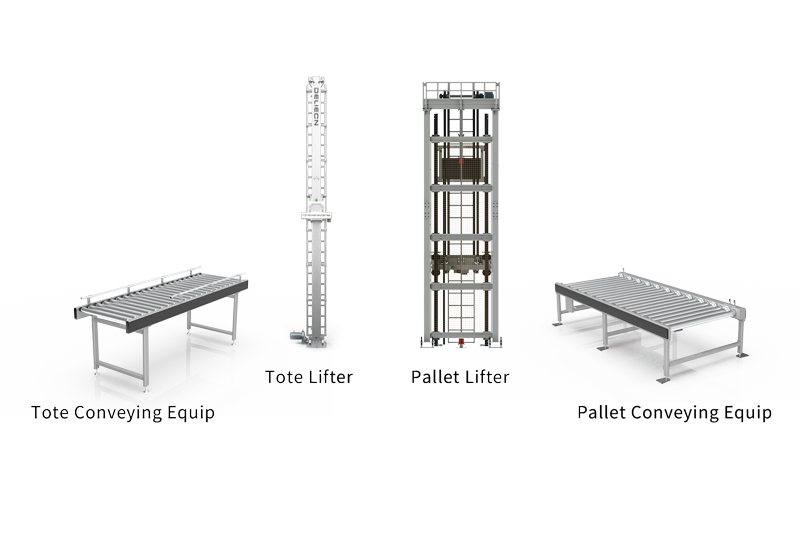
- conveying equipment;
- palletizers and depalletizers;
- crane-assisted loading equipment;
- robotic handling equipment;
- warehouse control and management software.
The four-way Shuttle Robots handle pallet movement inside the rack system, while the other equipment takes care of the transfer before and after storage.
Why Four-Way Movement Was Useful Here
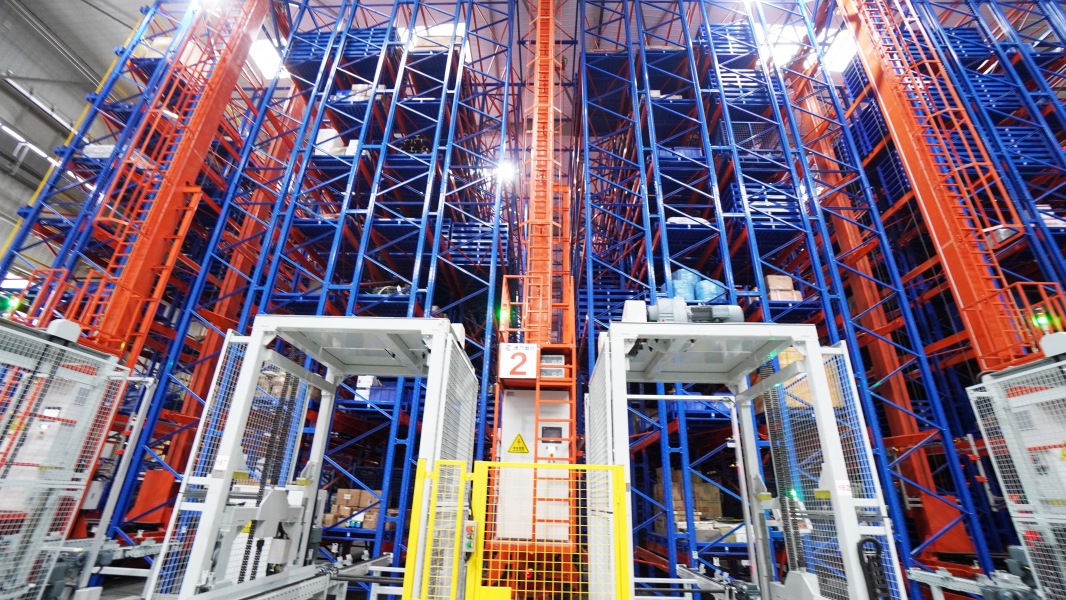
A Pallet Four-Way Shuttle Robot can travel along both the main and sub-aisle directions inside the rack system.
That matters when different storage locations need to be reached without assigning one shuttle permanently to one lane.
The project uses two Pallet Four-Way Shuttle Robots. Under the project calculation, the two-robot configuration was designed for a combined shuttle handling capability of approximately 40 pallets per hour.
This figure is a system design calculation rather than a blanket performance claim for every four-way shuttle project. Actual throughput still depends on task distribution, transfer points and the equipment connected to the Shuttle System.
That distinction is important in manufacturing.
A shuttle may finish its movement quickly, but if the next station is occupied, the pallet still waits.
Some of the Most Useful Design Work Happened Outside the Rack
One detail in this project was the position of the palletizing and depalletizing area.
The front-end handling arrangement was aligned directly with the first-level main rail, reducing the number of movements that had to pass through the lifters.
That is a relatively small layout decision, but it affects how much traffic is pushed through the vertical transfer equipment during daily operation.
Customized steel pallets were also used with mechanical positioning features.
For heavy welding wire and steel carriers, repeatable positioning matters because the material has to move through manual loading, conveying and automated storage without changing its reference position halfway through the process.
The automation therefore starts before the shuttle enters the rack.
Warehouse Software Connects the Material Flow
The physical equipment handles movement.
The control system decides what should move next.
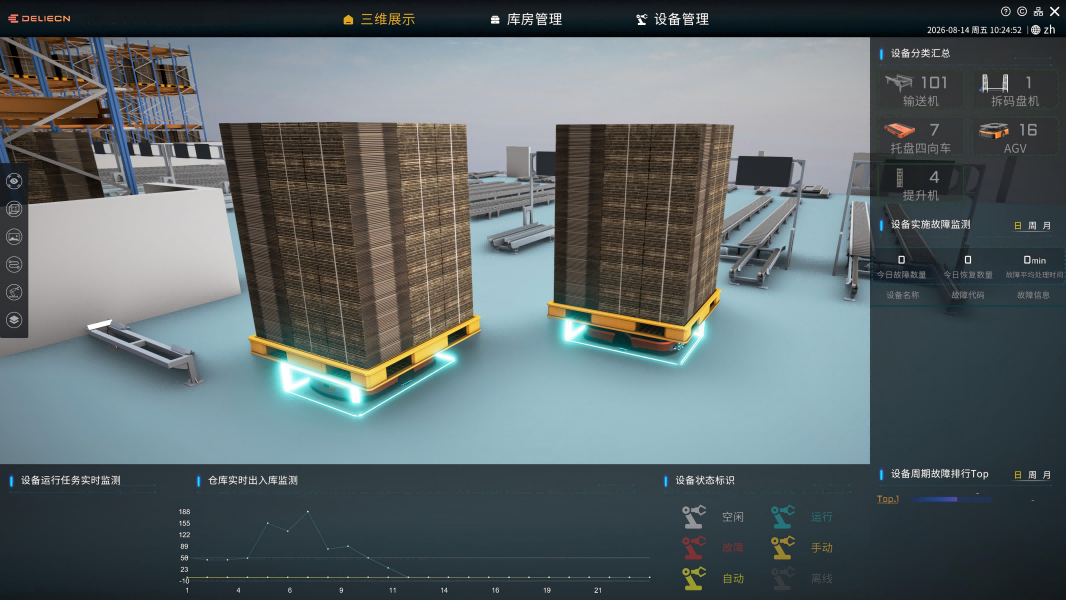
WMS/WCS and related control software coordinate storage locations, equipment tasks, material information and warehouse operations.
In a discrete manufacturing environment, this connection is particularly useful because warehouse activity is closely tied to production demand.
Instead of treating the AS/RS as an isolated storage area, the project allows material movement and warehouse information to become part of the wider factory logistics process.
What This Project Shows
The Zhengmei Shuyun project is not a large high-bay warehouse.
Its overall height is only about 6.9 meters, yet the system combines five storage levels, 893 effective locations and heavy load units within a relatively compact layout.
This project is not a large high-bay warehouse.
It shows that Pallet Four-Way Shuttle AS/RS is not limited to large finished-goods warehouses. It can also be configured around heavy production materials, customized carriers and the operating requirements of discrete manufacturing.
The important part is not simply putting a shuttle robot into a rack.
It is making the rack, carriers, handling equipment and software follow the same material flow.