
 AS/RS Handling Robot
 Vertical Storage Module
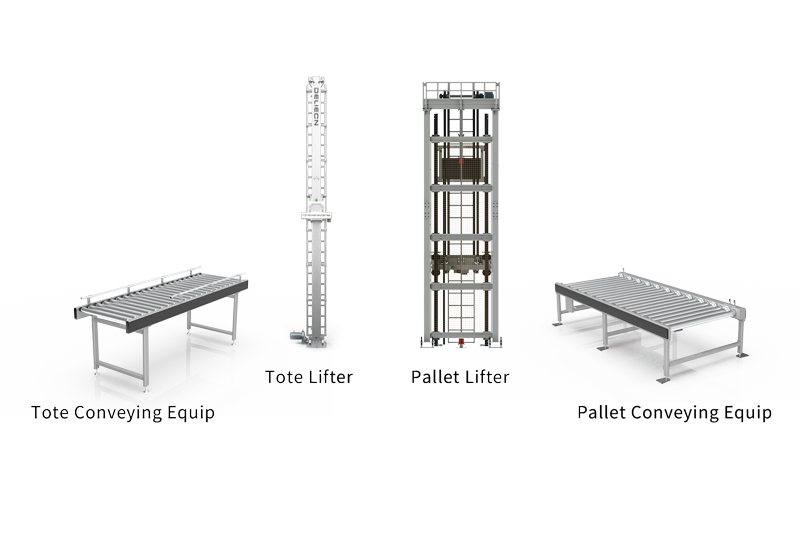 Conveying Equipment
 Smart Warehousing System
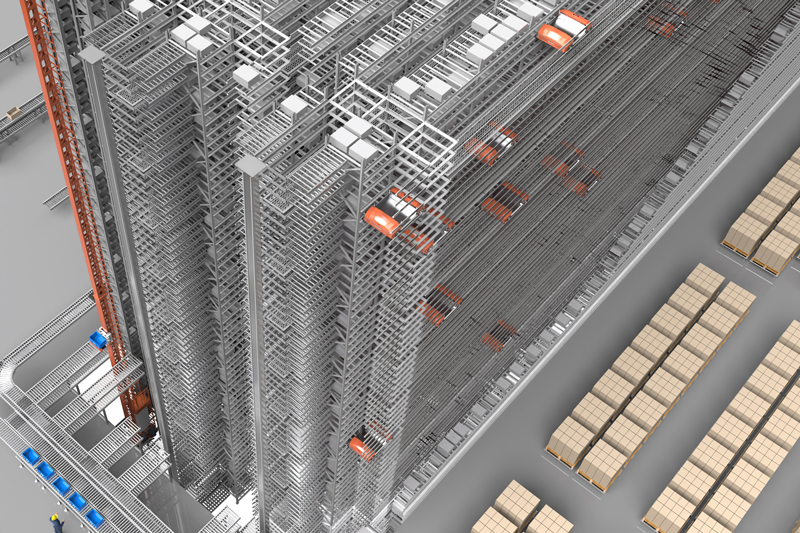 Warehouse Racking
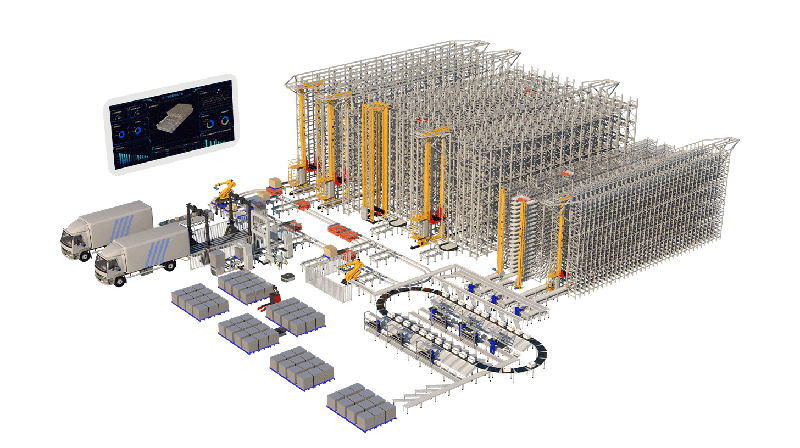 Industries
 Services
 About Us

Chemical Warehouse Automation: How a 6,309-Pallet AS/RS Balances Production and Shipping
In a continuous chemical plant, finished-goods storage has to absorb two operating rhythms that rarely match.
Packaging releases pallets according to production output. Shipping works around order schedules, truck arrivals and loading windows. On a quiet outbound shift, inventory builds quickly. When several vehicles arrive together, the same warehouse has to change from receiving mode to rapid retrieval.
That timing gap was central to the planning of this magnesium sulfate warehouse.
Approximately 33 pallets per hour arrive from the packaging area. Outbound demand is divided between two very different product flows: palletized 50 kg woven bags at around 30 pallets per hour and 1-ton bulk bags at up to 60 pallets per hour.
The engineering task was not simply to store the daily output. The system had to receive pallets continuously, preserve batch information and still release enough goods to support concentrated truck loading.
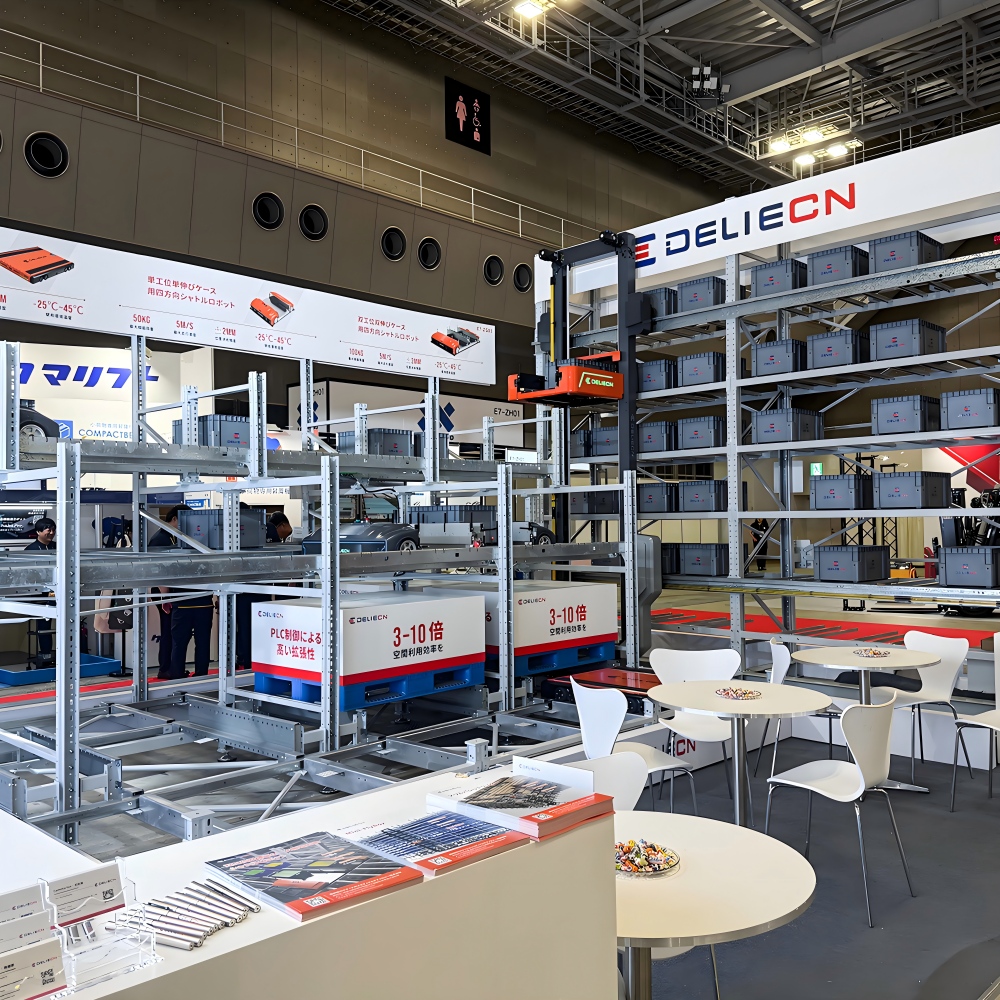
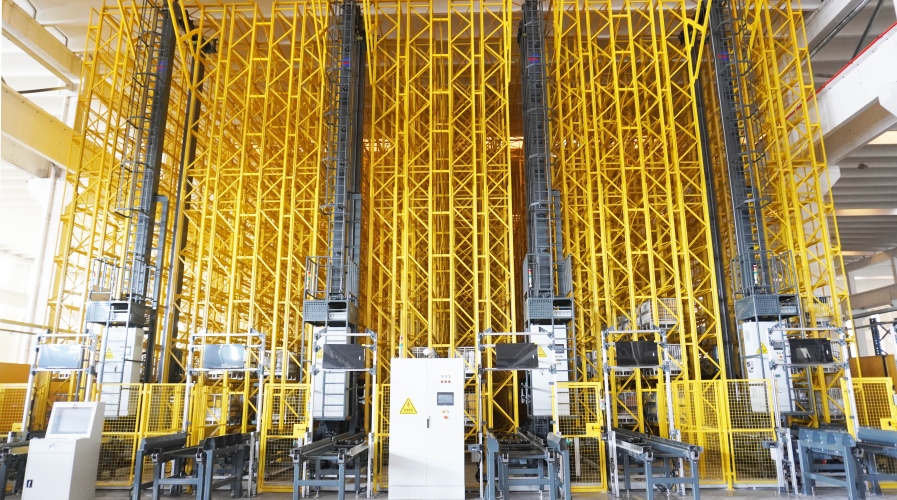
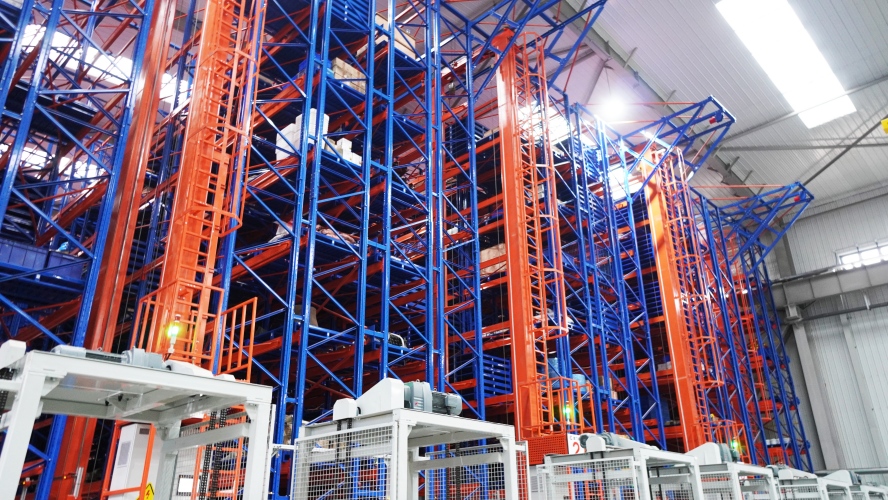
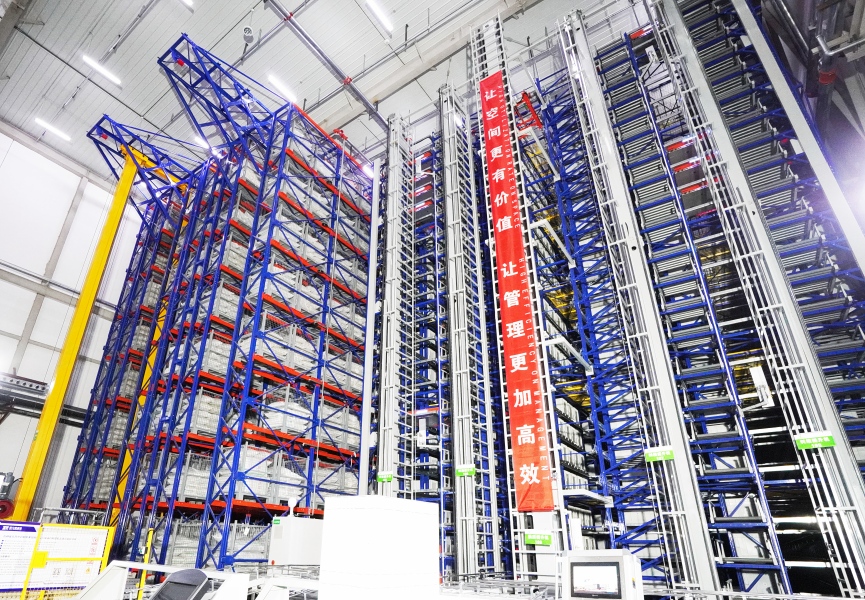
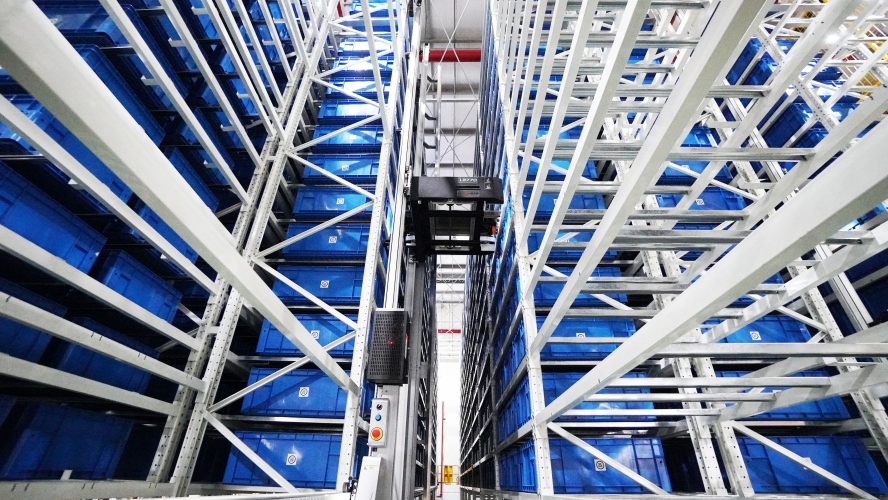
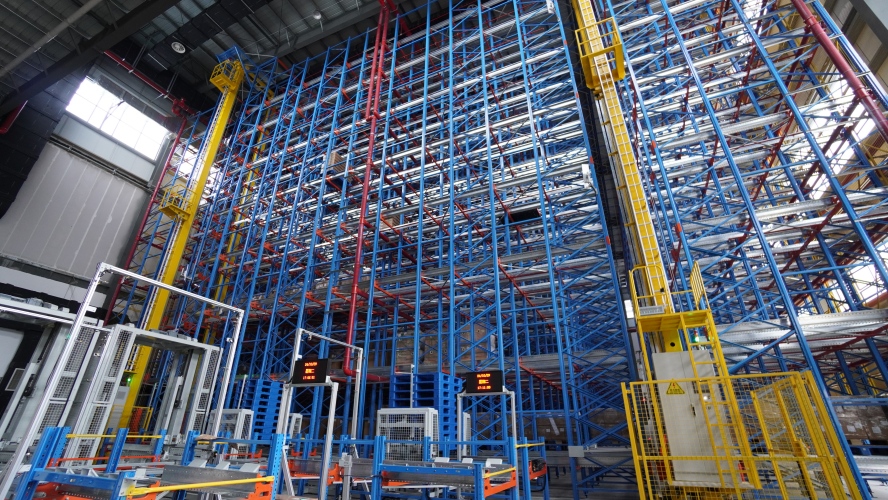
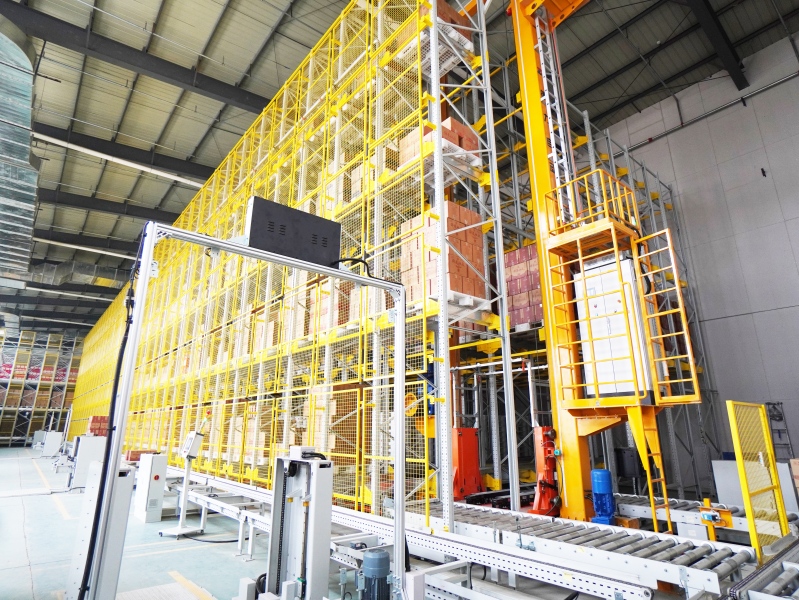
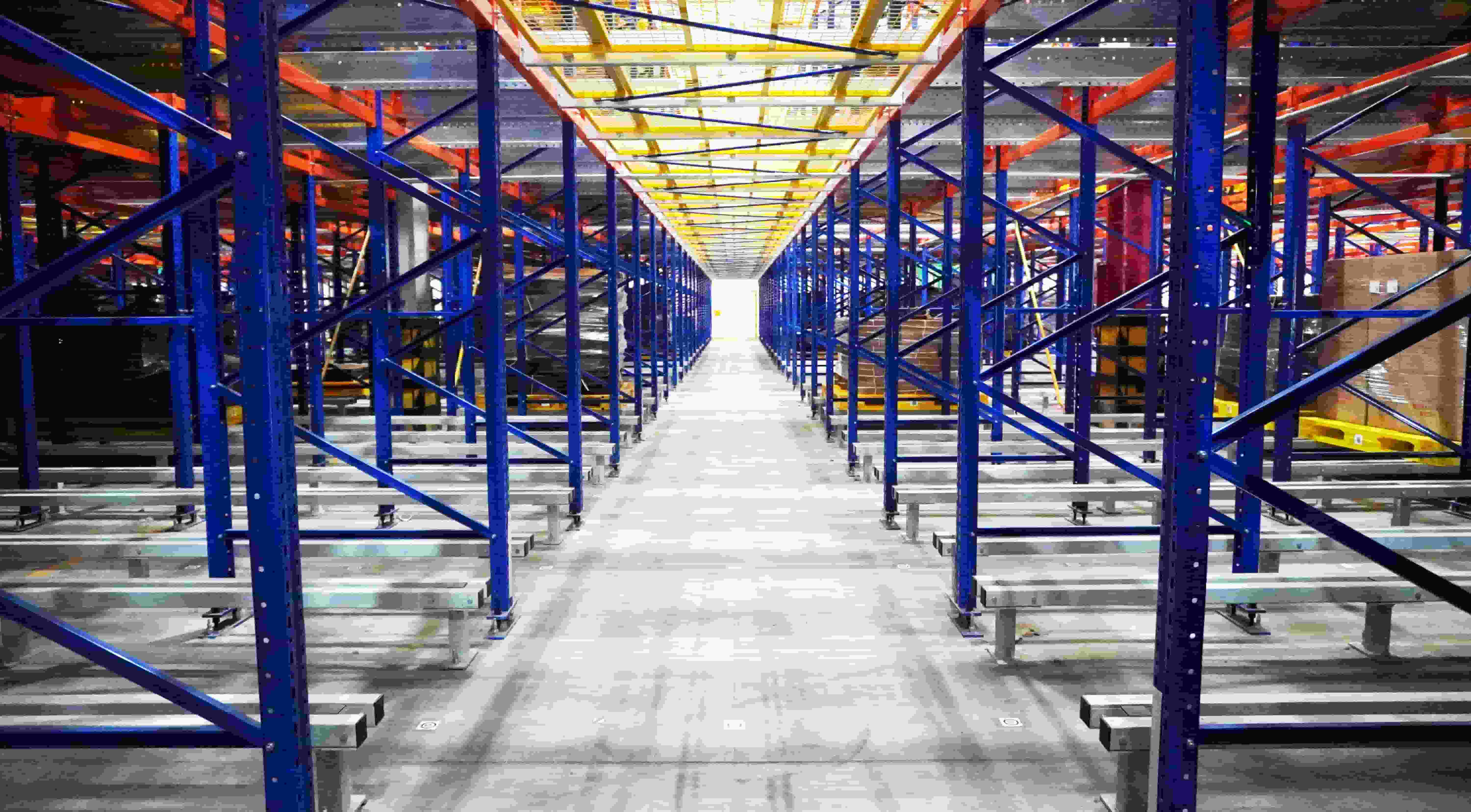
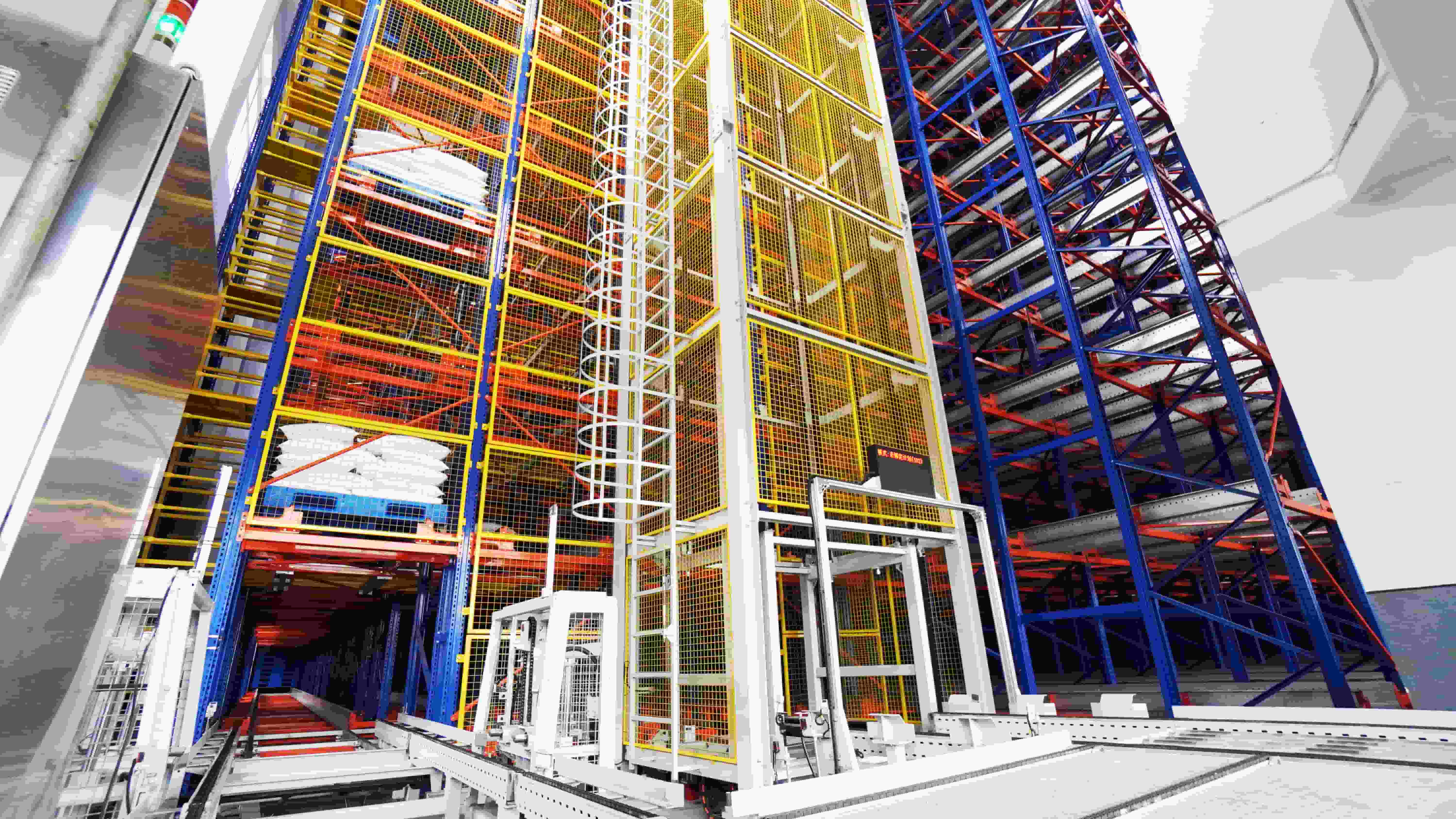
This led to a pallet four-way shuttle AS/RSwith 6,309 storage positions, 13 Shuttle Robots and 4 fork-type pallet lifters. The project also used different loading methods for bulk bags and woven bags rather than forcing both products through one standardized process.
The reasoning behind those choices is more useful than the equipment list itself.
The Warehouse Needed to Absorb an Uneven Material Flow
The plant produces monohydrate and heptahydrate magnesium sulfate in several packaging formats. Although the products belong to the same material family, their logistics requirements are not identical.
A pallet of 50 kg woven bags can be broken down during loading and adapted to different vehicle or order requirements. A 1-ton bulk bag is handled as a heavy unit load and creates a much clearer case for mechanical loading.
The previous reliance on floor storage and forklifts made these differences harder to manage. Finished pallets required substantial space, while travel aisles reduced the area available for inventory. Manual pallet transfer and loading also became labor-intensive, particularly for the heavier bulk-bag flow.
A conventional response would have been to calculate the required storage volume and build the warehouse around that number. The project team also had to ask what would happen during the busiest combination of inbound and outbound tasks.
If the system accepted production efficiently but retrieved too slowly, trucks would wait. If outbound orders took priority for too long, packaging could lose its buffer and production would eventually be affected.
The storage structure and the robot fleet were therefore sized for different purposes.
The racking provides the 6,309 pallet locations required for inventory. The 13 Shuttle Robots provide the movement capacity required by the operating profile. Because the robots can travel both lengthwise and crosswise, they are not permanently assigned to one storage lane.
This allows WCS to direct available shuttles according to task location, current workload and lifter status. During a receiving period, more vehicle capacity can support inbound storage. When shipping demand rises, tasks can be redirected toward retrieval.
The same flexibility helps during equipment maintenance. A stopped shuttle reduces available capacity, but its pending work can be reassigned to another vehicle. The warehouse is not dependent on one machine for access to one complete aisle.
For a plant where workload changes throughout the day, that was more valuable than giving every aisle its own fixed handling device.
A Simpler Way to Move Pallets Between Levels
Thirteen storage levels create capacity, but they also create thirteen places where pallets might need to transfer between horizontal and vertical equipment.
One possible design was to install a conveyor handover station at each level. It is a proven arrangement and can support fast transfers. It would also have placed motors, sensors, chains, cabling and supporting frames throughout the height of the storage system.
In a warehouse drawing, those components can appear to be minor details. For the maintenance team, they represent dozens of additional inspection and repair points located inside a high-bay structure.
The project instead uses four fork-type pallet lifters. A telescopic fork transfers the pallet directly between the lifter and the required storage level, removing the need for a driven conveyor station on every floor.
The decision reduced the amount of equipment installed within the racking, but it shifted greater responsibility to the lifters. Their capacity, positioning and availability had to be considered carefully because all pallets pass through the vertical interface.
Each lifter handles approximately 40 pallets per hour and travels at 40 m/min under load. Four units provide sufficient combined capacity for the planned peak flow of about 123 pallets per hour.
The number four was also important for resilience. A single high-capacity lifter might have appeared simpler, but it would have concentrated too much operational risk in one machine. With several vertical paths available, part of the warehouse can continue operating when one unit is under maintenance.
This is a recurring issue in AS/RS planning. Removing equipment can simplify a system, but only if the remaining interfaces are given enough capacity and redundancy to carry the workload.
Powder Exposure Changed the Shuttle Specification
Travel speed was not the only consideration when choosing the shuttle configuration.
Magnesium sulfate is handled in a powder-rich environment. Over years of operation, contamination control and maintenance become part of warehouse performance, even though they may not appear in the headline throughput figures.
The Shuttle Robots therefore use amechanical lifting mechanism rather than a hydraulic one.
This removes hydraulic oil from the lifting process and avoids a potential leakage source inside the product storage area. The mechanical transmission is also relatively direct for technicians to inspect.
That does not mean mechanical lifting is the preferred answer for every Pallet Shuttle application. In this case, however, it matched the product environment and the customer’s long-term maintenance priorities.
For powder chemicals, a small reduction in contamination risk can carry more operational value than an additional performance feature that is rarely used.
Different Loading Methods for Bulk Bags and Woven Bags
The two outbound flows presented a different planning question: should both be automated to the same degree?
For the 1-ton bulk bags, the case for automated loading was strong. The loads are heavy, the handling sequence is repetitive and manual placement inside trucks creates an evident labor and safety burden.
Bulk bags are therefore routed to a gantry robot loading area. A 3D scanning system identifies the truck compartment before the robot positions the loads. The line supports approximately 60 pallets per hour.
The woven-bag flow was less uniform.
Orders can involve different vehicle types and loading arrangements. Manual depalletizing still helps the team respond to these variations. A telescopic belt conveyor was selected to bring the goods into the vehicle, while operators complete the depalletizing and loading process. The line handles approximately 30 pallets per hour.
Using two different approaches was not a compromise caused by missing technology. It reflected the economics and operating conditions of each flow.
Fully automating the woven-bag line would have added cost and complexity without removing the same level of heavy manual handling found in the bulk-bag operation. The current layout can accommodate robotic depalletizing later if volume, vehicle standardization and order stability make the investment worthwhile.
This left the plant with automation where repetition and load weight supported it, and human flexibility where shipment variation still required it.
Inspection Begins Before Automated Storage
A dense AS/RS is less tolerant of poor pallet conditions than a manual floor-storage area.
A damaged pallet, incorrect load dimension or unreadable identification code may be manageable with a forklift. Inside Automated Racking, the same issue can interrupt a shuttle, lifter or transfer point.
For that reason, each finished pallet passes through dimension checking and barcode identification before entering the warehouse. Loads outside the permitted conditions are diverted to manual handling. Only accepted pallets continue into the automated flow.
This inspection step protects more than the equipment. It also establishes the pallet’s digital identity before storage.
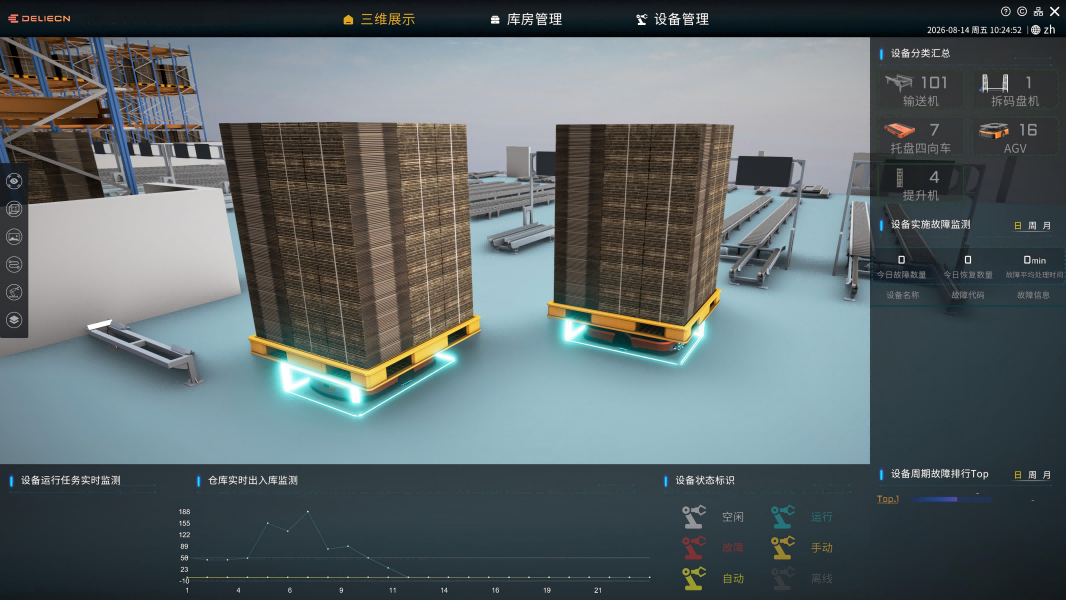
WMS records the product, batch, pallet and location relationship and manages inventory status and FIFO rules. WCS receives warehouse tasks and determines how the shuttles, lifters, conveyors and loading equipment should execute them.
ERP and MES exchange business and production information with WMS. They do not send movement instructions directly to the Shuttle Robots. Keeping business decisions and equipment control in separate layers makes the interface easier to manage and prevents production systems from carrying responsibilities that belong to warehouse execution.
For the chemical producer, the outcome is a continuous information trail from packaging through storage to shipment. Warehouse inventory can be verified by pallet and batch rather than reconstructed later from manual records.
The Project Was Designed Around Constraints, Not Maximum Automation
The completed system can process the plant’s mixed inbound and outbound flows while providing dense storage for continuous production. Yet the most relevant engineering decisions were not necessarily the most visible ones.
Shuttle quantity was separated from storage capacity so that robot investment followed throughput demand. Fork-type lifters removed conveyor stations from 13 levels but were deployed in sufficient numbers to protect capacity and availability. Mechanical lifting responded to powder contamination concerns. Truck loading was automated for heavy bulk bags, while the more variable woven-bag flow retained a degree of manual flexibility.
Together, these decisions produced a system suited to this plant rather than a standard automation package.
A different chemical operation might arrive at another answer. Hazardous materials may require explosion-protected equipment. Lower throughput could make a simpler storage system more economical. A highly standardized shipping fleet might justify full robotic loading for smaller bags. A taller building or different inventory profile might favor Stacker Cranes.
The transferable lesson is not the exact combination of 13 shuttles and four lifters.
It is the need to examine where the material flow actually loses capacity, where equipment failure would stop production or shipping, and where automation removes a meaningful labor, safety or maintenance constraint.
In this magnesium sulfate project, the warehouse was planned as the connection between packaging and truck loading—not as an isolated place to hold 6,309 pallets.
That difference guided nearly every major design decision.