
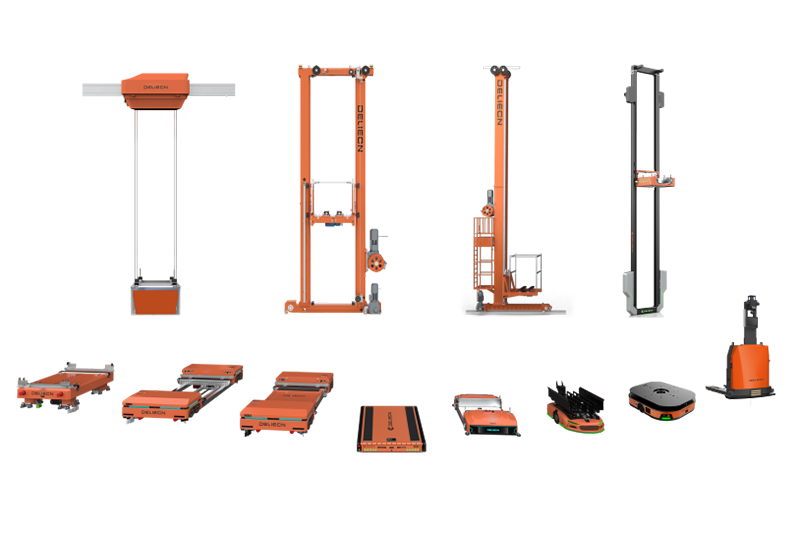
 AS/RS Handling Robot
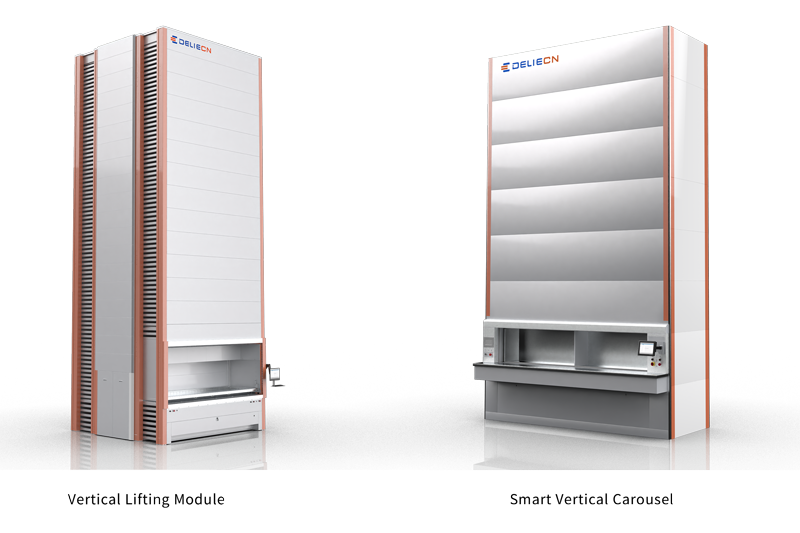 Vertical Storage Module
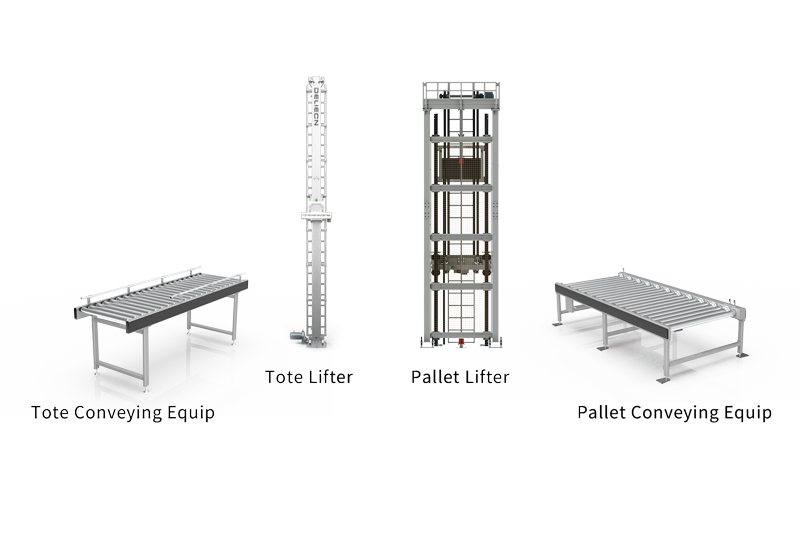 Conveying Equipment
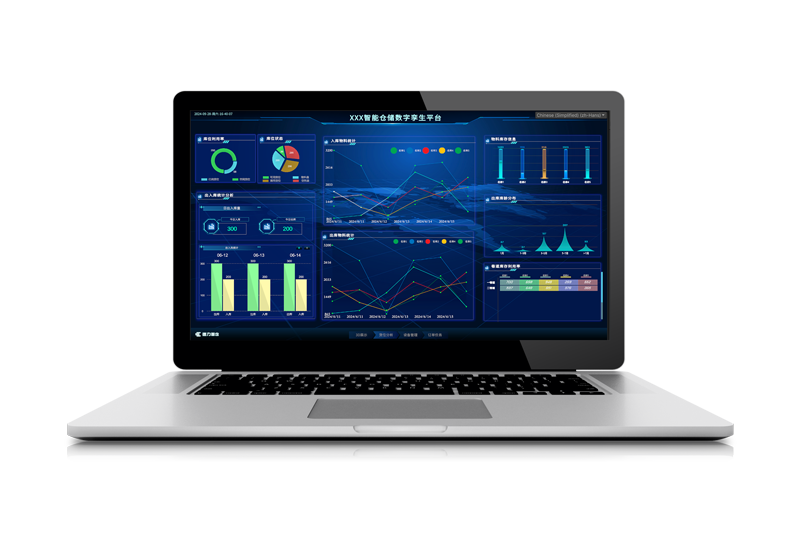 Smart Warehousing System
 Warehouse Racking
 Industries
 Services
 About Us


Hanbell Connected Kitting with Production Logistics
An automated warehouse can retrieve materials quickly and production can still wait.
The gap often appears after retrieval.
Large and small components need to be brought together according to production requirements. Materials then need to reach the correct production area, while semi-finished materials and empty carriers may need to return or move to another process.
For Hanbell, Warehouse Automation therefore could not end at the outbound interface of the AS/RS.
The factory needed to connect storage, kitting, internal transport and production-side material delivery as one continuous logistics process.
The more important question was not simply how quickly materials could leave storage.
It was:
Can the right materials be prepared and delivered according to actual production demand?
One Production Order Can Draw Materials from Different Storage Systems
A compressor or pump assembly may require materials with very different dimensions and handling characteristics.
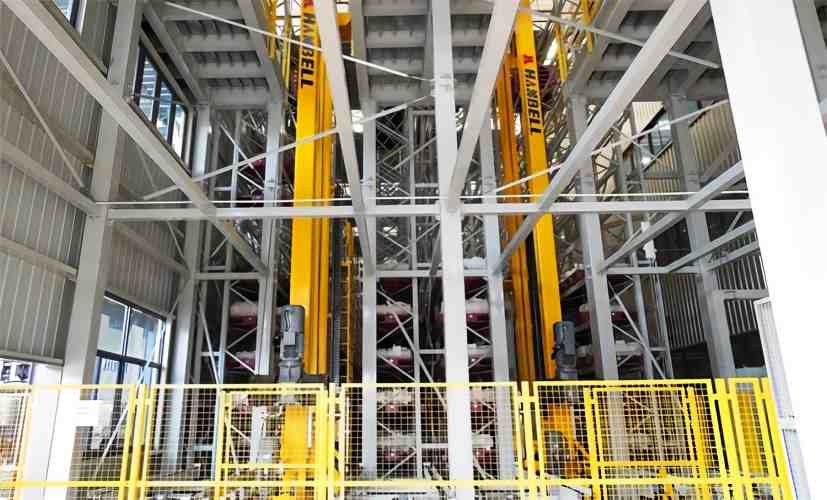
Large housings and major components can be stored and transported on pallets.
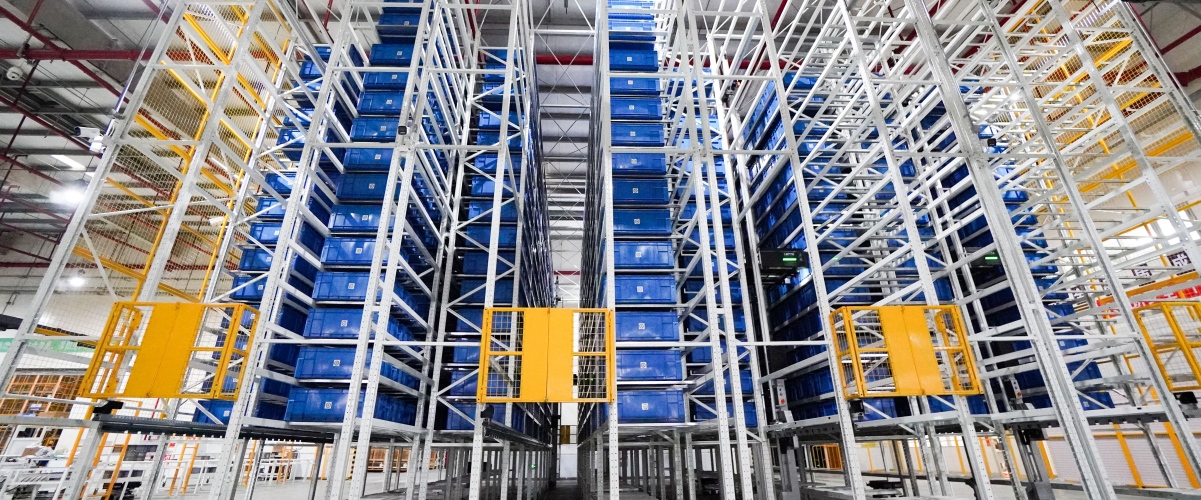
Smaller components are more suitable for tote-based storage.
When one production requirement involves both, the two material flows eventually need to meet before line supply.
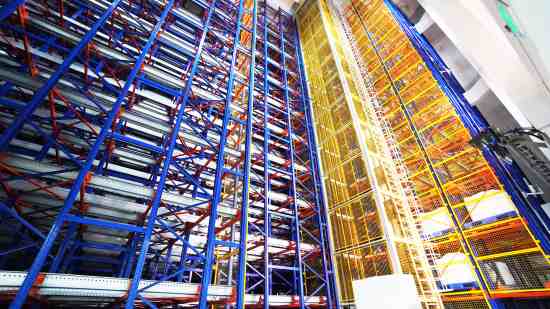
Large materials are retrieved from the Pallet Stacker Crane AS/RS and transferred by RGV toward the picking and preparation area.
Small parts come from a separate tote storage system containing:
- 1,928 tote locations
- 2 CTUs
The two CTUs are designed for a combined handling capacity of approximately 80–100 tote movements per hour.
Operators prepare the required large and small components according to the production order before the materials continue toward the corresponding production process.
At this point, warehouse retrieval is no longer simply about taking inventory out of storage.
It becomes part of production preparation.
Production Logistics Requires More Than One Transport Method
Inside an automated warehouse, material movement usually follows relatively fixed Storage And Retrieval interfaces.
Production-side logistics is different.
A material may need to move to different work areas depending on the product, production task and process stage.
Some routes are stable and repeat frequently.
Others change according to production requirements.
Hanbell therefore uses different transport methods for different parts of the material flow.
RGVs and conveyors are used where transfer routes and interfaces are relatively fixed.
For production-side movements that require more flexible routing, the final configuration includes:
- 6 Pallet Latent AMRs
- 2 pallet-transfer AGVs
- 1 tote-handling AGV
This does not mean mobile robots replace fixed transport equipment.
The two methods solve different logistics problems.
Fixed equipment is suitable for repeated point-to-point movement.
AGVs and AMRs provide more flexibility where destinations change according to production tasks.
Using both allows each movement to be handled by equipment that better matches the actual route.
Empty Carriers Also Need a Planned Route
Material delivery is only one direction of production logistics.
Once materials have been consumed, empty pallets and other carriers still need to leave the work area.
If this return flow is not considered during the original planning stage, empty carriers can gradually occupy workstation and logistics-aisle space.
Hanbell's logistics design therefore treats carrier return as part of the normal material flow.
One example is a two-level conveyor arrangement used where loaded and empty pallets need to move through the same area.
Loaded pallets travel on the upper level.
Empty pallets return on the lower level.
Instead of installing two conveyor routes side by side, the return route uses vertical space.
For a production area already occupied by equipment, workstations and logistics aisles, this reduces the amount of additional floor space required for pallet return.
It is a relatively small part of the overall project, but it addresses a practical problem that directly affects daily production logistics.
Production Requirements Need to Reach the Warehouse
Physical equipment can only respond correctly when production and business information reaches the warehouse in time.
The warehouse software therefore connects with Hanbell's MES and ERP through API interfaces, linking production requirements and business information with warehouse inventory and execution tasks.
WMS manages:
- inventory;
- storage locations;
- inbound and outbound tasks;
- warehouse business operations.
WCS coordinates the execution of connected automation equipment, including:
- Pallet Stacker Cranes;
- RGVs;
- conveyors;
- Pallet Latent AMRs;
- pallet-transfer AGVs;
- tote-handling AGVs.
Based on task requirements, equipment status and destination information, WCS coordinates material-handling tasks across the warehouse and production-side logistics process.
This connection becomes particularly important when production priorities change.
An urgent order or a change in the production sequence may alter which materials need to leave storage first and where they need to be delivered.
The warehouse therefore needs to keep three layers connected:
production and business demand → inventory and warehouse tasks → equipment execution
Instead of treating storage, transport and production-side delivery as separate operations, the system allows them to respond to the same production requirements.
The Warehouse Had to Serve Two Floors of Production
The physical layout added another layer of complexity.
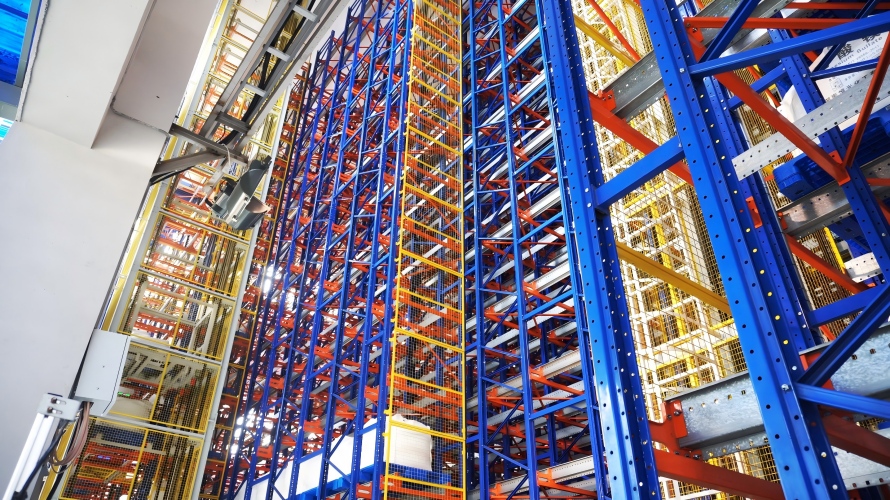
The pallet AS/RS is positioned between two factory buildings and supports material flow on both the first and second floors.
The Pallet Stacker Crane AS/RS provides2,872 pallet locations.
The separate small-parts storage area adds another 1,928 tote locations.
Large and small materials therefore enter production logistics through different storage systems but ultimately serve the same manufacturing process.
RGVs handle fixed pallet transfers at the warehouse front end.
Conveyors connect defined interfaces.
AGVs and AMRs take over where production-side movement requires greater routing flexibility.
The project does not depend on one machine carrying materials through the complete process.
Different types of equipment are used where their movement characteristics are most appropriate.
Why This Is More Than a Warehouse Automation Project
Storage capacity is important, but it is not the main point of this part of the Hanbell project.
The more relevant issue is what happens after materials leave storage.
Large and small components first need to be prepared according to production requirements.
From there, materials are delivered to different production areas according to actual tasks, while semi-finished materials and empty carriers may follow separate transfer or return routes.
That is why the project uses different handling methods at different points.
Pallet Stacker Cranes and CTUs manage automated storage and retrieval.
RGVs and conveyors handle stable interfaces and repeatable transfer routes.
Pallet Latent AMRs, pallet-transfer AGVs and tote-handling AGVs provide more flexible production-side transport.
Meanwhile, WMS/WCS connects warehouse inventory and equipment execution with Hanbell's MES and ERP, allowing physical material flow to respond to actual production and business demand.
For high-mix manufacturers, this is the practical difference between automating a warehouse and connecting warehouse automation with production logistics.
A warehouse may retrieve materials efficiently, but production can still wait if those materials are not prepared, transported and delivered according to the actual production requirement.
The Hanbell project therefore extends automation beyond storage and retrieval.
It connects inventory, kitting, material transport and production-side delivery, so the warehouse can support the way materials are actually used in manufacturing.