
 AS/RS Handling Robot
 Vertical Storage Module
 Conveying Equipment
 Smart Warehousing System
 Warehouse Racking
 Industries
 Services
 About Us

Food and Beverage Warehouse Automation: What We Learned from a Dukang Finished Goods Project
When looking at this project, the 11,044 pallet locations are the easiest number to notice.
But they were not the part that determined whether the warehouse would work well.
For a liquor manufacturer like Dukang, finished products keep arriving from production. They need to be palletized, moved into storage, recorded correctly, held until shipment, and then released again according to outbound orders.
Storage sits in the middle of that process.
If inbound cannot keep pace with production, pallets begin to accumulate before the warehouse. If outbound retrieval is too slow, the problem appears later at order preparation and shipping.
That was the more useful way to look at this project: not as a rack with 11,044 locations, but as a finished goods flow that had to keep working every day.
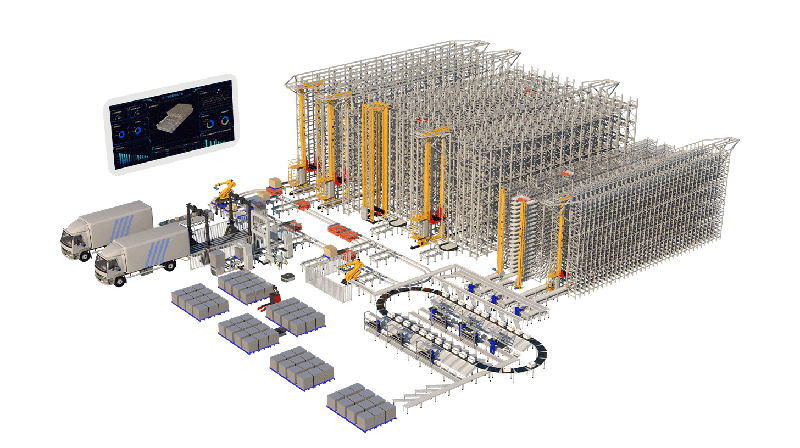
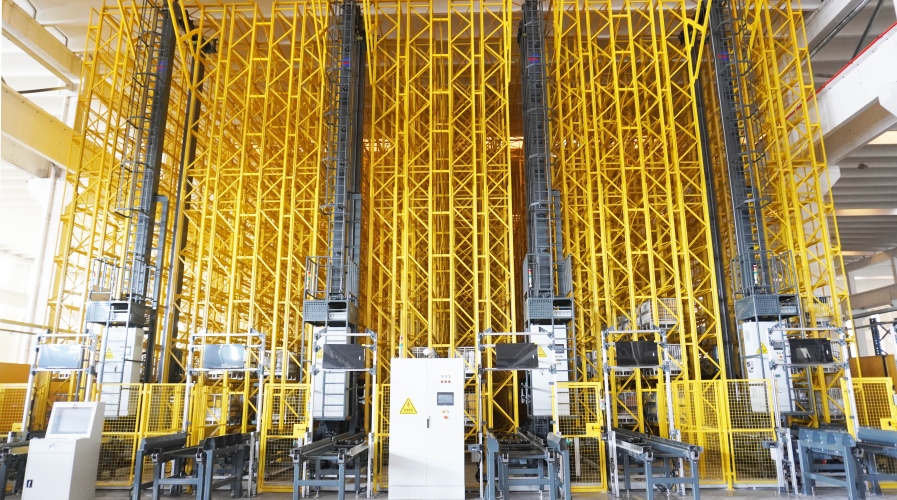
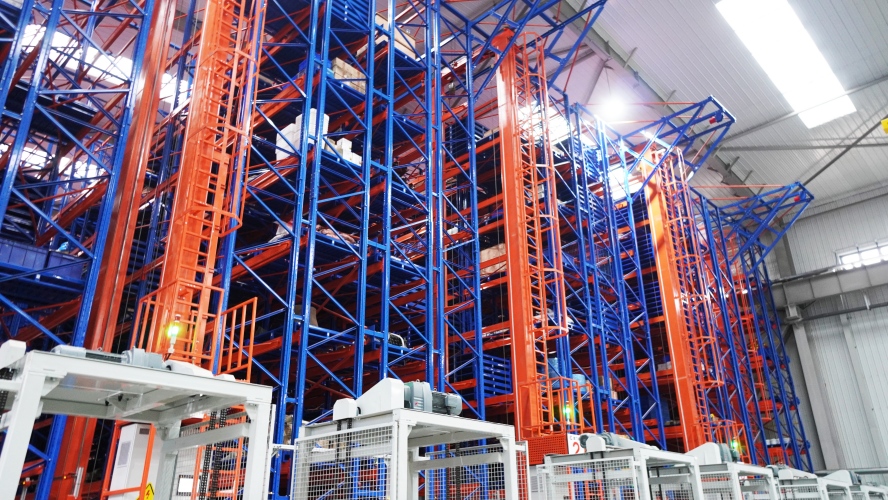
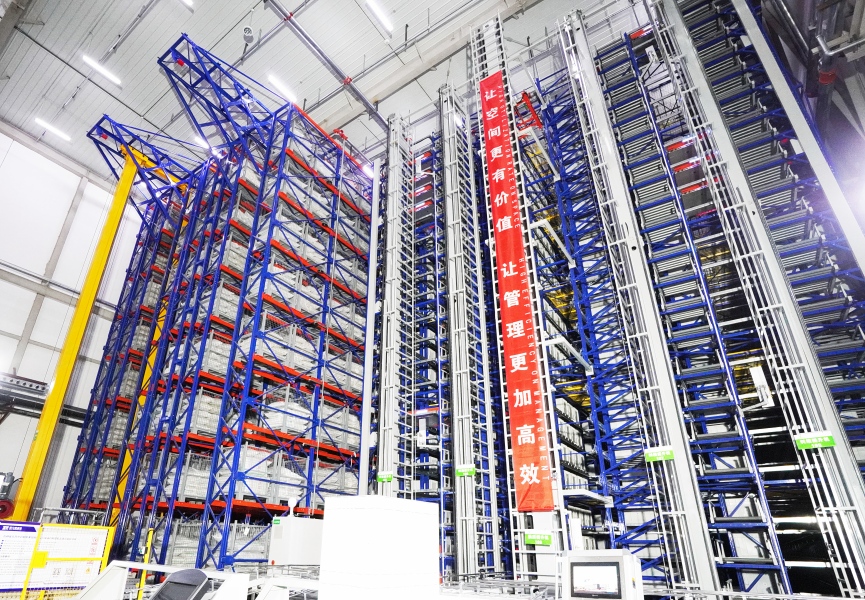
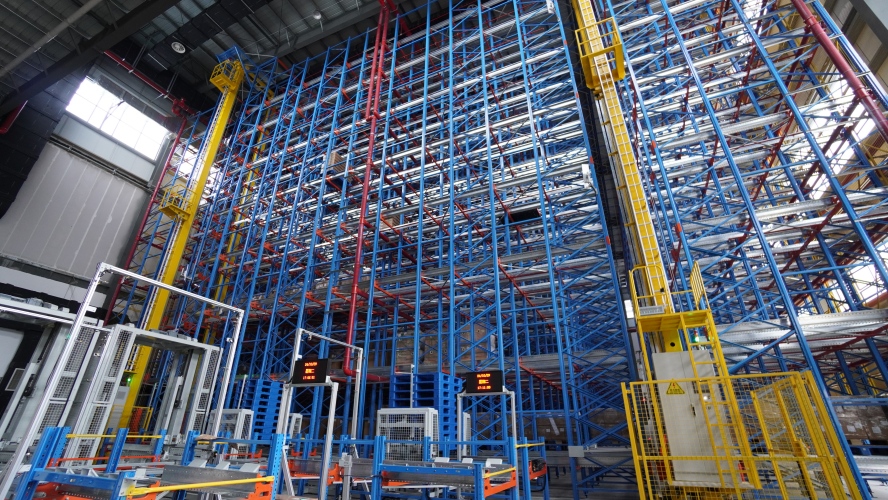
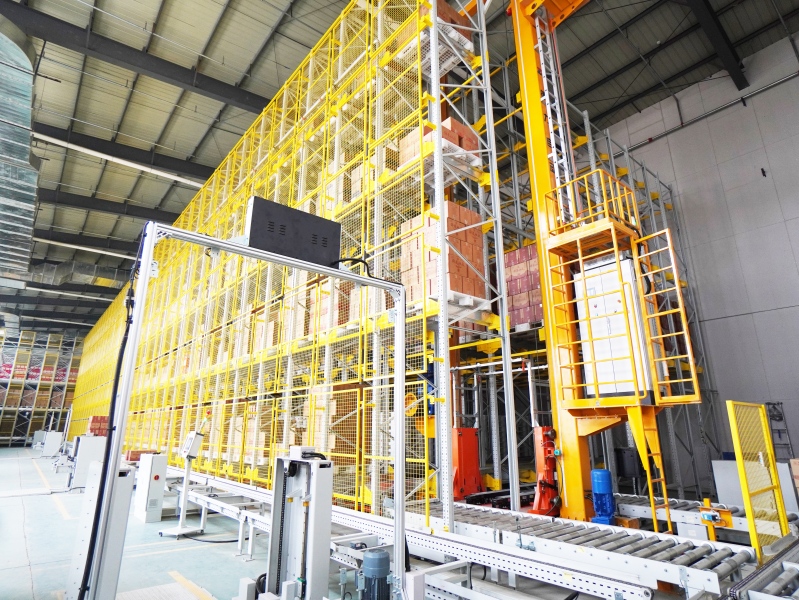
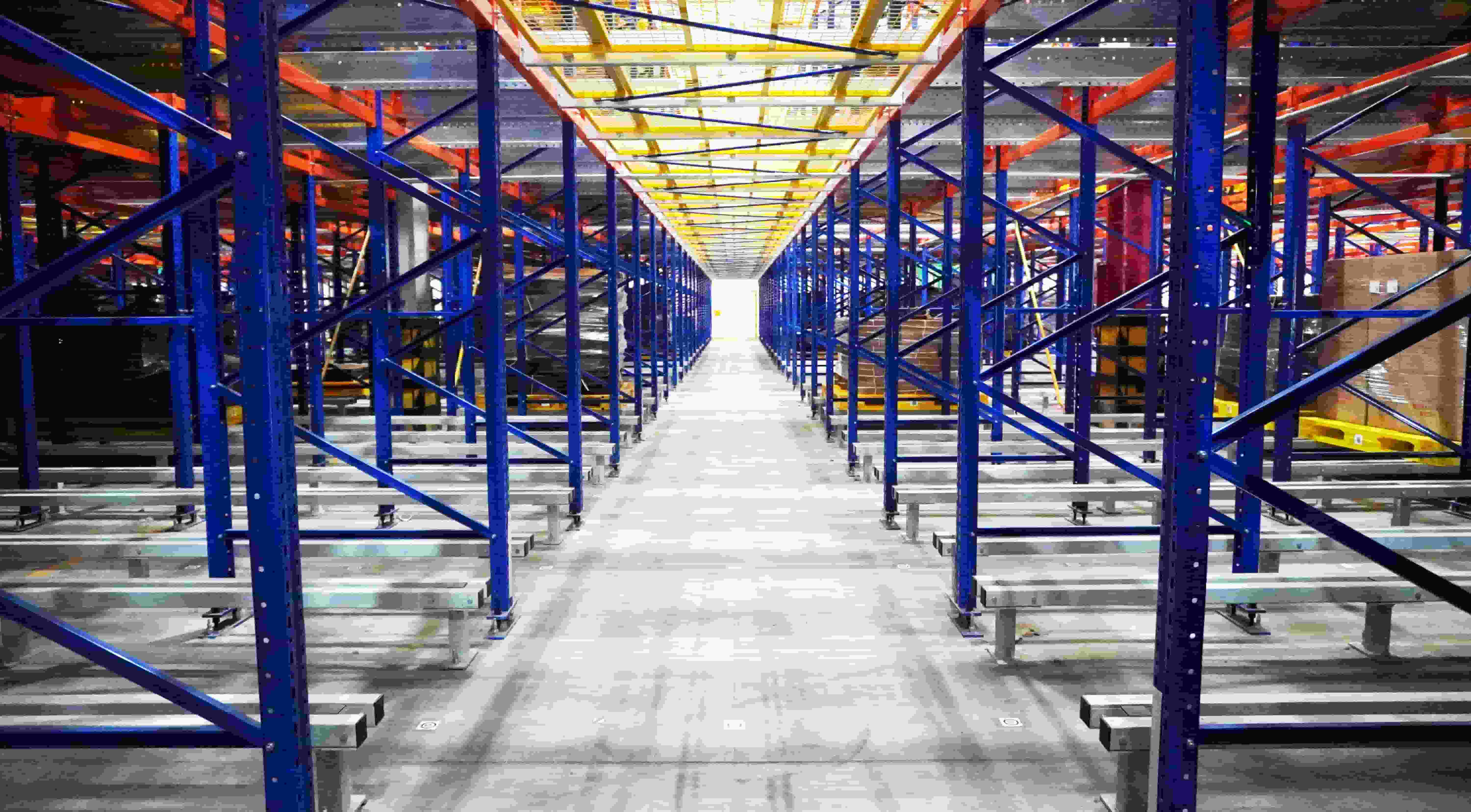
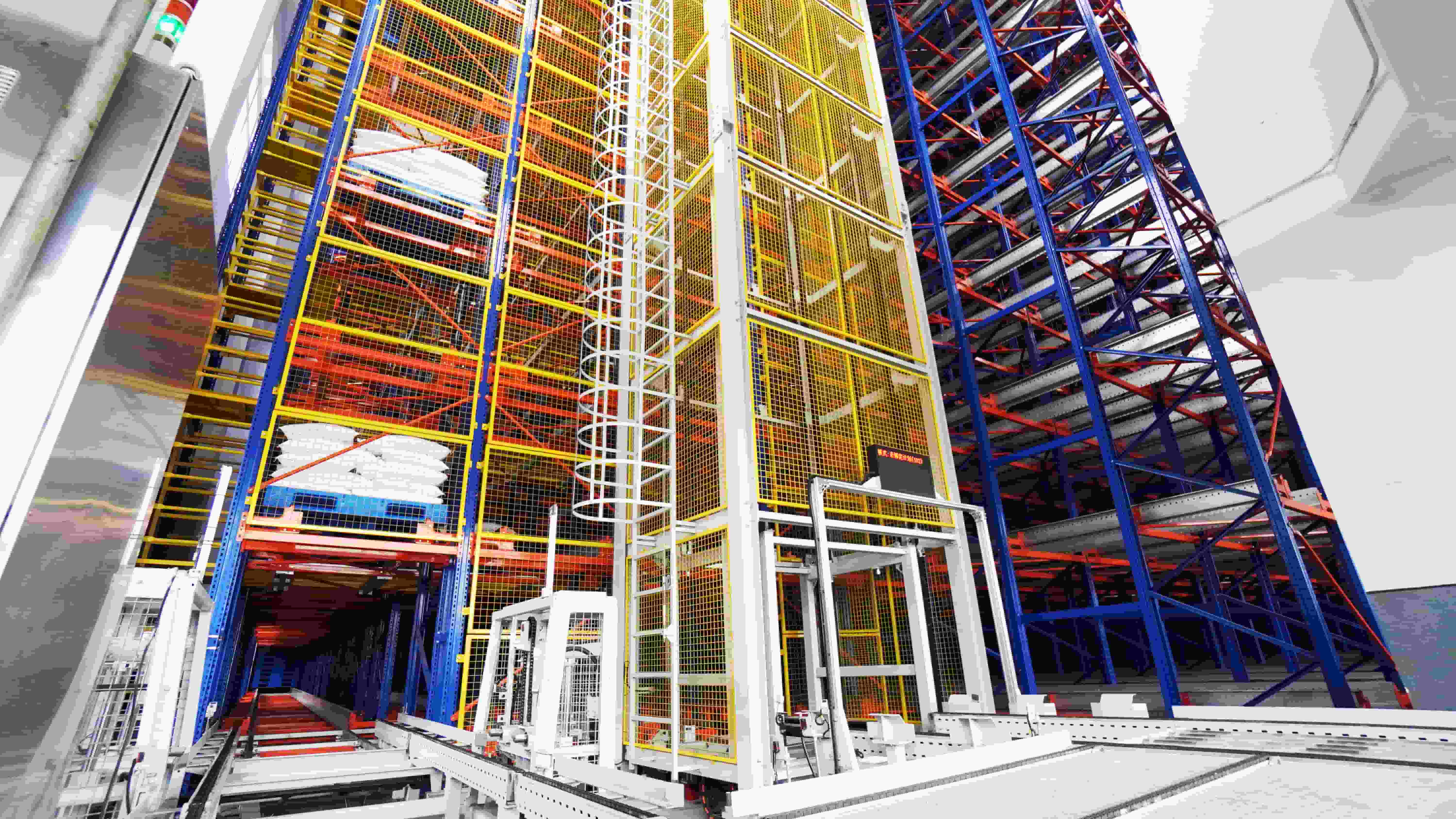
The warehouse eventually took shape around 4 stacker cranes, 8 pallet two-way Shuttle Robots, an RGV conveying system, palletizing and depalletizing equipment, and WMS/WCS.
The numbers tell part of the story. The way these pieces were arranged tells the rest.
Liquor finished goods have an advantage when compared with many spare parts or manufacturing warehouses: after packaging and palletizing, the handling units are relatively standardized.
That matters.
A warehouse storing thousands of irregular parts usually needs very flexible access to individual locations. Finished beverage products often have a different inventory pattern. The same product or batch may occupy several pallet positions, and pallets can be grouped more naturally.
That makes deep-lane storage worth considering.
There is a practical reason for separating these two movements.
If a conventional Stacker Crane system gives every pallet direct aisle access, more rack faces need to face the aisle. For inventory that can be stored deeper by batch, that space is not always necessary.
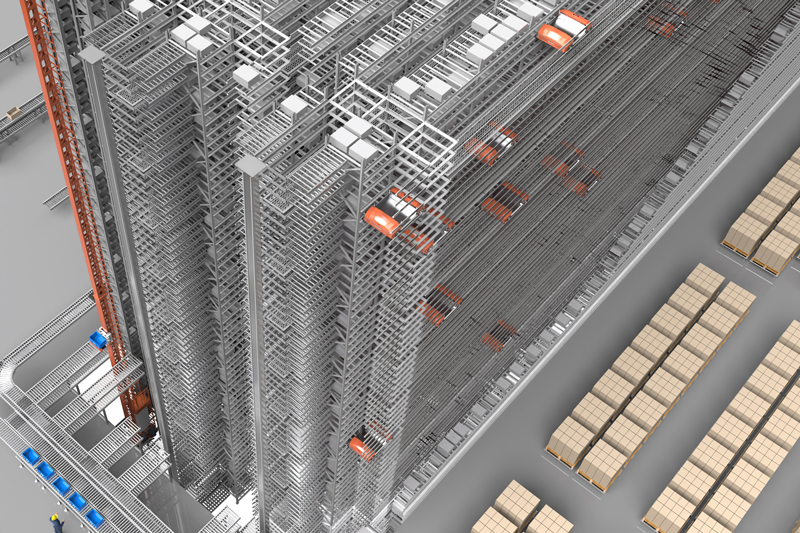
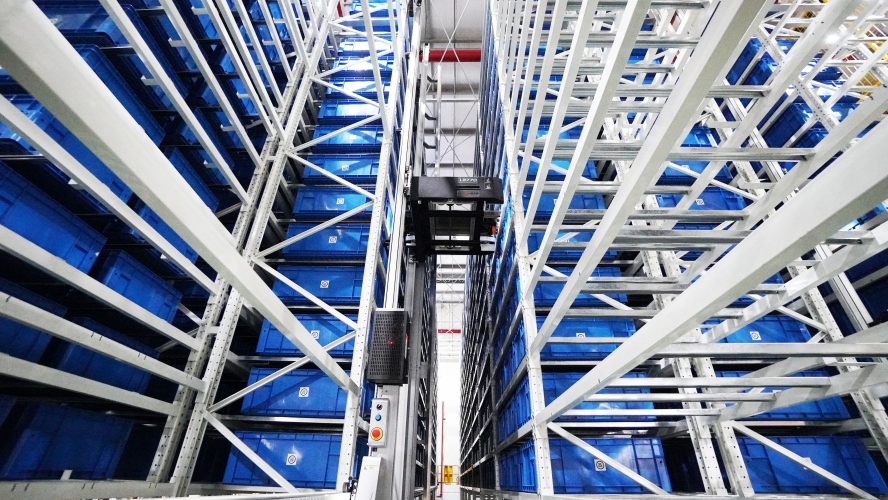
Here, the Shuttle Robot handles in-lane pallet movement.
This kind of design is particularly relevant to food and beverage finished goods, but only when the inventory structure fits it. A warehouse with very fragmented SKUs and constant access to individual pallets would need to be looked at differently.
This project was not built around an ultra-high-bay warehouse.
The system had to work within the customer’s existing warehouse conditions, with a project height of around 12 meters.
That changes the design question.
Instead of asking how high the rack could be built, the project needed to make better use of the volume that was already available.
The combination of stacker cranes and deep-lane pallet Shuttle Storage was used for exactly that reason. The stacker cranes handle vertical and aisle movement, while the two-way shuttle robots extend storage deeper into the rack.
For manufacturers considering a warehouse retrofit, this is a more useful reference than maximum building height.
Many existing food and beverage plants already have usable warehouse buildings but cannot simply increase clear height. In that situation, automation has to fit the building rather than asking the building to fit the automation.
The project also handles pallet loads of 1,000 kg or more. This is a common load range for pallet ASRS, so it was treated as a normal project design parameter rather than a special heavy-duty requirement.
The stacker cranes use conductor rail power supply for continuous operation in the fixed automated aisles.
For this project, looking only at pallet throughput does not give the clearest picture of the customer’s actual operation.
The original project requirements are easier to understand at finished-goods level: the warehouse needed to support approximately 10,000 cases inbound per day and 10,000 cases outbound per day.
That puts the system closer to the way a food and beverage manufacturer actually sees its warehouse.
Inbound follows production and packaging. Finished cases are palletized and need to move into storage without creating unnecessary accumulation between the production line and warehouse.
Outbound follows shipment requirements. Products need to be retrieved, transferred and prepared according to daily delivery tasks.
So storage capacity alone was not enough.
The front-end conveying and transfer system also had to connect palletizing, warehouse interfaces and outbound handling points.
The RGV conveying system and related conveyors form part of that connection.
A stacker crane may complete a retrieval task quickly, but the pallet still needs somewhere to go next. In day-to-day operation, the interfaces between equipment can be just as important as the speed of an individual machine.
That is why the project was planned around the complete pallet route rather than only the ASRS aisle.
Another detail that is easy to treat as secondary is palletizing.
For a food or beverage plant, the warehouse does not start at the rack.
It starts where finished cases become a stable pallet load.
The Dukang project includes palletizing and depalletizing equipment as part of the overall material flow. Once the product is palletized, conveyors take over the movement toward the automated storage area.
This reduces the number of manual handovers between packaging and storage.
The same logic applies on the outbound side. A pallet has to leave storage, pass through the front-end handling system and reach the next shipment process in the correct sequence.
That sequence is important.
A warehouse can be highly automated internally and still operate poorly if the production interface and shipping interface are treated as separate projects.
In this case, the better way to understand the automation is as one continuous pallet route rather than several independent machines.
Once pallets are stored several positions deep, warehouse management becomes more dependent on accurate location records and retrieval sequencing.
The system needs to know what is stored in each lane, which pallet belongs to which task, and what sequence should be used for inbound and outbound operations.
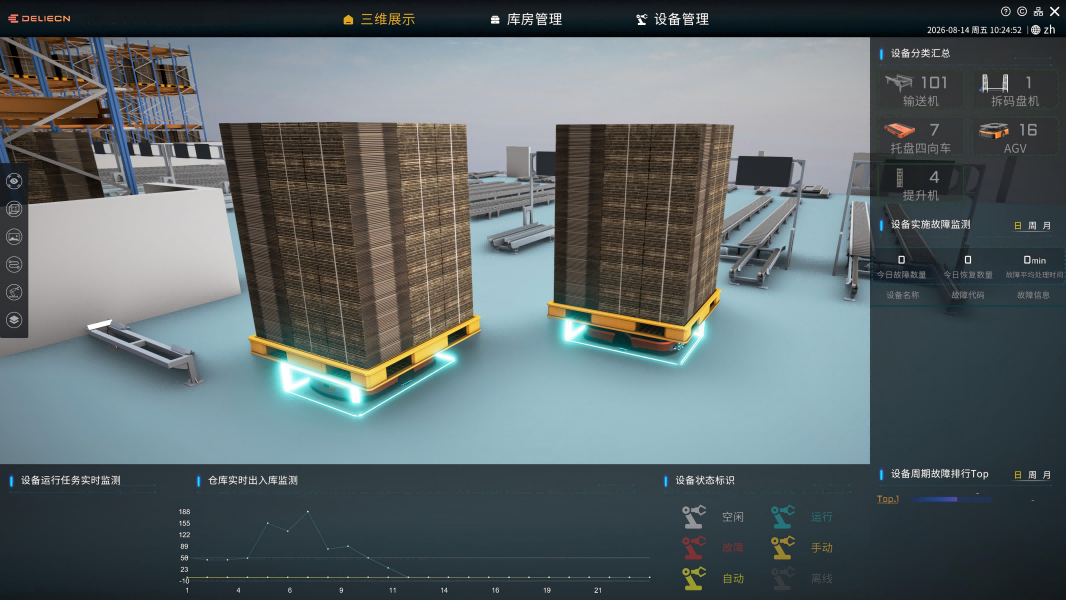
The project therefore uses WMS and WCS alongside the physical equipment.
WMS manages inventory, storage locations and inbound/outbound tasks. WCS coordinates task execution across the stacker cranes, pallet two-way shuttle robots, RGV conveying system and related equipment.
For a finished goods warehouse, this gives operators a clearer record of where products are stored and how they move through the system.
That matters in food and beverage manufacturing, where batch information and shipment sequence often need to remain visible throughout storage and outbound operations.
As storage becomes deeper and more automated, this coordination helps keep physical pallet movement aligned with inventory and task information.
The finished warehouse provides 11,044 effective pallet locations, but capacity alone is not the most useful way to describe the result.
The more meaningful change is that pallets now have a defined route between production, storage and outbound operations.
The project was designed around:
- 11,044 effective pallet locations
- storage for more than 500,000 cases of finished liquor
- approximately 10,000 cases/day inbound
- approximately 10,000 cases/day outbound
- 4 stacker cranes
- 8 pallet two-way shuttle robots
- 1 palletizing robot
- 1 depalletizing machine
- 1 RGV conveying system
- 4-level shuttle storage
- project height of around 12 m
- WMS / WCS / ECS
These figures show the balance the project was trying to achieve.
There had to be enough storage for finished goods, but the warehouse also needed to absorb daily production and release products according to shipping requirements.
Forklift involvement inside the main automated storage area is reduced, pallet locations are managed by the system, and production-to-storage movement is connected through automated handling equipment rather than a series of disconnected manual transfers.
For the customer, that makes daily finished goods logistics more predictable.
And predictability is often more useful than simply saying a warehouse has become “smart.”
Although Dukang is a liquor manufacturer, the storage logic is not limited to liquor.
Many food and beverage finished goods warehouses share similar conditions:
standardized pallet loads, relatively large batch quantities, continuous output from packaging lines, limited existing warehouse space, and periods of concentrated outbound demand.
Beer, bottled water, beverages, packaged foods and other palletized consumer products can face the same basic warehouse question.
The important point is not to copy this exact configuration.
A pallet shuttle and stacker crane combination makes sense when the SKU structure, batch size, pallet standardization and access pattern support deep-lane storage. In another plant, the right answer may be different.
The Dukang project is particularly relevant to manufacturers considering automation within an existing warehouse, where building height and footprint are already fixed.
The warehouse was not designed around the question, “Which automated equipment should we install?”
It was designed around a much more ordinary question:
How do finished pallets move from production into storage and back out for shipment without requiring a completely new high-bay building?
Once that condition was clear, the equipment choices made much more sense.
For manufacturers evaluating a food and beverage finished goods warehouse, DELIECN can review pallet specifications, inventory structure, production output, outbound requirements and existing building conditions before deciding whether pallet shuttle storage, stacker crane ASRS or another configuration is more suitable.
Follow DELIECN on LinkedIn for more warehouse automation project experience.