
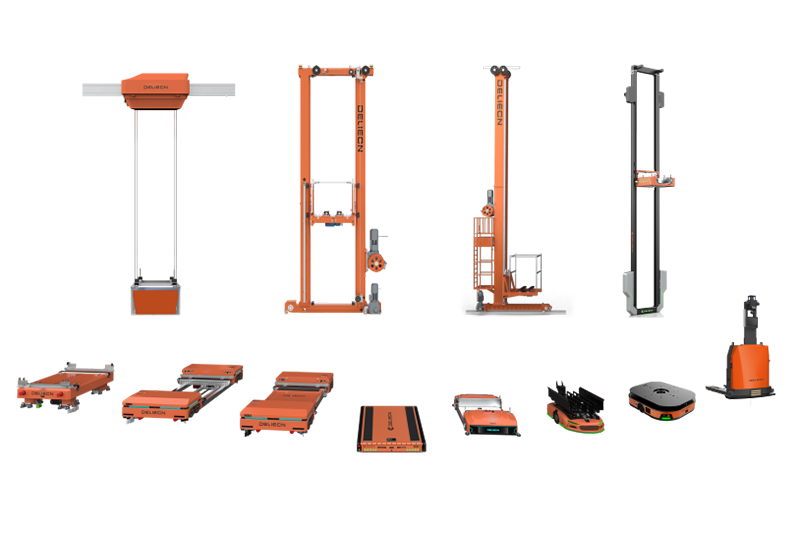
 AS/RS Handling Robot
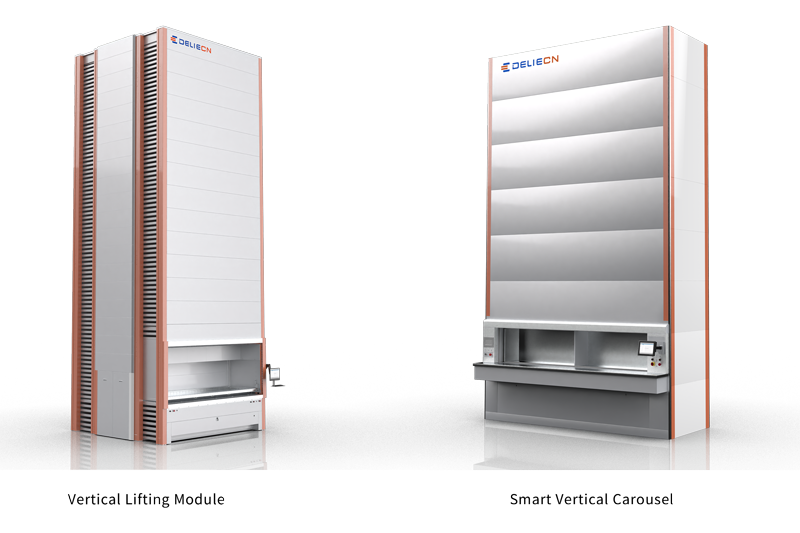 Vertical Storage Module
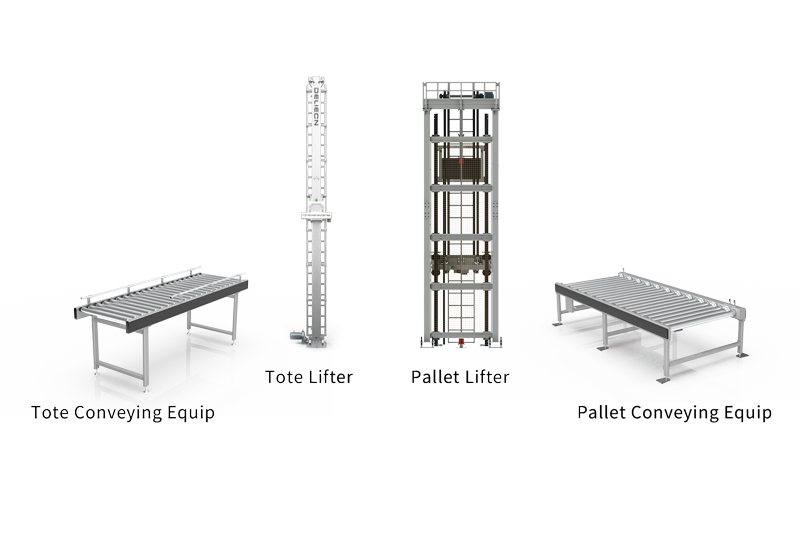 Conveying Equipment
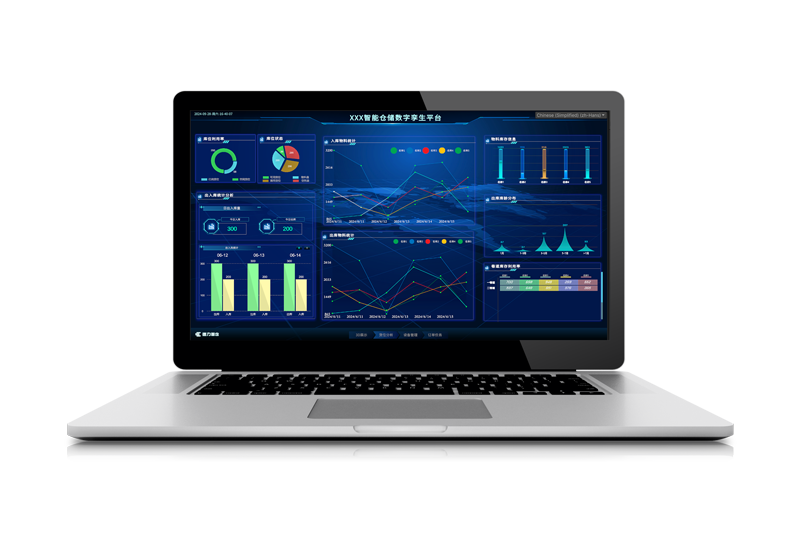 Smart Warehousing System
 Warehouse Racking
 Industries
 Services
 About Us

From Packaging to Truck Loading: An Automated Warehouse Solution for the Chemical Industry
For chemical manufacturers, production is only one part of the finished-goods process.
After products leave the production line, they still need to be packaged, palletized, stored, retrieved and prepared for shipment. When production capacity increases, the connections between these processes become just as important as storage capacity itself.
This project was developed for a chemical manufacturer producing magnesium sulfate monohydrate and magnesium sulfate heptahydrate.
The finished products are supplied in different packaging formats, including 50 kg bags and 1-ton bulk bags.
The warehouse therefore had to deal with more than pallet storage. Packaging, palletizing, Automated Storage, retrieval and truck loading all needed to follow the same material flow without creating unnecessary transfer points between processes.
Connecting Production Output with Automated Storage
Chemical finished goods in this project combine several characteristics that directly affect warehouse planning:
- heavy pallet loads;
- continuous production output;
- different packaging formats;
- high daily material flow;
- inventory and outbound management requirements.
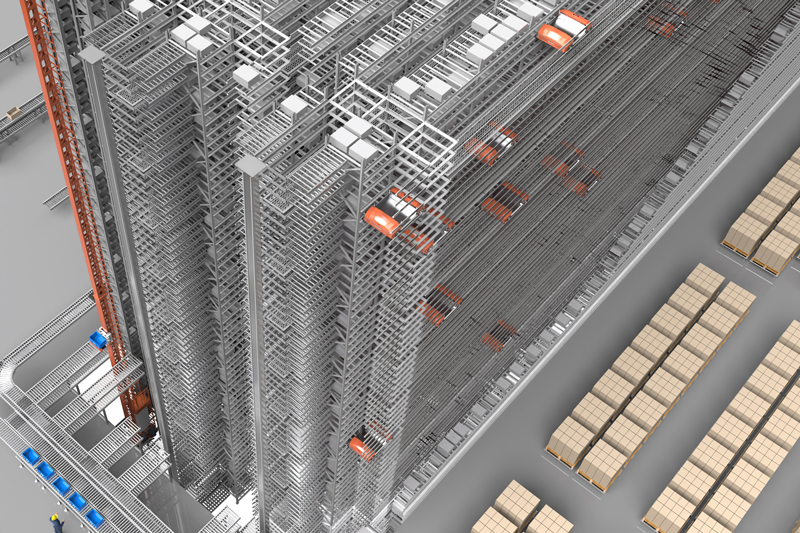
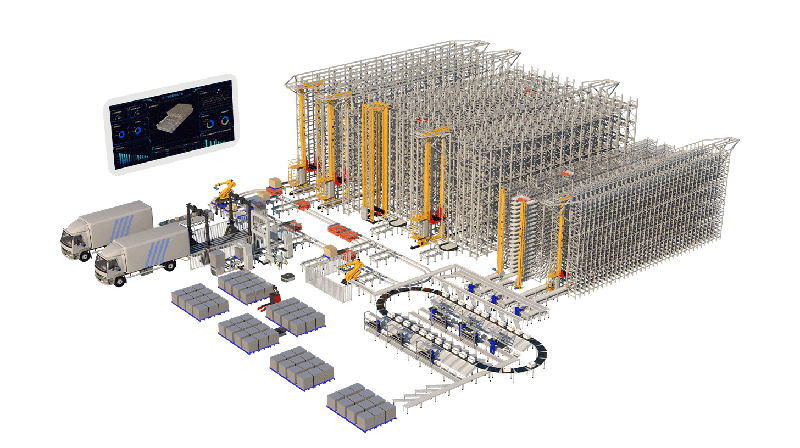
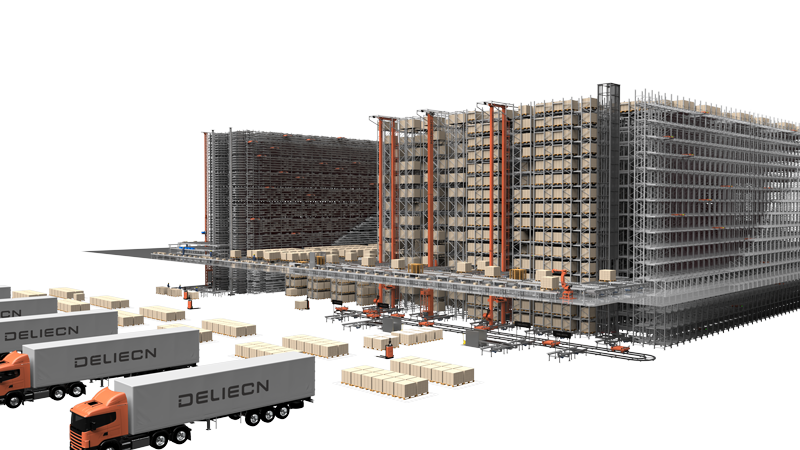
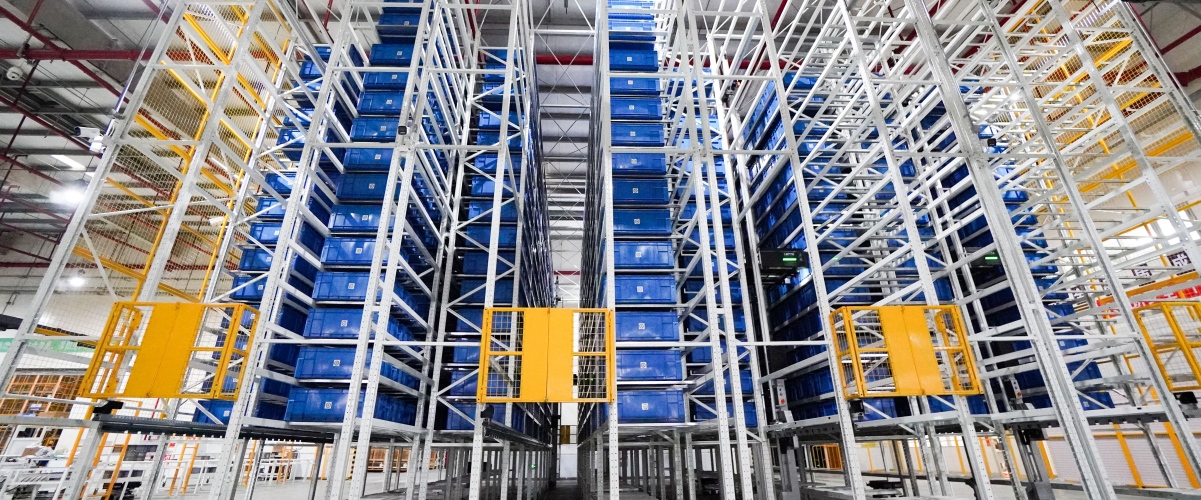
Based on these conditions, DELIECN designed a Pallet Four-Way Shuttle AS/RS that connects production-side handling with finished-goods storage and outbound preparation.
The integrated system includes:
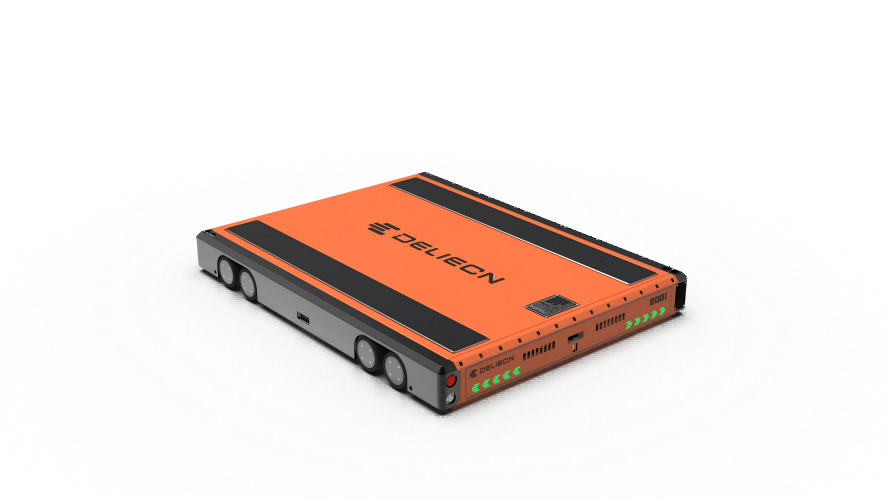
- Pallet Four-Way Shuttle Robots;
- Fork-Type Pallet Lifters;
- conveyors;
- palletizers;
- automated loading equipment;
- WMS/WCS.
Rather than treating the warehouse as a separate storage area, the project connects the processes before and after storage into the same logistics route.
High-Density Storage for Heavy Chemical Products
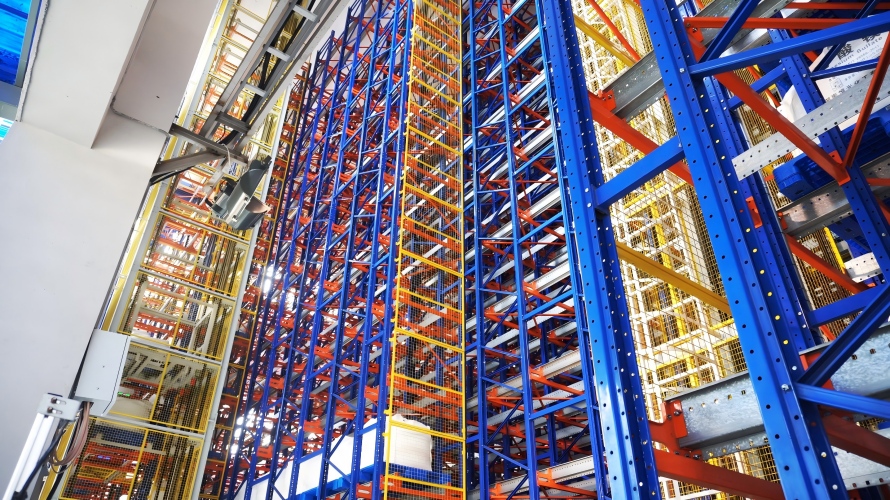
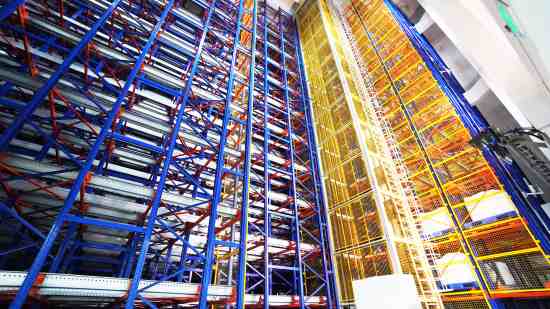
The Automated Storage area covers approximately3,177.34 m², with the rack system reaching approximately 21.665 m in height.
The system is designed with approximately 6,309 positions, including storage positions and system-required technical spaces.
A total of 13 Pallet Four-Way Shuttle Robots handle pallet movement inside the rack system, with pallet loads of up to 1,050 kg in this project.
The Shuttle Robots can travel along both main and sub-aisles, allowing WCS to assign vehicles and storage locations according to actual inbound and outbound tasks.
Based on the project configuration, the warehouse is designed for approximately 132 pallets/hour of combined inbound and outbound handling.
This throughput does not depend on shuttle speed alone. Shuttle Robots, vertical transfer, conveyors and downstream handling equipment all have to remain coordinated for the designed flow to be maintained.
Fork-Type Pallet Lifters Simplify Vertical Transfer
In a high-bay shuttle warehouse, vertical transfer is not only a question of lifting pallets between levels.
How the lifter connects with the shuttle system also affects equipment layout.
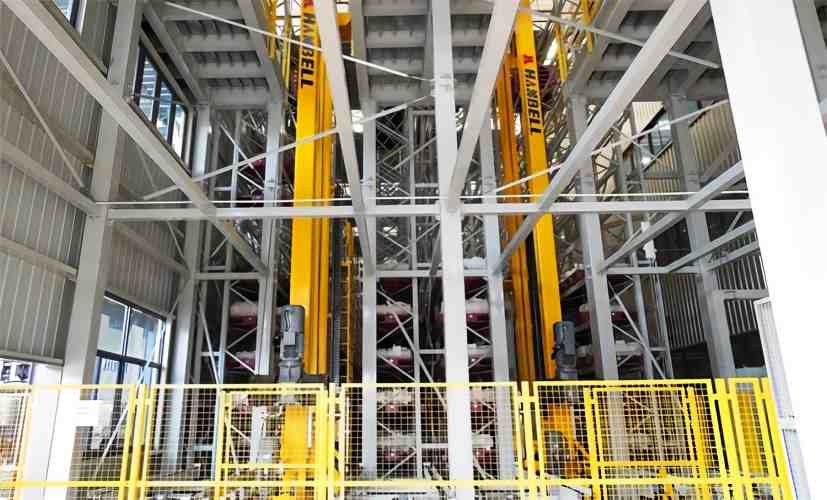
The project uses 4 Fork-Type Pallet Lifters for vertical transfer between rack levels.
The fork-type structure can connect directly with the Pallet Four-Way Shuttle system. Compared with an arrangement that requires additional conveyor sections between the lifter and shuttle interface, this reduces the amount of intermediate conveying equipment required at the level-changing point.
For this project, the configuration supports:
- pallet loads up to 1,050 kg;
- lifting height of approximately 22 m;
- positioning accuracy of ±2 mm.
This direct connection brings two practical benefits.
First, fewer intermediate conveyor sections are required around the rack interface, leaving more room for the storage system itself.
Second, reducing unnecessary transfer equipment also helps control equipment investment and simplifies the material-transfer route.
The Fork-Type Pallet Lifters work together with the shuttle robots and the remaining conveyor system to connect different rack levels with the inbound and outbound areas.
Different Packaging Formats Need Different Loading Methods
The outbound side of the project could not use one loading method for every finished product.
The 1-ton bulk bags and 50 kg bag products have different handling characteristics, so their final loading processes were designed differently.
For 1-ton bulk bags, pallets are automatically retrieved from storage and transferred to the loading area.
At the loading station, operators connect the lifting loops of the bulk bags to the loading equipment. The gantry loading system then completes the subsequent positioning operation inside the truck.
The loading system also integrates vehicle positioning and loading information management, with a designed capacity of approximately 60 pallet loads/hour.
For 50 kg bag products, retrieved pallets are transferred toward the loading area through an extendable belt conveyor before entering the final loading process.
The important point is that the automation method follows the packaging format instead of forcing both products through the same loading process.
WMS/WCS Connects Inventory with Equipment Execution
Once storage, palletizing, vertical transfer and outbound handling are linked together, equipment needs to follow the same warehouse task logic.
The WMS manages:
- inventory information;
- inbound and outbound tasks;
- material tracking.
The WCS coordinates:
- Pallet Four-Way Shuttle Robots;
- Fork-Type Pallet Lifters;
- conveyors;
- palletizers;
- loading equipment.
This allows production output, storage tasks and outbound preparation to be managed as connected operations rather than separate manual processes.
For a chemical finished-goods warehouse, this also gives operators clearer visibility into where materials are located and which logistics step they are entering next.
From Packaging to Truck Loading as One Material Flow
The most useful way to understand this project is not by looking at one piece of equipment.
The complete flow is:
Packaging → Palletizing → Inspection → Automated Storage → Retrieval → Outbound Transfer → Truck Loading
Inside the warehouse, Pallet Four-Way Shuttle Robots handle horizontal storage and retrieval, while Fork-Type Pallet Lifters provide direct vertical transfer between rack levels.
At the outbound end, different packaging formats continue through different loading processes.
Bulk bags use gantry-based loading after the required loading connection is completed.
50 kg bag products move toward the truck area through conveyor-based transfer.
This means the project does not try to automate every material in exactly the same way.
Instead, each section of the system is designed around the actual characteristics of the product and the process it needs to enter next.
For chemical manufacturers handling heavy finished goods and continuous production output, that connection between packaging, storage and shipment is often more important than any individual machine specification.