
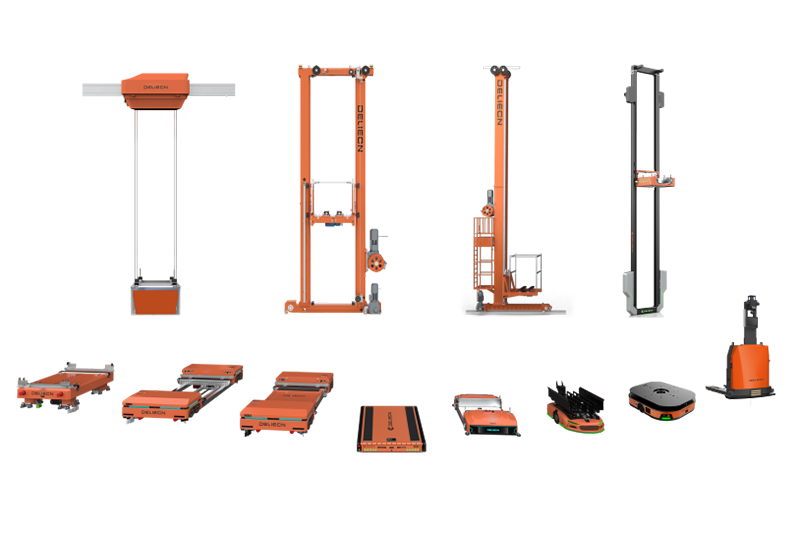
 AS/RS Handling Robot
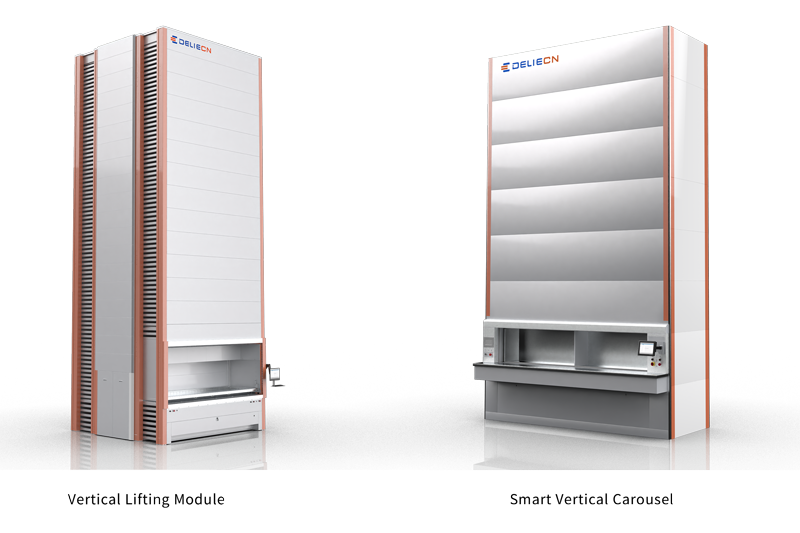 Vertical Storage Module
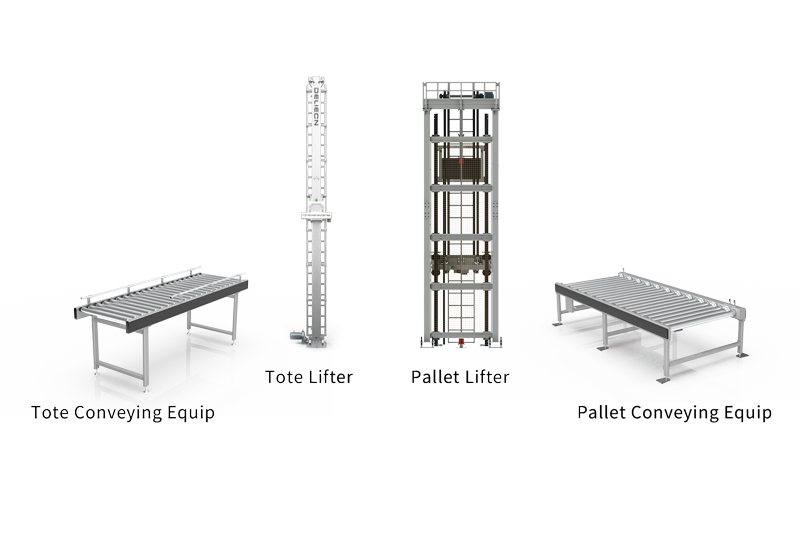 Conveying Equipment
 Smart Warehousing System
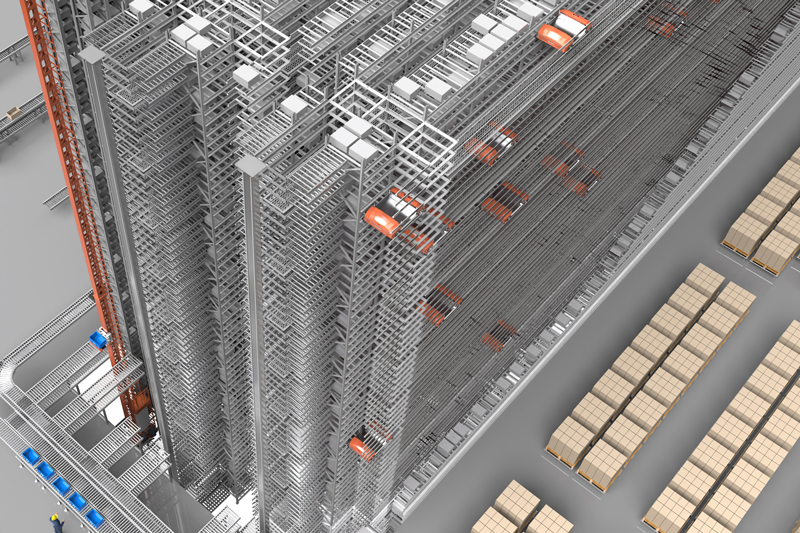 Warehouse Racking
 Industries
 Services
 About Us


How Should an Automotive Spare Parts Warehouse Handle 45,000 SKUs? Lessons from an Toyota Project
Automotive spare parts warehouses are difficult to automate because the inventory is rarely uniform.
A small fast-moving part may fit into a tote.
A large component may require a pallet or storage cage.
A bumper has a completely different shape.
Oil products and irregular components introduce their own storage requirements.
At the same time, the warehouse has to support receiving, storage, counting, replenishment, picking, outbound handling and returns across tens of thousands of part numbers.
The FAW Toyota spare parts warehouse project in Changshu manages nearly 45,000 SKUs.
For a warehouse at this scale, the first question is not which automation technology can store the most products.
It is how the inventory should be classified before deciding where automation makes sense.
Why 45,000 SKUs Cannot Be Treated as One Storage Problem
SKU quantity alone does not determine warehouse design.
Two warehouses may both manage 45,000 SKUs but require very different solutions depending on part size, packaging, turnover rate and picking frequency.
The FAW Toyota project includes:
- small and medium-sized parts;
- large components;
- bumpers;
- oil products;
- irregular items.
Some materials benefit from high-density Automated Storage.
Some require frequent picking.
Some can be standardized into pallet or tote load units.
Others are better suited to narrow-aisle, mezzanine or other storage formats.
Trying to put every part into one AS/RS would create compromises in space utilization, handling complexity or investment.
The project therefore uses different storage methods for different material profiles.
Large Spare Parts: High-Density Pallet Storage with Shared Shuttle Resources
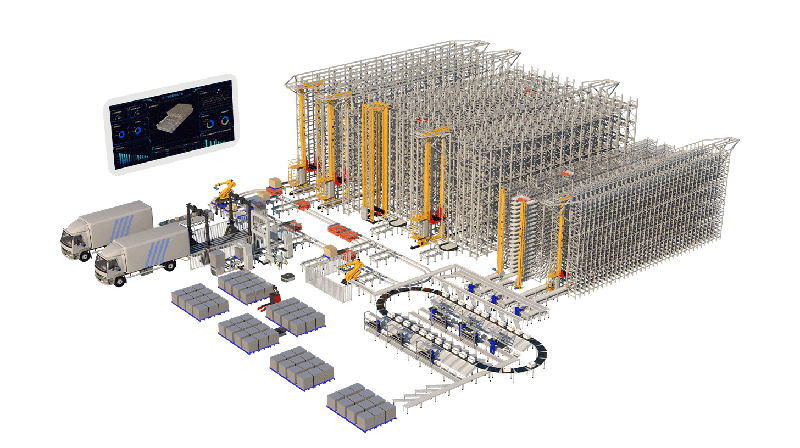
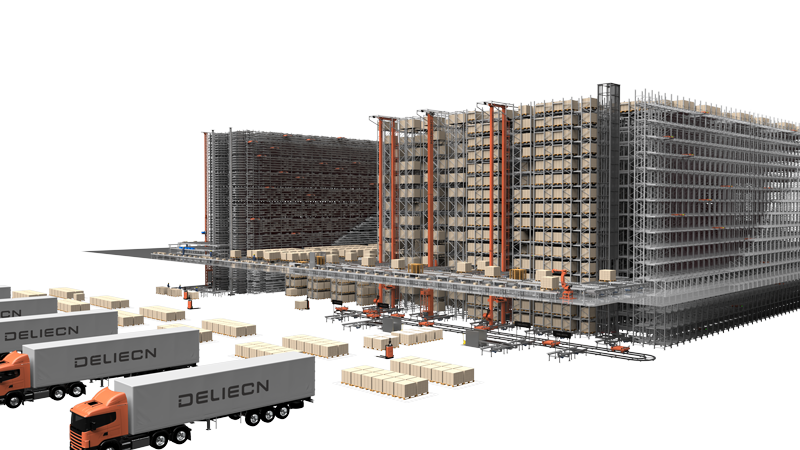
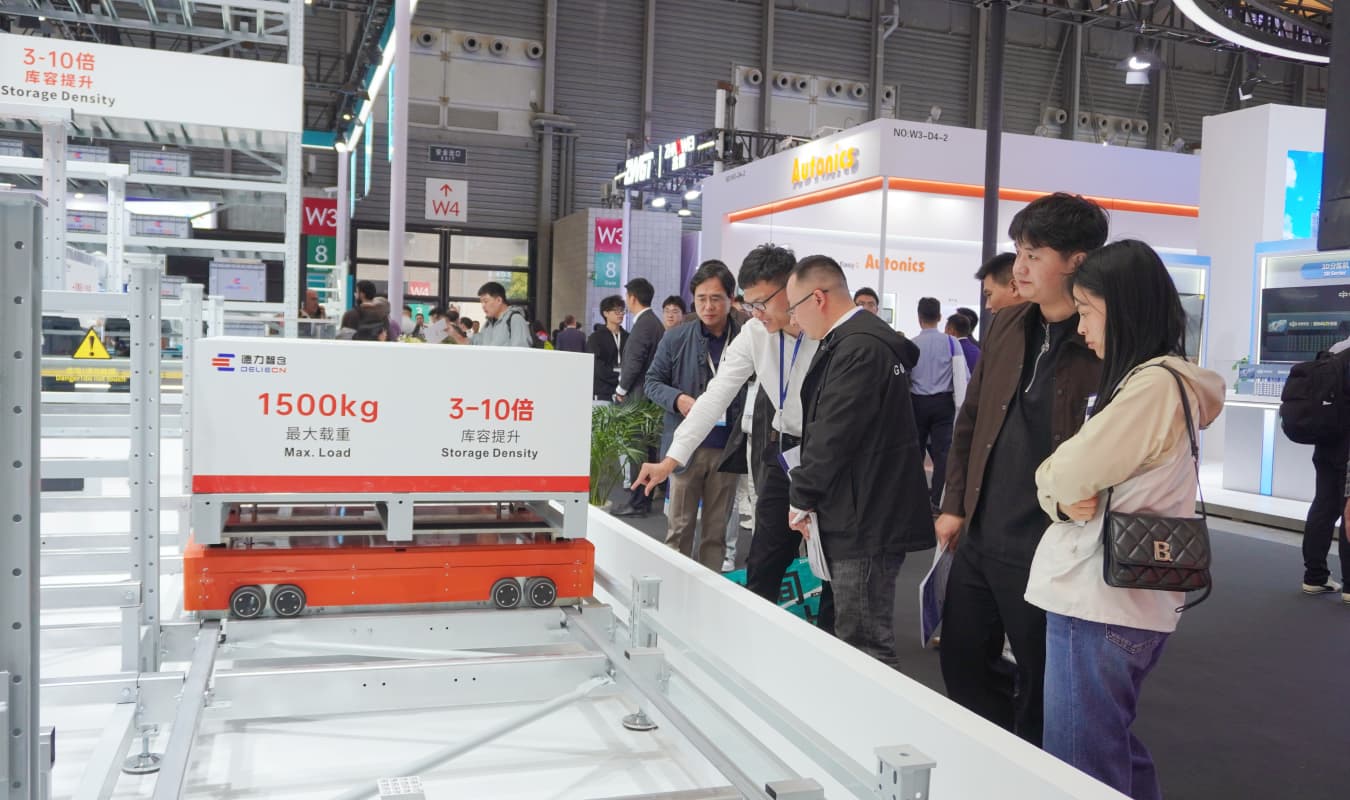
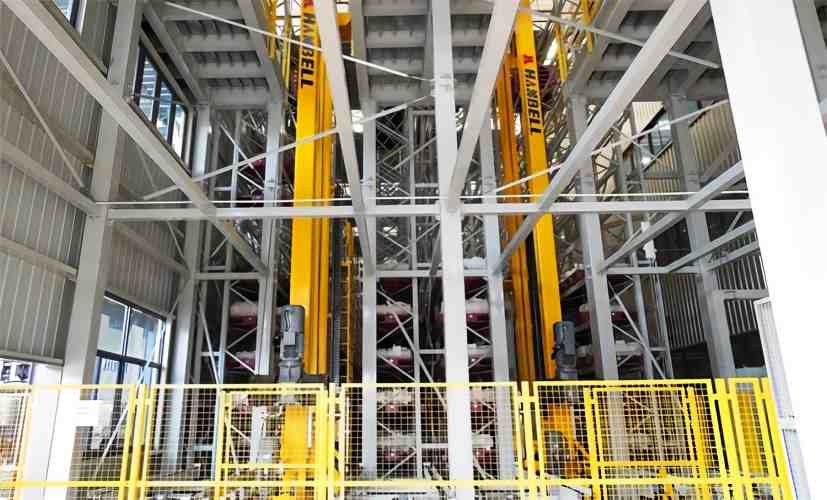
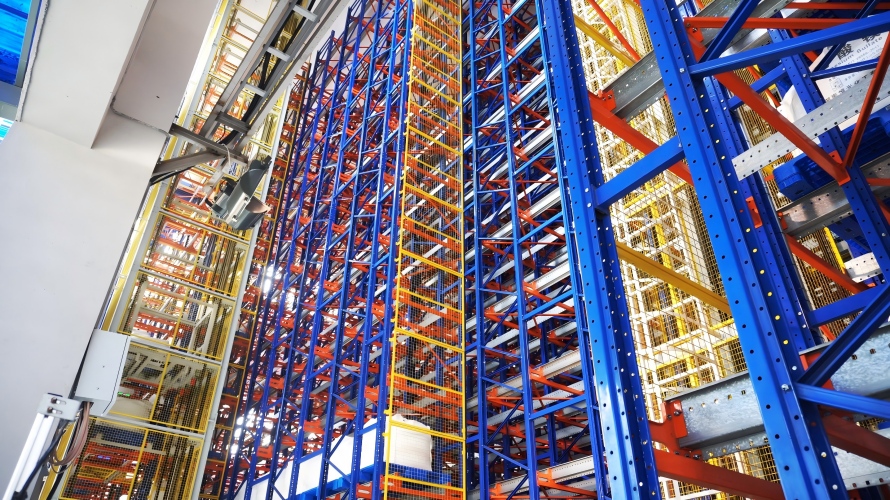
Large spare parts are handled in a Pallet Four-Way Shuttle AS/RS.
The five-level rack system is designed with:
- 3,091 total rack positions
- 2,767 effective storage positions
- 14 Pallet Four-Way Shuttle Robots
- 4 Lifters
The rack also accommodates two different carrier heights:
- H1675 mmon the first level;
- H1200 mmon levels 2–5.
The Pallet Four-Way Shuttle Robots move along both main and sub-aisle directions inside the rack system.
The Lifters provide vertical transfer between storage levels.
For the customer, the benefit is not simply higher storage density.
The four-way architecture allows shuttle resources to move between different rack areas according to current tasks instead of being permanently tied to one storage lane.
This provides more flexibility when the task load changes between different parts of the warehouse.
Small and Medium-Sized Parts: Picking Becomes the Bigger Challenge
Small automotive parts create a different operating problem.
They take up less space individually, but SKU quantity and picking frequency can be much higher.
One outbound requirement may involve small quantities from many different part numbers.
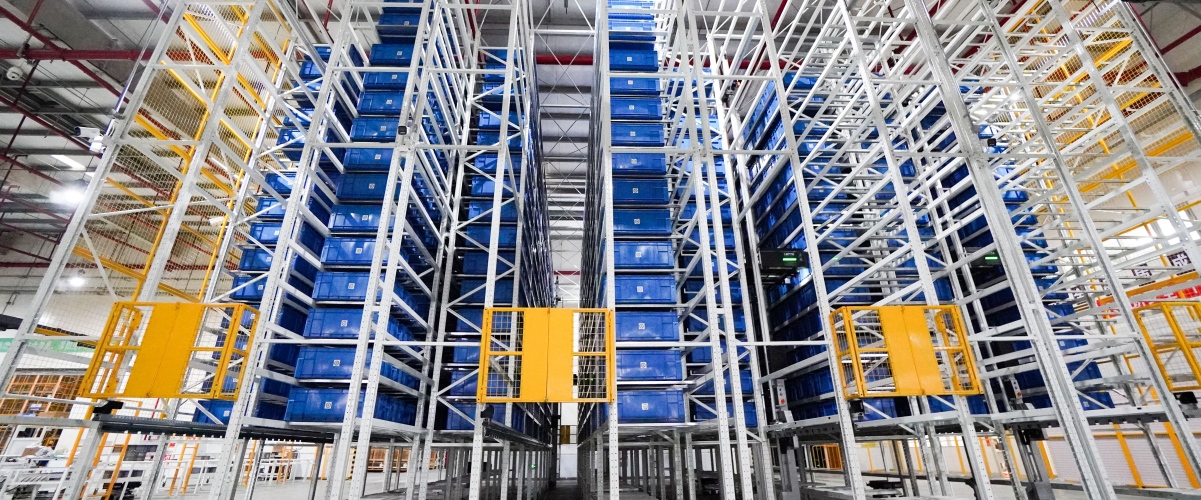
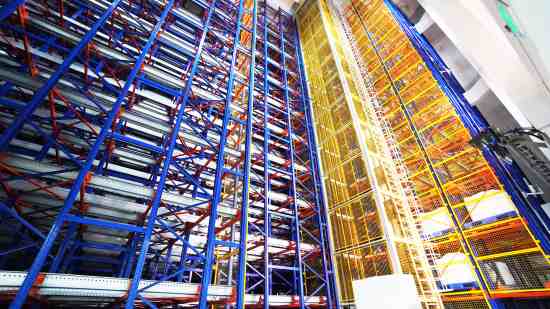
The small-parts area therefore uses a Mini-FlyBox AS/RS with:
- 17,000+ tote positions
- more than 10,000 H300 tote positions
- more than 7,000 H450 tote positions
- 18 Mini-FlyBox AS/RS.
The system is connected with goods-to-person picking.
Instead of requiring operators to repeatedly walk through storage aisles, the required totes are retrieved and brought toward the picking process.
The project design supports approximately 870 lines/hour of combined inbound and outbound throughput in this area.
For a high-SKU spare parts warehouse, this matters because storage capacity is only part of the problem.
The correct parts also need to reach picking fast enough to support downstream orders.
Irregular Materials Do Not Need to Be Forced into Shuttle Automation
Not every spare part is suitable for pallet or tote AS/RS.
Bumpers, larger-format components and other irregular items are handled through storage systems better suited to their dimensions and turnover patterns.
The project uses narrow-aisle racking and mezzanine storage for these categories.
The narrow-aisle system provides approximately 3,088 storage locations.
Oil products are also managed separately according to their storage requirements.
This is an important planning decision.
A spare parts warehouse does not become better simply because a larger percentage of the building is automated.
The useful question is whether the automation method fits the material.
Where a Shuttle System does not provide a clear operational advantage, another storage format may be simpler and more appropriate.
Different Storage Zones Still Need to Operate as One Warehouse
Dividing the warehouse by material type solves the storage-fit problem, but it can also create separate operating zones.
Those areas still need to exchange material.
The project uses:
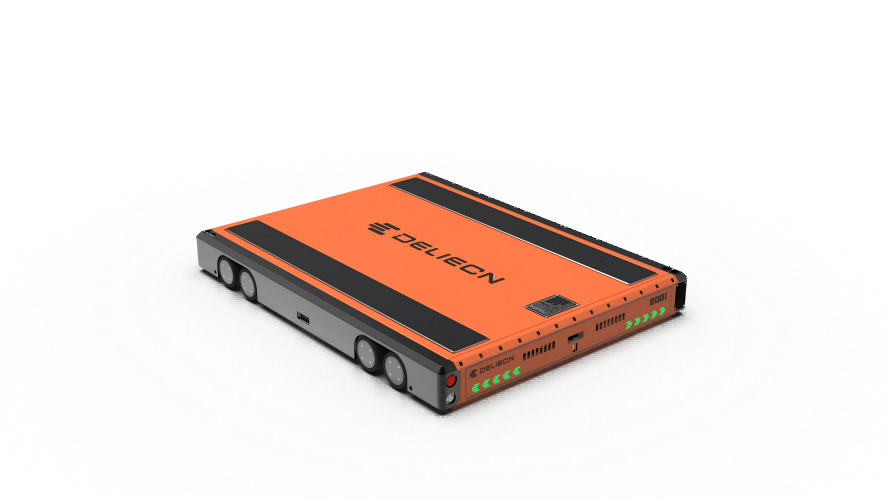
- 54 Tote AMRs
- 24 Pallet Latent AMRs
to support transport between different warehouse areas and operating nodes.
The mobile robots connect storage, picking, sorting, inbound/outbound and workstation areas according to the required material flow.
Their role is not to replace the AS/RS.
They provide the transport layer between storage systems with different operating characteristics.
For a multi-zone spare parts warehouse, this connection is critical.
Otherwise, automation inside each zone can still leave manual movement between the zones.
45,000 SKUs Also Create an Information Problem
Multiple storage technologies can only operate as one warehouse if inventory and task information are coordinated.
DELIECN WMS/WCS connects with the client's TOPSS system and upstream WMS.
WMS manages:
- inventory;
- storage locations;
- inbound and outbound tasks;
- picking;
- warehouse business rules.
WCS coordinates automated equipment execution according to tasks and current equipment status.
The project also uses the 3D Visualization Central Control System to present equipment status, task progress, inventory information and alarms in a centralized view.
For the customer, this is not simply a visualization feature.
The important point is that different storage and transport systems can follow one warehouse task logic rather than operating as separate automation islands.
What Changed After the Upgrade?
The project addressed different spare-part profiles in different ways.
Large parts use high-density Pallet Four-Way Shuttle Storage.
Small and medium-sized parts use Mini-FlyBox AS/RS and goods-to-person picking.
Irregular items remain in storage formats better suited to their dimensions.
Tote AMRs and Pallet Latent AMRs connect the different operating zones.
WMS/WCS connects warehouse execution with the client's business systems.
According to project reporting, the customer's spare-parts supply cycle was reduced from 8 days to 2 days.
That result should not be attributed to one machine.
It reflects the combined effect of:
material zoning → appropriate storage technology → faster picking → cross-zone transport → unified software coordination
For an automotive spare parts customer, this is ultimately the result that matters: how quickly the warehouse can support downstream parts supply.
What Can Other Automotive Spare Parts Warehouses Learn from This Project?
The most transferable part of the FAW Toyota project is not the number of robots installed.
It is the planning sequence.
When SKU quantity reaches tens of thousands, warehouse planning should first understand:
- part dimensions;
- packaging;
- turnover;
- order frequency;
- picking method;
- transport path.
Only then should the project decide which materials belong in pallet automation, which belong in tote automation, which need flexible mobile transport, and which are better handled through other storage formats.
The result may involve several different technologies.
That is not unnecessary complexity when each technology has a clearly defined role.
The FAW Toyota project demonstrates a practical principle for automotive spare parts logistics:
classify the materials first, select the appropriate storage method for each group, and then reconnect the warehouse through transport and software.
That is how a complex 45,000-SKU warehouse becomes one coordinated operation rather than a collection of separate storage areas.