
 AS/RS Handling Robot
 Vertical Storage Module
 Conveying Equipment
 Smart Warehousing System
 Warehouse Racking
 Industries
 Services
 About Us

Advanced Materials Warehouse Automation: Inside Weida Optoelectronics’ Manufacturing Logistics Project
In advanced materials manufacturing, Warehouse Automation is not only about increasing storage capacity.
Materials need to move through different stages: receiving, storage, production preparation, process areas and finished goods handling. Each stage has different requirements for storage methods, carriers and transportation.
The Weida Optoelectronics project focused on building a connected logistics system for a manufacturing environment.
The challenge was not simply adding automated storage equipment. The system needed to coordinate high-density pallet storage, production-side material handling and flexible transportation between different areas.
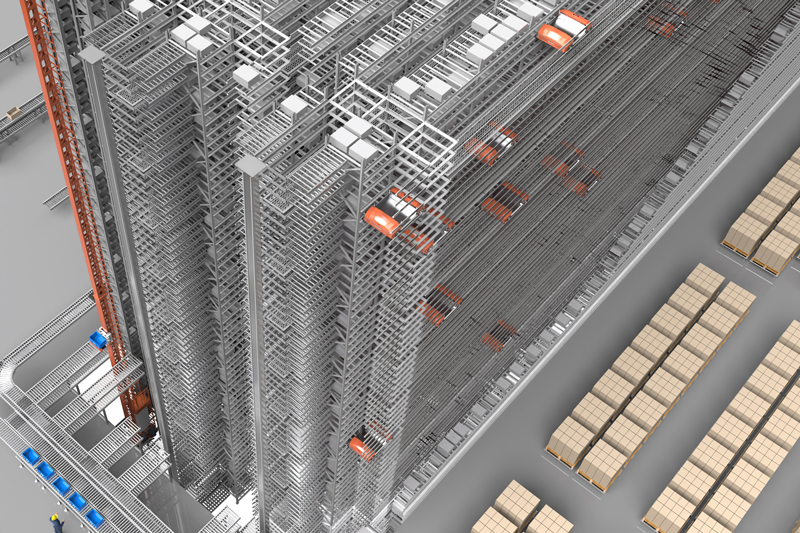
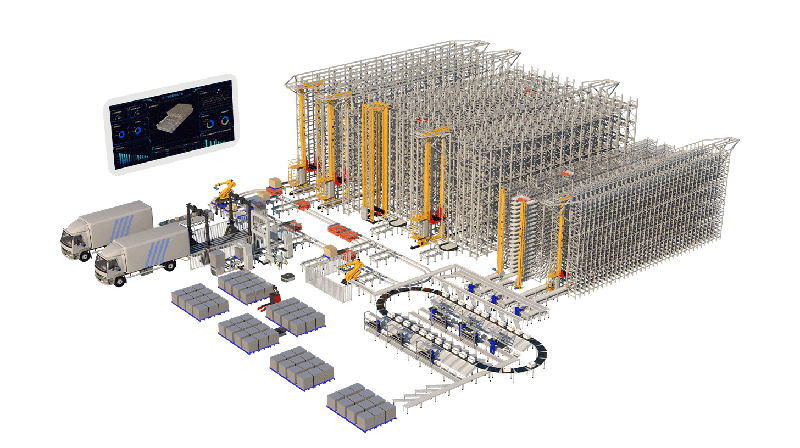
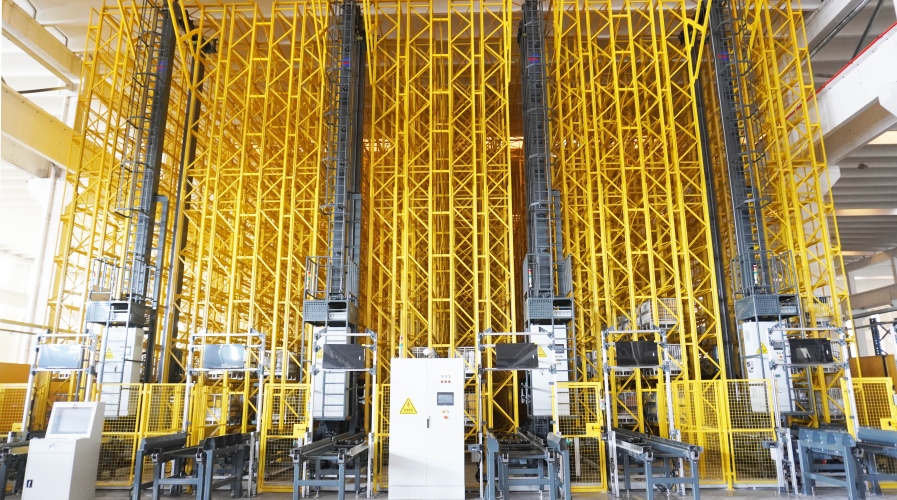
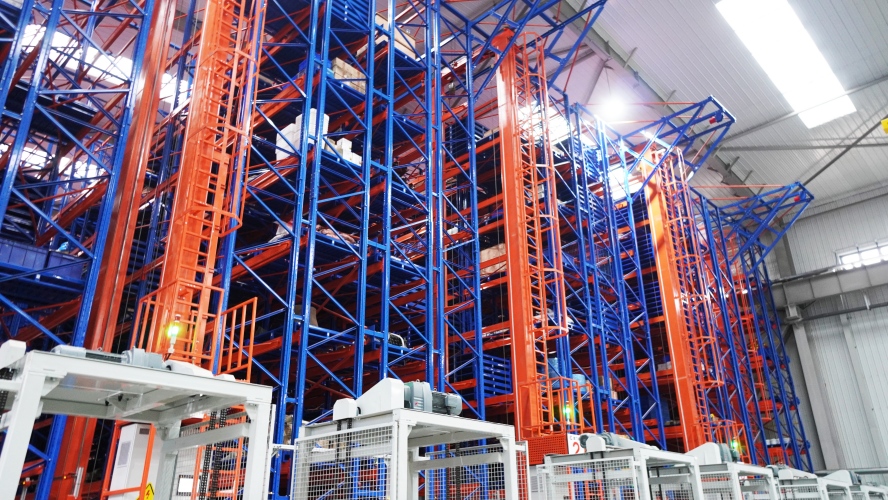
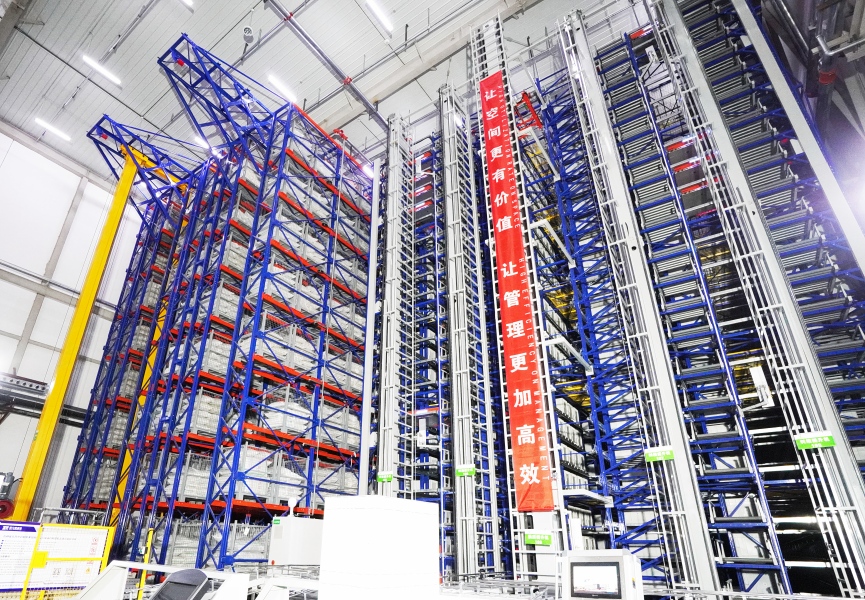
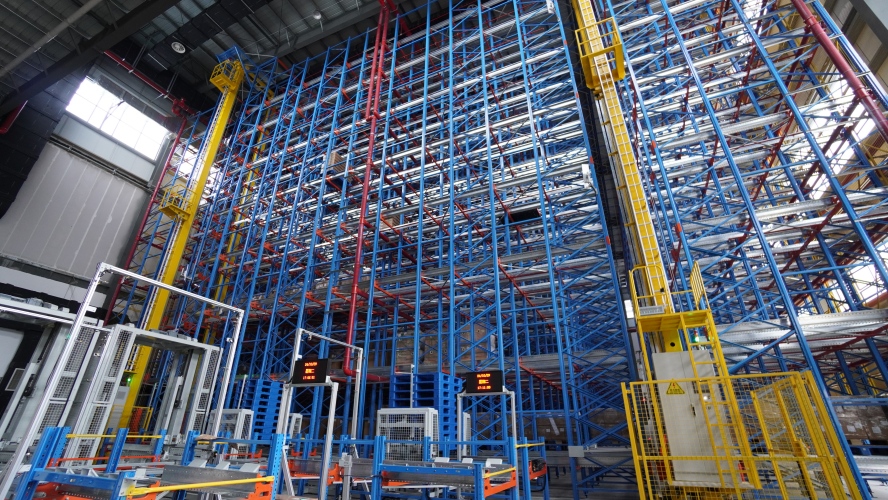
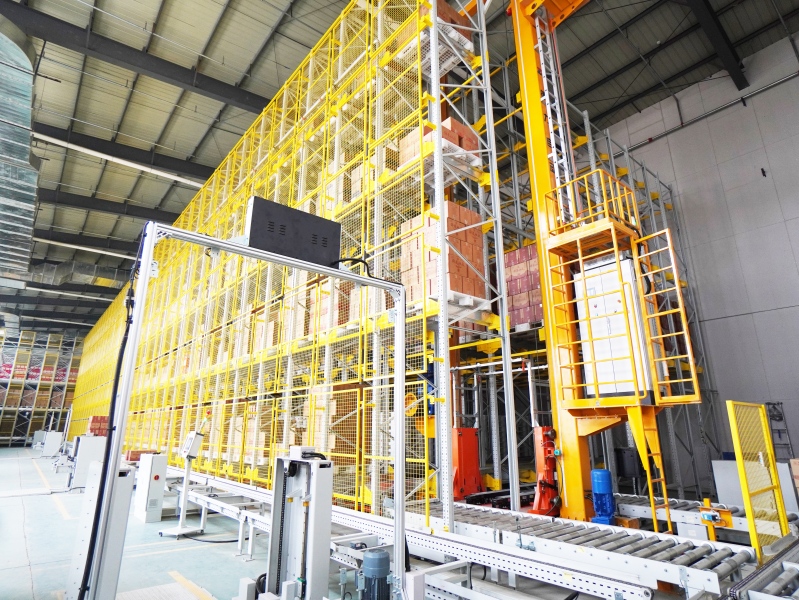
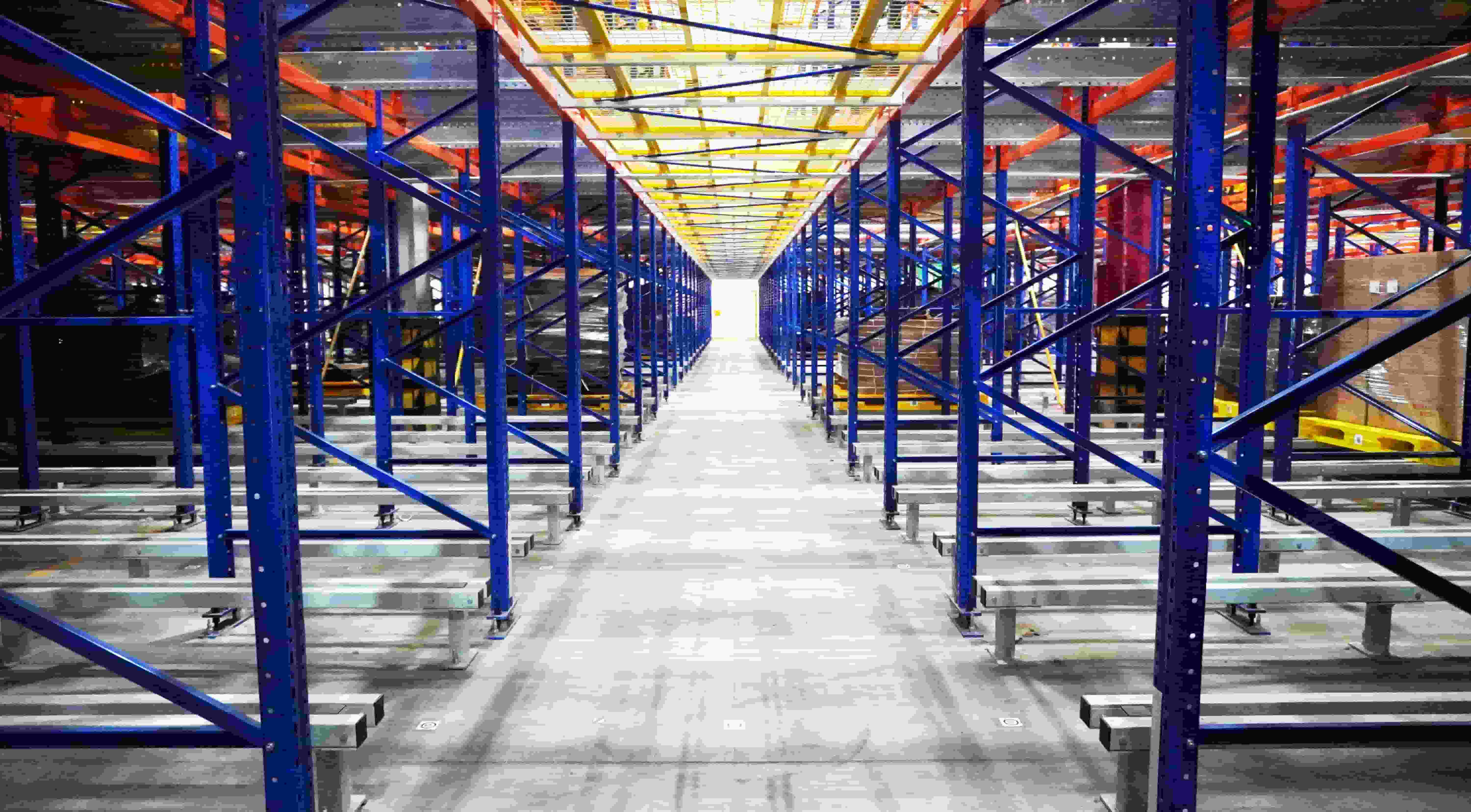
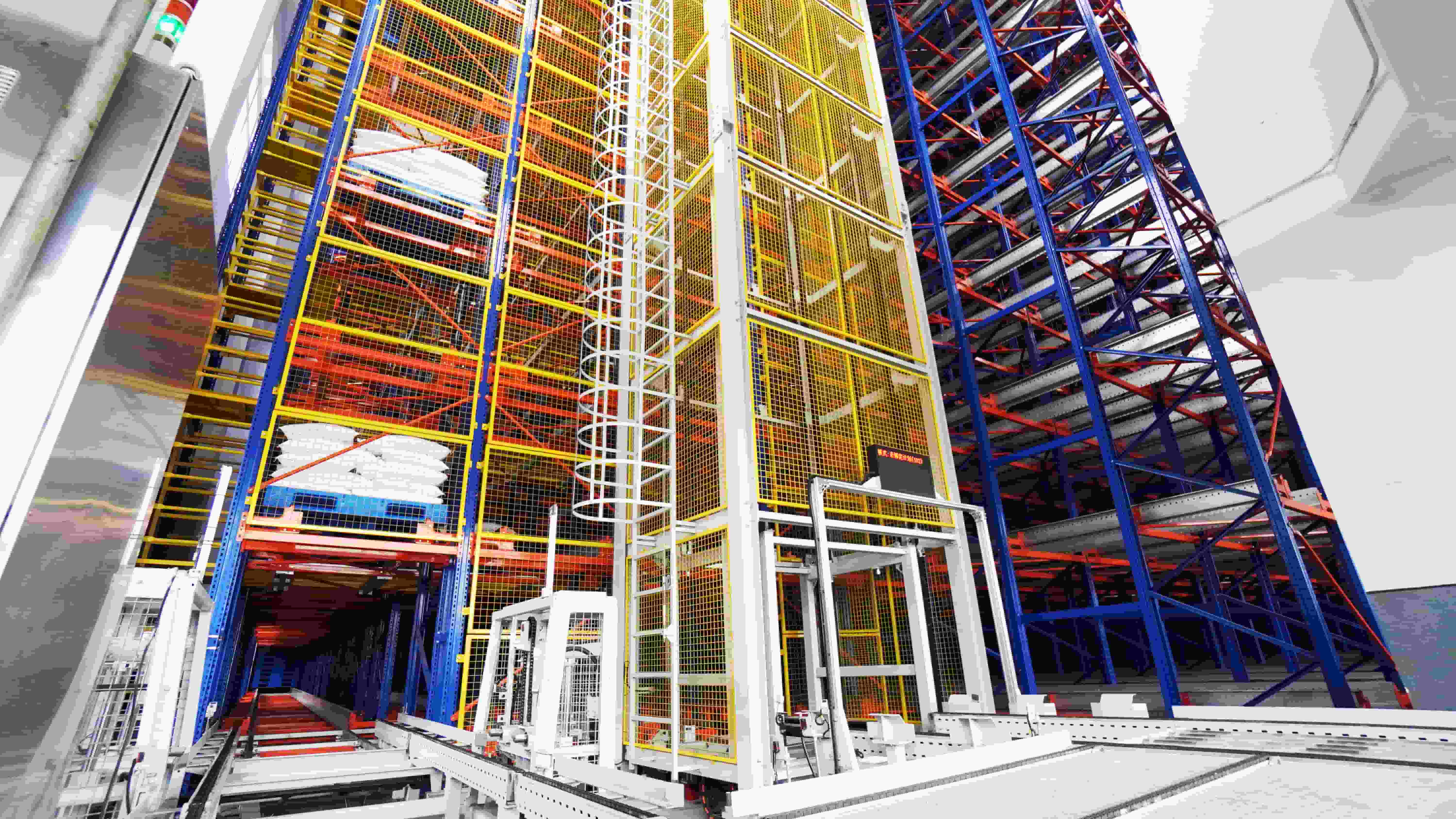
The project includes a central automated warehouse with 5,244 pallet locations, around 20 meters rack height, pallet Shuttle Storage,pallet stacker cranes, pallet latent AMRs, forklift AMRs, conveyors, WMS, WCS and API integration.
The important part is not the number of devices.
It is how different technologies work together according to different material flow requirements.
The central warehouse handles two pallet formats:
The Automated Storage area includes:
5,244 pallet locations
- 8 storage levels
- 2 double-mast Pallet Stacker Cranes
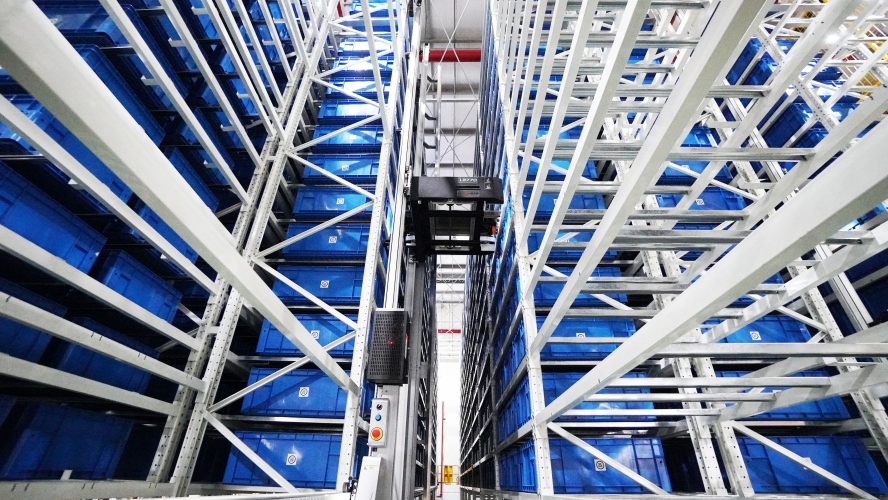
- 3 pallet two-way Shuttle Robots
The stacker cranes are responsible for vertical movement and aisle transportation, while the pallet two-way shuttle robots handle deeper lane movements inside the storage area.
This combination allows the warehouse to use deeper storage lanes and improve space utilization.
For palletized materials with relatively stable storage patterns, deep-lane storage can provide a practical balance between storage density and operational efficiency.
The stacker crane system is designed with a rack height of around 20 meters and supports continuous operation through conductor rail power supply.
A manufacturing plant rarely has only one material flow.
The central ASRS is designed for high-density pallet storage. However, production-related areas often require more flexible handling because materials may need to move between different process points.
For this project, additional process storage areas were designed close to production operations instead of applying the same ASRS structure everywhere.
This approach allows each area to follow its actual operating requirements.
- high-density storage;
- automated pallet management;
- inventory control.
- flexible material transfer;
- shorter transportation paths;
- easier connection with manufacturing processes.
For advanced manufacturing plants, this separation is often more practical than forcing all materials into one storage model.
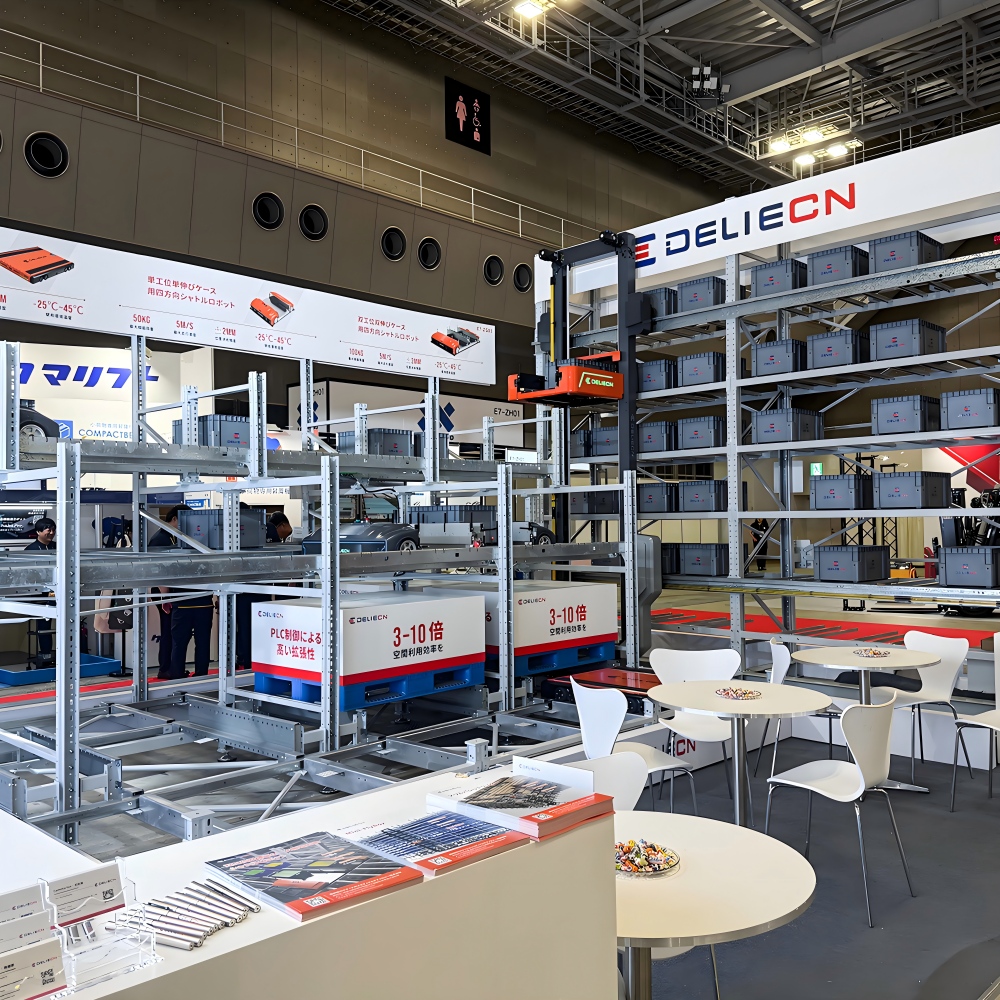
The project also applies pallet four-way shuttle robots in the front-end logistics area.
Different from the two-way shuttle robots used for deep-lane storage, the four-way shuttle robots provide more flexible movement between different transfer points.
The key value in this project is not only storage density.
It is flexibility.
Compared with expanding fixed conveyor routes everywhere, pallet four-way shuttle robots can provide a more adaptable connection between storage areas and production-related stations.
Their four-way movement allows the robot to travel in both main and sub-aisle directions, making material transfer planning more flexible when production requirements change.
For manufacturing environments, this flexibility helps reduce dependence on fixed logistics paths and provides more options for future layout adjustments.
The project includes different types of AMRs to support material movement:
- 10 pallet latent AMRs
- 2 forklift AMRs
The pallet latent AMRs are used for flexible pallet transportation between designated areas, while forklift AMRs support handling tasks that require lifting operations.
Using different AMR types allows the transportation method to match different handling requirements.
Instead of relying entirely on manual forklift movement, the system creates a more stable material flow between storage areas and production processes.
For manufacturing plants, this helps reduce repeated manual transfers and improves logistics consistency.
An automated warehouse depends not only on storage equipment, but also on the quality of material preparation before storage.
The project includes:
- profile inspection;
- barcode identification;
- pallet stacking and destacking;
- strapping equipment;
- conveyor systems;
- robotic palletizing and depalletizing equipment;
- a 2-ton fixed-column jib crane for specific handling requirements.
These processes help standardize pallets before they enter the automated storage system.
For ASRS applications, consistent load conditions are important.
Correct dimensions, stable pallet positioning and accurate identification information help reduce interruptions during automated handling.
Therefore, automation starts before the rack system — at the point where materials are prepared for the next logistics step.
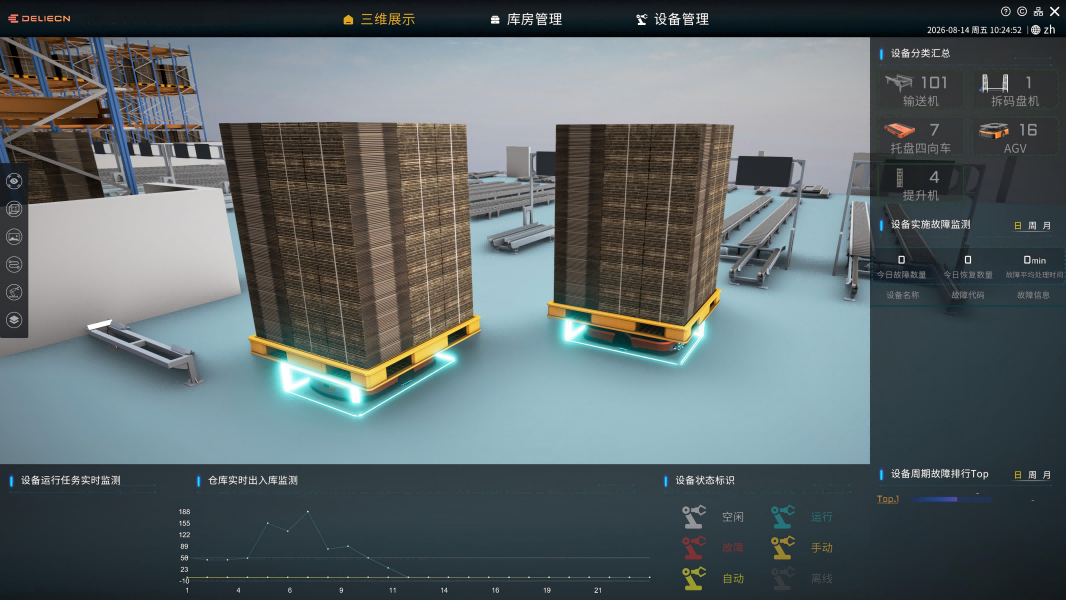
The project integrates:
- WMS;
- WCS;
- API interface system.
When a manufacturing logistics system includes multiple storage areas, shuttle robots, AMRs and production interfaces, equipment coordination becomes an important part of daily operation.
WMS manages inventory information, storage locations and operational tasks.
WCS coordinates equipment execution, including stacker cranes, shuttle robots, AMRs and conveying equipment.
The project includes:
- 5,244 pallet locations
- approximately 20 m rack height
- 2 pallet stacker cranes
- 3 pallet two-way shuttle robots
- 2 pallet four-way shuttle robots
- 10 pallet latent AMRs
- 2 forklift AMRs
- WMS + WCS + API integration
More importantly, the project combines different automation methods for different logistics requirements.
The stacker crane ASRS provides high-density storage.
The pallet shuttle system improves storage utilization.
The pallet four-way shuttle supports flexible front-end transfer.
The AMRs connect warehouse and production areas.
Together, these systems create a more connected manufacturing logistics process.
For advanced materials, electronics, precision manufacturing and other industries, warehouse automation is rarely solved by selecting one machine.
The more important question is how materials move through the factory.
Different materials may require different storage methods.
Different production stages may require different transportation solutions.
A successful automation project starts from understanding material flow, then selecting the right combination of technologies.
The Weida Optoelectronics project shows how a manufacturing warehouse can combine high-density storage, flexible transportation and digital management to support a more reliable production logistics process.
DELIECN provides integrated solutions including pallet ASRS, shuttle storage systems, AMRs, conveyors, WMS/WCS integration and production logistics automation.
Follow DELIECN on LinkedIn for more warehouse automation project insights.