
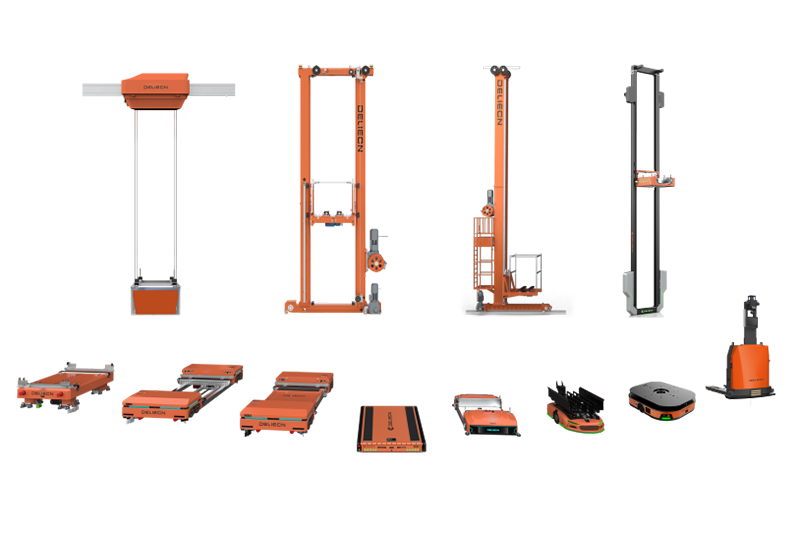
 AS/RS Handling Robot
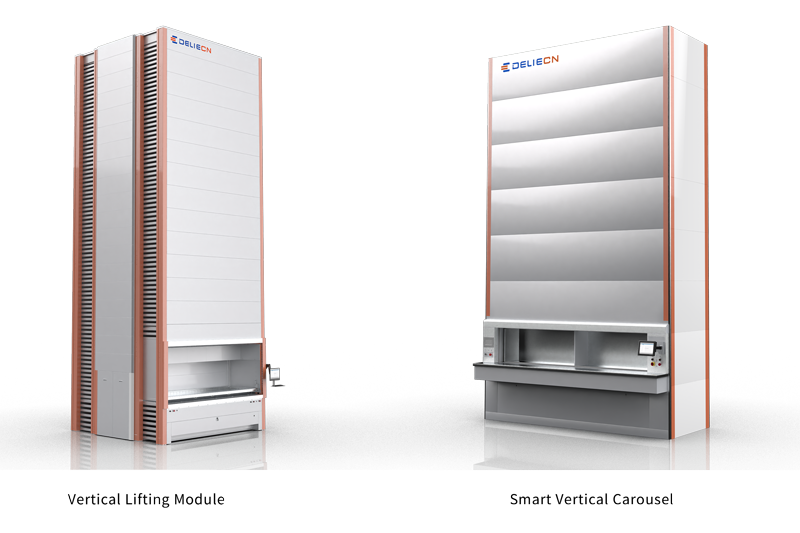 Vertical Storage Module
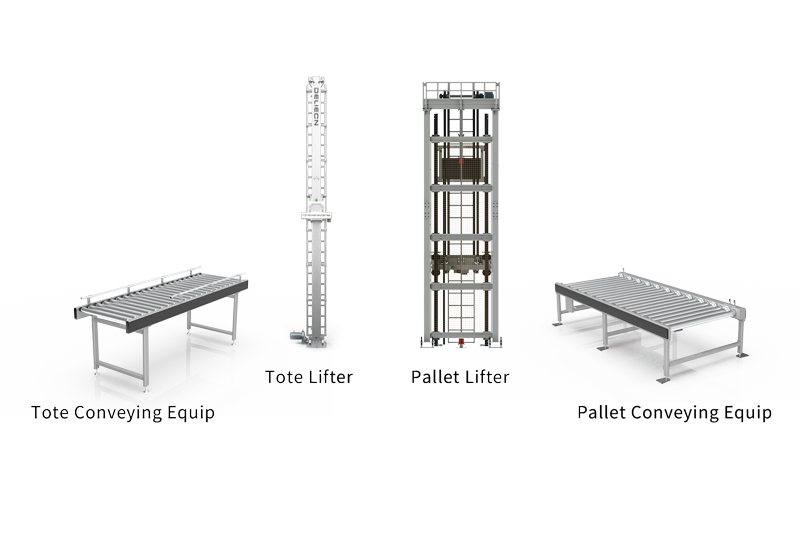 Conveying Equipment
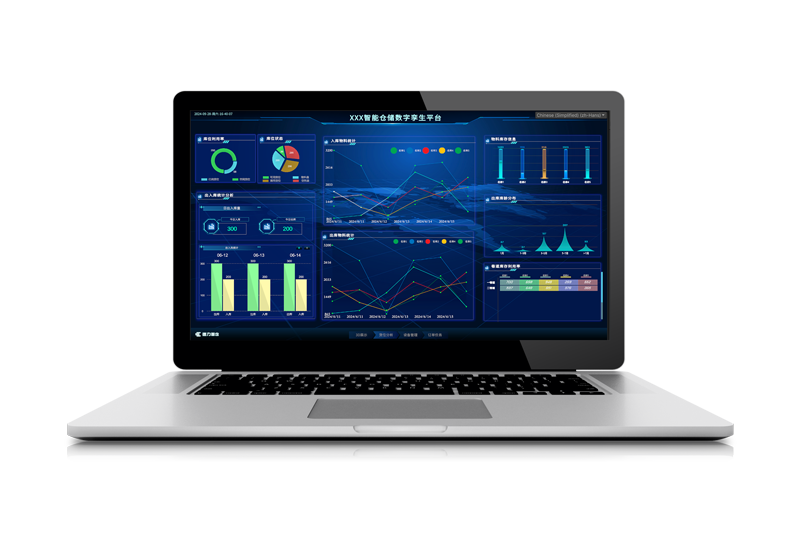 Smart Warehousing System
 Warehouse Racking
 Industries
 Services
 About Us

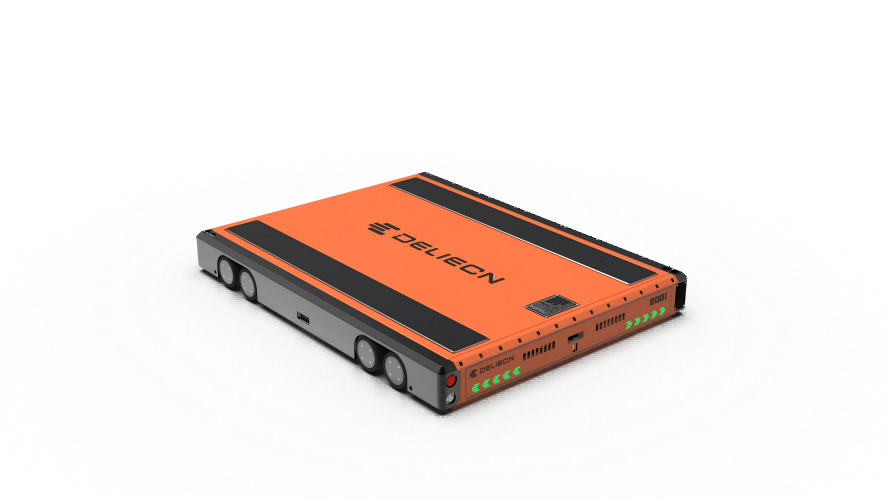
Can a Pallet Four-Way Shuttle AS/RS Solve the Real Bottlenecks in Pallet Warehousing?
Pallet Warehouses Usually Become Expensive Before They Become Full
A pallet warehouse does not always look out of control from the outside.
The pallets are still moving. Forklifts are still working. Operators still know most of the storage areas. But the cost of keeping the warehouse running starts to rise quietly.
Forklift aisles take up too much space.
Inbound pallets wait near the dock because storage locations are hard to release quickly.
Outbound preparation depends on experienced operators remembering where goods are stored.
Heavy pallets move through areas where people and forklifts share the same floor.
During peak periods, everyone looks busy, but the number of pallets actually completed does not rise at the same pace.
This is often the moment when customers start to consider a pallet four-way shuttle AS/RS.
They are not simply buying a robot. They are trying to solve a group of connected problems: limited space, labor intensity, pallet handling safety, storage density, inbound and outbound efficiency, and the ability to keep operating when demand changes.
The First Pain Point Is Usually Space
For many pallet warehouses, space is the most visible problem.
The warehouse may already be using a large floor area, but a lot of that space is not used for storage. It is used for forklift aisles, turning areas, temporary staging, and safety distance.
As inventory grows, customers often face two choices: expand the building or store pallets more densely.
A pallet four-way shuttle AS/RS gives customers a third option.
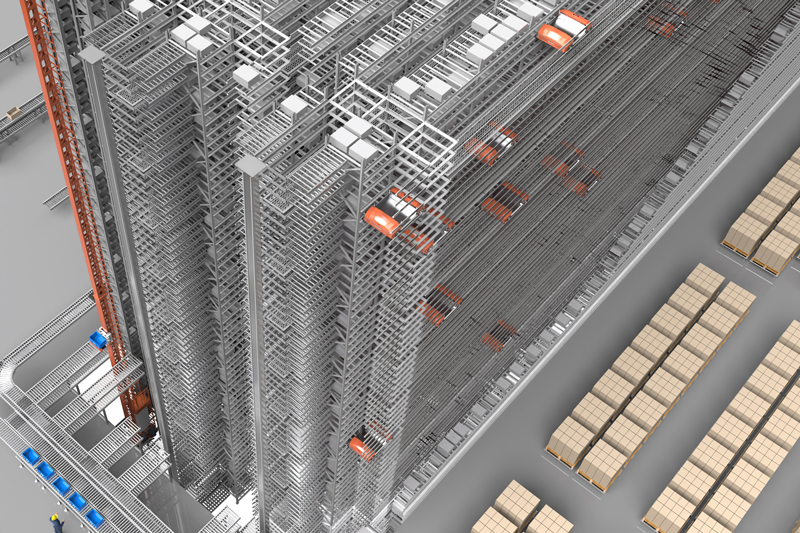
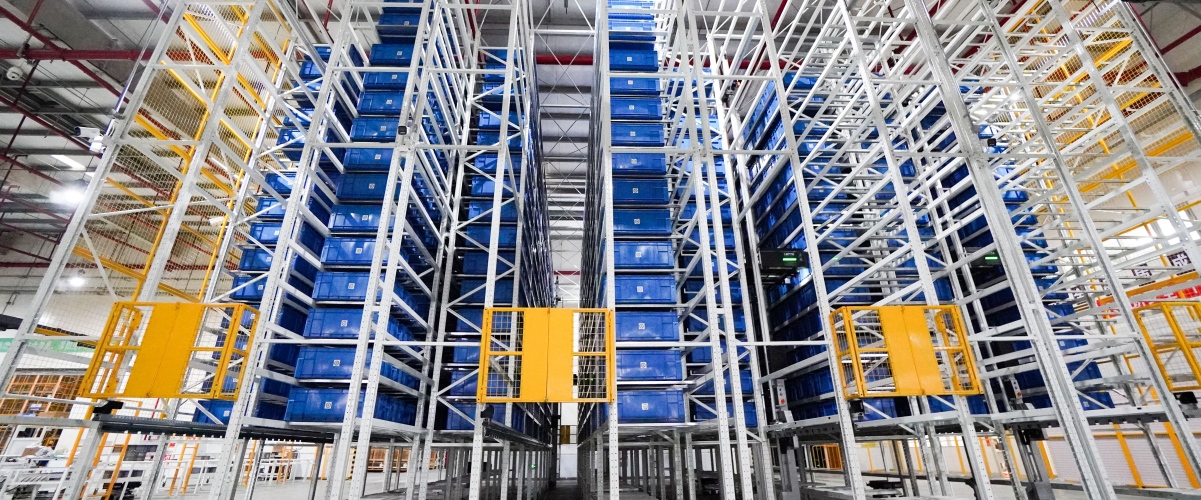
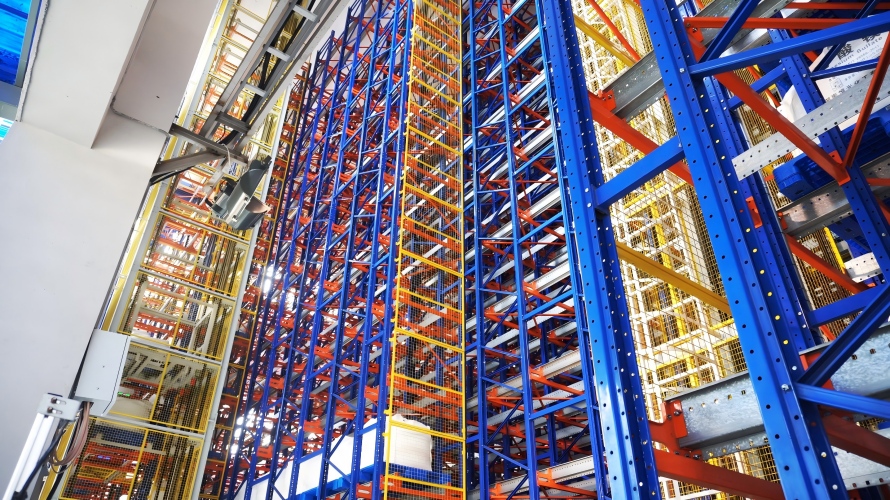
By using high-density racking, Shuttle Robots, pallet lifters, and automated conveyors, the system reduces dependence on wide forklift aisles inside the storage area. Pallets can be stored deeper and higher, while the Shuttle Robot handles movement within the racking structure.
For customers, the value is easy to understand: more pallets can be stored in the same building, without turning the warehouse into a crowded forklift area.
This is why pallet four-way Shuttle Systems are especially attractive for food and beverage, chemical materials, cold chain, new energy materials, manufacturing warehouses.
The Second Pain Point Is Heavy and Repetitive Handling
Pallet storage is not like small-item picking.
A pallet may weigh hundreds of kilograms or more than one ton. When forklifts handle this type of load repeatedly, the pressure is not only efficiency. It is also safety, labor intensity, and consistency.
Manual forklift handling depends heavily on operator skill. During busy periods, forklift traffic increases, turning space becomes tighter, and temporary staging areas become more crowded. Even when no major accident happens, the operation becomes harder to control.
A pallet four-way shuttle AS/RS changes the work division.
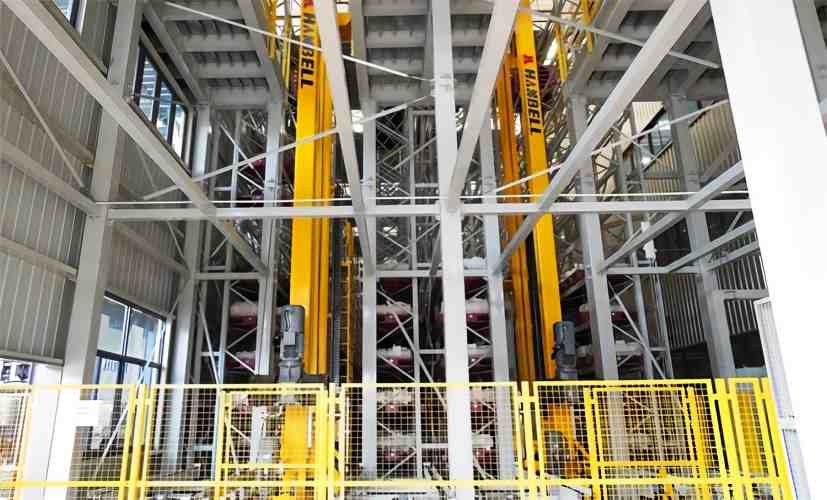
Forklifts or conveyors bring pallets to the system entrance. After that, the Shuttle Robot, lifter, conveyor, and WCS take over the storage movement. Operators no longer need to drive deep into dense storage areas for every inbound or outbound task.
This reduces repeated manual handling and makes pallet movement more controlled.
For customers, this is not only about replacing labor. It is about moving heavy goods in a safer and more predictable way.
A Single Robot Does Not Solve the Whole Problem
This is an important point.
A pallet four-way shuttle robot is the core handling device, but it cannot solve the whole warehouse problem by itself.
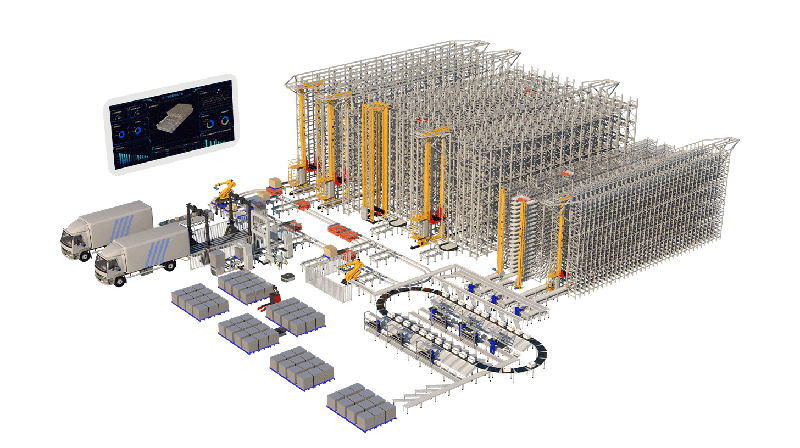
The real performance comes from coordination.
WMS decides what should happen.
WCS decides how the equipment should execute it.
Pallet lifters connect different storage levels.
Conveyors connect inbound and outbound areas.
Multiple Shuttle Robots share tasks inside the storage area.
Sensors, controls, and visual systems help the warehouse monitor the process.
If any part is poorly matched, the warehouse may still face bottlenecks.
For example, if the Shuttle Robots are fast but the lifter capacity is too low, pallets will wait before changing levels. If the conveyors are not arranged properly, inbound pallets may accumulate before storage. IfWMS location rules are weak, fast-moving pallets may be placed too deep, making outbound less efficient.
This is why customers should not evaluate a pallet four-way shuttle AS/RS only by robot load capacity or speed.
They should evaluate the full movement chain.
What Happens If One Shuttle Robot Fails?
This is one of the most practical questions customers ask.
In a manual warehouse, if one forklift fails, another forklift can often take over. Customers naturally worry whether an automated system has the same flexibility.
In a pallet four-way shuttle AS/RS, the answer depends on the system design. With multi-robot scheduling, one Shuttle Robot does not have to stop the entire warehouse. WCS can reassign tasks to other available robots, adjust task priority, and keep inbound or outbound flow running through other vehicles and available paths.
This is one of the reasons multi-vehicle dispatching is so important.
The purpose is not only to make more robots work at the same time. It is to keep the system resilient. When one robot is charging, under maintenance, or temporarily unavailable, other robots can continue to handle tasks.
For customers, this reduces the fear that one equipment issue will immediately become a warehouse-level shutdown.
Of course, this does not mean maintenance is unimportant. It means the system should be designed with redundancy, access, spare parts, and response procedures from the beginning.
Peak Periods Need Scheduling, Not Just More Equipment
Many warehouses try to solve peak pressure by adding more forklifts and more workers.
That may work for a while, but it also increases traffic, safety pressure, and management difficulty.
A pallet four-way shuttle AS/RS uses another approach. It relies on task scheduling.
When inbound pallets increase, WCS can distribute storage tasks among different shuttle robots and lifters. When outbound demand rises, WMS can release tasks by priority, while WCS arranges retrieval sequence and equipment movement. When certain zones become busy, the system can adjust task allocation to reduce congestion.
This is especially useful in industries where workload arrives in waves.
A food factory may release finished goods after production. A chemical warehouse may need stable daily outbound flow. A battery material warehouse may handle heavy pallets with high storage demand. A cold chain warehouse may need fast movement while reducing unnecessary door opening and manual exposure.
In these scenarios, the question is not whether one robot can run fast.
The question is whether the whole system can keep pallets moving without creating new waiting points.
Energy Saving Also Comes from System Behavior
Sustainability is not only about using less electricity in one motor.
In a pallet four-way shuttle AS/RS, energy saving comes from several operating details.
Automatic charging allows robots to recharge without manual battery replacement. The system can arrange charging when vehicles are idle or when task pressure is lower. No-task sleep mode helps reduce unnecessary power consumption when the robot is not actively working.
WCS scheduling also affects energy use. Fewer empty trips, better task grouping, and more reasonable route planning all help reduce waste.
For customers, this means the system can support long-term operation while avoiding unnecessary energy consumption. In warehouses with multiple robots and long working hours, these details matter.
What Customers May Struggle With After Go-Live
Even a well-designed system needs a careful transition period.
After go-live, customers may face questions such as:
Why is one outbound task waiting?
Why did the system choose this storage location?
Why is a shuttle robot charging now?
Why is the lifter queue longer during peak time?
How should operators handle an abnormal pallet?
How should warehouse staff check alarms and task status?
These are normal questions when a team moves from manual operation to automated operation.
This is where supplier service matters.
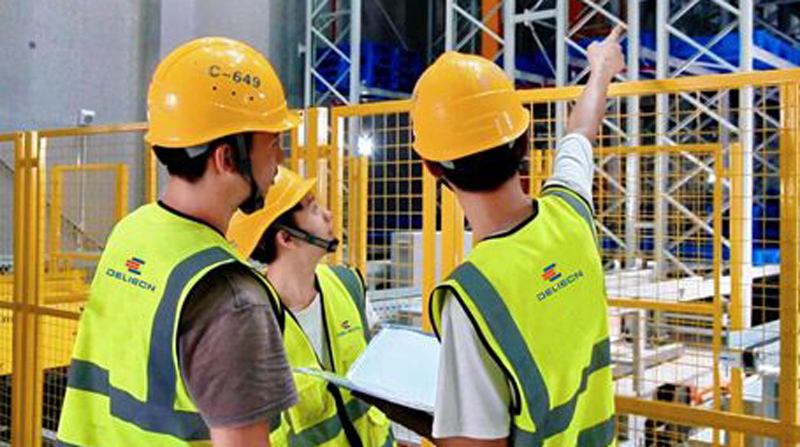
DELIECN supports customers with operation training, system training, maintenance guidance, and go-live support. During the ramp-up period, the project team helps the customer understand how WMS creates tasks, how WCS dispatches equipment, how operators should respond to alarms, and how daily warehouse management should change after automation.
For customers, this kind of support is very practical.
A system is not successful only when installation is finished. It is successful when the customer’s team can use it steadily in daily operation.
Future Expansion Should Be Reserved from the First Design
A warehouse automation project should not only solve today’s storage pressure.
Many customers choose pallet four-way shuttle AS/RS because their business is growing. That means the system should leave space for future changes.
More pallets may need to be stored.
Throughput may increase.
New production lines may be added.
More inbound or outbound points may be required.
ERP or MES integration may become deeper.
AI-based analysis may be introduced later for prediction, maintenance, or storage optimization.
A modular pallet four-way shuttle AS/RS can support phased expansion if it is planned correctly from the beginning. Additional shuttle robots can be added according to throughput needs. Storage zones can be expanded if building conditions allow. WMS/WCS logic can be adjusted as operation rules change.
This is another reason why self-developed WMS/WCS is valuable.
When software is flexible, customers have more room for later optimization instead of being locked into the first version of the process.
Project Insight: High-Density Heavy Pallet Storage
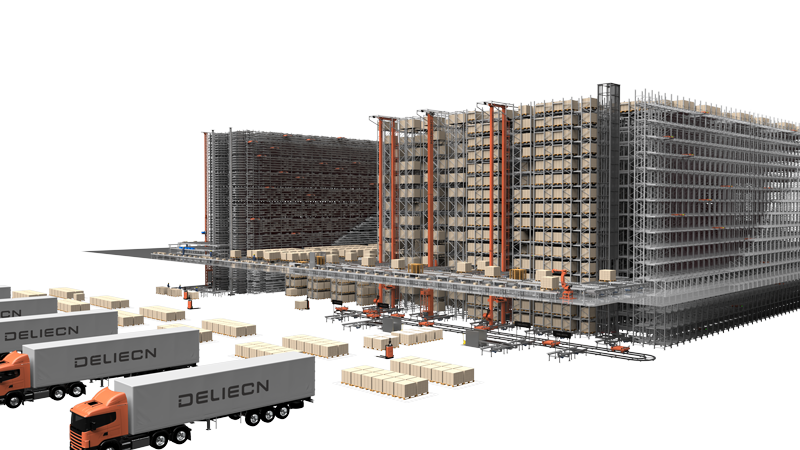
In one DELIECN battery material project, the warehouse reached 21 meters in height and planned 41,580 pallet locations. The system used 30 pallet four-way shuttle robots and achieved about 265 pallets per hour. Single pallet weight exceeded one ton.
The key point is not only scale.
The project shows why pallet four-way shuttle AS/RS is suitable for high-density and heavy-load storage. Heavy pallets require stable handling. Large inventory requires clear location management. High throughput requires WMS/WCS coordination. A tall warehouse requires reliable lifter and shuttle cooperation.
For customers with similar pressure, the system helps turn a difficult pallet storage problem into a controlled material flow.
Project Insight: Continuous Industrial Material Flow
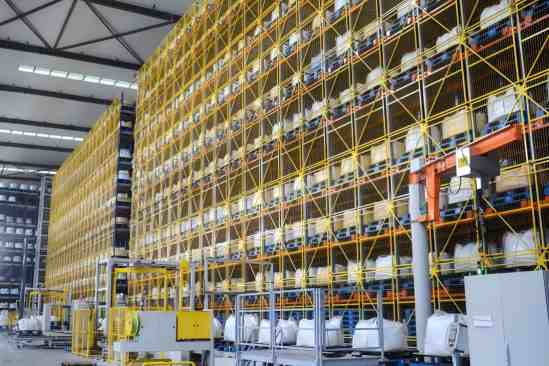
In a magnesium sulfate project, DELIECN built a pallet four-way shuttle AS/RS with about 6,309 pallet locations in a warehouse of approximately 3,177 square meters and 21.665 meters in height. The system used 13 pallet four-way shuttle robots and reached about 132 pallets per hour, supporting around 900 tons of daily material flow.
This project reflects another customer concern: steady daily output.
Industrial warehouses do not only need dense storage. They need the warehouse to support production and delivery every day. If pallets cannot enter or leave smoothly, production rhythm and shipment planning may both be affected.
The value of the system is that pallet movement becomes more predictable. Pallets are stored by rules, retrieved by demand, and tracked by the system.
Conclusion
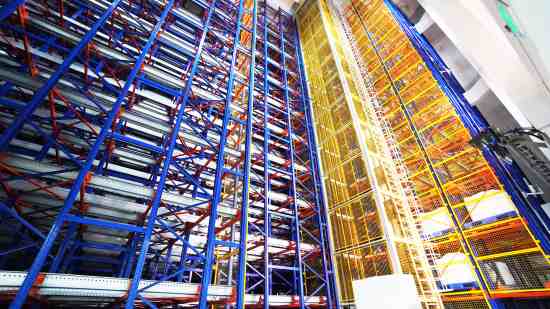
A pallet four-way shuttle AS/RS is valuable because it addresses the problems customers actually face in pallet warehouses: limited space, forklift aisle waste, heavy manual handling, peak-period pressure, safety concerns, and unclear pallet flow.
But the robot itself is not the whole answer.
The real value comes from the full system: WMS creates the right tasks, WCS schedules the equipment, lifters connect storage levels, conveyors handle transfer, multiple shuttle robots share the workload, automatic charging and sleep mode reduce energy waste, and training helps the customer’s team use the system smoothly after go-live.
For customers, the better question is not whether a pallet four-way shuttle robot is fast enough.
The better question is whether the whole AS/RS can make pallet storage safer, denser, more efficient, easier to manage, and ready for future growth.