Industries Smart Warehousing Solutions Tailored To Your Industry
With a comprehensive range of intralogistics, products, DELlECN helps you build efficient and Fully Automated Warehouse operations.
Services Maximizing the Value of Your Logistics
At DELIECN, service goes beyond product delivery. We provide consulting, planning, design, manufacturing, installation, commissioning, and after-sales support throughout the entire lifecycle.
About Us Efficient and Flexible Automated Warehousing Solutions
DELIECN supports clients across food and beverage, new energy, chemicals, pharmaceuticals, e-commerce, precision manufacturing, textiles, and energy industries with intelligent warehousing systems tailored to their goals and requirements.

Most warehouses do not decide to automate because someone suddenly wants more robots.
Usually, something has been getting harder for a while.
The warehouse may still have enough people, but every new operator spends more time walking. There may still be empty space in the building, yet another rack row cannot be added without blocking forklift traffic. Inventory is technically in the system, but supervisors still call the warehouse to confirm whether a material has actually arrived at the production line.
None of these problems looks serious on its own.
Together, they are often the reason an Automated Storage And Retrieval System (ASRS) enters the discussion.
The interesting part is that companies rarely buy ASRS for exactly the same reason.
For one customer, the problem is space. For another, it is picking. A factory may care more about keeping production supplied, while a pharmaceutical warehouse may care about knowing exactly which batch moved through which location.
That difference should shape the system from the beginning.

A conventional warehouse needs people or forklifts to reach inventory.
That access takes space.
Wide aisles may be necessary for turning a loaded forklift. Lower racks may have been chosen because the handling equipment cannot reach higher. Temporary floor storage starts appearing when the original rack capacity is exceeded.
Over time, the warehouse can feel “full” even though much of the building is being used for access rather than inventory.
ASRS changes this because the handling equipment works inside or alongside the storage structure.
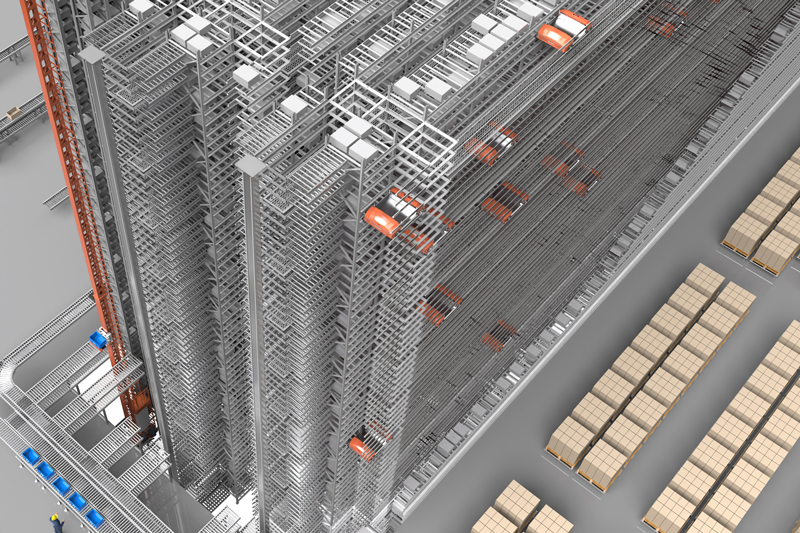
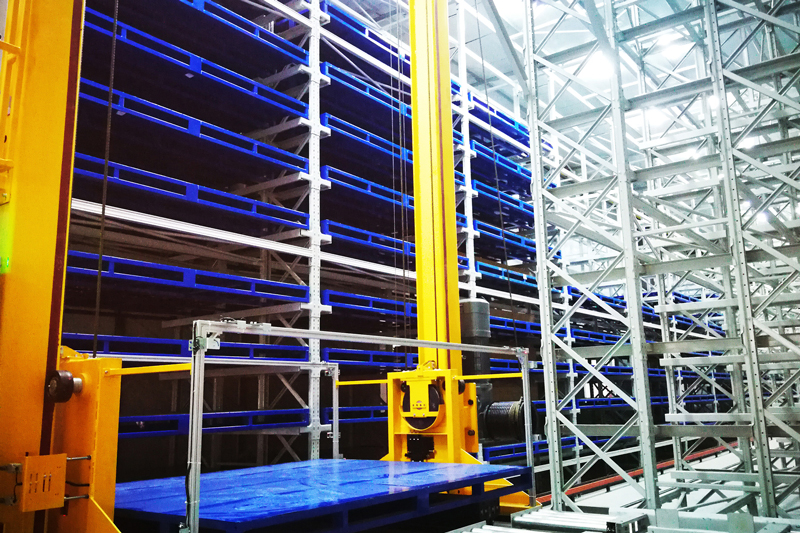
A stacker crane can travel in a narrow aisle. A Pallet Shuttle can move loads inside deep rack lanes. Tote automation can use far more vertical levels than manual shelving normally would.
But higher density only makes sense where the economics support it.
Cold storage is an obvious example.
In a -25°C pallet warehouse completed by DELIECN, the customer moved to a Pallet Four-Way Shuttle arrangement and created 3,484 storage locations. The useful result was not simply a larger number of pallet positions.
Every aisle inside a freezer is refrigerated space. Whether that space holds inventory or only provides access, the customer still pays to insulate and cool it.
Reducing some of those access aisles therefore changes the economics of the whole cold room. More product can be stored within the same refrigerated envelope, while routine pallet movement also requires less human exposure to the low-temperature environment.
That is a much stronger reason for automation than saying a shuttle robot is faster than a forklift.
Another warehouse may have enough capacity and still be struggling.
The problem often appears during peaks.
A customer may report an average outbound volume that looks perfectly manageable across an eight-hour shift. In reality, a large percentage of those orders may need to leave in a two-hour window.
That changes the design.
A pallet retrieved from storage does not disappear after the shuttle completes its task. It still needs to reach a lifter, move through a conveyor or mobile-robot interface, pass through a buffer if necessary and arrive at the next operating area.
One slow transfer point can determine the output of the entire system.
This is also why adding robots does not always increase throughput.
If several shuttle robots are already waiting for the same lifter, another shuttle simply joins the queue.
A useful ASRS design therefore starts to look less like a rack calculation and more like traffic planning. Where do loads converge? Which pieces of equipment are shared? What happens when inbound and outbound tasks compete for the same transfer point?
Those questions are often more important than maximum robot speed.
The problem changes again when pallets become totes.
An automotive parts warehouse can have thousands of small components occupying very little individual space. The physical size of each item is no longer the biggest difficulty.
Finding the right one quickly is.
In Toyota's spare-parts operation, nearly 45,000 SKUs are managed across different storage and handling areas. For small and medium parts, the available warehouse height was relatively limited, but the number of locations required was high.
The solution did not simply try to build the tallest possible tote structure.
Different tote heights were given different storage pitches. Smaller totes could use more levels; taller ones used fewer. In the completed Mini-FlyBox area, this produced more than 17,000 tote locations while still supporting automatic retrieval and goods-to-person picking.
The design looks obvious after it is built.
Before that point, however, it required asking a more basic question: how much vertical space is being wasted because every tote is being treated as though it were the same height?
Now compare that with a different automotive-component warehouse where the building reaches more than 22 meters.
In that situation, unused height becomes the waste. A multi-level Tote Shuttle system can make sense because the building already provides the vertical volume needed to justify it.
So even when two customers both say, “We need automated small-parts storage,” the right ASRS may be completely different.
Manufacturing projects often reveal another reason to automate.
Production does not care how efficiently the warehouse stores a pallet if the material arrives late.
A line may be waiting for packaging material while the warehouse still shows stock available. Semi-finished goods may accumulate because the next process has not called for them. Finished pallets may leave production faster than operators can move them away.
The storage system becomes part of a larger flow.
At YFY's plant, this led to a layout where dense storage and flexible movement were deliberately separated.
Upper levels are used for high-density pallet storage. The lower floor remains available for more changeable material movement around production and shipping.
That decision matters because factories rarely benefit from filling every available square meter with fixed automation.
Some areas need density. Others need freedom of movement.
ASRS works best when it respects that distinction.
| Operational Problem | Typical Manual-Handling Condition | How ASRS Addresses It | Relevant Performance Indicator | Typical Improvement Potential* |
|---|---|---|---|---|
| Limited warehouse space | Storage locations depend heavily on wide aisles, pedestrian access, and low-to-medium-height racking. | Uses high-density storage locations and automated equipment to reduce aisle requirements and use vertical space more effectively. | Storage density; floor area per stored load; cubic utilization | Approximately 40%–60% less floor space for the same storage capacity in suitable applications. |
| Long travel and excessive walking | Operators travel repeatedly between storage locations, picking areas, and staging zones. | Delivers pallets, totes, or cartons directly to designated workstations through computer-controlled storage and retrieval cycles. | Travel distance; touches per order; labor minutes per order | Travel activity can be reduced substantially, often by more than 50% in goods-to-person workflows. |
| Inventory inaccuracy | Manual counts, misplaced loads, and delayed transaction recording can create discrepancies between physical and system inventory. | Records each storage and retrieval transaction automatically and assigns inventory to defined, trackable locations. | Inventory accuracy; cycle-count variance; location accuracy | Well-controlled systems commonly target inventory accuracy of 99.5% or higher. |
| Picking errors | Wrong-item, wrong-quantity, and wrong-location errors may occur during manual picking and replenishment. | Combines software-directed storage with barcode, RFID, light-directed, or vision-based identification and verification. | Order accuracy; mis-pick rate; returns caused by warehouse error | Order accuracy can reach approximately 99.5%–99.9% when processes, identification, and controls are properly configured. |
| Unstable throughput during peak periods | Output depends on available labor, operator walking speed, shift coverage, and changing workload conditions. | Coordinates storage, retrieval, buffering, sequencing, and workstation replenishment according to prioritized orders. | Lines or loads per hour; peak-hour output; queue time | Throughput becomes more consistent and can be scaled by adding equipment, stations, or operating shifts. |
| High labor dependency | Material movement relies on a large number of workers for repetitive lifting, travel, counting, and put-away tasks. | Automates repetitive transport and storage activities while allowing employees to focus on exception handling, quality, and higher-value work. | Labor hours per unit; labor cost per transaction; staffing requirement | Direct handling labor can often be reduced by 30%–70%, depending on the process design and automation scope. |
| Ergonomic and safety risks | Frequent lifting, bending, pushing, forklift traffic, and work at height can increase exposure to workplace hazards. | Moves loads within controlled equipment zones and presents goods at ergonomic work heights where the system is designed for goods-to-person handling. | Manual lifts; forklift movements; recordable incidents; ergonomic exposure | Manual travel, lifting, and vehicle interaction can be significantly reduced, although site safety procedures remain essential. |
| Poor traceability and limited visibility | Managers may lack real-time information about stock location, order status, dwell time, or equipment activity. | Connects warehouse-control software with inventory and order systems to provide transaction history, status updates, and operational reports. | Real-time inventory visibility; transaction history; order-status accuracy | Provides continuous digital records for stored units, movements, exceptions, and system activity. |
| FIFO, FEFO, and lot-control challenges | Manual selection makes it difficult to consistently prioritize older stock, expiration dates, batches, or production lots. | Uses inventory rules and location management to select loads according to defined FIFO, FEFO, lot, or batch requirements. | Stock rotation compliance; expired inventory; lot traceability | Improves adherence to rotation rules when product data, scanning, and system configuration are accurate. |
| Inconsistent replenishment and staging | Production lines, picking zones, or shipping docks may experience shortages, excess staging, and poorly timed replenishment. | Automates replenishment triggers, buffer management, order sequencing, and delivery to defined points of use. | Stockout frequency; replenishment response time; staging dwell time | Reduces avoidable stockouts and improves material availability through rule-based replenishment. |
| Difficulty operating in controlled environments | Cold storage, cleanrooms, dust-sensitive areas, or secure zones can increase labor cost and operational complexity. | Limits personnel access to controlled areas and can be configured with suitable materials, enclosures, sensors, and operating procedures. | Human exposure time; environmental compliance; access events | Can reduce personnel movement in controlled areas while supporting more consistent handling conditions. |
| Growth without proportional facility expansion | Increased SKU variety or order volume may require additional floor space, labor, and manual handling capacity. | Adds storage locations, workstations, modules, or equipment capacity within a planned automation architecture. | Capacity per square meter; peak capacity; scalability | Supports higher storage and throughput capacity within the existing building envelope when structural and process limits permit. |
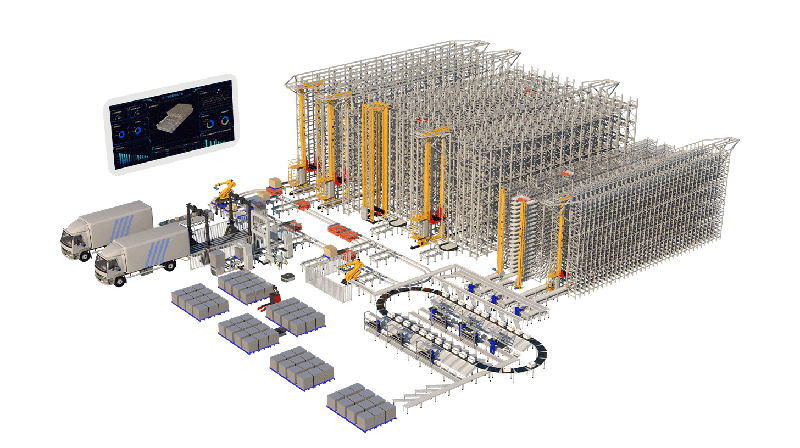
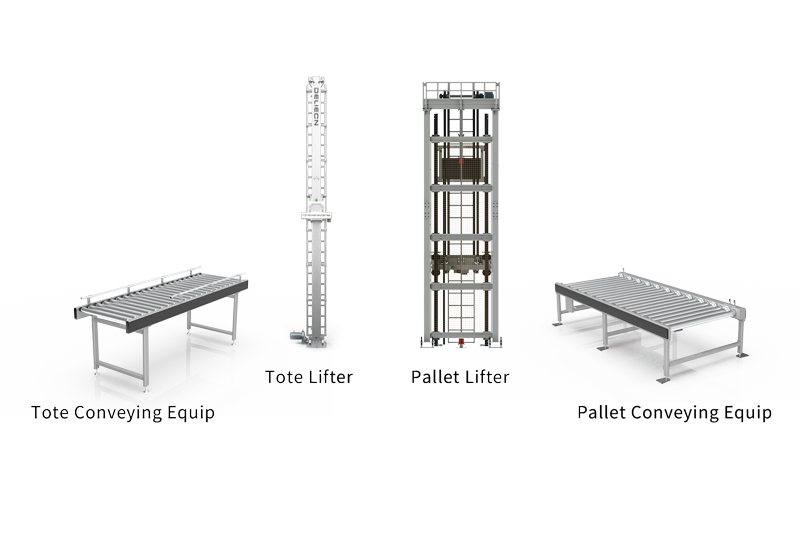
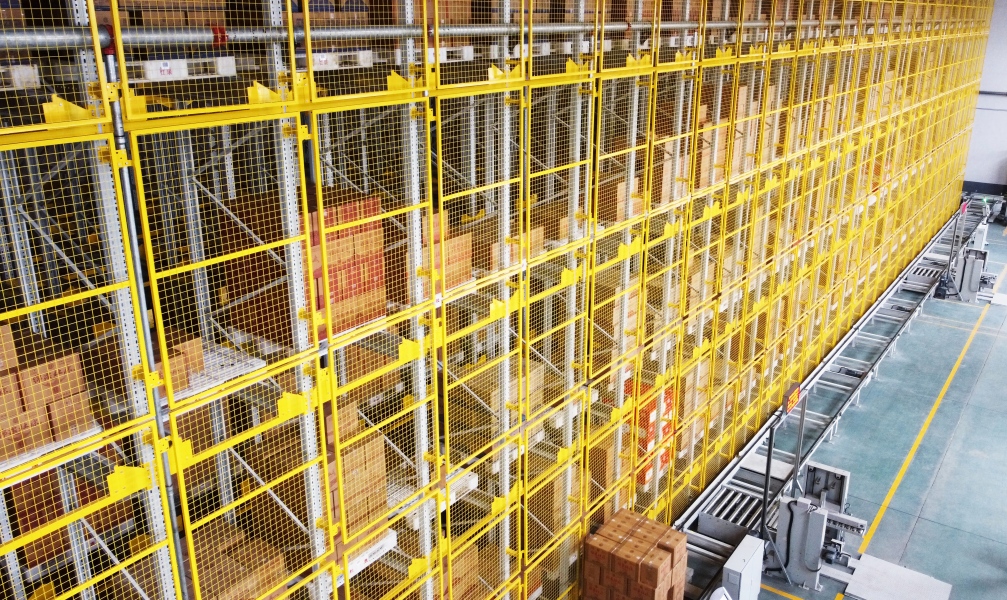
Racks, cranes, shuttle robots and conveyors are visible.
Suppose a pallet is physically transferred from storage to production but the system still records it at the original location. One error may be manageable. Repeated across thousands of movements, it eventually becomes a stock-control problem.
This is where warehouse software becomes part of ASRS rather than an optional add-on.
The architecture also needs to respect what the customer already operates.
The purpose is not to add more software layers.
It is to make sure that when a material moves physically, the business systems know what happened.
ASRS does not create value simply because a warehouse becomes more automated.
The value usually appears at a specific constraint.
Maybe the customer is paying to cool too much empty aisle space.
Maybe a high building is using only half of its vertical volume.
Perhaps employees spend a large part of each shift walking between storage locations and picking areas.
Production may be waiting for materials.
Inventory accuracy may be becoming harder to maintain as SKU count increases.
Those problems do not require the same solution.
Some warehouses may need a pallet shuttle system. Others are better suited to stacker cranes. Small-parts operations may use Mini-FlyBox or Tote Shuttle. Flexible production areas may still rely on AMRs even when the storage section is highly automated.
That is why the decision to choose an Automated Storage and Retrieval System should begin before the equipment list is written.
Follow a pallet, tote or component through the current warehouse.
Look at where it waits. Look at how many times somebody handles it. Notice how much building space exists only so people or forklifts can reach it. Check where physical inventory and system records begin to drift apart.
The strongest ASRS projects usually start there.
Automation is then no longer about replacing a manual warehouse with machines.
It becomes a way of removing the part of the operation that has become hardest to scale.
: It stores and retrieves goods with software, conveyors, lifters, cranes, or shuttle robots. The operator sees less manual movement. The system performs the timed work.
An operator scans each pallet, tote, or carton. The control system checks its size, weight, location, and priority. It then assigns a storage position. Incorrect data can cause trouble.
Software selects a suitable item, often from the nearest available location. A crane or shuttle collects it from a narrow aisle. The load then reaches a picking station. Inventory records update immediately.
Mini-load systems handle smaller cartons, totes, and bins. Compact carriers place them in dense storage positions. They suit repetitive movements and controlled item sizes. Irregular packaging may reduce performance.
Unit-load crane systems suit dense, high-bay pallet storage. They use vertical space and narrow aisles. Large loads require careful movement control. Access can be slower during equipment faults.
Shuttle systems move loads through deep storage lanes. They can work well when many identical items move daily. Crane systems offer different access patterns. Neither option fits every warehouse.
Yes. Vertical lift modules bring enclosed trays to a floor-level station. Horizontal carousels bring bins toward the operator. Both can reduce walking in small-item areas. They still require accurate inventory records.
Review order profiles, item dimensions, daily peaks, and replenishment frequency. Check ceiling height, maintenance skills, charging areas, and traffic rules. Test real cartons, damaged labels, and late replenishment waves. Paper studies can miss seasonal problems.
No system is perfect. Sensors can fail, conveyors can jam, and data can become inaccurate. Human judgment remains necessary during recovery. Regular safety checks and practical trials reveal hidden weaknesses.