Leave Your Message
0%

Ten years ago, an overseas buyer looking at Chinese warehouse equipment might have started with price.

That conversation has changed.

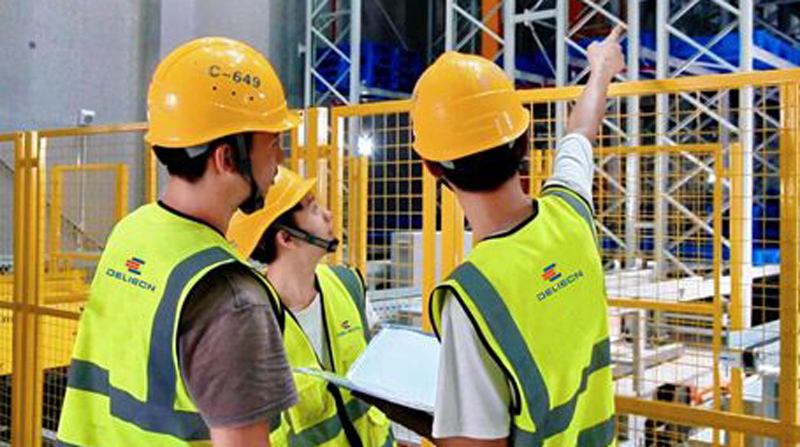
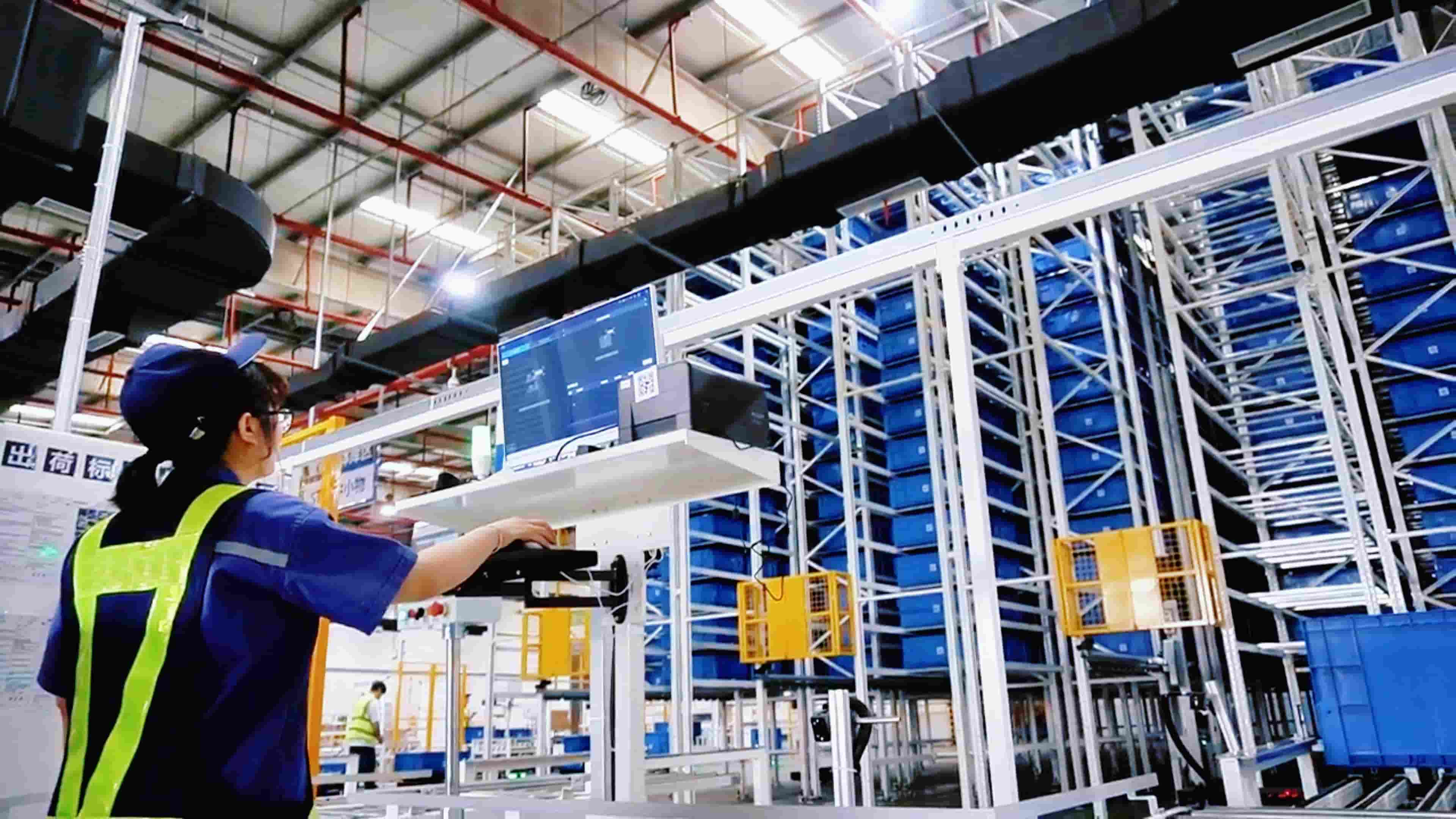
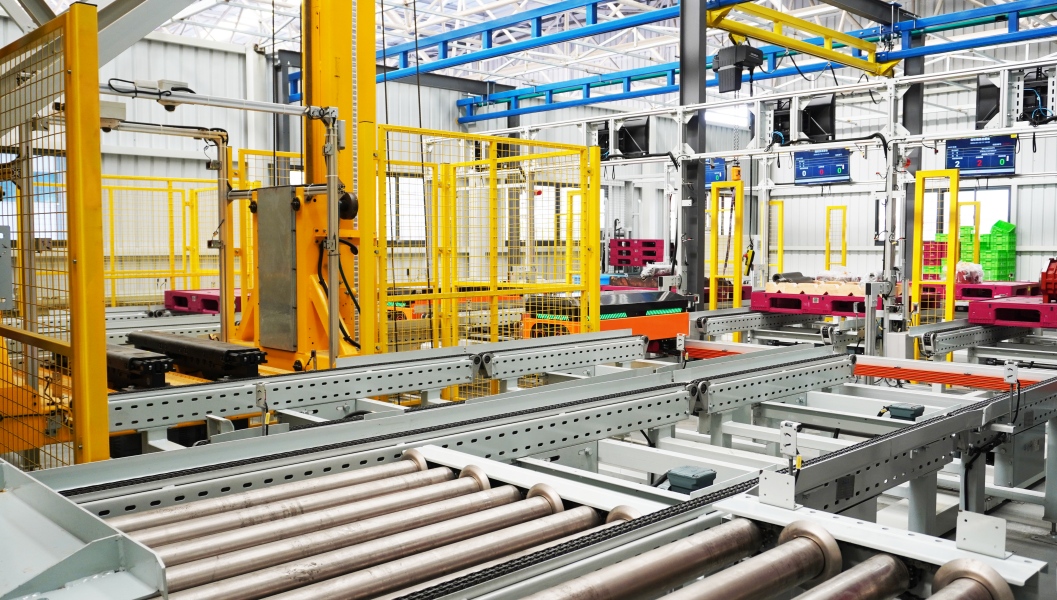
Today, when buyers visit logistics exhibitions in Shanghai, Guangzhou or Shenzhen, they can see pallet four-way shuttles, tote shuttles, Stacker Cranes, AMRs and increasingly mature warehouse software from Chinese manufacturers. More importantly, many of these products are no longer built only for domestic warehouses. Chinese equipment is appearing in projects across Southeast Asia, Europe, the Middle East and other overseas markets.

So why are more buyers considering a China Four-Way Shuttle supplier?

Price is still part of the answer. It is just no longer the most interesting part.

客户展(1).jpg

What Is a Four-Way Shuttle Storage System?

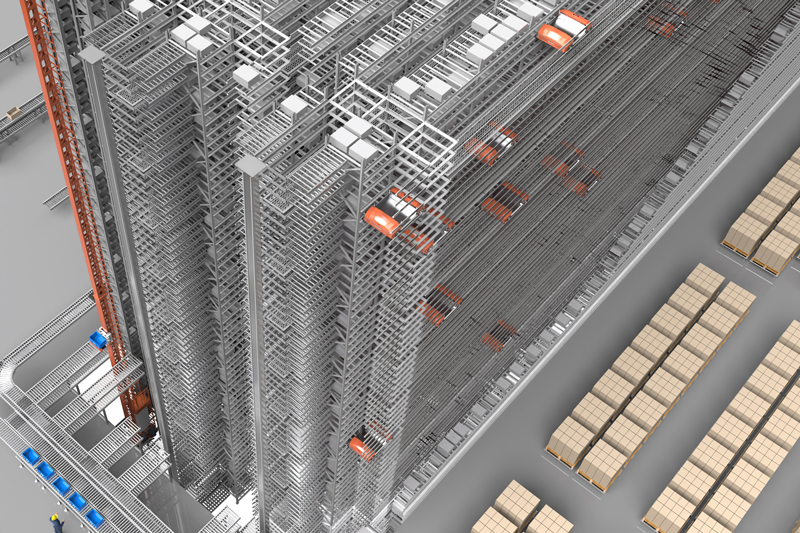
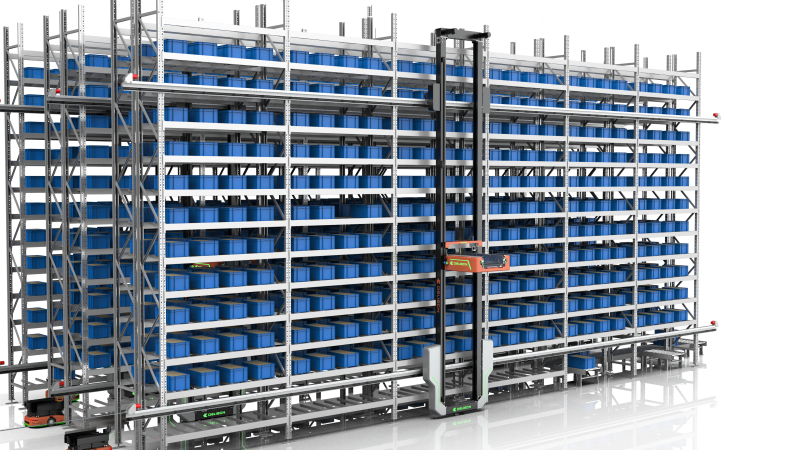
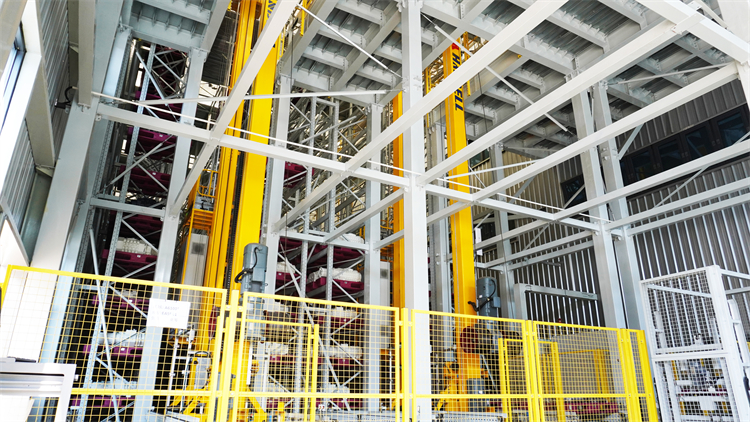
A Four Way Shuttle Systemis an Automated Storage solution for high-density warehouses. Unlike a two-way shuttle, its carriage moves forward, backward, left, and right. This flexibility allows one shuttle to serve several storage lanes. In a typical installation, pallets rest on steel rails inside deep channels. The shuttle lifts each pallet, travels beneath it, and places it in the selected position.

The system suits warehouses handling many pallets with similar products. It can improve space use while reducing forklift movement in storage aisles. Operators usually control tasks through warehouse software, scanners, and safety sensors. A reliable supplier should provide load calculations, rack drawings, shuttle testing, and clear maintenance procedures. These details matter when pallets weigh over one tonne or temperatures change inside cold storage.

The Four-Way Shuttle Market in China Grew Out of Real Warehouse Pressure

China is a useful place for four-way shuttle technology to develop because its warehouses are rarely all the same.

A new-energy materials plant may want tens of thousands of heavy pallet locations. An automotive parts center can have thousands of SKUs and constant picking activity. A pharmaceutical factory cares about batch control and production supply. A cold store wants to reduce the amount of refrigerated space occupied by forklift aisles.

These requirements have pushed Chinese manufacturers in different directions.

Some started with racking. Companies such as Nanjing Inform have years of experience in storage structures and later expanded into shuttle-based ASRS.

Others came from logistics equipment, robotics or system control.

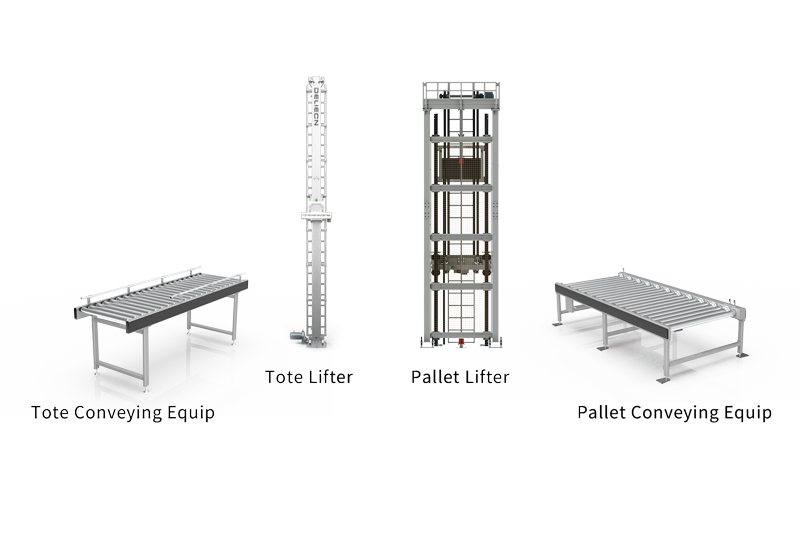
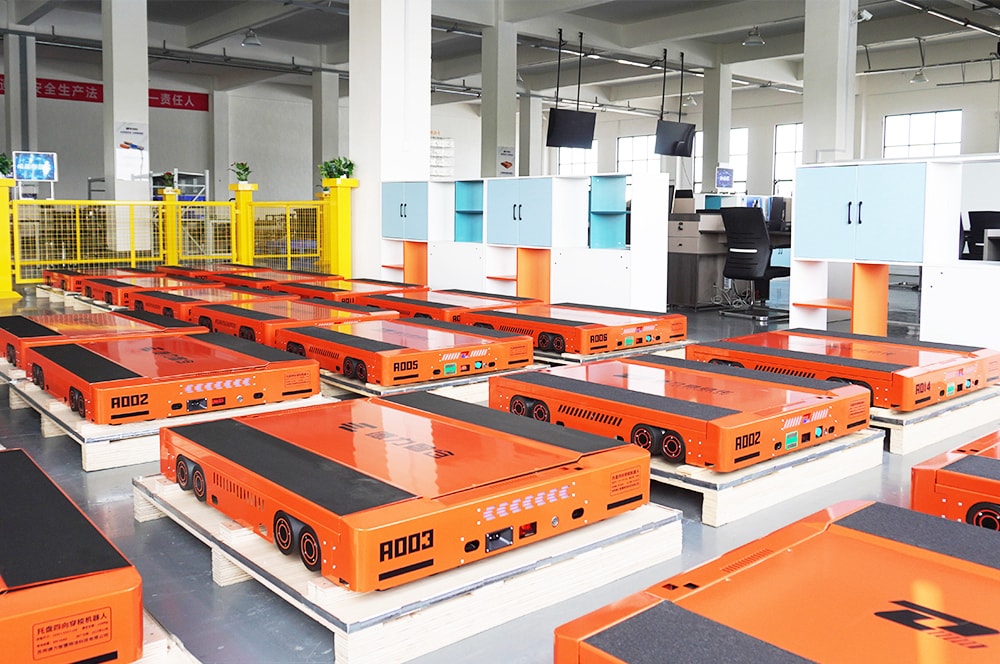
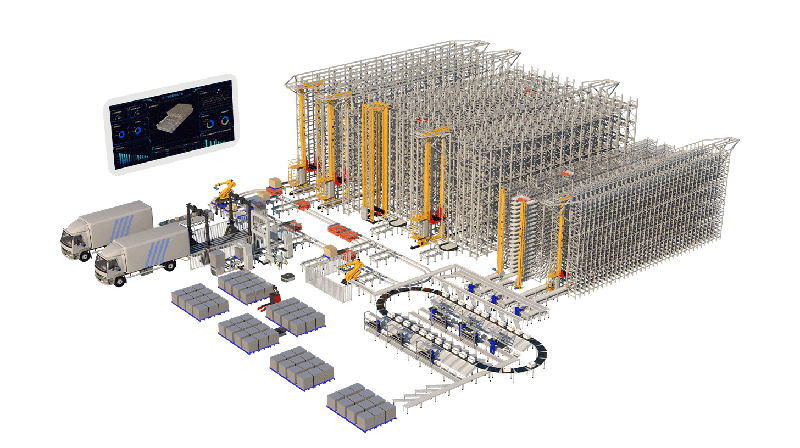
DELIECN followed another path, developing Pallet and Tote Four-Way Shuttle Robots together with lifters, conveying equipment and WMS/WCS. This allows the shuttle to be considered as part of the material flow rather than as an isolated machine.

The differences between these manufacturers are worth paying attention to.

They also explain why simply searching for the cheapest “4 way shuttle” on a sourcing platform does not tell you much about the Chinese market.

One Detail Can Change an Entire Rack Design

The body height of a Pallet Shuttle sounds like a small specification.

In an actual warehouse, it can affect thousands of storage positions.

DELIECN, for example, developed a 125 mm Pallet Four-Way Shuttle Robot. A thinner vehicle leaves more vertical space available for the pallet and rack structure. Whether that creates an additional storage level depends on the building and pallet height, so it should never be treated as an automatic capacity gain.

But this is exactly how experienced warehouse engineers tend to look at shuttle specifications.

They ask what a number changes in the building.

The same applies to speed. A shuttle capable of 120 m/min sounds attractive. Yet if several shuttles share one lifter, increasing robot speed alone may do little for total outbound capacity.

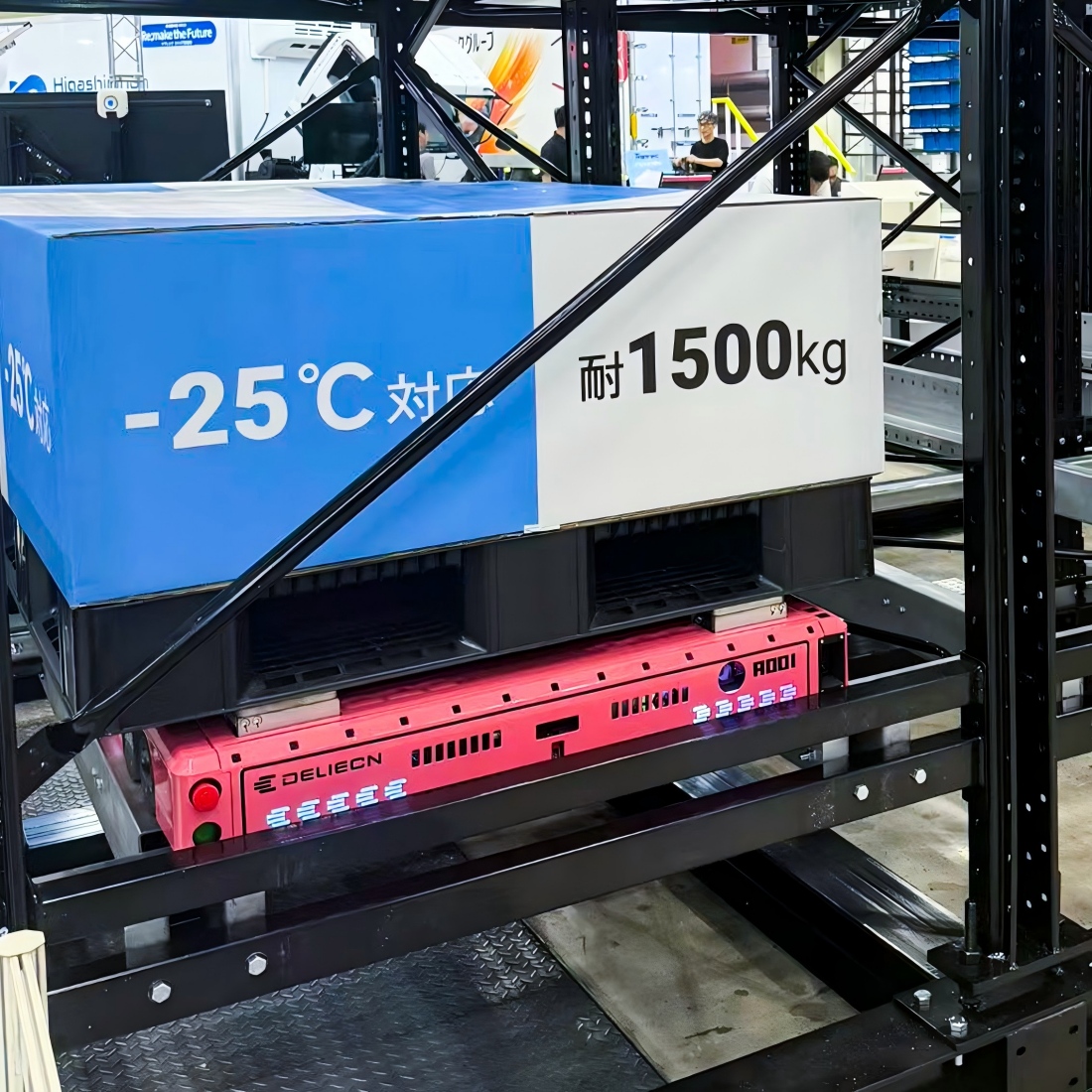
Cold temperature is similar. Saying that a shuttle can enter a freezer is easy. Running repeatedly at -25°C brings questions about batteries, sensors, electrical components, lubrication and maintenance.

These details are where the manufacturing depth of a supplier begins to show.

China's Supply Chain Helps Manufacturers Make These Changes Faster

A four-way shuttle contains far more than a steel chassis and four sets of wheels.

Motors, reducers, sensors, electrical components, batteries, machining, sheet-metal fabrication and control systems all have to come together inside a compact machine. The rack itself also has to maintain the dimensional accuracy required for repeated travel and positioning.

China already manufactures most of these components at enormous industrial scale.

For shuttle manufacturers, that creates a short distance between an engineering change and the factory floor.

This becomes useful when projects stop being standard.

A customer may have an unusual pallet. Another needs low-temperature operation. A brownfield warehouse may have very little height to spare. A heavy industrial project may need a load well beyond a conventional consumer-goods pallet.

The advantage is not that every Chinese supplier will accept every customization. Many will not.

The advantage is that the surrounding manufacturing ecosystem makes customization technically and commercially realistic when the project justifies it.

That is quite different from buying a finished standard machine and trying to make the warehouse fit around it.

A Cold Warehouse Is a Good Place to See Whether the Design Makes Sense

Cold storage gives four-way shuttle technology a particularly clear job.

At -25°C, an aisle is not free space. It has already been built, insulated and refrigerated.

In DELIECN's Readly project, Pallet Four-Way Shuttle Robots were used to create3,484 pallet locations while reducing the dependence on conventional forklift aisles. The resulting warehouse uses its refrigerated volume far more intensively.

Yet DELIECN has also used Pallet Two-Way Shuttle technology in cold-storage applications.

That may sound less impressive in a brochure, but it tells us something useful.

If pallets can be grouped into deep lanes with predictable movement, the ability to travel in four directions may not be necessary. Paying for additional flexibility only makes sense when the inventory and throughput can use it.

A supplier willing to recommend a simpler system is often more interesting than one that recommends its most expensive robot for every warehouse.

China Is Also Moving Beyond the Pallet Shuttle

The development of tote four-way shuttles is another sign of how the market is changing.

Pallet storage is mainly concerned with large unit loads. Tote storage introduces a different problem: much larger location counts, higher retrieval frequency and more demanding multi-robot scheduling.

At Yonggui, for example, the building reaches 22.3 meters. Its Tote Shuttle system uses 51 storage levels and serves more than 9,700 types of automotive components.

That is not simply a pallet shuttle made smaller.

The robot, fork mechanism, rack, lifters and control logic all have to suit a different operating rhythm.

For an overseas buyer, experience across pallet and tote systems can therefore reveal something about a manufacturer's R&D capability. It shows whether the company understands only one machine or has developed a broader technical base around shuttle storage.

The Factory Visit Still Tells You More Than the Catalogue

If you are seriously evaluating Chinese suppliers, spend less time comparing PDF specifications and more time looking at what happens behind them.

Walk through the manufacturing area.

Look at whether shuttle assembly is actually taking place there. Ask where the mechanical design is done. Find out who writes the WCS. Ask the engineer what happens when several robots request the same lifter.

Then ask to see a project that was difficult for a reason similar to yours.

For a freezer project, a normal-temperature demonstration is of limited value. For a 1,500 kg pallet, a tote-shuttle reference proves little. If your warehouse already has WMS, ask how the supplier's WCS will exchange tasks and status with it rather than accepting a generic statement that “API integration is supported.”

The answers do not need to be perfect.

They need to be specific.

Experienced engineering teams usually start talking about pallet quality, buffer positions, peak task distribution, interface responsibility and recovery from abnormal conditions. A sales-only organization tends to return quickly to robot specifications.

That difference becomes much easier to hear in a real technical conversation.

Chinese Four-Way Shuttles Are Becoming an Engineering Choice, Not Just a Cost Choice

There is still a cost advantage in sourcing warehouse equipment from China, particularly when shuttles, racking, lifters and other equipment are purchased together.

But that alone would not explain the industry's development.

The stronger reason is that China now has a sizeable group of manufacturers working on the same warehouse problems from different technical backgrounds. Competition between them has accelerated product development, while China's machinery, electronics, steel fabrication and software ecosystem gives those companies room to keep improving their systems.

For buyers, this creates more opportunity and more homework.

Do not choose a China Four-Way Shuttle supplier because the robot looks fast on an exhibition track.

Look at what the company manufactures, what it develops itself, where its equipment has already operated, and whether its engineers understand why your warehouse needs four-way movement in the first place.

If those answers are convincing, the value of sourcing from China becomes much easier to see.

FAQS

: What technologies should a reliable four-way shuttle supplier provide?

: Look for precise positioning, stable wireless communication, and real-time task coordination. The shuttle should stop smoothly beside pallets in narrow rack spaces. Small errors matter. Useful controls include dynamic routing, collision avoidance, and battery monitoring. Remote diagnostics can shorten troubleshooting time.

How can buyers verify shuttle performance before purchasing?

Request a live demonstration using your pallet sizes and actual floor conditions. Observe repeated starts, stops, and direction changes. Check full-load movement and stopping accuracy. Ask for test records and measurable performance data. Sales promises are weak evidence.

Why is four-way movement useful in dense warehouses?

A four-way shuttle moves forward, backward, left, and right. This can improve storage density and reduce dedicated aisle requirements. It also supports changing storage layouts. The benefit depends on accurate design. More movement is not always better.

What customization details should a supplier confirm?

Confirm pallet dimensions, rack spacing, floor tolerance, load capacity, and rack height. Discuss temperature, dust, humidity, and charging conditions. The supplier should explain each required specification clearly. A small measurement error may cause rack interference or delayed retrieval.

How should software compatibility be evaluated?

Check communication protocols with the warehouse management system and conveyor equipment. Ask how commands are handled during network interruptions. Review data interfaces, manual recovery, and fault reporting. Future expansion should also be discussed. Compatibility problems appear later.

What safety and maintenance information should suppliers provide?

Request safety procedures, wiring diagrams, fault codes, and maintenance intervals. Review collision sensors, battery monitoring, and maintenance access. Ask about spare-parts availability and technician response times. Operator training should be clearly scheduled. Documentation matters daily.

Which conditions can expose hidden shuttle problems?

Test uneven floor conditions, dust, mixed pallets, and repeated direction changes. Observe whether sensors remain accurate after long operating cycles. Workers may also make mistakes. Real warehouses are less tidy. Simulations cannot reveal everything.

How can international buyers compare suppliers fairly?

Compare technical evidence, engineering communication, support plans, and total project costs. Request layout drawings, load calculations, simulations, and installation references. Factory audits or witnessed testing can improve confidence. Define response times and acceptance standards before payment. I would question every assumption.

What support should a dependable supplier offer after delivery?

Support may include installation guidance, operator training, remote troubleshooting, and replacement-part planning. The supplier should explain charging cycles and expected motor life. Export experience can simplify packaging and technical documents. Some adjustments may still be necessary after daily use. That is normal.

Ethan

Ethan

Ethan is a seasoned marketing professional specializing in logistics automation and intralogistics solutions. With a profound understanding of advanced robotics technologies and end-to-end automation systems, he plays a key role in connecting clients with the innovative solutions that enhance......
Previous Best China Warehouse Automation Supplier for Global Buyers