Industries Smart Warehousing Solutions Tailored To Your Industry
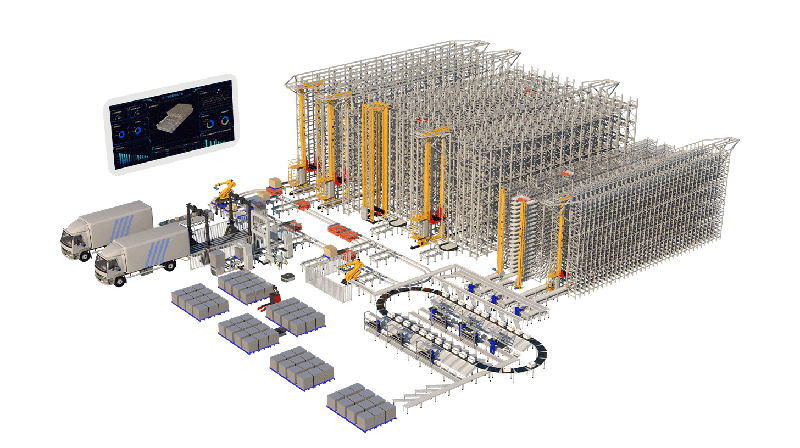
With a comprehensive range of intralogistics, products, DELlECN helps you build efficient and Fully Automated Warehouse operations.
Services Maximizing the Value of Your Logistics
At DELIECN, service goes beyond product delivery. We provide consulting, planning, design, manufacturing, installation, commissioning, and after-sales support throughout the entire lifecycle.
About Us Efficient and Flexible Automated Warehousing Solutions
DELIECN supports clients across food and beverage, new energy, chemicals, pharmaceuticals, e-commerce, precision manufacturing, textiles, and energy industries with intelligent warehousing systems tailored to their goals and requirements.

Buyers from around the world are jumping into the warehouse tech scene, which’s being shaped by several pressures—like tight labor markets, promises of faster deliveries, and demand that’s pretty unpredictable. Implementing a Warehouse Automation System can really boost your picking speed, keep your inventory more accurate, and bring some consistency to your workspace. That said, don’t think automation is some magic fix. If you pick the wrong system, it can actually cause costly bottlenecks, especially near busy loading docks.
According to the Material Handling Institute’s 2024 Annual Industry Report, more than half of the supply chain leaders surveyed—around 55%—are planning to bump up their tech investments. The report also highlights growing interest in stuff like robotics, AI, and integrated software solutions. And Interact Analysis predicts solid growth in Warehouse Automation through 2027. These numbers definitely show we’re on the move, but they don’t guarantee that any particular purchase will be smooth sailing. Every warehouse is unique—different ceiling heights, SKU types, order volumes, and workforce skills—so what works for one might not work for another.
That’s why I put together this guide with 10 practical tips for international buyers looking into Warehouse Automation Systems. It covers things like checking supplier credibility, matching systems to your needs, understanding total costs, cybersecurity concerns, training, maintenance, and after-sales support. A good evaluation starts with real-world specs—think: handling 12,000 orders daily, managing 1,500 SKUs, operating in two shifts, and dealing with seasonal peaks. And don’t just go by slick demos—ask for proof from similar setups. Seeing how they've handled real-world challenges will tell you way more.
And hey, small tests really do matter. A quick pilot project can uncover issues like barcode glare, conveyor noise, or software lag—things a fancy presentation might gloss over. Sure, the term Automation Warehouse System sounds straightforward, but putting it into practice is a whole different ball game. It involves hardware, controls, data systems, people, and a solid plan for change management. So, some of the recommendations here are intentionally cautious. Forecasts can shift, and no single supplier is perfect for every warehouse. The key to making solid decisions is doing thoughtful trials, being transparent about your assumptions, and maybe getting an independent tech review—think of it like doing your homework before making a big purchase.
Global buyers should define the problem before selecting Warehouse Automation. MHI’s 2024 Annual Industry Report forecasts that 55% of surveyed companies will increase supply chain technology and innovation investment. That percentage shows market confidence, not a purchasing target. It does not justify buying every available system. Set measurable goals first: increase order lines per hour, reduce picking errors, or stabilize service during peak seasons. Record current throughput, labor hours, SKU dimensions, and daily order volatility.
Use external data carefully. The International Federation of Robotics reported 541,302 industrial robots installed worldwide in 2023, showing strong automation adoption. However, this figure does not prove warehouse payback. A robot designed for manufacturing may not suit mixed cartons, narrow aisles, or frequent product changes. Compare three operating scenarios: normal demand, promotional peaks, and labor shortages. Include integration, maintenance, training, energy, and software costs. Small details matter, such as scanning delays at a packing bench or ten seconds lost at every replenishment task.
Plans can be wrong. Test assumptions with a limited pilot zone and real orders. Measure cycle time, error rates, downtime, and worker travel distance for several weeks. Recheck the model after seasonal demand changes. A 55% investment forecast should encourage disciplined preparation, not rushed spending. Keep manual fallback procedures, because even reliable systems need recovery steps during network outages or unexpected inventory variation.
Warehouse Automation should begin with the task, not the machine. Picking, replenishment, sorting, and pallet movement require different solutions. A conveyor may support steady cartons, while mobile robots can suit changing pick locations. Manual work may still perform better for fragile or irregular items.
Volume changes the decision. High-throughput operations often need fixed equipment and predictable product flows. Medium-volume warehouses may benefit from modular systems that expand by zone. Low-volume sites should avoid expensive automation unless labor shortages or service targets justify it. Measure orders per hour, travel distance, peak-season demand, and available floor space.
SKU complexity matters just as much. A warehouse with 200 uniform cases is easier to automate than one with 20,000 items. Record dimensions, weights, packaging quality, and storage frequency. Small, mixed SKUs need accurate identification and flexible handling. Oversized goods need different clearances and safety controls. Do not trust catalog assumptions. Test real products.
I have seen projects fail because average volume replaced peak data. That mistake is costly. Pilot one workflow, then compare accuracy, uptime, labor savings, and maintenance needs. The results may challenge the original plan. Global buyers should also verify local electrical standards, operator training, spare-part access, and system support before signing. A technically impressive design can still disappoint when service response is slow.
Global buyers should compare Warehouse Automation by operating conditions, not by glossy specifications. 2024 market data showed strong demand forAS/RS, AMRs, AGVs, and robotic picking systems. AS/RS suits dense storage and predictable throughput. It can reduce travel time dramatically. AMRs offer flexible movement around changing workstations. AGVs remain effective on fixed routes and stable warehouse layouts. Robotics improves picking consistency, but integration often requires more engineering than expected.
Compare five practical measures: throughput, storage density, labor coverage, installation time, and software compatibility. In 2024, labor shortages continued pushing buyers toward mobile robots and robotic handling. However, growth did not make every system suitable. A high-speed AS/RS may underperform when product sizes change weekly. An AMR fleet may struggle with narrow aisles, poor floor markings, or unreliable wireless coverage. Small details matter.
Request site-specific data before selecting equipment. Measure peak orders, not average orders. Test cartons, pallets, labels, and damaged packaging. Ask for recovery procedures when a robot stops near a loading door. Total cost should include software updates, spare parts, training, and integration work. Payback estimates can look attractive. They can also be wrong. I have seen projects underestimate seasonal peaks and manual exception handling. A controlled pilot, with documented results, offers more reliable evidence than a sales forecast.
For global buyers, ROI starts with a baseline, not a supplier promise. Record shifts, loaded labor cost, picks per hour, error rate, and overtime for four representative weeks. Then model Agv Warehouse Automation against the same workload. MHI’s 2024 Annual Industry Report found that 47% of surveyed supply-chain professionals used robotics and automation. Adoption is growing, but adoption alone proves nothing. Calculate annual labor savings from reduced hours and loaded hourly costs. Include training, software, maintenance, batteries, integration, safety upgrades, and downtime.
Throughput needs a physical test. Compare current picks per hour with verified system performance during peak waves. If 20 operators produce 10,000 daily picks, removing six positions creates value only after local wages and shift lengths are applied. Accuracy deserves separate measurement. Multiply fewer errors by reshipment, handling, service, and disposal costs. Zebra’s 2024 Warehousing Study reported that 69% of warehouse decision-makers planned to deploy automation by 2028. Intentions do not guarantee usable capacity.
Use this payback formula: total installed cost divided by annual net benefit. A $600,000 project delivering $180,000 net savings pays back in 3.3 years. Test low, expected, and high cases. A buyer’s first spreadsheet is often too optimistic. Seasonal volume, absenteeism, and integration delays can weaken returns. Require a pilot with measured uptime, queue time, pick accuracy, and recovery time. A slower system with dependable accuracy may outperform a faster one that stalls.
Representative planning benchmarks comparing a manual warehouse with an automated workflow. The model uses labor hours per 100 orders, orders processed per hour, order accuracy, and estimated payback period.
Example assumptions: two-shift operation, stable order volume, consistent SKU profiles, and automation applied to picking, conveying, and sorting. Actual ROI depends on labor rates, utilization, integration costs, maintenance, and local operating conditions.
10 Warehouse Automation System Tips for Global Buyers
Check WMS, WES, ERP, and IoT Integration Before Global Deployment
Global buyers should test system integration before ordering Warehouse Automation Robots. A WMS must send accurate tasks, locations, lot data, and inventory status. The WES then sequences robot movements around conveyors, picking stations, and charging windows. If these layers disagree, a full aisle can stop. Test with real SKU dimensions. Errors appear quickly.
ERP integration connects warehouse events to purchasing, finance, and order planning. Confirm how receipts, adjustments, returns, and partial shipments move between systems. Use one controlled test order across several time zones and measurement units. IoT sensors can provide temperature, battery, door, and motor data. However, raw alerts may overwhelm supervisors. Set thresholds, ownership, and escalation rules before deployment. Our pilot looked successful, but excessive sensor warnings delayed genuine maintenance. That mistake was avoidable.
A global rollout needs stable APIs, clear data ownership, and offline procedures for network outages. Ask suppliers to document retry logic, timestamps, cybersecurity controls, and audit trails. Run a small pilot and measure travel time, order accuracy, recovery time, and human intervention. Keep evidence. Do not hide weak results. Recheck integrations after software updates, new product types, and local operating changes. A system can perform well in one facility, yet fail when data practices change elsewhere.
| No. | Automation Tip | Integration Checkpoint | Planning Data or KPI | Global Deployment Requirement | Validation Method | Risk Level |
|---|---|---|---|---|---|---|
| 1 | Map the end-to-end material flow before selecting equipment. | Confirm that WMS inventory status, WES task orchestration, ERP orders, and equipment controls use the same process definitions. | Document receiving, put-away, replenishment, picking, packing, shipping, returns, and exception flows. | Use common process maps with local variations clearly identified for every target country. | Run a process simulation using peak-day volume, returns, shortages, and damaged inventory scenarios. | Medium |
| 2 | Define the system-of-record hierarchy. | Set clear ownership for item master data, inventory balances, purchase orders, sales orders, shipment status, and financial transactions. | Each critical data object should have one authoritative source and one approved update path. | Support multilingual descriptions, local units of measure, time zones, tax rules, and country-specific identifiers. | Perform duplicate-record, unit-conversion, and inventory-reconciliation tests before go-live. | High |
| 3 | Use API-first integration with reliable event handling. | Check REST or message-based interfaces between ERP, WMS, WES, warehouse control systems, transportation systems, and IoT platforms. | Define message ownership, retry rules, time stamps, error codes, idempotency, and monitoring for every interface. | Design for intermittent connectivity, regional network differences, and controlled offline operation. | Test duplicate messages, delayed messages, incomplete payloads, service timeouts, and recovery after outages. | High |
| 4 | Size WES capacity for normal and peak demand. | Verify that WES can prioritize tasks across conveyors, sorters, robots, picking stations, and manual work areas without conflicting commands. | Model average and peak order lines per hour, task latency, station utilization, buffer capacity, and recovery time. | Use local peak calendars, seasonal promotions, labor constraints, and cross-border shipping cut-off times. | Conduct a stress test at planned peak throughput plus a contingency margin, commonly 15%–25%. | High |
| 5 | Standardize barcode, RFID, and sensor data capture. | Ensure scanners, RFID readers, dimensioners, scales, cameras, and environmental sensors send normalized data to the correct application. | Track read rate, false-read rate, scan latency, device uptime, battery status, and measurement tolerance. | Define acceptable label formats, frequency bands, calibration procedures, and local radio or safety requirements. | Test glossy labels, damaged labels, mixed package sizes, metal products, low temperatures, and poor lighting. | Medium |
| 6 | Build cybersecurity and access control into the design. | Review identity management, network segmentation, encryption, privileged access, device authentication, and audit logging across IT and operational technology. | Define recovery point objectives, recovery time objectives, patch windows, backup frequency, and security incident response roles. | Account for data-protection, critical-infrastructure, labor, and electronic-record requirements in each operating region. | Complete vulnerability assessments, role-based access tests, backup restoration tests, and disaster-recovery exercises. | High |
| 7 | Plan for local compliance and trade documentation. | Connect order, inventory, shipment, customs, serial-number, lot, and expiry data where local regulations require traceability. | Maintain complete event history for receiving, movement, picking, packing, shipping, recalls, and returns. | Support country-specific labels, languages, currencies, units, product classifications, and retention periods. | Use compliance checklists and sample audits for each country, product category, and distribution channel. | High |
| 8 | Measure energy use, maintenance, and equipment availability. | Connect equipment controllers and IoT sensors to maintenance and analytics systems without interrupting WMS or WES execution. | Monitor overall equipment effectiveness, availability, mean time between failures, mean time to repair, and energy per order line. | Consider local power quality, voltage standards, spare-parts availability, technician coverage, and climate conditions. | Run a controlled pilot for at least one operating cycle and compare baseline versus automated performance. | Medium |
| 9 | Design human fallback and exception workflows. | Confirm that operators can safely handle jams, mis-picks, missing inventory, damaged goods, network outages, and manual order release. | Set maximum exception response time, manual processing capacity, escalation levels, and reconciliation procedures. | Provide multilingual work instructions, safety training, local labor coverage, and clearly assigned decision rights. | Perform live failure drills and verify that inventory and order status remain consistent after manual intervention. | Medium |
| 10 | Use a phased rollout with measurable acceptance criteria. | Separate configuration, integration, equipment commissioning, user acceptance testing, cutover, and post-go-live stabilization. | Set target order accuracy, inventory accuracy, throughput, system availability, response time, and backlog limits before deployment. | Pilot one site or process, capture lessons learned, and create a repeatable template for additional countries. | Require signed acceptance tests, parallel-run reconciliation, daily dashboards, and a formal go-live exit review. | High |
Safety and compliance should shape the purchase, not follow it. Map moving equipment, pedestrian crossings, emergency stops, and maintenance access before requesting quotations. Ask suppliers for documented risk assessments and validation records. Check ISO 3691-4 for driverless trucks, ISO 13849 for safety controls, and EN 528 for storage and retrieval machines. Regional requirements may differ. Confirm applicable machinery, electrical, workplace, and data-protection rules with an accredited local assessor. Small gaps become expensive delays.
Cybersecurity deserves the same attention as mechanical performance. Request network diagrams, asset inventories, role-based access, patch procedures, and secure remote-support controls. Segment warehouse devices from corporate systems. Test recovery using a disconnected backup, not only a written plan. The 2024 Verizon Data Breach Investigations Report found that the human element appeared in 68% of breaches. Training still matters. The 2024 IBM Cost of a Data Breach Report placed the global average breach cost at 4.88 million dollars, although warehouse exposure varies widely.
Regional standards also affect integration. Verify radio frequencies, voltage, emergency signage, accessibility, and worker-training obligations before shipping equipment. Require translated alarms and clear procedures for local technicians. MHI’s 2024 Annual Industry Report reported that 55% of supply-chain professionals increased technology investment over the previous two years.
That momentum can encourage rushed decisions. I have seen impressive demonstrations hide weak maintenance evidence. Measure recovery time, false stops, inspection intervals, and spare-parts availability on your own site. A slower pilot may reveal more than a polished presentation.
Global buyers should treat the 73% automation-adoption projection as a vendor-screening signal, not a sales guarantee. Warehouse Automation Systems must solve measurable problems: walking distance, picking errors, dock congestion, and labor visibility. Ask vendors for site-specific evidence from facilities with similar order profiles. Request before-and-after figures, implementation timelines, and maintenance records. Strong proposals show how sensors, software, conveyors, or mobile robots work together. Avoid impressive demos alone. They can hide weak integration.
Compare vendors through a practical scorecard. Check local service coverage, spare-parts access, cybersecurity controls, data ownership, and training depth. Require clear answers about peak-season capacity and manual fallback procedures. A reliable supplier explains failure handling in plain language. Test a small zone before approving a full deployment. Measure scan accuracy, replenishment speed, uptime, and worker travel during the pilot. Numbers reveal more than polished presentations. Sometimes, the cheapest bid becomes expensive after customization.
Global projects also need adaptable communication. Confirm language support, export documentation, electrical compatibility, and regional compliance responsibilities. Ask who owns software updates when operating conditions change. One overlooked detail can stop a productive aisle. Keep an internal record of assumptions, rejected options, and unresolved risks. That record supports accountable decisions and exposes weak reasoning. I would still challenge the 73% figure. Adoption varies by country, warehouse size, product mix, and available capital. Use the projection to ask better questions, then verify every claim on your own floor.
API interfaces are becoming the connective tissue of modern warehouse automation. The International Federation of Robotics reported that more than 541,000 industrial robots were installed worldwide in 2023, highlighting the growing need for reliable communication between automated equipment and business systems. In this environment, warehouses must coordinate orders, inventory, transport tasks, and production requirements without delays caused by isolated software platforms.
A flexible API interface system supports WebService, WebAPI, and table-to-table connections, allowing warehouse management systems and warehouse control systems to integrate smoothly with ERP, MES, and SAP environments. These integration methods enable real-time synchronization of commands, task feedback, inventory records, and equipment status. As a result, operators can reduce manual data entry, improve order visibility, and respond faster to changing operational demands.
The 2024 MHI Annual Industry Report indicates that supply chain organizations continue to increase investment in automation and digital technologies to improve efficiency and resilience. Seamless system connectivity is essential to achieving those goals. By creating a consistent data exchange layer across warehouse, manufacturing, and enterprise applications, API-based integration helps accelerate deployment, simplify cross-system coordination, and support scalable automation as business volumes and operational complexity grow.
Define measurable goals before selecting equipment. Track order lines per hour, picking errors, labor hours, and peak-season service. Record SKU sizes and daily order changes. Buying everything is usually a mistake.
No. It shows market confidence, not guaranteed payback. Compare normal demand, promotional peaks, and labor shortages. Include software, training, energy, maintenance, and integration costs. Forecasts can mislead.
Run a limited pilot using real orders. Measure cycle time, accuracy, downtime, and worker travel distance. Test several weeks, not one impressive afternoon. Recheck results after seasonal demand changes.
Confirm that warehouse, execution, enterprise, and sensor systems share accurate data. Test locations, lot details, inventory status, returns, and partial shipments. Use one controlled order across time zones. Small data errors spread quickly.
Set alert thresholds, ownership, and escalation rules before launch. Separate urgent warnings from routine battery or temperature notices. Too many alerts can hide genuine maintenance problems. We learned this slowly.
Map moving equipment, pedestrian crossings, emergency stops, and maintenance access. Request documented risk assessments and validation records. Check local machinery, electrical, workplace, and data-protection requirements. A narrow walkway matters.
Request network diagrams, asset lists, access controls, patch procedures, and secure remote support. Separate warehouse devices from corporate systems. Test recovery with a disconnected backup. Written plans are not enough.
Verify radio frequencies, voltage, emergency signs, accessibility, and technician training duties. Provide translated alarms and clear local procedures. Software may succeed in one site and fail elsewhere. Data habits differ.
Ask for maintenance records, spare-parts availability, inspection intervals, retry logic, timestamps, and audit trails. Measure recovery time and false stops on your own site. Demonstrations are useful, but incomplete.
Yes. Network outages, unusual inventory, or software updates can stop reliable equipment. Prepare manual picking and recovery steps. Review them with workers. Automation reduces routine work, not every risk.
For global buyers, choosing a Warehouse Automation System should begin with clear business goals, such as reducing labor pressure, increasing throughput, improving order accuracy, and supporting future growth. Start by assessing order volume, SKU variety, product dimensions, storage density, and required processing speed. Then compare suitable technologies, including automated storage and retrieval systems, autonomous mobile robots, automated guided vehicles, and robotic solutions. Each option should be evaluated according to task type, operating environment, scalability, and integration requirements.
A reliable investment decision also requires a practical ROI model covering labor savings, capacity gains, accuracy improvements, maintenance costs, implementation expenses, and payback time. Before deployment across regions, confirm compatibility with warehouse management, execution, enterprise resource planning, and Internet of Things platforms. Buyers should also review operator safety, equipment reliability, cybersecurity, data protection, training, service support, and regional technical standards. Finally, assess vendors by implementation experience, customization capability, system uptime, lifecycle support, and their ability to scale automation as demand and operational complexity increase.