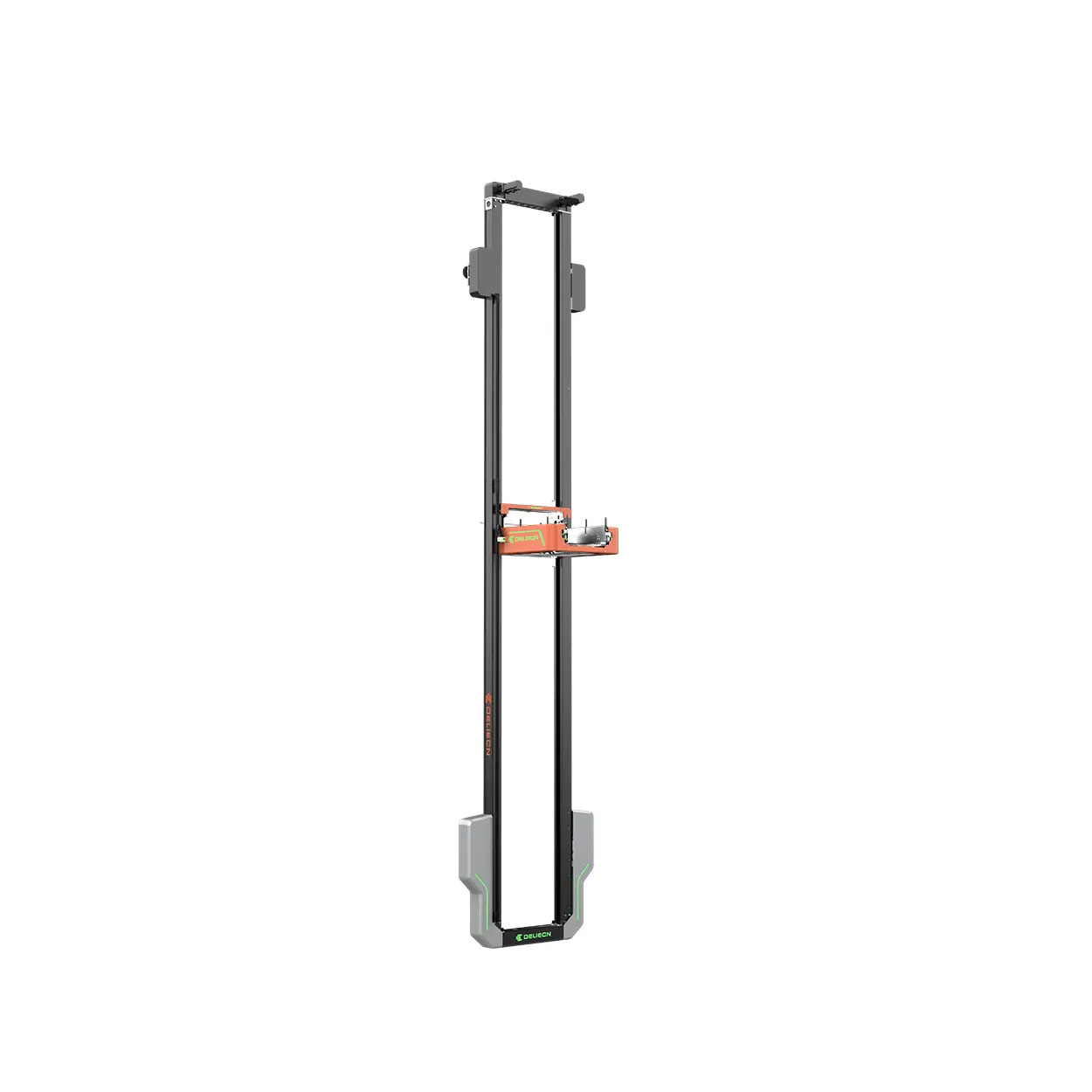
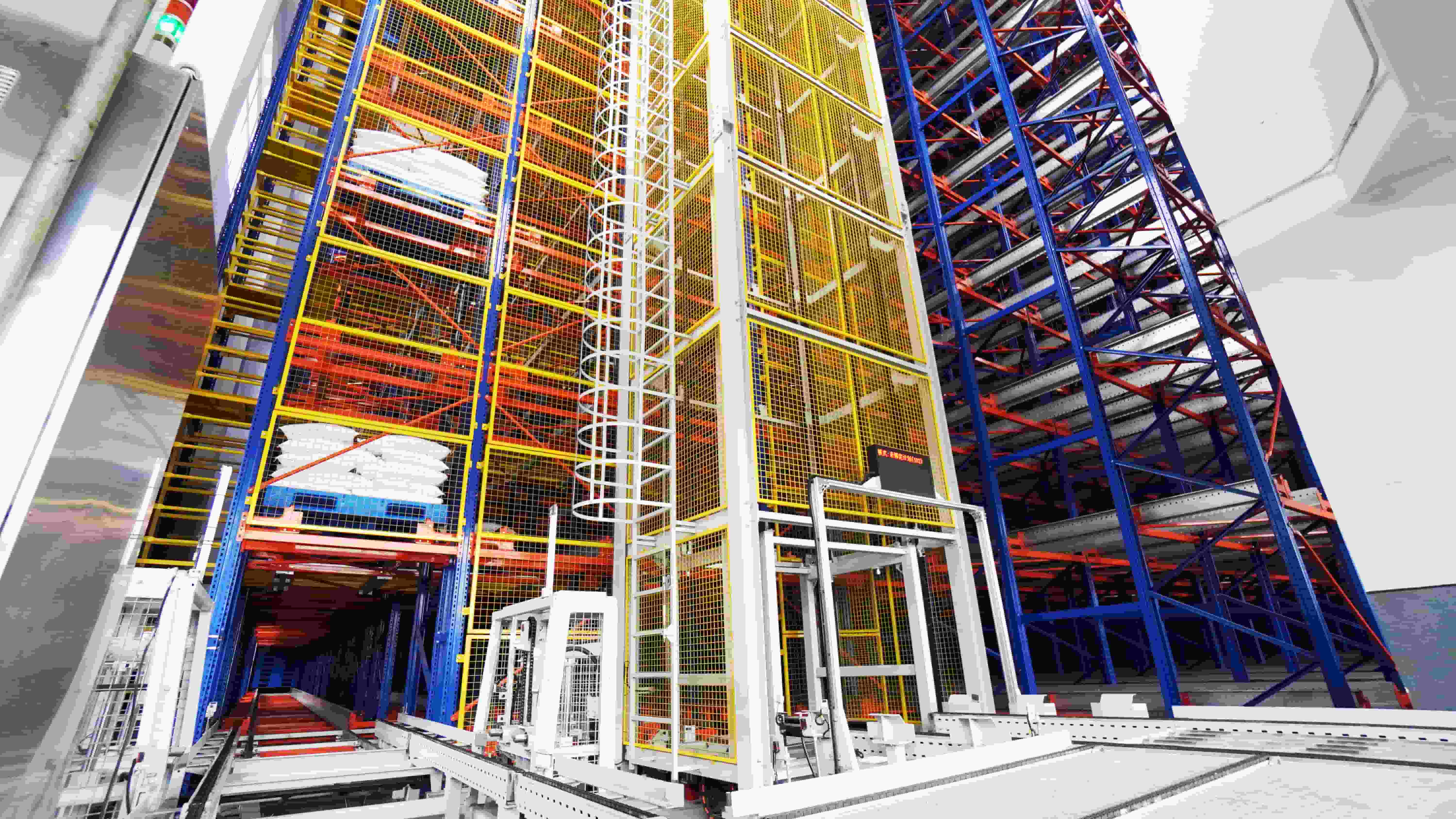
“Tote Shuttle Robot” sounds like one type of equipment.
It is not.
DELIECN currently has Tote Two-Way Shuttle Robot, Tote Four-Way Shuttle Robot and Dual-Station Tote Four-Way Shuttle Robot. They all handle standardized unit loads such as totes and bins, but the way they move inside the rack—and the amount of work they can complete during one cycle—is different.
The easiest place to start is not speed.
It is this question:
Does the shuttle need to change lanes by itself?
Once that is clear, the difference between the three becomes much easier to understand.
The Tote Two-Way Shuttle Robot has the simplest movement logic.
It travels along one axis inside the rack. It can move forward and backward to store or retrieve totes, but it does not have the Y-axis lane-switching capability of a four-way shuttle.
If the shuttle needs to serve another lane or level, the system requires another transfer arrangement; the exact method depends on the warehouse layout.
DELIECN's current Two-Way model supports both single- and double-deep configurations. Its confirmed specifications include a 50 kg maximum load, X-axis speed up to 5 m/s, ±2 mm positioning accuracy, 140–600 mm variable fork range, and Supercapacitor or Lithium Iron Phosphate Battery power options.
So Two-Way should not be understood as a “slower Four-Way.”
Its X-axis speed can also reach 5 m/s.
The real difference is movement freedom.
A Two-Way system is worth considering when storage lanes and material allocation are relatively structured and the project does not need each shuttle to move independently between multiple aisles.
Tote Four-Way Shuttle: The Robot Can Change Lanes
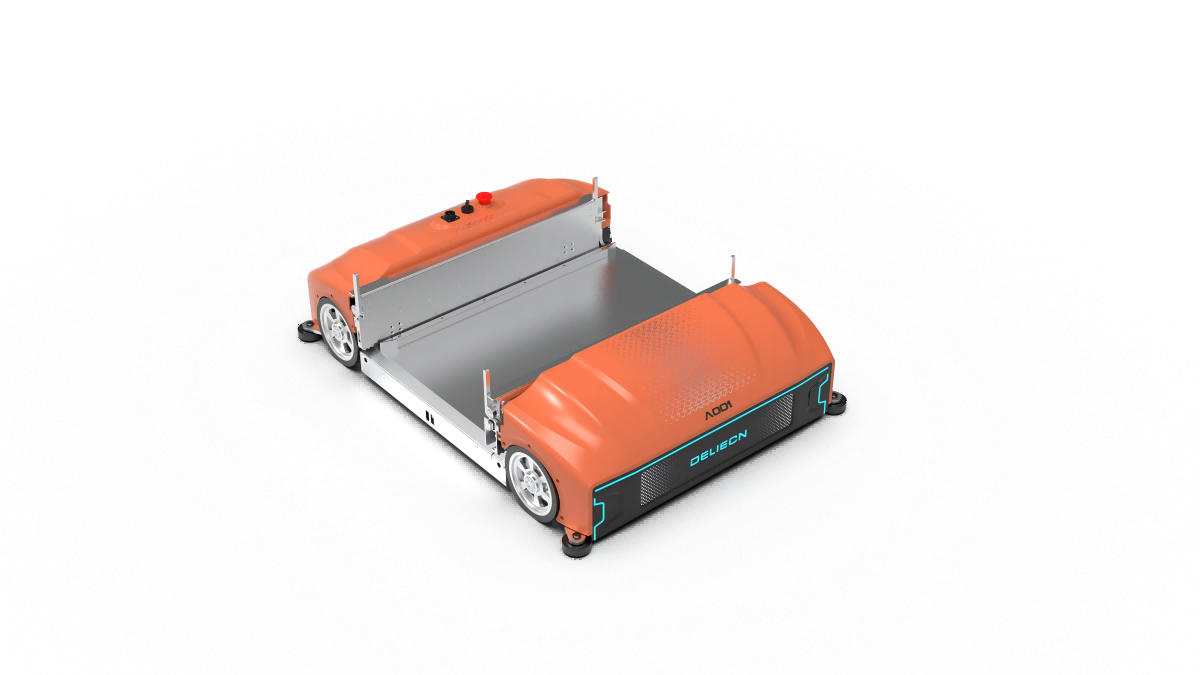
The Tote Four-Way Shuttle Robot adds another movement axis.
It can travel along both the X and Y directions inside the rack system, allowing the robot to change lanes at intersections on the same level.
When another storage level is required, a level-changing lifter transfers the shuttle to the designated level. DELIECN's current product material specifically identifies both lane-switching and level-switching capability as part of the Four-Way architecture.
This changes how shuttle capacity can be used.
A robot finishing a task in one aisle can be dispatched toward another aisle instead of remaining assigned to the original lane. Multiple shuttles can therefore share the rack network, with WCS coordinating tasks and traffic according to current demand.
The current DELIECN Four-Way model supports 50 kg maximum load, X-axis speed up to 5 m/s, Y-axis speed up to 2 m/s, ±2 mm positioning accuracy, single- or double-deep configurations, a 140–600 mm variable fork range, and Supercapacitor or Lithium Iron Phosphate Battery power options.
This makes the Four-Way architecture useful when SKU activity changes frequently and the warehouse needs shuttle resources to move between different lanes rather than remain fixed in one part of the rack.
Dual-Station Four-Way: Four-Way Movement, but Two Tote Positions
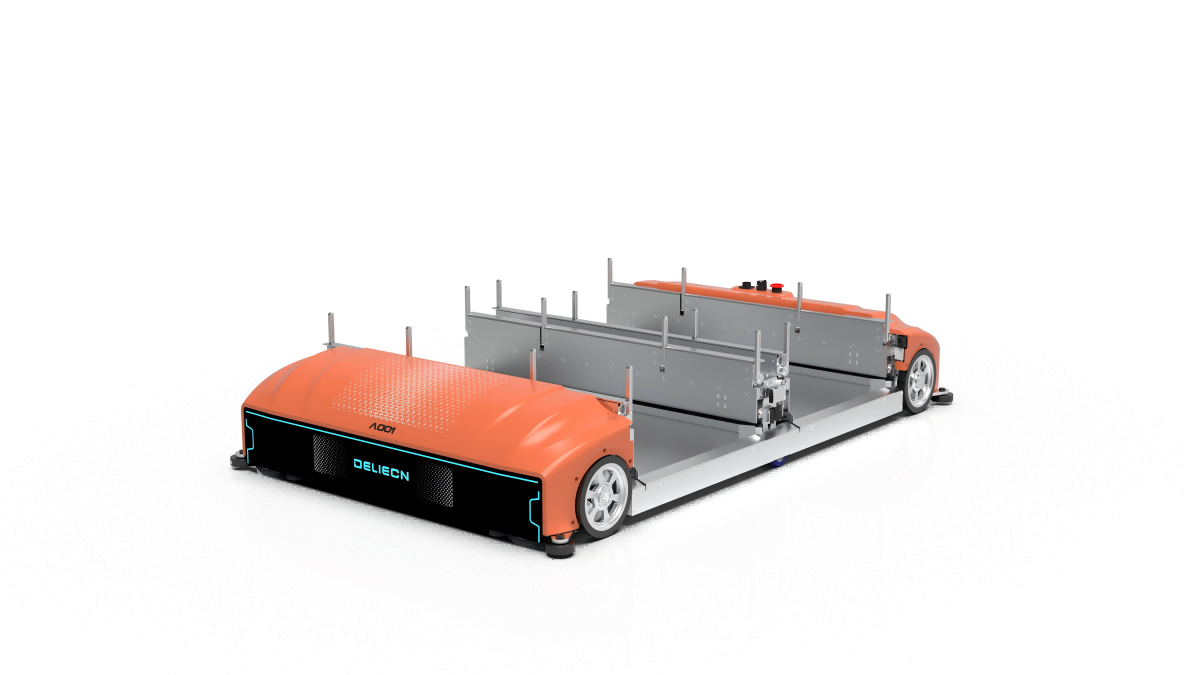
The Dual-Station Tote Four-Way Shuttle Robot is not a completely different movement architecture.
It is still a four-way shuttle.
The important change is the dual-station structure.
A standard Tote Four-Way Shuttle handles one tote position at a time. The Dual-Station model has two tote positions, allowing two totes to be handled within the same operating cycle when the task combination permits it.
That gives WCS more options when arranging storage, retrieval and tote-positioning tasks.
The design can support front and rear tote access, single- and double-deep storage, flexible two-tote combinations and internal tote repositioning.
DELIECN's Dual-Station model is designed with a rated load up to 100 kg, travel speed up to 5 m/s, ±2 mm positioning accuracy, 140–600 mm adjustable fork range and 7 operating modes.
But there is an important point here:
two tote positions do not mean the warehouse automatically becomes twice as fast.
The actual benefit depends on whether real orders create tasks that can be combined effectively. Lifter capacity, conveyor flow, shuttle quantity, buffers and picking-station demand still affect total system throughput.
The Dual-Station version becomes more relevant when high tote volumes make the number of useful movements completed in each shuttle cycle increasingly important.
So What Is the Actual Difference?
A simple way to separate the three is:
Tote Two-Way Shuttle Robot
moves along one axis and does not change lanes by itself.
Tote Four-Way Shuttle Robot
moves along X and Y directions inside the rack and can change lanes; a level-changing lifter connects different levels.
Dual-Station Tote Four-Way Shuttle Robot
keeps the Four-Way movement logic, but adds two tote positions so compatible tasks can be combined within one cycle.
That is a more useful distinction than comparing the three only by maximum speed.
Two-Way and Four-Way models can both reach 5 m/s on the X-axis. The question is what the robot needs to do after it reaches the end of that path.
If tote locations can be organized around relatively fixed lanes and the project does not require each shuttle to switch aisles independently, Tote Two-Way Shuttle is the simpler architecture to evaluate first.
If SKU demand changes frequently and shuttle robots need to move between different aisles and share capacity across the rack network, Tote Four-Way Shuttle usually deserves closer consideration.
If that same Four-Way flexibility is required but peak tote movement is much higher and the order structure creates frequent opportunities to combine two tote tasks, the Dual-Station Tote Four-Way Shuttle becomes more relevant.
The final choice should therefore start with the warehouse data:
SKU structure, tote dimensions and weight, storage depth, required locations, peak inbound/outbound flow, picking demand and building layout.
The fastest robot on paper is not automatically the right shuttle.
What matters is whether its movement logic matches the way totes actually need to move through the warehouse.

 Industries
 Services
 About Us
 AS/RS Handling Robot
 Vertical Storage Module
 Conveying Equipment
 Smart Warehousing System
 Warehouse Racking