Industries Smart Warehousing Solutions Tailored To Your Industry
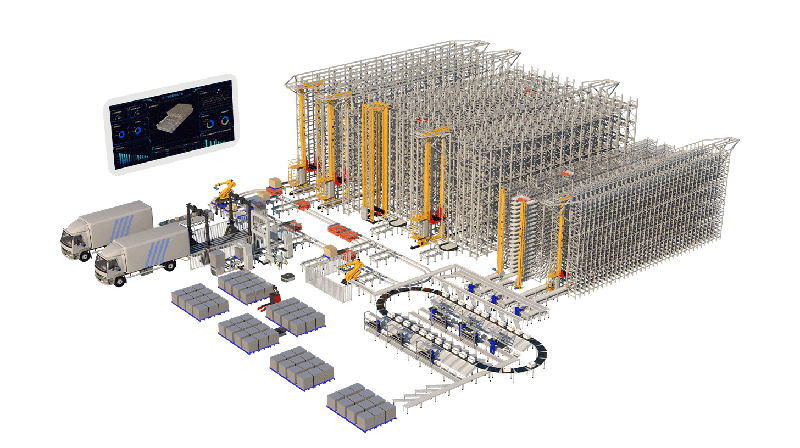
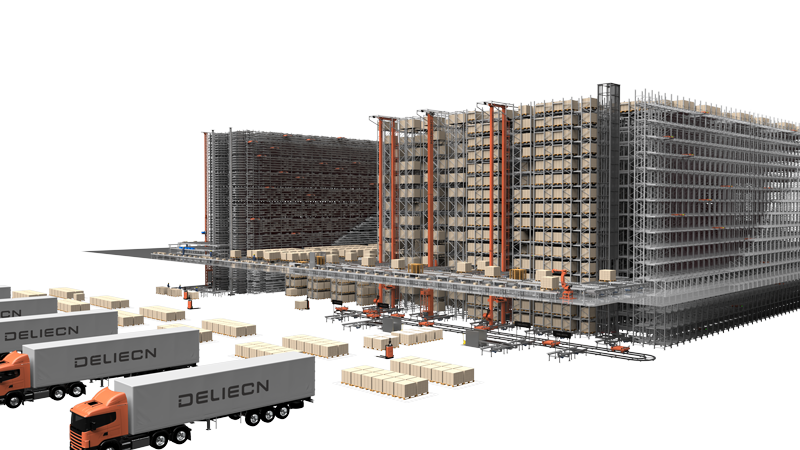
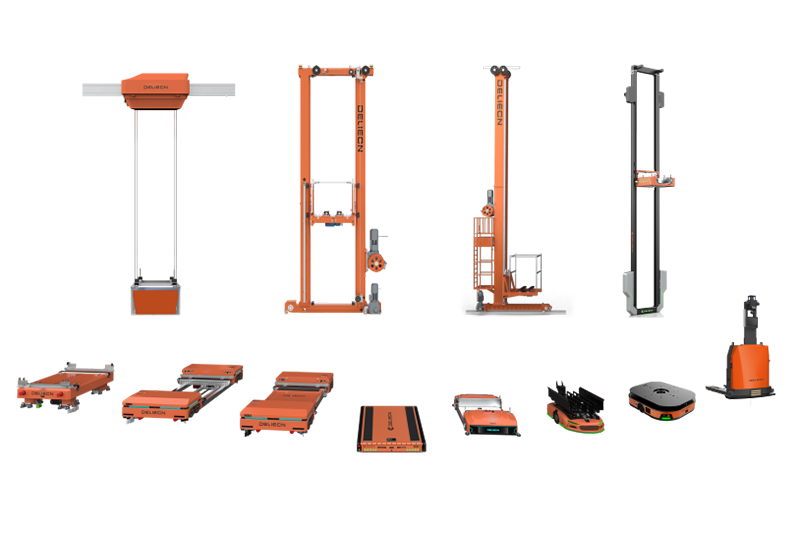
With a comprehensive range of intralogistics, products, DELlECN helps you build efficient and Fully Automated Warehouse operations.
Services Maximizing the Value of Your Logistics
At DELIECN, service goes beyond product delivery. We provide consulting, planning, design, manufacturing, installation, commissioning, and after-sales support throughout the entire lifecycle.
About Us Efficient and Flexible Automated Warehousing Solutions
DELIECN supports clients across food and beverage, new energy, chemicals, pharmaceuticals, e-commerce, precision manufacturing, textiles, and energy industries with intelligent warehousing systems tailored to their goals and requirements.

Deciding between a two-way and a four-way Pallet Shuttle isn't just about which way they move — it actually impacts a bunch of other things like the layout of your aisles, how densely you can store pallets, your overall throughput, and how easily your warehouse can adjust to changing demands. With a two-way system, shuttles usually run along a fixed lane, and you'll rely on forklifts or transfer equipment to move pallets between lanes. On the other hand, a four-way system is more versatile since it can move across lanes and even between different levels, giving you greater flexibility in routing. That said, more flexibility often means more coordination, maybe some complex software integration, and a higher up-front investment. It's not really a one-size-fits-all situation.
Honestly, there’s no clear winner here. For example, a chilled warehouse with deep lanes and predictable pallet flow might do just fine with a simple two-way shuttle setup. But a busy distribution center with lots of different destinations and frequent replenishment might find more value in the routing options that come with a four-way system. To figure out what’s right for your operation, you’ll want to start with the nitty-gritty details—like pallet sizes, peak-hour traffic, SKU turnover, aisle design, and how you'll handle equipment maintenance or repairs. Small assumptions can really make a difference; a layout that looks good on paper might feel totally different once forklifts are sharing the space.
In this guide, we’ve looked at the top 10 two-way and four-way Pallet Shuttles available in China, based on practical factors like system setup, control software, claimed capacity, support services, and how well they fit various warehouse types. Of course, the phrase “two-way vs four-way Pallet Shuttle” gets to the core of the decision, but keep in mind that it’s not the whole story — there are operational trade-offs to consider. Also, since no specific expert quotes or sources are cited here, it's worth double-checking any direct quotes with their original sources if you plan to use them. Overall, choosing the right system really depends on digging into your actual warehouse needs and workflow."

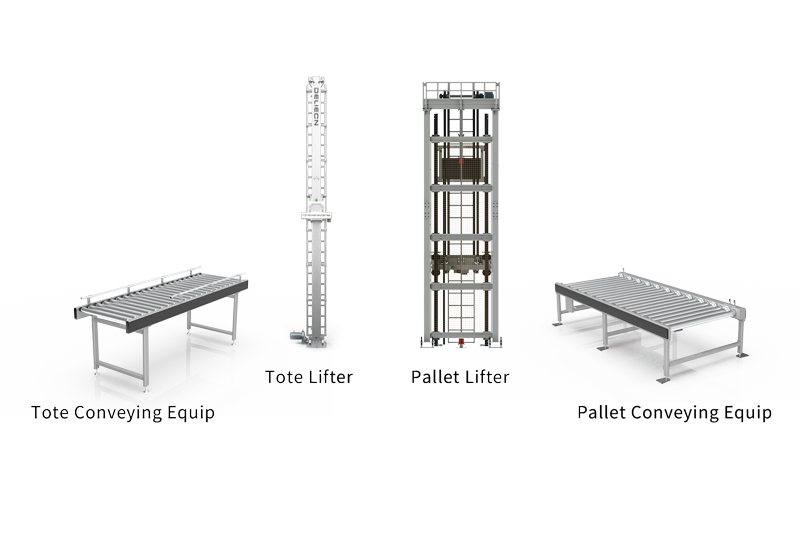
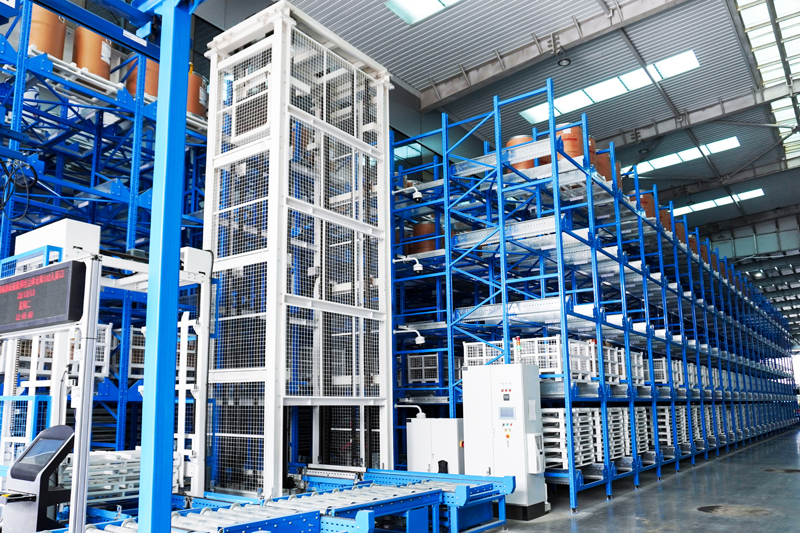
A Pallet Shuttle System combines storage rails, a powered shuttle, lifterss, conveyors, and warehouse control software. In a two-way layout, the shuttle travels along one channel; forklifts or transfer equipment serve the aisle ends. Four-way designs can change direction at intersections, moving pallets between channels. The choice affects more than travel time: rail layout, load dimensions, and replenishment access must fit the building.
A typical workflow begins when the warehouse system assigns a storage lane. An operator places a pallet at the channel entrance, and the shuttle carries it to an available position. For retrieval, the shuttle brings the selected pallet back to the pickup point.MHI and Deloitte’s 2024 Annual Industry Report found that 55% of surveyed supply-chain leaders expected technology and innovation investment to rise over the following two years. That supports careful evaluation, not automatic adoption.
Tips: Check pallet condition, load stability, and rail clearance before testing a lane. Record retrieval times during a pilot. A neat layout can still expose awkward handoffs, and those deserve another look.
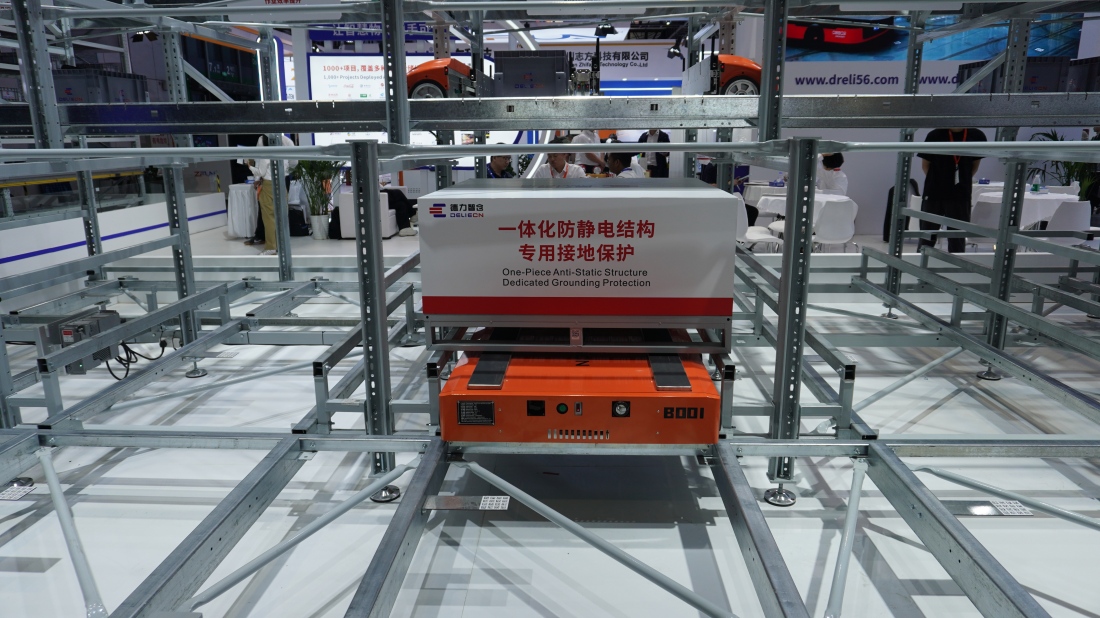
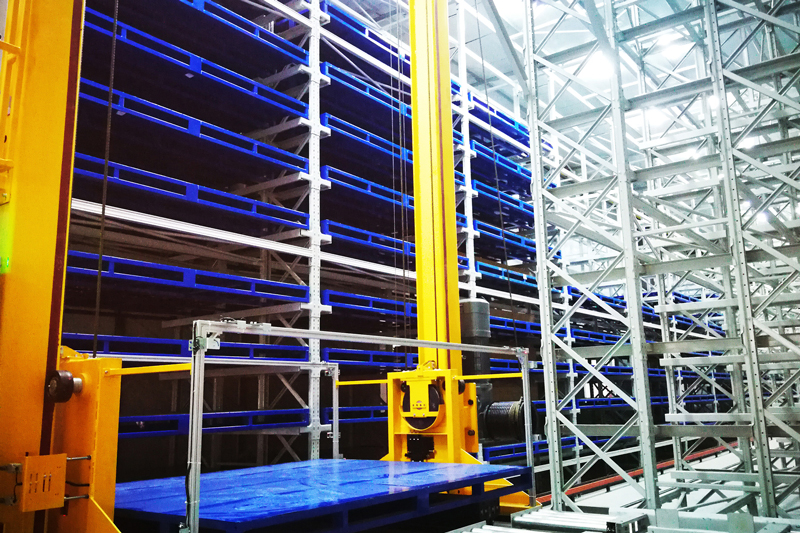
In a two-way Pallet Shuttle system, the shuttle travels forward and backward on rails inside one storage lane. A forklift places a pallet at the lane entrance; the shuttle lifts it and carries it to an open position. For retrieval, it brings the selected pallet back to the aisle. No forklift needs to enter the rack.
Deep lanes use this movement to store multiple pallets behind one another, reducing aisle space per pallet. The trade-off is access: many layouts operate on last-in, first-out logic, so product sequence matters. A controller tracks occupied positions, while sensors help detect pallet edges and obstacles.
Small details matter. Pallet dimensions, load stability, and rail alignment can affect reliable movement; real installations need site-specific testing.
The distinction from a four-way shuttle is movement across the rack layout: a two-way unit stays within its assigned lane, while a four-way unit can also travel between lanes.
MHI and Deloitte’s 2024 Annual Industry Report found that 55% of surveyed respondents planned to increase supply-chain technology investment. That signals interest, not guaranteed savings.
Before specifying equipment, compare expected throughput with peak demand and consider charging, maintenance, and recovery procedures.
One caution: dense storage can slow access when inventory placement rules are poorly matched to daily picking.
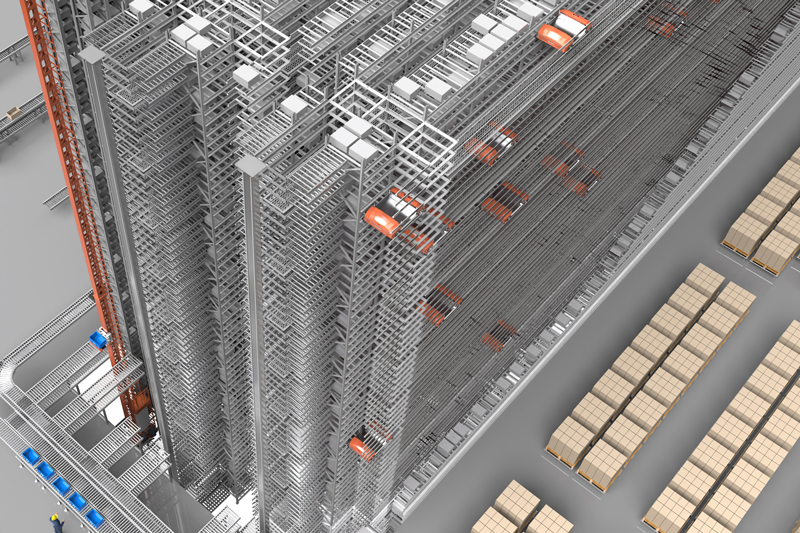
A Four Way Shuttle travels along storage rails and changes direction at planned transfer points. Unlike a two-way unit, it can move across both the depth and width of a racking layout. This flexibility lets one shuttle reach several lanes without being carried back to a fixed entry point. The rack design must provide continuous, correctly aligned travel paths.
At a lane intersection, the shuttle pauses while a transfer device or rail arrangement redirects it. Sensors and control instructions help confirm its position before movement resumes. A pallet should sit squarely on the shuttle, with its load centered and within the system’s rated capacity. Even a small overhang can interfere with rails or neighboring loads. Small details matter.
In daily operation, software assigns routes according to pallet locations, retrieval requests, and available travel paths. Clear lane identifiers help operators understand where a pallet is stored and where it should go. But a route that looks efficient on a screen may create waiting at a busy intersection. That trade-off deserves review using actual order patterns, not just the storage plan. Dust, uneven loads, and imperfect pallet dimensions can also affect movement, so inspection routines and realistic load standards remain important.
Ten representative system configurations for comparison, not a market-share ranking. Actual capacity, speed, and layout depend on the pallet, load, rack design, safety requirements, and equipment specification.
| No. | System Configuration | Shuttle Travel | How It Changes Storage Lanes | Typical Layout Components | Best Suited For | Main Consideration |
|---|---|---|---|---|---|---|
| 1 | Two-way shuttle — single-deep lanes | Runs forward and backward along one lane. | Does not move between lanes by itself; a forklift or transfer device moves it when required. | Single-deep rack lanes, shuttle, pallet positions, and lane-end access. | Simple installations with a small number of lanes and moderate throughput. | Each shuttle is generally assigned to a lane or moved between lanes using separate handling equipment. |
| 2 | Two-way shuttle — drive-in / LIFO block storage | Travels in and out of a channel from the accessible face. | Lane changes normally require the shuttle to be lifted or transferred to another channel. | Deep storage channels, a front operating aisle, and compatible pallets. | High-density storage of batches with last-in, first-out (LIFO) access. | Access to pallets within a lane is sequence-dependent; deep lanes can limit selectivity. |
| 3 | Two-way shuttle — FIFO flow-through layout | Moves pallets through a channel between its loading and retrieval ends. | The shuttle stays in its channel; pallets and shuttle operations are organized around separate ends. | Flow-through channels with loading and retrieval aisles on opposite sides. | Stock rotation where first-in, first-out (FIFO) access is needed. | Requires access and operating space at both ends of the storage lanes. |
| 4 | Two-way shuttle — multi-depth lane system | Travels along a lane to store or retrieve pallets at different depths. | Transfers between lanes using a forklift, shuttle carrier, or other separate transfer arrangement. | Deep rack channels, lane-end access, and a shuttle sized for the load unit. | Facilities prioritizing storage density over direct access to every pallet. | SKU sequencing and retrieval order should be planned to reduce reshuffling. |
| 5 | Two-way shuttle — dedicated shuttle per lane | Moves in two directions within its assigned lane. | No routine cross-lane movement; lane assignment is fixed during operation. | Multiple parallel lanes, lane-level shuttles, and shared or dedicated controls. | Repeatable, high-volume pallet movements with predictable lane usage. | More shuttles may be required when many lanes must operate simultaneously. |
| 6 | Four-way shuttle — cross-aisle lane transfer | Moves along the storage lane and across a perpendicular transfer path. | Uses a cross-aisle or transfer corridor to reach another lane at a compatible level. | Four-way shuttles, parallel lanes, cross-aisles, and rack-level transfer paths. | Layouts needing flexible shuttle assignment across multiple lanes. | Cross-aisles and transfer points must be included in the rack and traffic design. |
| 7 | Four-way shuttle — multi-level system with lifts | Travels horizontally in two directions; vertical movement is handled by a lift or level-transfer device. | Transfers across lanes on its level and changes levels through designated lifting equipment. | Multi-level racks, four-way shuttles, vertical lifters, and coordinated controls. | Facilities seeking dense storage across multiple rack levels. | Lift capacity, cycle time, and interface scheduling can affect overall throughput. |
| 8 | Four-way shuttle — shared-shuttle zone | Can travel along lanes and use transfer paths to serve more than one lane. | Moves through designed intersections or transfer sections rather than crossing rack beams freely. | Connected lane groups, transfer intersections, shuttles, and traffic-management controls. | Operations where workload varies between storage lanes. | Routing rules and traffic control are important to prevent congestion at shared intersections. |
| 9 | Four-way shuttle — goods-to-person interface | Travels within the rack system in two horizontal axes. | Uses transfer paths to bring pallets to a designated interface, often coordinated with lifts or conveyors. | Storage lanes, transfer points, lift or conveyor interfaces, and picking stations. | Order fulfillment operations that bring pallets to operators or downstream equipment. | Interface and station capacity must be balanced with shuttle and lift performance. |
| 10 | Four-way shuttle — expandable modular block | Moves in both lane and cross-lane directions within the designed block. | Uses planned cross-aisles and transfer points; additional zones can be connected as the layout expands. | Modular rack blocks, defined transfer paths, controls, and optional vertical-transfer equipment. | Facilities planning phased growth or flexible allocation of storage lanes. | Expansion needs to preserve safe clearances, load compatibility, and traffic capacity. |

Two-way and four-way pallet shuttle systems solve different movement problems.
A two-way shuttle travels forward and backward along a storage lane, while a forklift or transfer device moves it between lanes. This arrangement can suit warehouses with predictable product flows and many pallets per SKU. It keeps the operating logic simple. But access between lanes may limit how quickly work shifts during a busy picking period.
A Four Way Shuttle System can travel across lanes as well as along them, depending on the rack and control design. That added movement can improve access to different storage zones and help balance tasks when demand changes. Capacity gains are not automatic. Rack geometry, fire clearances, pallet condition, and staging space still shape usable storage. A practical comparison should measure actual pallet positions and peak-hour moves, not just shuttle speed. Watch a pallet enter a lane. Delays at handoff points can erase a vehicle’s speed advantage. Four-way systems may also require more coordination and careful maintenance planning. Not always. A neat spreadsheet can still mislead; trial the proposed workflow with real pallet sizes and order patterns before committing.
When comparing China’s top ten pallet shuttle providers, start with the warehouse task, not the brochure. Two-way systems move loads along one lane; four-way models can travel across lanes and may reduce forklift transfers. That flexibility has a price. Check whether your aisle layout, pallet dimensions, and daily movement volume justify it.
Ask each provider for load limits, positioning tolerances, battery runtime, charging method, and performance data under realistic conditions. Request a layout review using your actual rack depth and pallet drawings. Small mismatches matter. A shuttle that fits the nominal pallet size may still struggle with damaged boards or uneven loads. Compare control software, integration options, fault alerts, and the time needed to retrieve a stalled unit. Still, no scorecard is perfect.
Service quality deserves equal weight. Check technician coverage, spare-parts availability, commissioning support, and operator training. Ask for references from warehouses with similar goods and operating hours, then verify what the system handles during peak periods. For a 4 Way Pallet Shuttle, clarify how cross-aisle movement is controlled and what happens if communication drops. Request written assumptions behind quoted throughput; impressive figures can depend on ideal conditions. A live demonstration helps, but a short visit cannot reveal every maintenance issue.
Choosing a two-way or four-way pallet shuttle starts with the movement your operation actually needs. A 2 Way Shuttle travels along a fixed channel, making it suitable for deep-lane storage where pallets enter and leave from the same access aisle. It can reduce forklift travel inside the rack. But replenishment and retrieval may compete for the same lane.
A four-way system can move across lanes as well as along them, helping shuttle pallets between storage channels and transfer points. That flexibility can support changing storage plans, but it also adds control requirements and coordination. Check pallet dimensions, load weight, rack clearances, and the number of daily moves before comparing equipment. Measure peak activity, not only an average shift.
Walk the layout. Count the forklift handoffs. A short access aisle may matter more than extra shuttle speed. Also check charging locations, maintenance access, and how the system handles a blocked lane. Ask operators to test typical pallet loads, including imperfect ones with uneven wrapping. A clean spreadsheet can miss those details. If the warehouse has stable, high-volume lanes, a two-way setup may be simpler to manage; if inventory moves between lanes often, four-way travel may justify its added complexity.
A forklift places a pallet at the lane entrance. The shuttle lifts it and carries it along rails to an open position. For retrieval, it returns the selected pallet to the aisle. Forklifts stay outside the rack.
It stores several pallets behind one another, reducing aisle space per pallet. Many layouts follow last-in, first-out access. Product sequence matters.
A two-way shuttle stays in its assigned lane. A four-way system can also travel between lanes and transfer points. That flexibility needs more coordination.
It may suit stable, high-volume lanes where pallets enter and leave through the same aisle. Replenishment and retrieval can compete for lane access. Not always.
It may help when inventory often moves between storage lanes and transfer points. Consider the added controls and coordination before choosing it.
Check pallet dimensions, load weight, rack clearances, and daily moves. Measure peak activity, not just an average shift. Measure peak demand.
Count forklift handoffs and check aisle access, charging locations, and maintenance space. Ask operators to test unevenly wrapped pallets. Small details matter.
A controller tracks occupied positions, while sensors help detect pallet edges and obstacles. Rail alignment and load stability can affect movement.
No. Poorly matched inventory placement can slow picking. A neat spreadsheet can still miss a crooked load. Real layouts need testing.
Pallet shuttle systems use automated carriers, rails, rack structures, and control software to move and store pallets in deep lanes. A two-way shuttle travels forward and backward along a lane, making it well suited to repetitive loading and retrieval in high-density storage. A four-way shuttle can also move across lanes, offering greater routing flexibility and helping warehouses serve multiple locations without relying on a fixed lane layout.
This overview compares two-way vs four-way pallet shuttle systems in terms of storage capacity, operating speed, and adaptability. It also outlines practical criteria for assessing China’s top 10 pallet shuttle providers, such as system design, integration capabilities, service support, and suitability for different warehouse needs. Choosing between the two configurations depends on factors including inventory patterns, throughput targets, available space, and the balance between simplicity and flexibility.