“Pallet Shuttle Robot” sounds like one product.
It is actually several different ways of organizing pallet movement inside high-density racking.
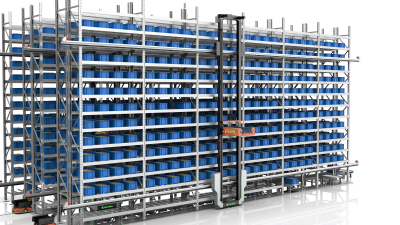
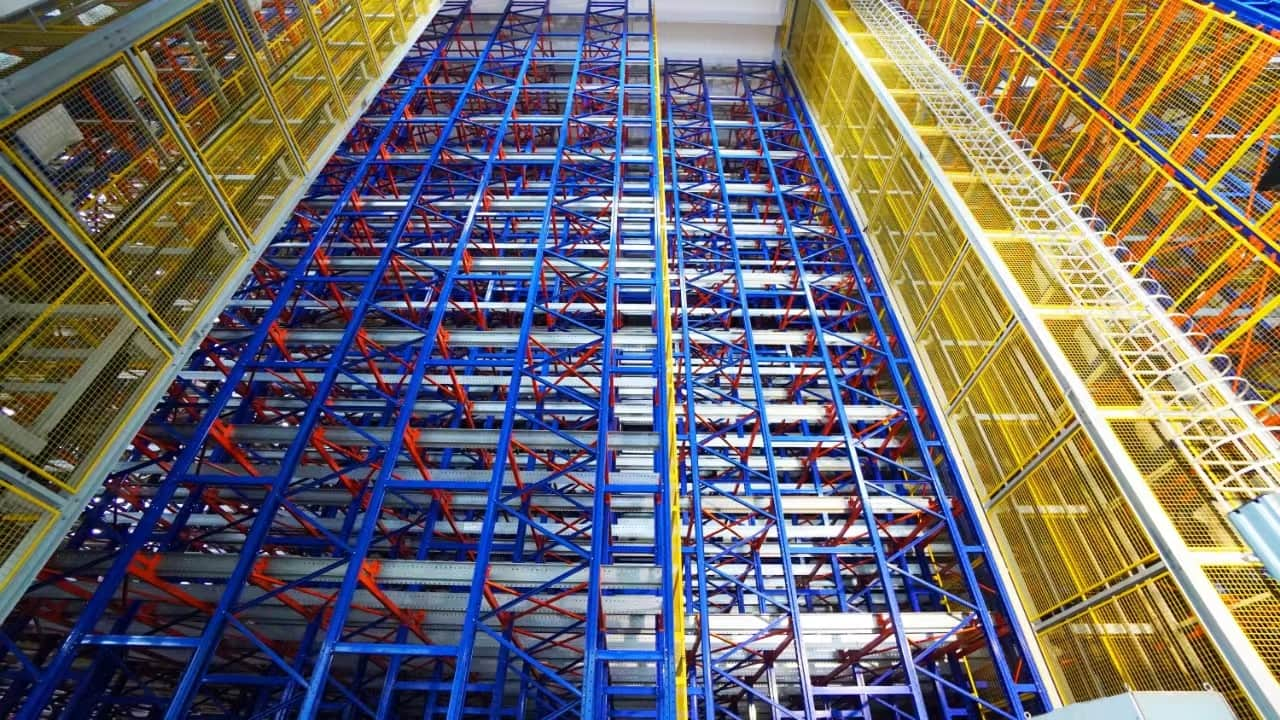
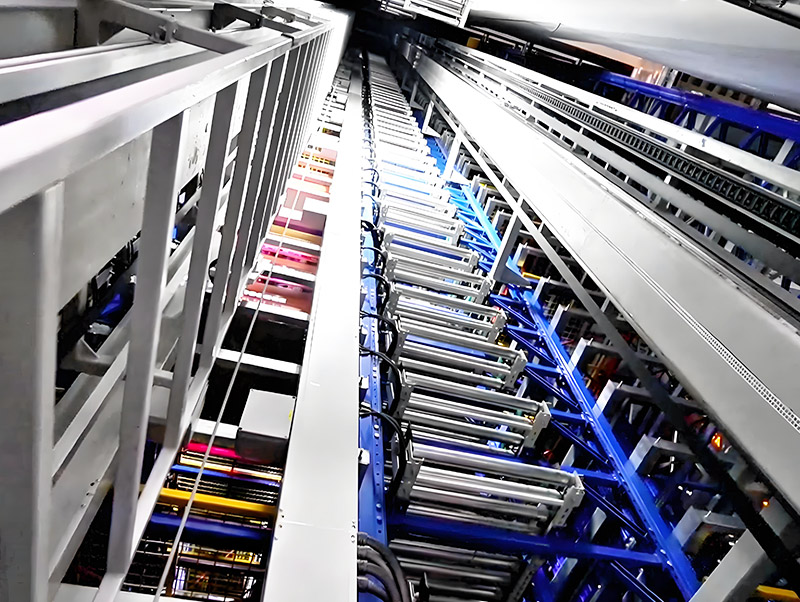
A Pallet Two-Way Shuttle Robot works inside one lane.
A Parent-Child Pallet Shuttle Robot adds a Parent Shuttle to move Child Shuttles between lanes.
A Pallet Four-Way Shuttle Robot can change between main and sub-aisles inside the rack system by itself.
They can all increase storage density.
The difference is how much movement freedom the warehouse actually needs.
A useful question to start with is:
Who moves the shuttle from one storage lane to another?
Two-Way Shuttle: The Robot Works Inside One Lane
A Pallet Two-Way Shuttle Robot moves forward and backward inside a storage lane.
During inbound operation, the pallet is delivered to the lane entrance. The shuttle picks it up and moves it deeper into the rack.
For outbound, the shuttle brings the required pallet back toward the entrance.
The robot itself does not move sideways into another storage lane.
That can be a very good fit when the inventory is naturally stored in batches.
Imagine a food or beverage warehouse where one SKU regularly occupies many pallet positions.
Those pallets can be grouped in one deep lane, so there is little benefit in giving every shuttle independent cross-aisle movement.
The two-way shuttle simply automates pallet movement inside that deep lane.
This architecture is worth considering when:
several pallets belong to the same SKU or batch;
lane allocation is relatively stable;
the storage strategy is clearly defined;
deep-lane density is the main requirement.
Two-way shuttles can also work with Pallet Stacker Cranes, where the stacker crane handles aisle and vertical movement and the shuttle handles the depth of the storage lane. DELIECN's current material specifically lists this combination for projects balancing high-density storage with higher inbound/outbound requirements.
Parent-Child Shuttle: The Child Works in the Lane, the Parent Changes Lanes
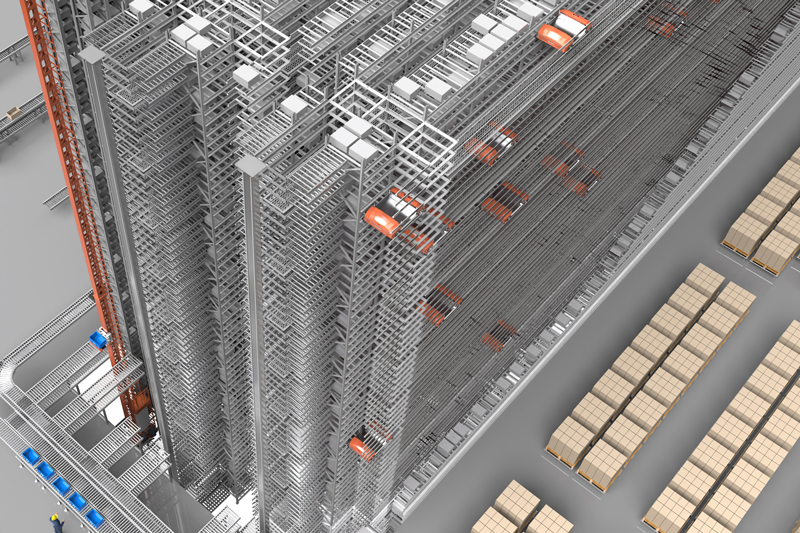
A Parent-Child Pallet Shuttle system keeps the deep-lane storage principle but adds automatic cross-lane movement.
The Child Shuttle works inside the storage lane.
The Parent Shuttle travels along the main aisle and carries the Child Shuttle to the lane that needs to be served.
So the easiest way to understand it is:
the Child handles storage depth; the Parent handles lane changing.
This becomes useful when a warehouse has many deep lanes and shuttle relocation between those lanes also needs to be automated.
The Parent and Child do not necessarily have to remain together during the entire task.
DELIECN's current Parent-Child architecture supports decoupled operation: a Child Shuttle can continue working inside a lane while the Parent Shuttle proceeds to another dispatch task. Configurations can also allow one Parent Shuttle to work with multiple Child Shuttles.
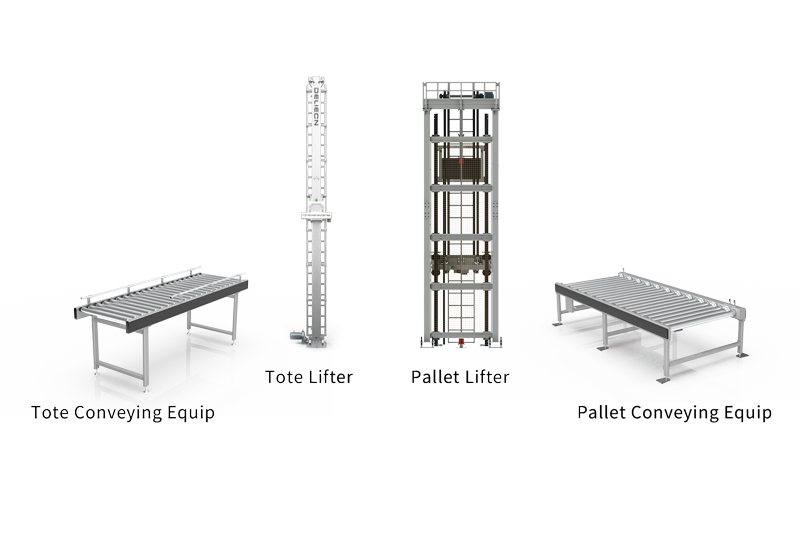
For taller warehouses, the Parent-Child system can work with lifters so that shuttle resources can serve different rack levels.
That makes it quite different from simply placing a standard two-way shuttle in a deep lane.
Four-Way Shuttle: The Robot Changes Lanes by Itself
The Pallet Four-Way Shuttle Robot solves the same lane-changing problem differently.
It does not need a Parent Shuttle.
The robot itself travels along both the main and sub-aisle directions inside the rack system.
After completing a task in one lane, it can leave that lane, move along the main aisle and enter another.
This matters when pallet destinations change frequently.
A robot that finishes an inbound task in one rack zone can later be dispatched to another aisle for an outbound task.
When several robots share the rack network, WCS can allocate available shuttle capacity according to the current workload rather than tying one robot permanently to one lane.
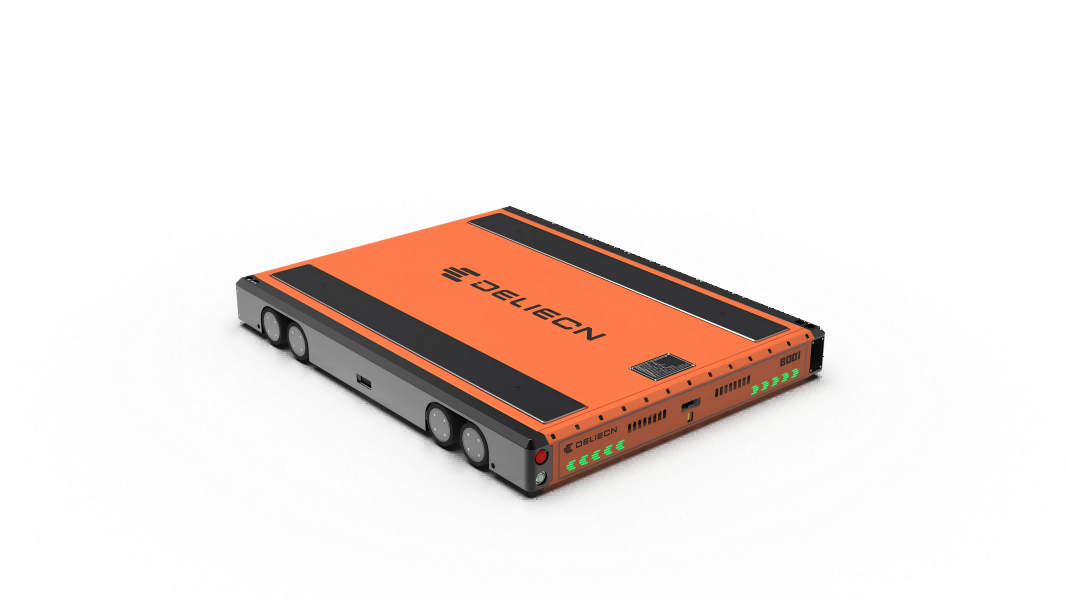
DELIECN's current Pallet Four-Way Shuttle Robot includes a 125 mm ultra-thin model, supports loads up to 1,500 kg and offers ±2 mm positioning accuracy. It is also designed for operation down to -25°C.
The lower body height can leave more vertical clearance for rack planning, which is useful in warehouses where building height or refrigeration equipment restricts the available space.
That is more precise than simply saying the 125 mm design will always create another rack level—it depends on the complete layout.
Which One Fits Which Warehouse?
The answer usually becomes clearer once you look at the inventory rather than the robot.
If the warehouse stores large batches of the same SKU and pallets can remain in clearly assigned deep lanes, a Pallet Two-Way Shuttle Robot may already fit the operation.
If the same deep-storage logic is required but many lanes need to be served automatically, a Parent-Child Pallet Shuttle system adds the main-aisle transfer needed to move Child Shuttles between them.
If pallet locations and tasks change more frequently and each robot needs to move independently across the rack network, a Pallet Four-Way Shuttle Robot provides more freedom for system scheduling.
Four-way is not automatically the better answer.
A warehouse holding 30 pallets of one SKU has a different operating problem from a warehouse where most SKUs only have one or two pallets.
The first warehouse may benefit from deep, clearly allocated lanes.
The second may place more value on flexible access.
What Should Be Checked Before Choosing?
I would start with four pieces of information.
First, how many pallets are normally held behind each SKU?
That tells us whether deep lanes can actually be filled efficiently.
Second, what happens during the peak inbound and outbound periods?
Daily averages can hide the two-hour period that determines the real system requirement.
Third, what are the FIFO/FILO and batch rules?
These affect lane arrangement and how stock is allocated.
Fourth, what does the building allow?
Clear height, columns, refrigeration equipment, fire protection and transfer-station positions all influence the final architecture.
Only after those questions are understood does it make sense to calculate shuttle quantity, lifter capacity and front-end transfer equipment.
The three systems can be reduced to three sentences:
Pallet Two-Way Shuttle Robot:
The robot works inside one lane.
Parent-Child Pallet Shuttle Robot:
The Child works inside the lane; the Parent moves it between lanes.
Pallet Four-Way Shuttle Robot:
The robot moves between lanes by itself.
That is the mechanical difference.
The customer decision comes afterwards: How are the SKUs distributed, how deep should the storage lanes be, how often does capacity need to move between aisles, and w

 Industries
 Services
 About Us
 AS/RS Handling Robot
 Vertical Storage Module
 Conveying Equipment
 Smart Warehousing System
 Warehouse Racking