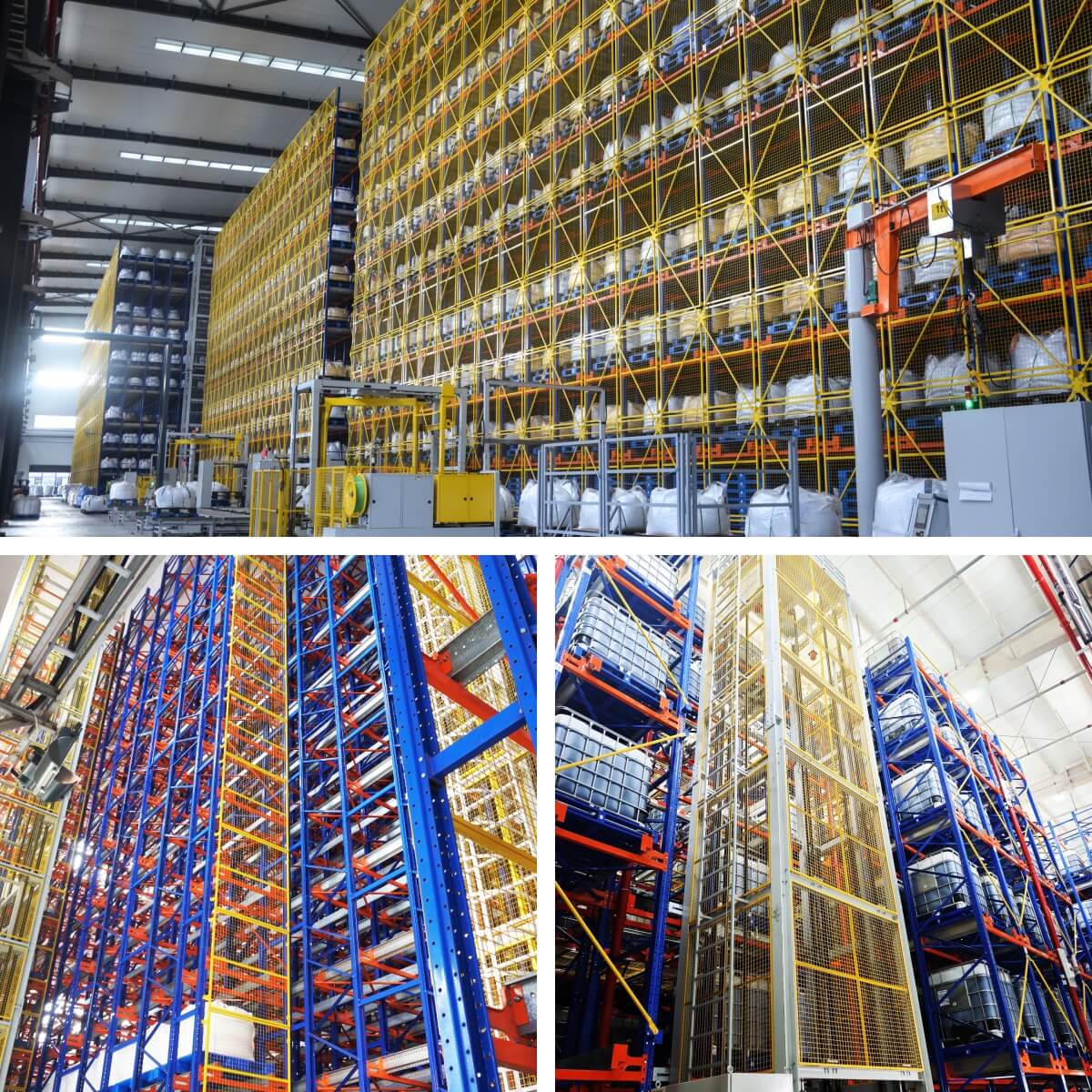
We are often asked the same question at the beginning of a pallet automation project:
Should this warehouse use a Pallet Four-Way Shuttle or a Stacker Crane?
There is no useful answer from the equipment name alone.
Warehouse height is one example.
A high-bay building does not automatically mean that a Stacker Crane is the only suitable option, just as a lower warehouse does not automatically mean that a Shuttle System is better.
DELIECN has used Pallet Four-Way Shuttlesystems in high-bay battery-material storage, while a precision-manufacturing project for Hanbell uses Pallet Stacker Cranes in a warehouse of approximately12.3 m.
The difference comes from the problem the warehouse needs to solve.
One project may need more pallet positions.
Another may already have enough storage but needs more pallet handling capacity.
A third may have a new, regular high-bay building and a predictable material flow.
Those projects should not automatically end up with the same AS/RS.
A Tall Warehouse Does Not Automatically Mean a Stacker Crane
Stacker Cranes are a natural fit for many high-bay warehouses.
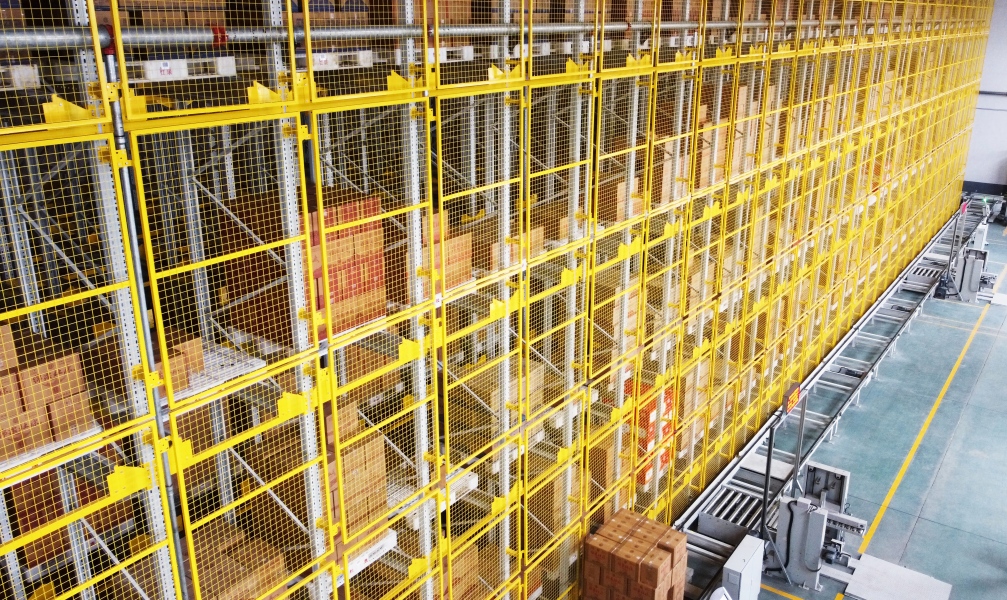
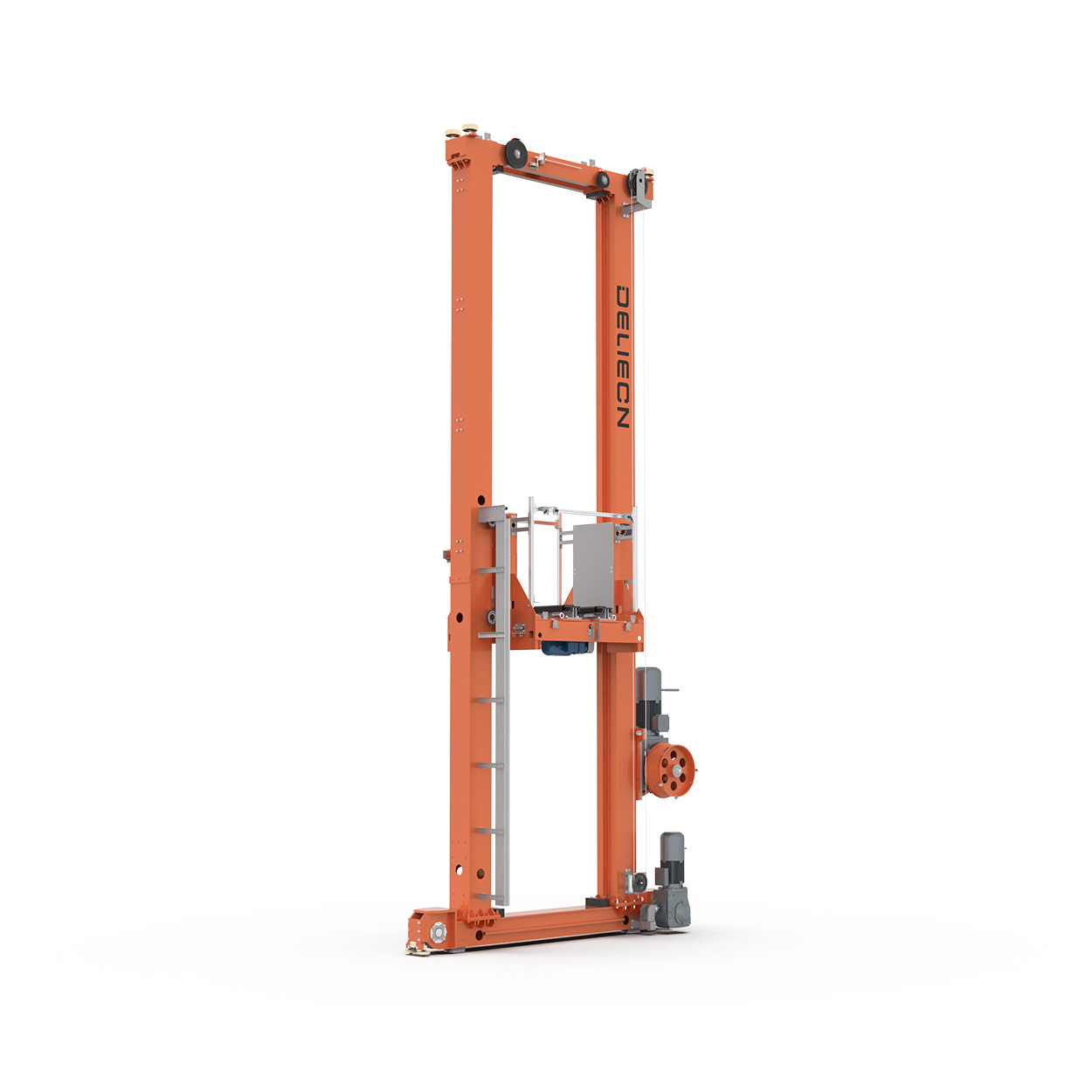
A Pallet Stacker Crane travels along a fixed aisle and serves storage positions on both sides.
When the building is tall and regular, this arrangement can make effective use of vertical space.
DELIECN Pallet Stacker Cranes can be configured for storage heights up to 45 m, depending on project conditions.
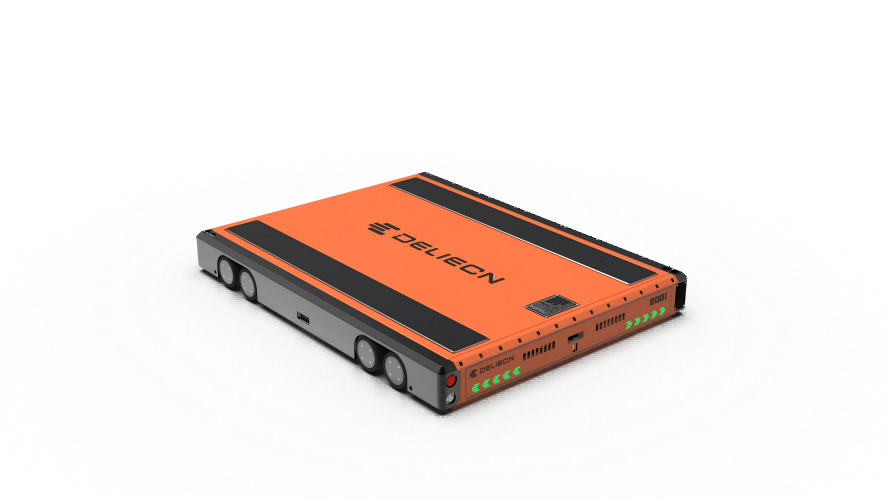
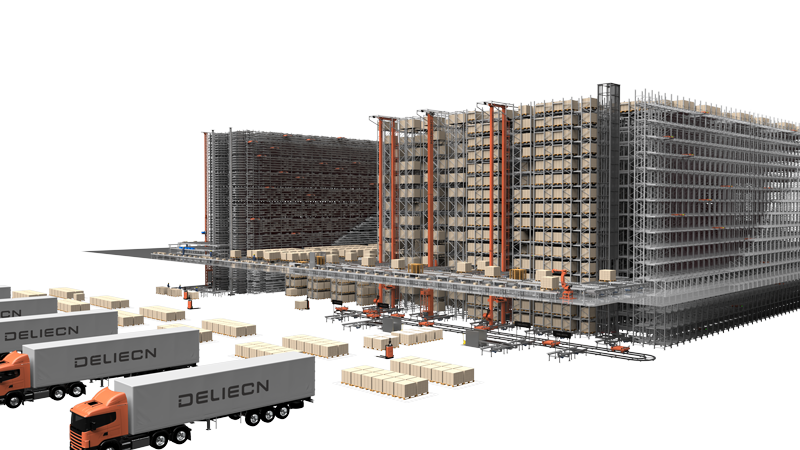
A Pallet Four-Way Shuttle AS/RS uses a different architecture.
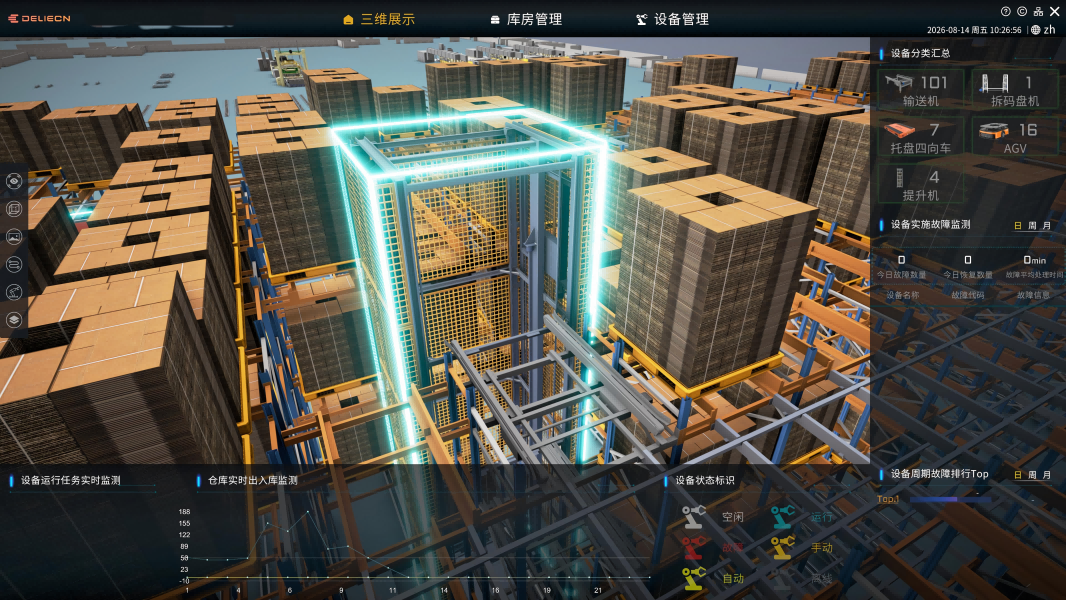
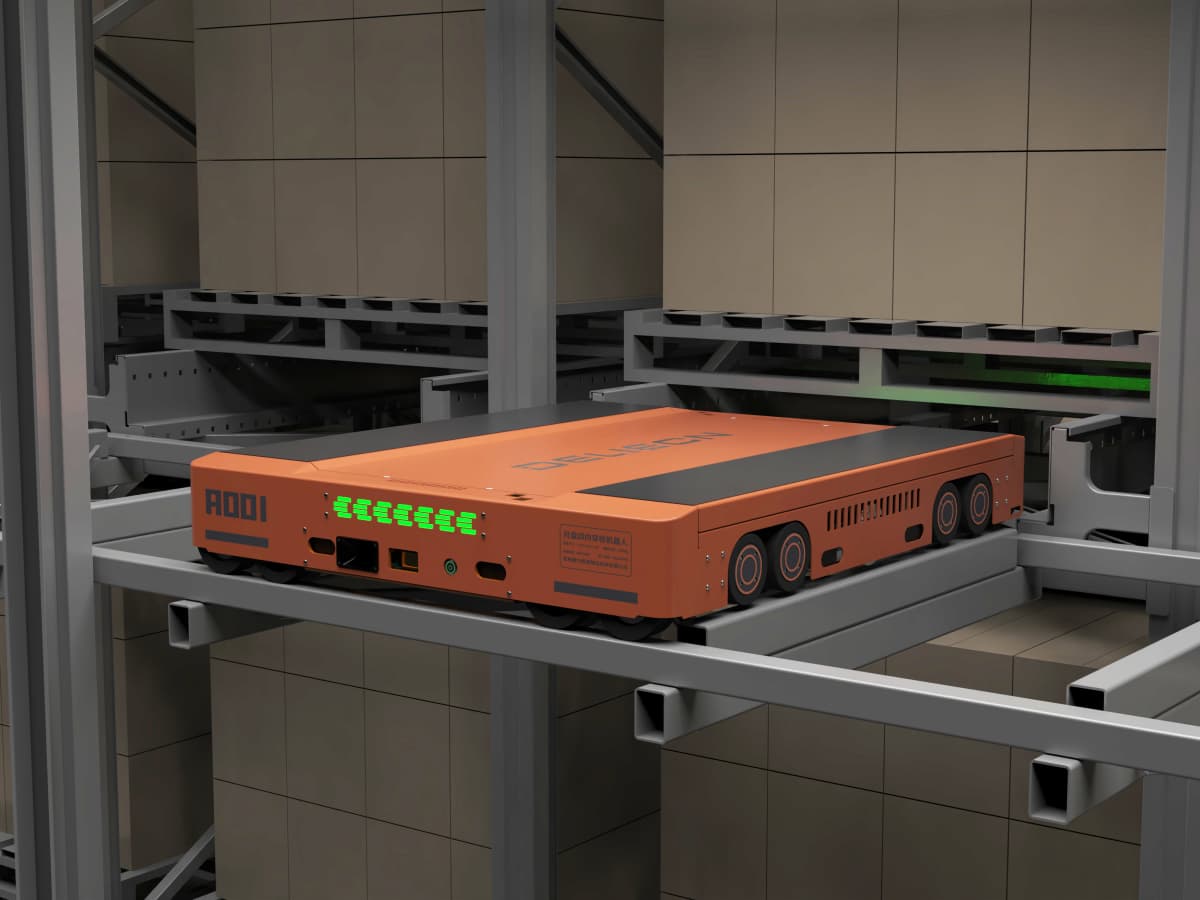
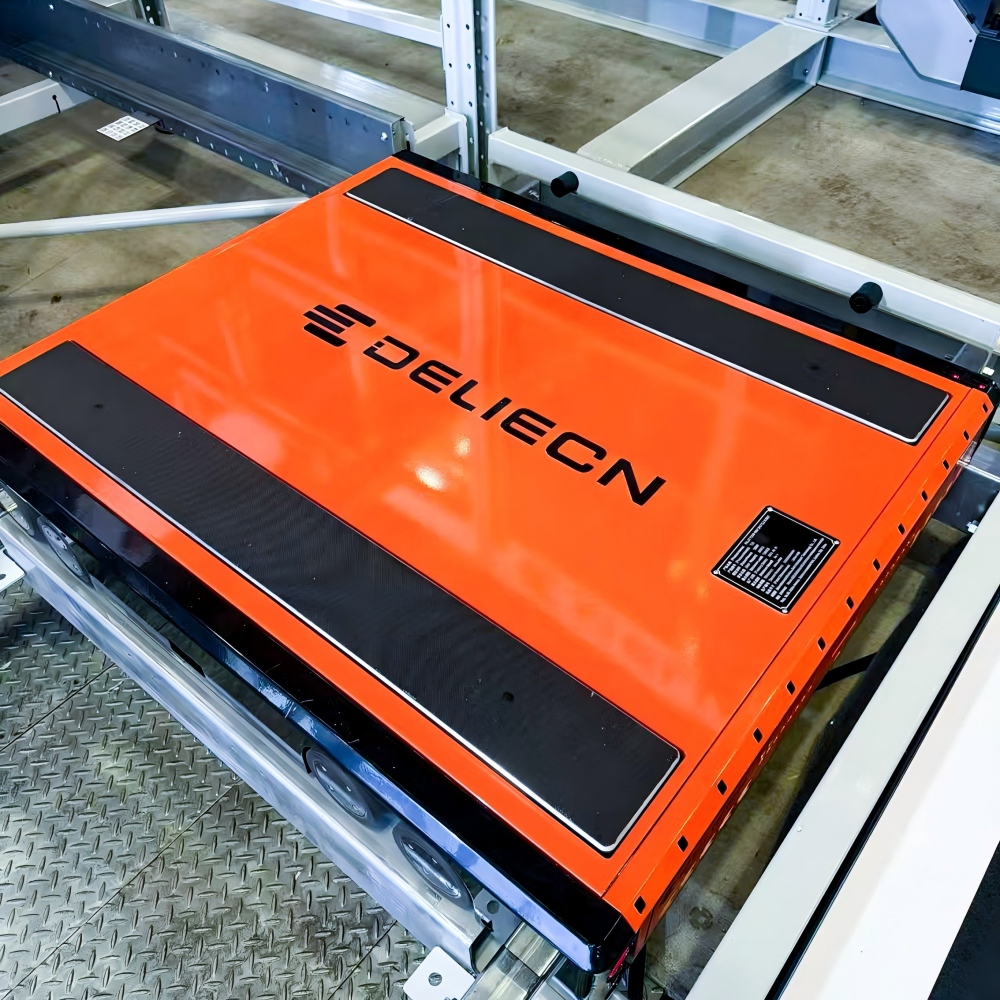
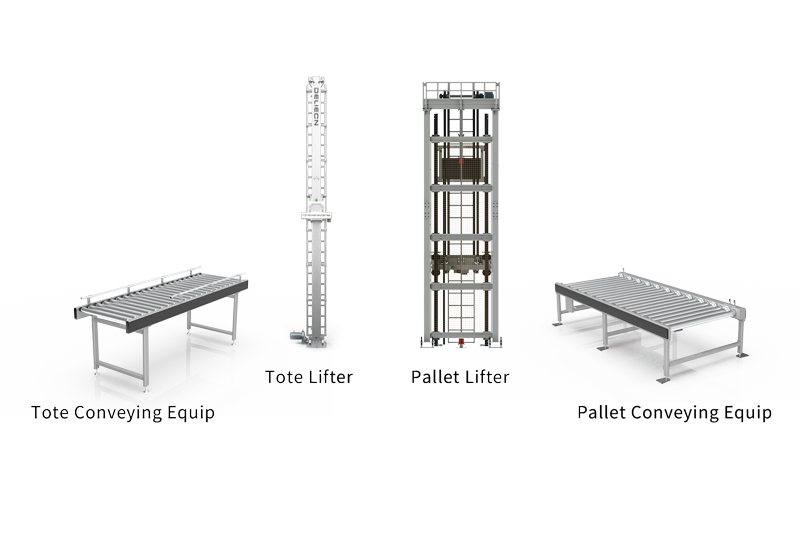
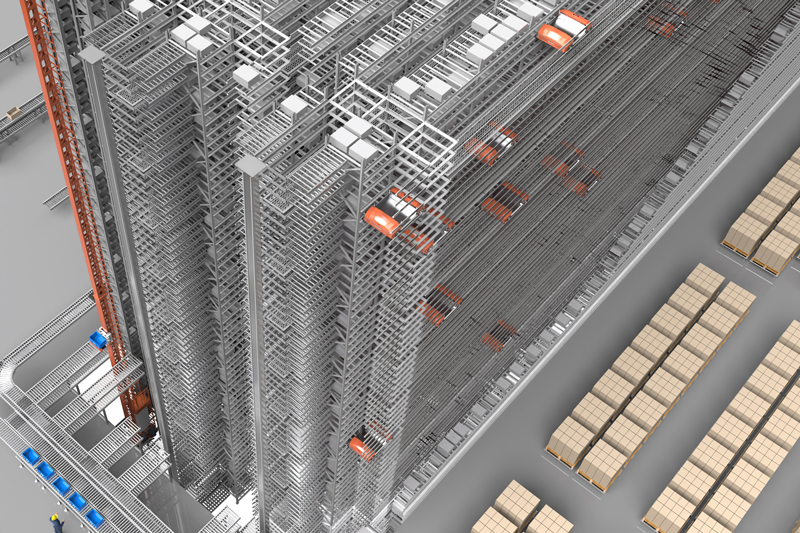
Multiple shuttle robots operate inside the rack system, moving along both main and sub-aisles, while Lifters connect different storage levels.
In one DELIECN battery-materials project, the warehouse uses a Pallet Four-Way Shuttle architecture for high-bay, heavy-load storage, with pallet loads above one ton and system throughput reaching approximately 265 pallets/hour.
The point is not that a Four-Way Shuttle is better for tall warehouses.
It is that warehouse height alone does not determine the technology.
Storage density, SKU structure and material flow matter just as much.
Look at the SKU Structure Before the Storage Density
Four-way shuttle systems are often attractive because they can create dense pallet storage blocks.
But density only helps if it matches the inventory.
Imagine two warehouses that both need 10,000 pallet positions.
One stores a few hundred SKUs, with many pallets behind each SKU.
The other manages several thousand SKUs, many with only one or two pallets in stock.
The capacity number is the same.
The operating logic is not.
Deep storage works particularly well when enough pallets can be grouped logically within the lanes.
If many unrelated SKUs are placed in deep storage, access and relocation become more complicated.
A Stacker Crane AS/RS provides a more structured aisle-based access pattern.
With single-deep storage, each pallet position can be accessed directly.
With double-deep storage, some direct accessibility is traded for greater storage density because rear positions may require the front position to be clear.
That is why the useful data is not simply the total pallet count.
Pallets per SKU, turnover and access frequency often matter more.
Throughput Is Where Many Comparisons Go Wrong
It is easy to compare machine speeds.
A shuttle reaches one speed.
A stacker crane reaches another.
That does not tell the customer what the warehouse will actually process.
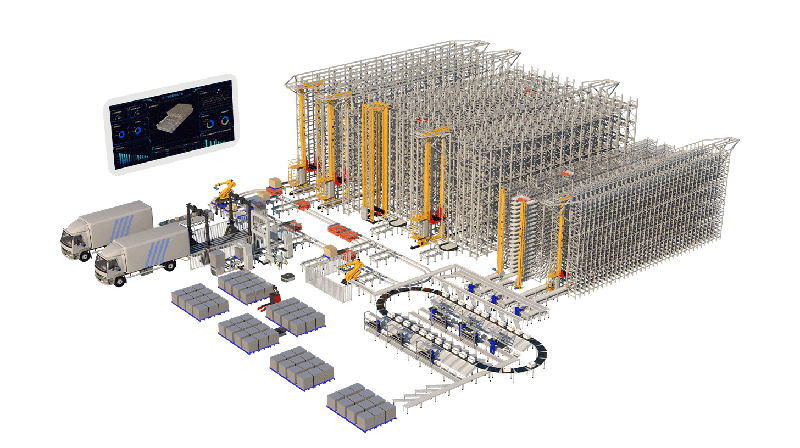
In a Four-Way Shuttle AS/RS, a pallet may pass through:
conveyor → Lifter → shuttle → storage location
If the Lifter is already handling tasks at its practical capacity, adding another shuttle will not automatically increase warehouse throughput.
The same applies to a Stacker Crane system.
A fast crane can still wait because the RGV, conveyor or downstream station is occupied.
Hanbell provides a useful example.
The planned pallet warehouse had only two stacker-crane aisles.
Instead of adding more aisles, the project uses two Pallet Stacker Cranes on one rail in each aisle.
The reason was specific to that building: more handling resources had to be placed within the aisle space already available.
So when customers compare throughput, a more useful question is:
Where are pallets most likely to wait?
Sometimes it is the storage machine.
Sometimes it is the Lifter.
Sometimes it is the warehouse-front conveyor or outbound buffer.
The slowest critical handover point may matter more than the fastest machine.
Four-Way Shuttle Systems Offer a Different Expansion Path
A Four-Way Shuttle system distributes horizontal handling work across several robots.
If business volume grows, additional shuttle robots can often be introduced, provided the rest of the system was designed with sufficient capacity.
That can make the architecture useful when future throughput is uncertain.
But adding more robots does not create unlimited throughput.
If a shared Lifter or transfer interface is already at capacity, more shuttles may simply create a longer queue.
This is why expansion should be considered when the system is first designed.
The rack, Lifters, conveyors and buffer positions all need to support the intended expansion path.
When a Stacker Crane Is the Cleaner Answer
There are also many projects where a Pallet Stacker Crane AS/RS is the more direct solution.
A new high-bay building with long, regular aisles and clearly defined inbound and outbound points is a typical example.
The crane has a defined operating area.
The storage route is clear.
The surrounding interfaces are relatively straightforward to model.
If the customer's SKU structure and pallet flow are stable, there may be little reason to introduce additional system flexibility that the operation is unlikely to use.
In those cases, predictable aisle-based operation can be more valuable than maximum routing flexibility.
Maintenance Should Be Discussed Before Commissioning
Customers also need to know what happens when equipment is unavailable.
In a multi-shuttle system, one unavailable shuttle does not necessarily stop every storage task. Other available robots may continue working in accessible areas.
In a conventional Stacker Crane AS/RS, a crane fault mainly affects the aisle that crane serves.
But neither architecture is automatically free of single points of failure.
Lifters, conveyors, network infrastructure and control systems can also affect the overall material flow.
A useful maintenance discussion should therefore cover practical recovery questions:
How can failed equipment be accessed?
Can another device take over part of the workload?
What critical spare parts are needed?
Which transfer points justify redundancy?
These questions are more useful than simply comparing a general availability figure.
A Simple Way to Narrow the Choice
A Pallet Four-Way Shuttle AS/RS is worth considering when storage density is a major priority, the building footprint is constrained, the SKU profile suits deeper storage, or the customer wants flexibility in how robot resources are allocated.
A Pallet Stacker Crane AS/RS is worth considering when the warehouse is tall and regular, the aisle layout is clear, material flow is relatively stable and structured pallet access is important.
These are starting points, not fixed rules.
Real warehouse selection still depends on the complete operating profile.
What We Need Before Comparing the Two
A useful first discussion normally starts with:
warehouse dimensions and clear height, pallet size and weight, required pallet positions, SKU quantity, approximate pallets per SKU, inbound and outbound demand, operating temperature, and whether the project is a new warehouse or an existing-building retrofit.
With that information, the two architectures become much easier to compare.
Sometimes one solution is clearly more suitable.
Sometimes both can work and the decision comes down to investment, maintenance or future expansion.
Some projects may even use different technologies in different zones.
The purpose of AS/RS selection is not to prove that one machine is more advanced.
It is to make sure the system solves the constraint that actually matters—without creating a new bottleneck somewhere else.

 Industries
 Services
 About Us
 AS/RS Handling Robot
 Vertical Storage Module
 Conveying Equipment
 Smart Warehousing System
 Warehouse Racking