A Pallet Asrs enquiry usually arrives with the same sentence attached. Send us the list of types you offer.
What comes back is a table: model numbers, a height band, a payload band, a column headed mast type. Tables like that are hard to compare, because the rows answer different questions. One row describes a structure. Another describes a duty. A third records nothing more than a supplier's naming habit.
The questions buyers actually ask sound different. Can you handle 1.8 tonne pallets? If one crane stops, do we lose the whole aisle? Neither appears in a model list.
After enough of these comparisons, a type list reads as a set of questions rather than a set of answers.
A Pallet Stacker Crane is not a model lifted off a shelf. It is a rail-guided machine built around four numbers the buyer already owns: the heaviest pallet, the usable clear height, the cycle count required inside the working window, and the conditions it has to run in.
So the useful question is not which types exist.
It is which of those four numbers is binding in this building.
That answer fixes the mast structure, the fork configuration, how many cranes share one aisle, and how much of the budget ends up outside the crane itself. The configurations below are not a catalogue. They are the ones that turn up on commissioned projects, together with what each one costs somewhere else.
Two installations are described here. The Hanbell figures come from the commissioning documents written at handover. The aluminium foil plant is described by industry, because that customer has not released its name.
Single-Mast and Double-Mast Describe a Rigidity Decision
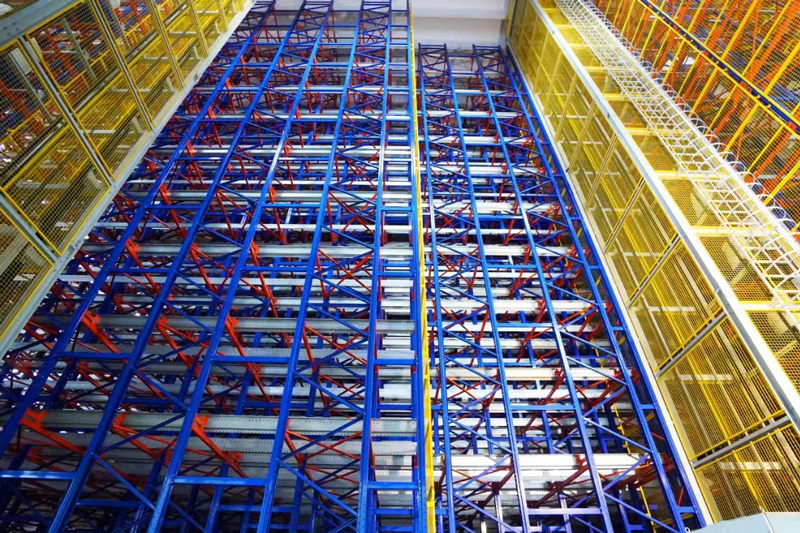
Every type list opens with the same split: one column carrying the load, or two columns standing either side of it.
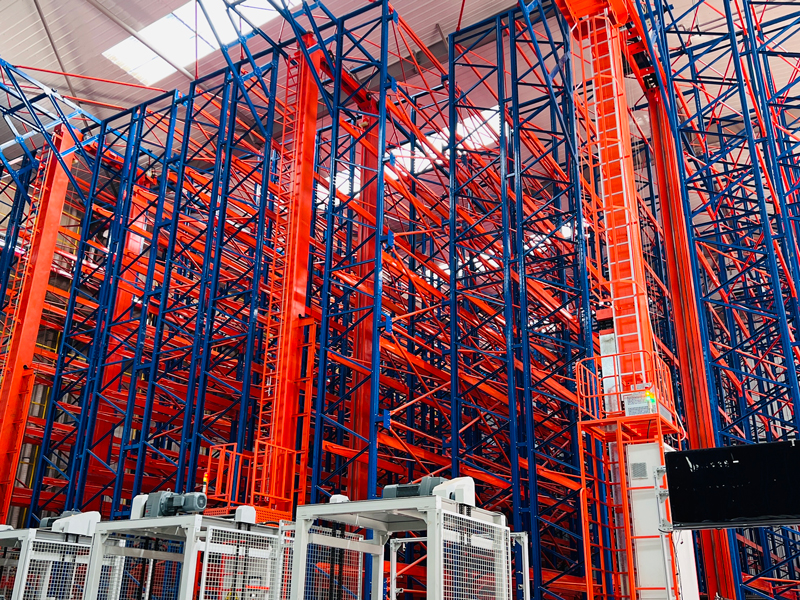
Single-mast Stacker Cranes use less steel and suit moderate heights with moderate duty. Double-mast Stacker Cranes control the deflection that appears once the mast is tall, the unit load is heavy, or the machine runs continuously across shifts. That much is in every catalogue, and it is not where the decision sits.
Deflection is a travel problem before it is a structural one. A mast bends under load, and the bend grows with height. Past a certain combination of height and payload, the fork spends longer waiting for the sway to settle before it can extend. Two machines with the same rated speed and payload can hand the operation noticeably different cycle times, and the difference never reaches the comparison sheet.
Ask for the deflection figure at the top working position under full rated load, and ask how it has been converted into approach and settling time inside the cycle calculation.
Ask in writing. Answers to that question have a habit of changing between the proposal and the commissioning report.
Two Cranes Can Share One Rail, and That Is Usually a Throughput Answer
The most useful distinction in this family has nothing to do with the mast. It is how many cranes work an aisle, and how the work is divided between them.
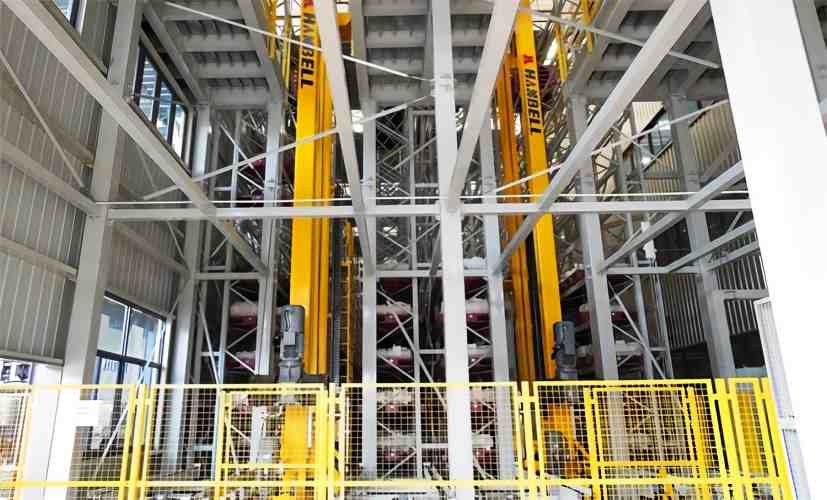
Hanbell gave the question a hard edge. Only two aisles fitted between existing buildings, and material still had to reach two production floors. Around 1,578 pallet movements had to be completed inside an eight-hour production window.
More aisles were impossible. Faster cranes were tested and rejected, because horizontal travel is one component of a storage cycle among several: lifting, positioning, fork travel, waiting on downstream equipment, task sequencing. Making one of them faster does not shorten the others.
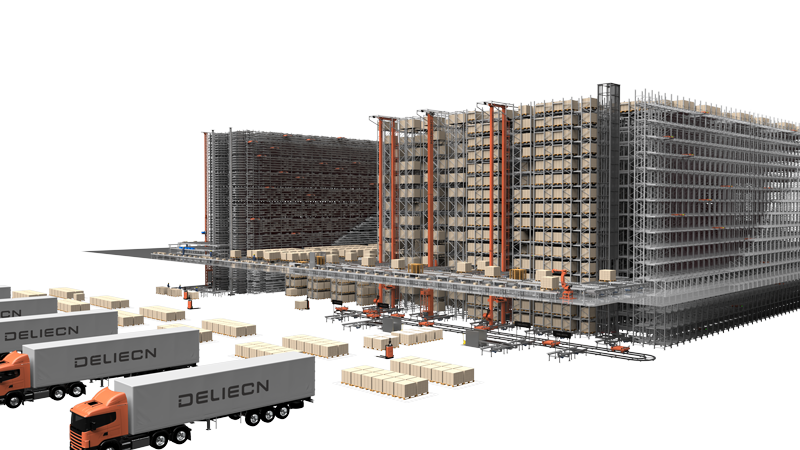
So four cranes went onto two rails, two machines to each. WCS hands every crane its own operating zone during production, which lets tasks run in parallel at a maintained safe distance. Inventory that has to cross between zones is moved during low-load periods, so relocation never competes with production supply. The building holds 2,872 pallet positions across 12 storage levels.
The change bought concurrency, not machine count. Two machines on the same rail without that scheduling arrangement would spend more time waiting for each other.
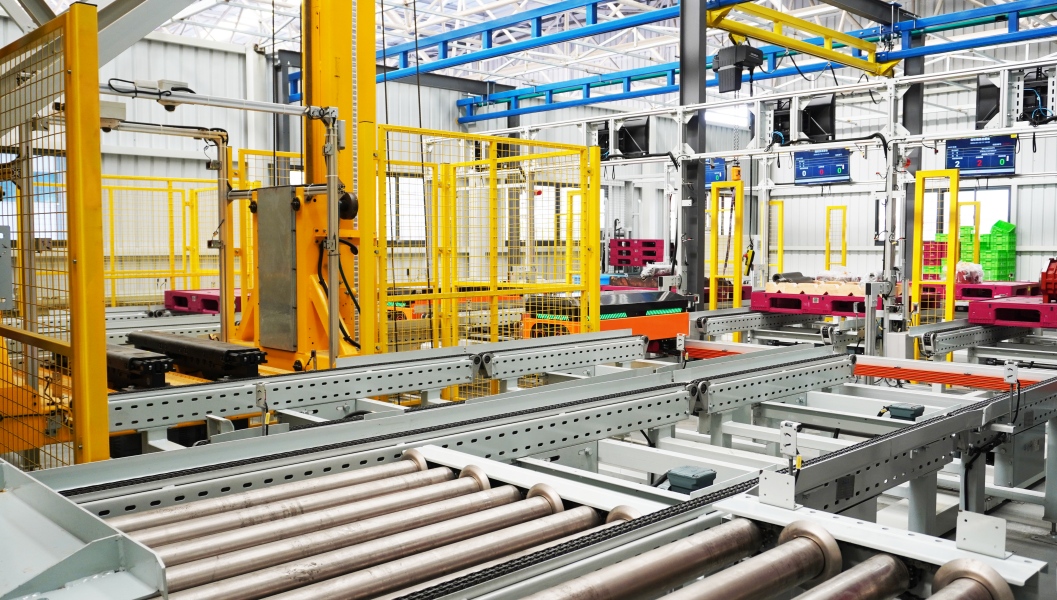
Outside the racking, four single-station RGVs, one dual-station RGV and several conveyor lines did the rest. Goods-to-person picking improved handling efficiency by around 80%, at 99.99% picking accuracy.
Environment Changes the Specification Before It Changes the Type
Temperature, dust and area classification rarely produce a new type of crane. They re-specify most of the components inside one.
A coal-coking and fine chemicals producer we worked with needed pallet storage across many categories and many specifications of maintenance material. In conditions like those the questions start upstream of the machine: which dust is present, where it settles, whether it conducts, which parts sit in the collecting path, and which zone and group the installation has to be built for.
Per component is the only basis that survives an audit. Ask what rating applies to the motors, the cabinet, the sensors, the cabling and the earthing, because a single enclosure class on a data sheet usually describes the cabinet and nothing else. Zone classification and dust group determination belong to the operator and the responsible specialist body, not to a quotation.
One limit is worth stating. The low-temperature configurations published not only for our equipment cover the Pallet Shuttle Robots, specified from -25°C to +40°C, but also carry across automatically to a stacker crane standing in the same building.
If One Crane Stops, What Is Still Reachable?
The question arrives early in most first meetings. What happens when one machine breaks?
For a rail-guided aisle the honest answer comes in two parts. The pallets in that aisle keep their location data and lose their access path.
Unless the installation includes a transfer arrangement letting a crane serve more than one aisle, or a second crane configured to take over the same rail, the inventory waits until the repair is finished.
The repair is the cheap part. The cost sits in the window around it: a dispatch missing its loading slot, a receiving dock standing idle, pallets re-handled by hand in a cold room, supervisors working out what can still be reached another way.
Crane count and any transfer option belong in the availability calculation, not only the throughput one. That is the difference between a quotation that answers the throughput question and one that answers the operation.
When a Pallet Stacker Crane Is the Wrong Answer
Some projects do not need one.
- The building is too low.With only a few usable levels, the machine's operating envelope, top clearance and rail zone consume one or two of them, and too few positions remain to carry the capital cost. Floor storage reorganised around the existing handling fleet usually returns more.
- The movement is too small.A plant moving a few dozen pallets a day rarely recovers the investment, whichever mast is specified, and a conventional rack layout with the existing forklift fleet usually costs less.
- The building fights back.Poor floor flatness, weak ground bearing, an awkward column grid. Correcting those can cost more than the crane, particularly in an existing building.
- No crane loss window is acceptable.Where downtime on an aisle cannot be tolerated and a transfer arrangement is out of budget, the design needs to stop depending on one machine per aisle rather than buy a bigger one.
None of that is an argument against automation. It is an argument for finding these things out before the drawings are signed.
Before the quotations go out, write down which of the four numbers is least negotiable here: heaviest pallet, clear height, cycle window, or environment. A supplier who cannot say which of the four their own proposal is built around is selling a product line rather than a design.

 Industries
 Services
 About Us
 AS/RS Handling Robot
 Vertical Storage Module
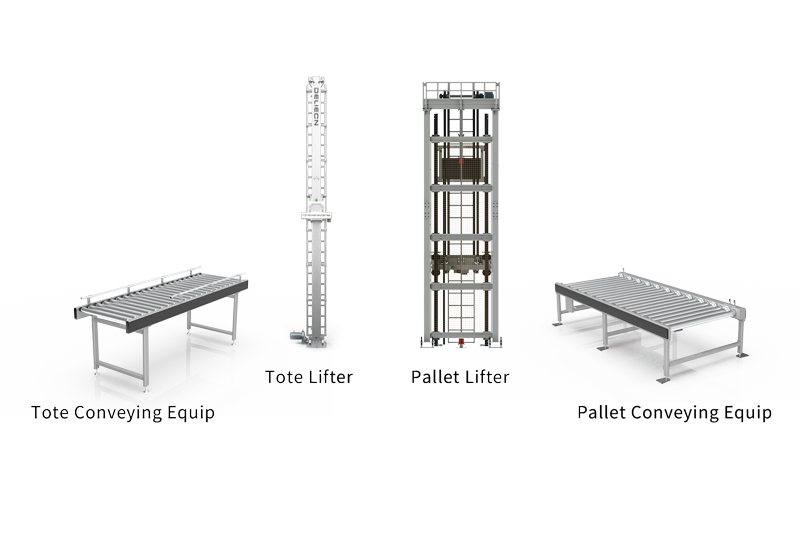 Conveying Equipment
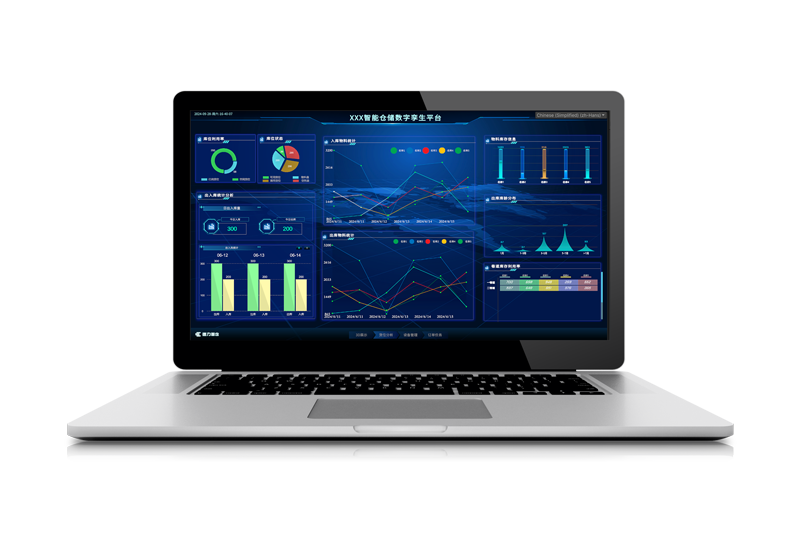 Smart Warehousing System
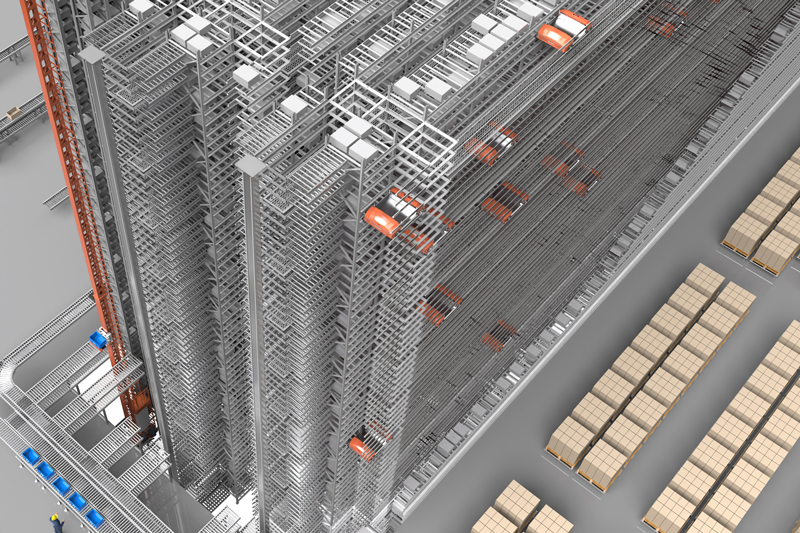 Warehouse Racking