Industries Smart Warehousing Solutions Tailored To Your Industry
With a comprehensive range of intralogistics, products, DELlECN helps you build efficient and Fully Automated Warehouse operations.
Services Maximizing the Value of Your Logistics
At DELIECN, service goes beyond product delivery. We provide consulting, planning, design, manufacturing, installation, commissioning, and after-sales support throughout the entire lifecycle.
About Us Efficient and Flexible Automated Warehousing Solutions
DELIECN supports clients across food and beverage, new energy, chemicals, pharmaceuticals, e-commerce, precision manufacturing, textiles, and energy industries with intelligent warehousing systems tailored to their goals and requirements.
Most manufacturing warehouse projects start the same way. The building is full, the SKU count keeps climbing, and the crew that runs the place is harder to hire than it was three years ago.
The first reaction is predictable. Rent a facility across town. Bolt in another row of racking. Push everyone to pick faster and check less.
One question arrives before almost every project we quote: "Without new construction, how many more pallets can we fit?"
On paper, the predictable answers look reasonable. In practice, they usually treat the symptom.
We've delivered Warehouse Automation projects across the compressor, chemical, battery material and cold chain industries, and the pattern holds. The factories that got value from automation started by naming one problem, not by shopping for robots.
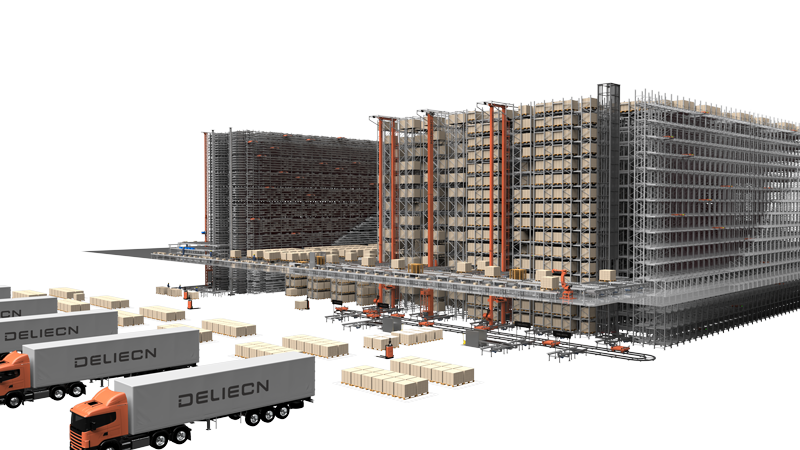
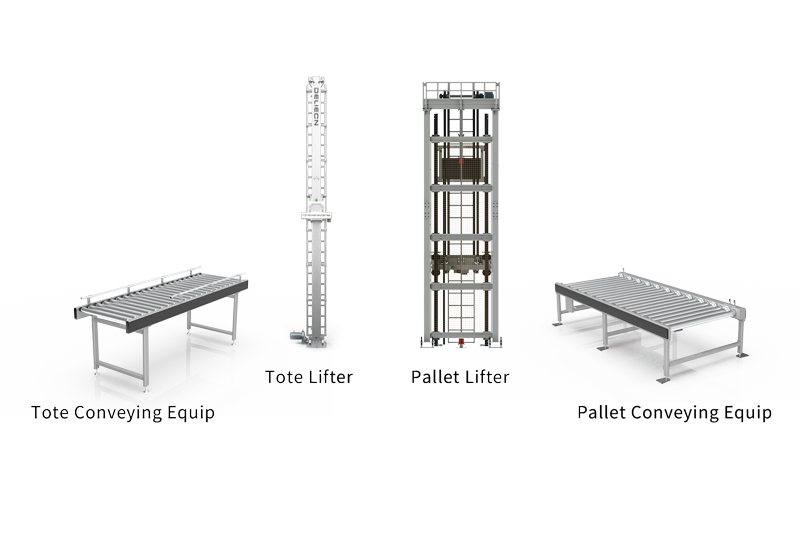
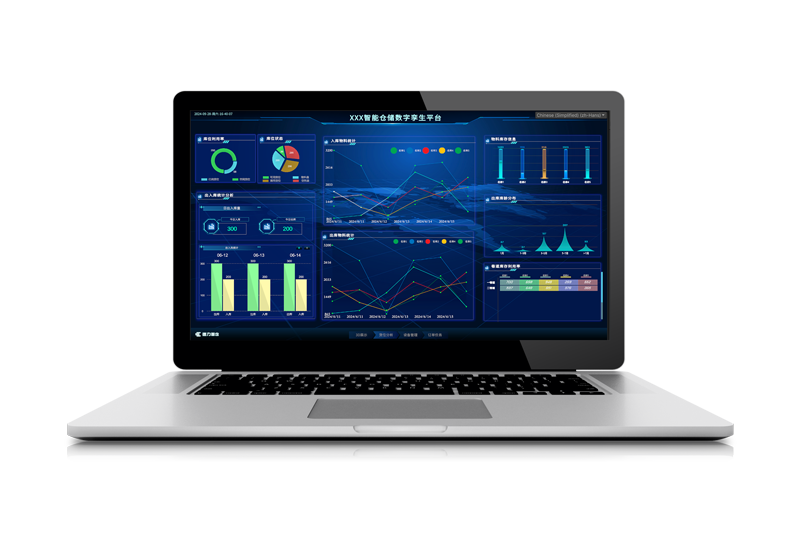
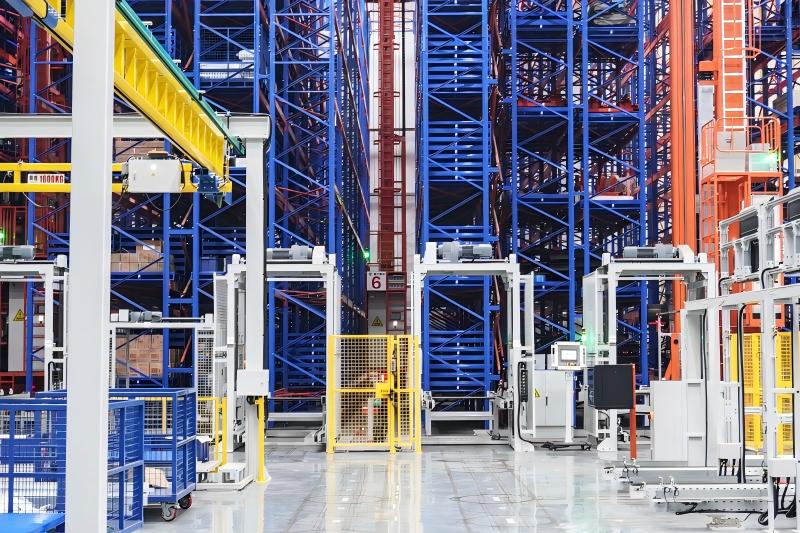
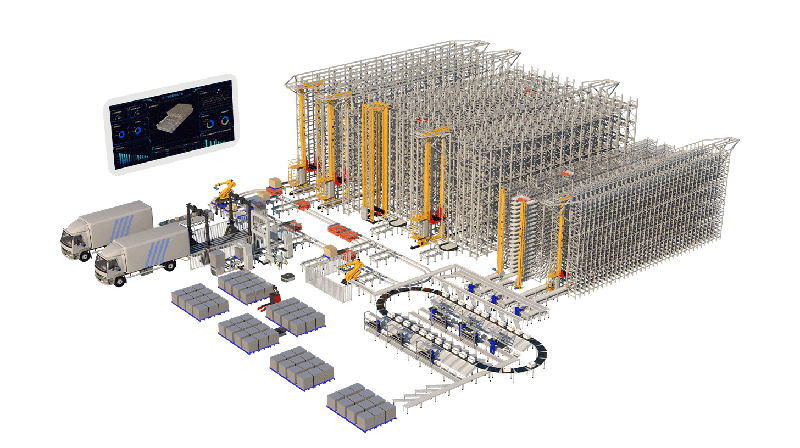
An automated warehouse isn't a rack with robots inside. It's storage, handling equipment, WMS/WCS software and a service relationship, sized around your actual order flow.
So before asking how to automate, ask what the automation is for.
The project numbers below come from commissioning and handover records; where a client name isn't public, we describe the industry instead. Four industries, two technologies, and one planning logic behind all of them.

Space runs out first. Land around an operating plant is expensive, permits take a year, and the flat warehouse built a decade ago was sized for a product range that no longer exists.
Then the range itself grows. More formats, more batch numbers, more customers ordering smaller quantities more often. Manual picking slows as the range widens, and errors show up exactly where orders are most urgent.
Labor compounds both. Wages rise, experienced staff leave, and recruiting forklift drivers for cold rooms and high racks gets harder every year. Several customers have said the same thing in different words: hiring isn't the problem anymore — keeping people is.
Beneath it all sits the strategic issue. A factory investing in smart manufacturing — connected lines, ERP, MES — still runs its warehouse on paper lists and forklift radios.
Here's the trap. Space calls for density. Speed calls for throughput. Accuracy calls for software discipline. Automate before naming which one hurts most, and you can buy expensive equipment and keep the original bottleneck anyway.
Before any quotation, write down four things.
The problem, measured as one number. Pallet positions you can't fit. Orders per shift that miss the cutoff. Error rate you won't accept. If the number isn't written down, every quotation looks equally convincing — which is exactly the danger.
The budget, including what buyers forget: racking, Shuttle Robots, lifters, software, fire protection changes, floor works, first-year running costs.
Capacity and throughput, as two separate numbers. Capacity is how many pallets you hold. Throughput is how many pallets per hour leave the system at peak. Merging them is how buyers end up with the wrong system.
And the year you'll actually be living in: three years out.
Suppose you store 4,000 pallets today and volume grows 15% a year. Three years out, that's about 6,000 positions. Size for 4,000 and year two brings a second project, with everything built twice.
The arithmetic is simple on purpose. Real growth arrives in steps — a new product line, an export market, one large customer. Use your own numbers. Capacity is a business decision, not a rack decision.
Hanbell, a compressor manufacturer, ran into this before any equipment was ordered.
Their warehouse holds 2,872 pallet locations on 12 levels, worked by 4 Stacker Cranes on 2 aisles plus 5 RGV systems. During commissioning it completed about 1,578 pallet movements in eight working hours, and goods-to-person picking lifted picking efficiency 80% at 99.99% accuracy.
Two purchases hide in those figures. The 2,872 locations buy space. The 1,578 movements buy shipping capacity.
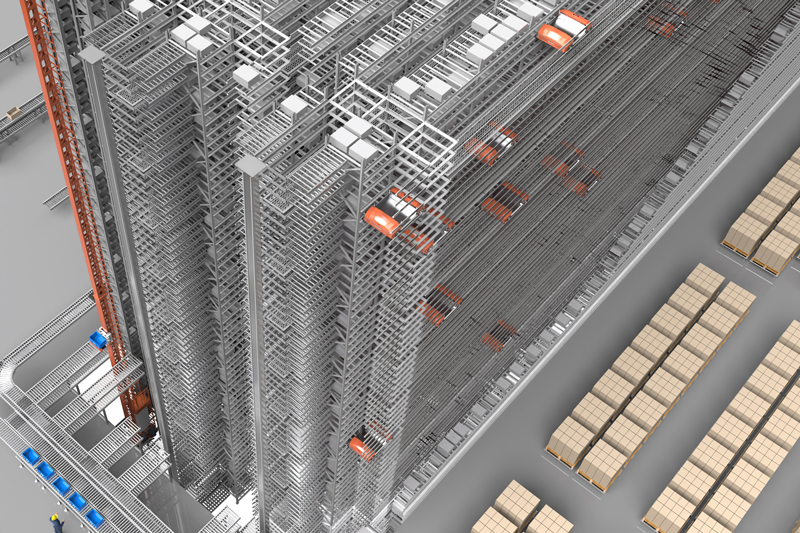
Where the throughput came from matters more. Not new aisles — the building ruled those out. Two cranes share one rail, and the WCS splits the work between them. Left unscheduled, two cranes in one aisle would spend the shift waiting on each other.
More storage doesn't fix a flow problem. More speed doesn't fix a space problem. Most warehouses are losing money on one of them, and it's worth knowing which before the first quotation arrives.
Start with the material, not the machinery.
One battery aluminum foil producer ships about 150,000 tons of finished foil a year — heavy, large-format, intolerant of rough handling. Standard pallets were never an option for this material.
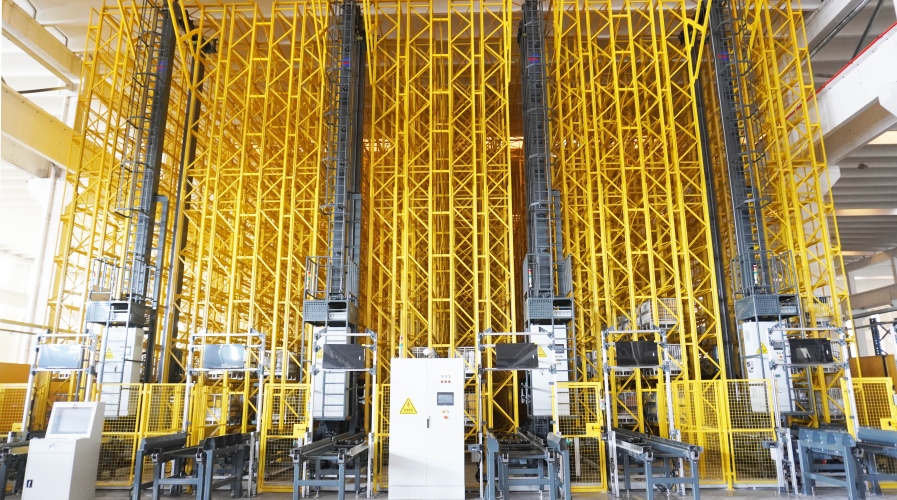
Their answer was ultra-high heavy-duty pallet stacker cranes working at 31.6 meters: 13,790 pallet positions, unit loads from 500 to 2,500 kg, space utilization up about five times over the flat storage it replaced, and a turnover rhythm the cranes sustain at roughly 1,300 pallets a day.
DELIECN customized non-standard load carriers for the project, covering material from L1740 × W1100 × H255 mm up to L1890 × W1100 × H340 mm.
The trade-off is worth stating plainly. At that height the crane carries the load, but responsibility doesn't stop at the machine — it shifts into rack tolerance, rail foundations and the conveyor interface. Those are the places an isolated-machine supplier meets trouble, and it meets them at commissioning, the worst possible time.
Where do cranes lose ground? Fixed lanes, fixed rhythm, expansion by construction. That's fine for one heavy, stable flow. It gets expensive for anything variable.
Shuttles take the other side of the trade: variable order flows, mixed products, room to grow.
Lithium battery materials came first. One producer put raw material, work-in-process and finished goods into a single system — 37,904 locations, 265 pallets per hour, no people on the floor between production and shipping. Batch information rides with every pallet because the WMS talks to the plant's upper-level systems.
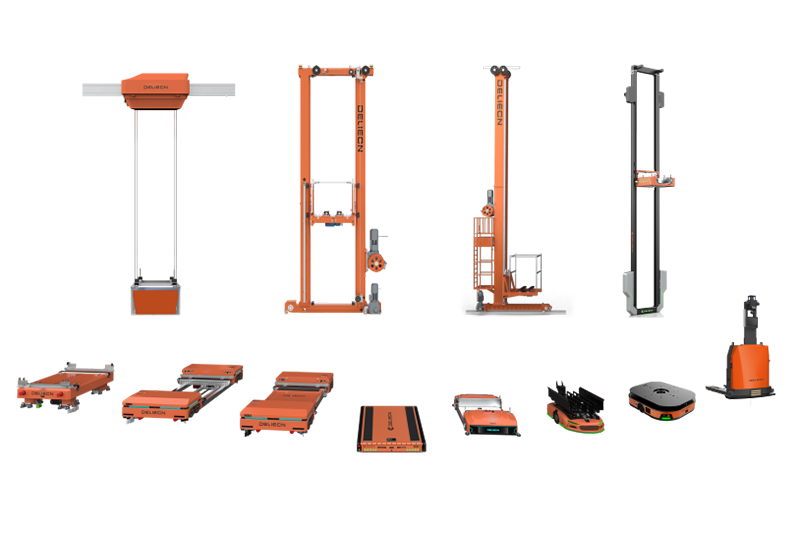
Chemicals tested the scheduling. A producer in Hunan receives about 33 pallets an hour from packaging but ships in bursts — 30 pallets an hour of bagged goods, 60 bulk bags when trucks arrive together. Thirteen four-way shuttles and 4 fork-type lifters behind a 6,309-position rack absorb that mismatch, and the two product types load differently on purpose.
Cold storage tested the hardware. A third-party cold chain operator runs the same two-way shuttle platform in two zones — 1,062 positions at -18°C, 4,020 at 0–5°C, vehicles rated from -25°C to +40°C. Around 90% space utilization, 99.9% operational accuracy.
Dust tested everything at once. A refractory materials producer runs 1.8-ton pallets in a 29-meter warehouse where the air carries conductive graphite. The fleet needed rail-cleaning devices under the vehicles, mechanical lifting instead of hydraulics, and positioning checks holding ±2 mm at 99.9% accuracy.
"Does the whole warehouse go down if one robot stops?" Buyers ask this more often than they ask about speed. In a multi-vehicle fleet the work gets redistributed across lanes. You lose capacity, not access. The follow-up question is usually about forklifts — "how many can we retire?" — and in these systems the shuttles move pallets between lanes themselves, so the forklift count drops with the dock traffic.
Automation projects fail most often for one reason: they were approved too early.
We would rather a buyer disqualify automation early than discover the mismatch after commissioning.
Monday, the quotations arrive. Friday, someone has a comparison sheet with fourteen rows and a colour-coded winner. Before trusting that sheet, translate what's actually written on the quotations. None of it is dishonest. It's just short.
"WCS included" can mean a task-orchestration layer, or a traffic sequencer that ducks the hard scheduling. "Installation and commissioning included" can mean a tested, accepted system, or equipment on site with acceptance criteria still undefined. "One year warranty" says nothing about month fourteen. "Local service" spans everything from a spare-parts warehouse to a phone number.
Delivery rate sits in the same blind spot, and buyers skip it most often. What does the promised date actually include — equipment delivered, or equipment through FAT and accepted at SAT? How does ramp-up phase in without stopping production? Who holds spare parts, and what response time is contractual?
One disclosure from our side, since buyers can't verify it from a website: we don't quote a standard delivery time. Scope, building and customization decide it, and a supplier who names a fixed number before seeing your layout is guessing. In-house manufacturing of core products matters here — it shortens the spare-parts chain and the software change cycle, and it's what separates a customization promise from a customization track record.
Then compare suppliers on the numbers your operations manager reports a year in: pallets dispatched per shift, orders completed before the cutoff, positions available at peak, unplanned stoppage hours. Price decides what you can afford. Those decide what it was worth.
How much does it cost to automate a manufacturing warehouse?
It depends on building height, throughput targets, product mix and software scope. Ask each supplier for a scope list that separates racking, equipment, software and site works — comparing totals before comparing scopes is how projects end up mismatched.
Should I choose Stacker Cranes or shuttle robots?
It depends on clear height, load weight, SKU depth per lane and how fast you expect to grow. Cranes suit very high, heavy, stable flows; shuttles suit variable flows and phased expansion. Send your layout to shortlisted suppliers and ask for a fit check with reasons, not a product sheet.
Can warehouse automation be installed without stopping production?
Yes, and it's standard practice on brownfield projects. Storage and new equipment go in one section at a time while the old operation keeps running. Ask how ramp-up is phased and what the fallback operation looks like if commissioning slips.
What happens if one shuttle robot breaks down?
In a multi-vehicle shuttle system, the remaining vehicles take over the stopped vehicle's work across lanes, so you lose capacity, not access to your goods. Ask how many spare vehicles the design assumes and what the response commitment is.
How much storage density can automation actually add?
Published projects range from about two times to more than ten times, depending on building height, pallet format and the original layout. Ask suppliers to calculate the position count with your dimensions before believing any multiplier.
The direction is no longer in question. Density on scarce land, expensive labor, orders that fragment every year — automation has moved from early-adopter experiment to baseline for any factory that calls itself smart.
The sustainability case rides along more directly than most companies notice. The same inventory on less land, sometimes no second building at all. Fewer forklift hours in freezers and at height, less energy, fewer people in the worst jobs. Batch traceability that shrinks waste from expired stock and mis-shipments. For manufacturers carrying green and sustainable development targets, the automated warehouse is part of that agenda, not adjacent to it.
But the same project becomes an expensive detour when the supplier guessed wrong — about the problem, about the customization, about the date.
Keep one question at the top of the comparison sheet. Not who is cheapest: whose assumptions still hold in year three, when the building is fuller, the peak is higher, and the person who signed has moved on.