Leave Your Message
0%

Every tote automation project starts with the same question: which robot should we buy?
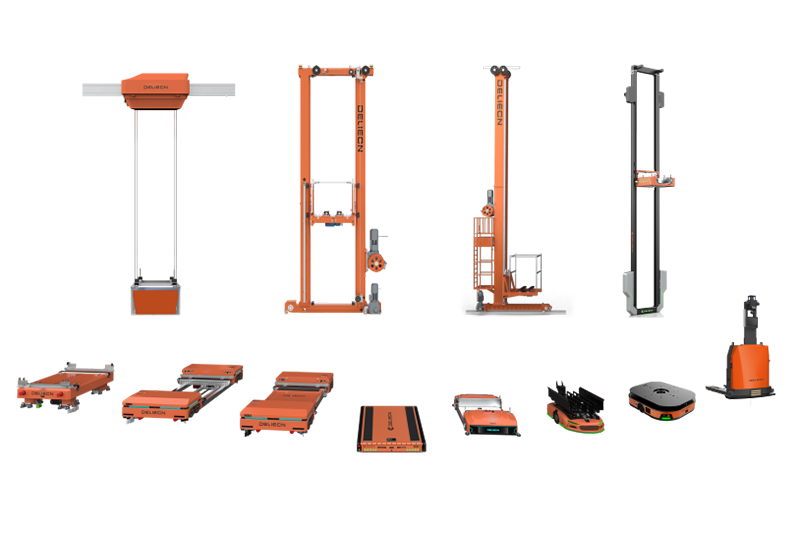
Suppliers answer with a product list. Single-station Tote Shuttle. Dual-station Tote Shuttle. Mini-FlyBox. Mini-load crane. Each comes with a datasheet, and the datasheets all look impressive.
On paper, comparing them seems reasonable. In practice, most comparisons start in the wrong place — with the machine instead of the tote.
After building tote systems for connector plants, pharmaceutical distribution and automotive spare parts, we've found the choice usually comes down to four variables: tote weight, SKU variety, available building height, and the throughput your peak hour actually demands.
Answer those four first. The robot class follows from them, and the four projects below show how different the answers can be.

飞箱.jpg

Write Down the Tote Before You Compare Any Robot

Tote weight sets the boundary early. Most tote Shuttle Robots handle totes below 50 kg; once loads exceed roughly 80 kg, you're in mini-load territory.
SKU variety matters as much as weight. A warehouse touching 370 SKUs on an average inbound day behaves nothing like one moving 20.
Then come height and throughput. A 12 m building and a 22 m building reward different machines, and a warehouse that must push 300+ totes per hour buys different equipment than one moving 100. The numbers in that last sentence come from the projects below, and none of them are arbitrary.

Single-Station Tote Shuttle: Many SKUs in a Tall Building

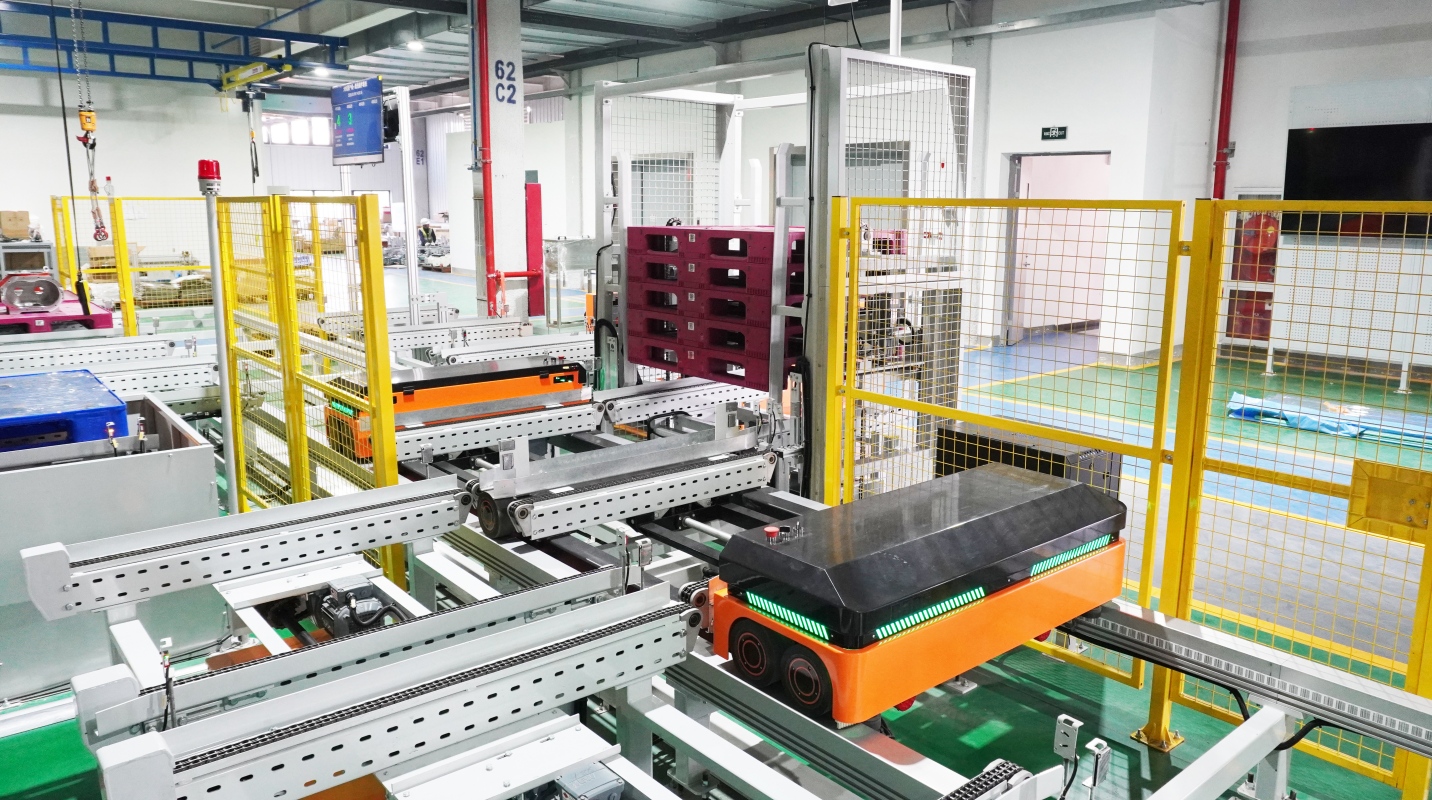
A single-station tote shuttle robot carries one tote per cycle. That simplicity is the point. When SKU variety is high and totes stay under 50 kg, one tote per cycle keeps task handling predictable, and the fleet scales by adding robots rather than redesigning lanes.
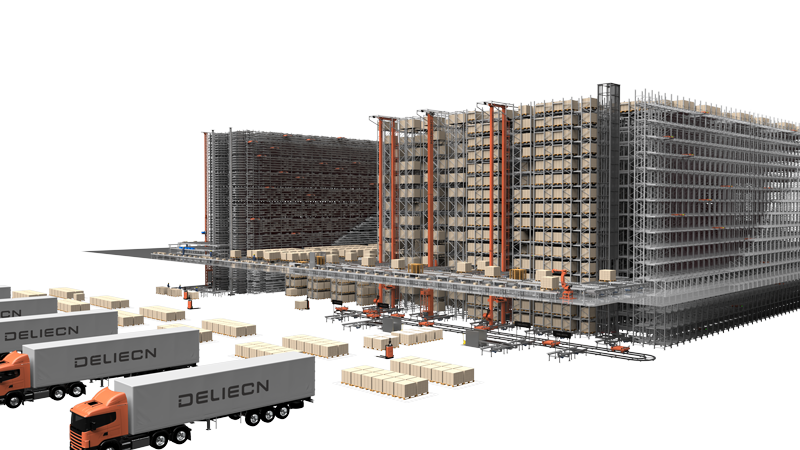
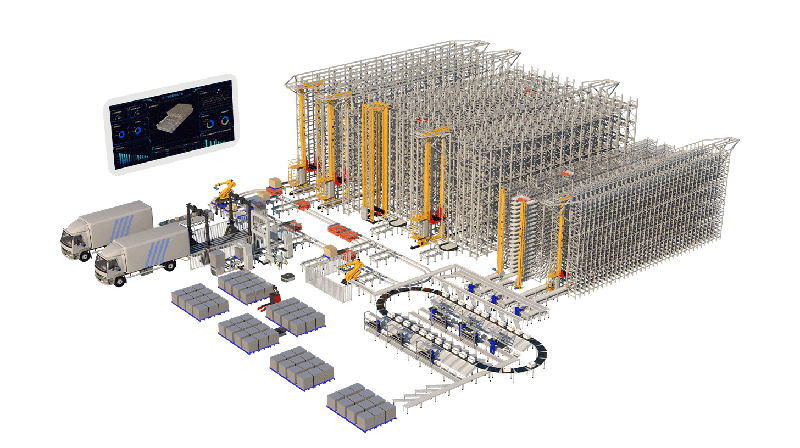
Sichuan Yonggui, a manufacturer of electrical connectors and electromechanical products, chose this route for its new plant. DELIECN configured Pallet Stacker Cranes, RGVs, tote four-way shuttle robots and WMS/WCS into one custom system.
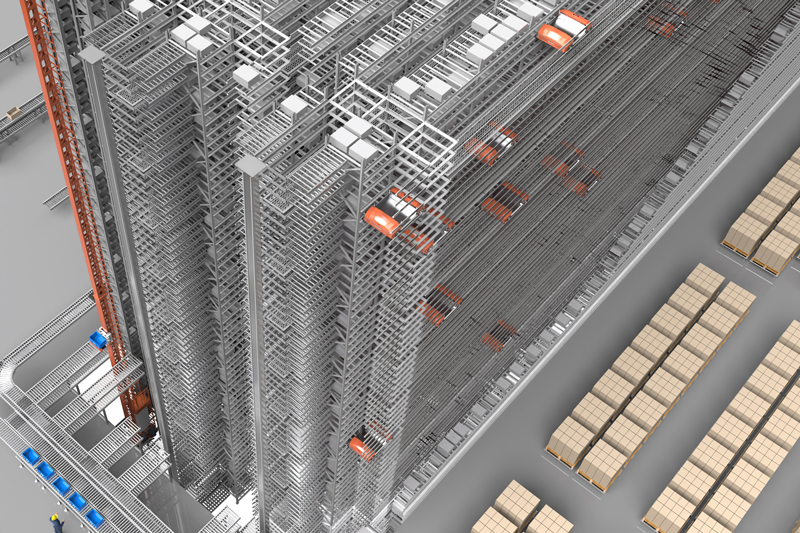
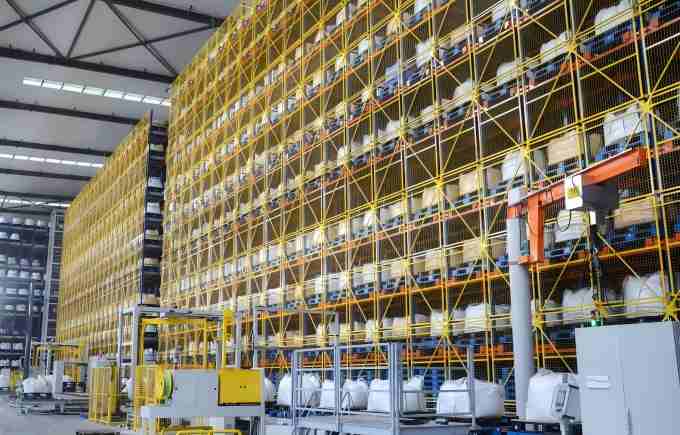
The tote warehouse reaches 22.3 m with 51 storage levels and holds more than 9,700 types of automotive components. Eight tote four-way Shuttle Robots run it, achieving up to 323 totes per hour, with peak daily inbound handling around 370 SKUs and outbound around 872.
That last number explains the design. A warehouse that touches 872 different SKUs in one outbound day doesn't need the fastest robot available; it needs thousands of addressable positions and a scheduler that keeps eight vehicles from waiting on each other.
Height is what made it economical. The 22.3 m envelope turned vertical space into 51 working levels, and storage capacity rose by roughly 10 times.
Jilin Beiyao, a pharmaceutical enterprise in northeast China, runs single-station tote shuttle robots too. Pharmaceutical distribution lives on many SKUs in small batches, so one tote per cycle keeps every movement traceable — and in that profile, predictability beats raw speed.

Two Totes in One Cycle Is a Scheduling Decision

Dual-station tote shuttles target a different profile: large floor area and high throughput. The robot carries two totes per trip, and the two stations can serve different locations in the same run — the second tote is picked up en route.
Under a favourable task mix, this architecture delivers efficiency gains of up to 80–90% over single-station operation. Treat that as a ceiling, not a promise; the actual gain depends on operating mode and workload structure.
And note where the real barrier sits. The hardware is easy to copy. The scheduling that decides whether two tasks can be paired, whether the detour is worth it, and whether both stations stay loaded — that's the hard part.
Ask any bidder to demonstrate task-pairing against your own order profile, not a demo script.

Mini-FlyBox Buys Density in a Small Footprint

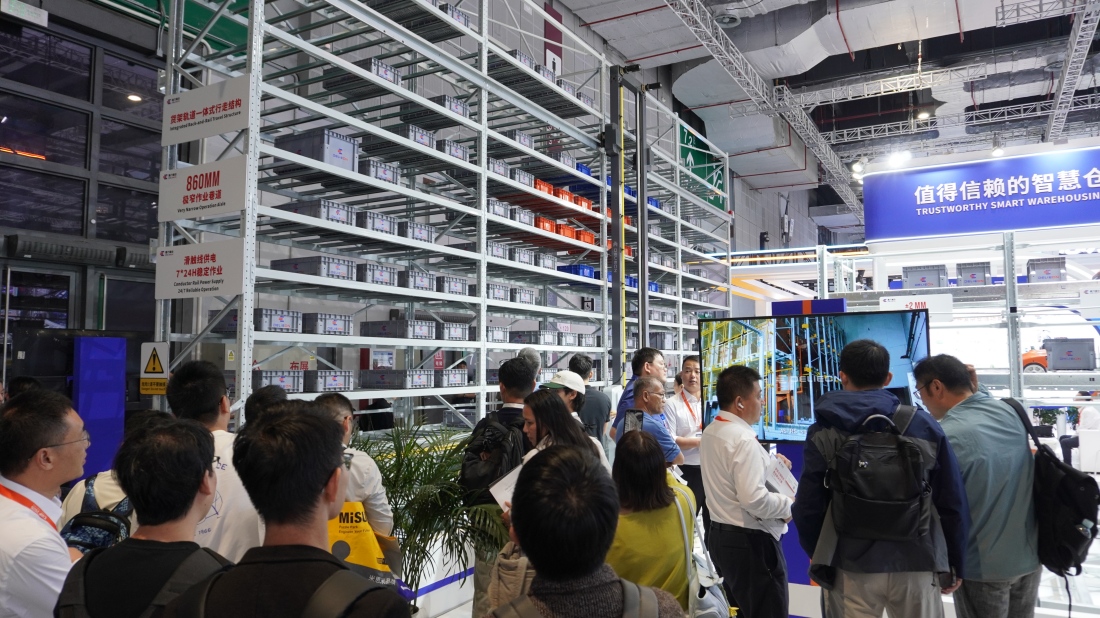
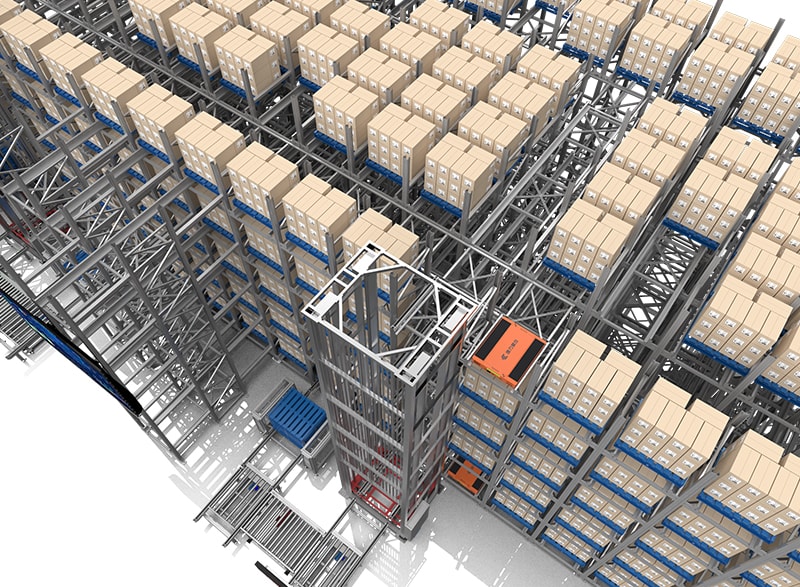
Mini-FlyBox suits the opposite constraint: little floor space, moderate height, and a need for dense storage. The rack and the robot form one integrated structure, aisles narrow down to 860 mm, and the system works below roughly 12 m.
One honest trade-off: Mini-FlyBox runs along a single axis inside its aisle and doesn't cross aisles on its own. Tote AMRs or conveyors handle the routing between aisles. Its value is locations per square metre, not routing freedom.
Toyota's automotive spare parts warehouse shows the result. The Mini-FlyBox area holds more than 17,000 tote locations, split by tote height — the H300 zone runs 15 levels with 10,000+ locations, the H450 zone 11 levels with 7,000+ — feeding goods-to-person picking.
Different level pitches for different tote heights sounds like a detail. It's actually why both formats could share one system without wasting vertical space.

When the Tote Gets Heavy, the Crane Comes Back

From roughly 80 kg upward, and especially above 12 m — 20 m and beyond in heavy-duty installations — mini-load cranes take over tote handling. A crane travels the aisle and serves each level from the rack face, which keeps handling stable as tote weight climbs.
BETT, which makes hydrostatic hydraulic and pneumatic products, combined pallet stacker cranes with Mini-Load Cranes to store multi-specification raw materials, semi-finished and finished goods in one facility. Space utilisation rose by 80% and operational efficiency by 80%, with WMS data processing accuracy reaching 99.99% across production and warehousing.
The lesson isn't that mini-load beat the shuttle. It's that the building held heavy and light, large and small items at once, and the equipment mix followed the loads.

One Tote Class, Four Different Answers

Set the projects side by side: 22.3 m and 323 totes per hour at Yonggui; 17,000+ locations in 860 mm aisles at Toyota; 80% utilisation gains on mixed loads at Butuo. These numbers describe each project. What transfers is the logic behind them.

Match the machine to the tote first, the building height second, and the peak hour last. Then let the software carry the difference, because in every one of these buildings, scheduling decided whether the hardware performed.

When a Tote Shuttle Is the Wrong Answer

Three situations should stop a tote shuttle project early.
If daily volume is low — a few hundred tote movements spread across a full shift — automation can't pay for itself, and organised shelving with a small AMR fleet will return the investment faster.
If most of your flow is full pallets rather than totes, a pallet four-way shuttle system fits the load class better; forcing pallets into tote equipment usually means repacking everything by hand.
And if tote formats keep changing — different sizes, soft packaging, unstable stacking — fix the container standard first. Robots follow containers, not the other way round.
We would rather see a buyer disqualify a tote shuttle in month one than discover the mismatch after commissioning.
The right question was never "which robot is best." It's "what does my tote weigh, how many SKUs do I touch on a peak day, how tall is my building — and where does my flow actually lose hours?" Answer those, and the shortlist writes itself.

FAQS

How does a tote shuttle robot move storage containers?

It travels along guided rails inside storage lanes. Wheels move it horizontally. Lifters transfer totes between levels and workstations. Sensors check position, clearance, and tote presence. Small alignment errors can delay multiple orders.

What warehouse measurements should be taken before selecting a system?

Measure tote length, width, height, and actual load weight. Record aisle width, storage height, and maintenance access. Walk the warehouse during its busiest shift. Paper measurements can miss awkward handoffs.

How does tote weight affect robot performance?

Heavier totes require stronger drive parts and controlled braking. Test the heaviest realistic tote, not only an empty container. Uneven loading also matters. A stable-looking tote may shift during acceleration.

What software integration features should be tested?

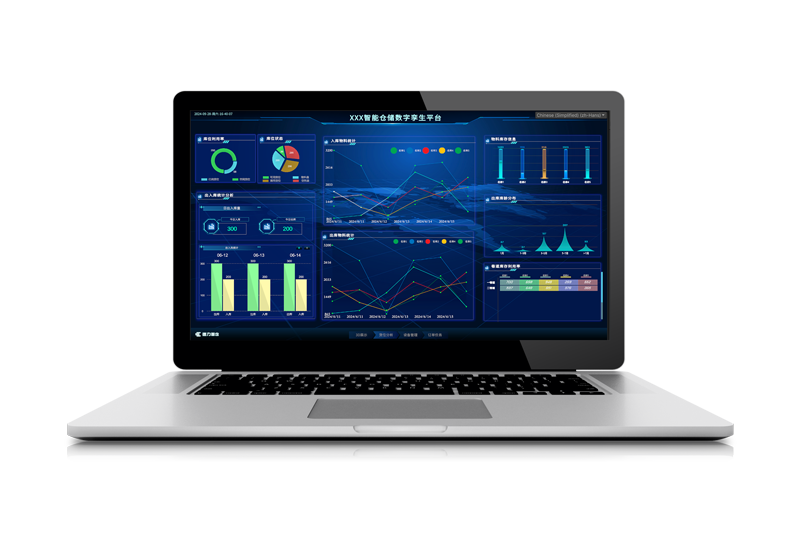
Test inventory updates, order changes, task visibility, and recovery after network interruptions. Confirm documented interfaces and clear data ownership. Review audit logs and user permissions. Fast movement is useless when inventory data arrives late.

Aria

Aria

Aria is a dynamic marketing professional specializing in logistics automation, with a deep understanding of the intricacies of intralogistics and advanced robotics technologies. With a commitment to excellence, Aria plays a crucial role in showcasing the company's innovative solutions, which......
Previous China Top 10 Small Parts Automation System Manufacturers?