Leave Your Message
0%

So, choosing a Four Way Shuttle Robot Supplier isn't just about comparing prices. Really, it's a decision about capacity, uptime, safety, and how flexible your warehouse can be down the road.

A good supplier should take time to understand your storage profile before they start pitching equipment. They'll ask about pallet dimensions, load weights, aisle width, temperature, throughput, and what happens during peak season. If a supplier dodges those questions? That's a red flag. They might be selling hardware, not actually solving your operation's problem.

As warehouse automation specialist John M. Hill puts it, “The best automation is measured by dependable performance, not impressive equipment alone.” That's worth paying attention to. A Four Way Shuttle System can move pallets efficiently, sure, but poor software integration can cause delays at every transfer point.

So look closely at how the robot navigates, how it charges, what the control software is like, and how it recovers from failures. Ask for live test data, not just glossy brochures. If you can, visit a site where it's actually running. Watch what happens when a lane is blocked, a battery is low, or a pallet is misplaced.

Service matters just as much. Check spare-parts availability, remote support hours, technician response times, and operator training. And ask whether the supplier has done installations similar to yours. A newer supplier might bring fresh ideas, but limited field experience can be risky.

Don't ignore integration either. The robot needs to communicate reliably with your warehouse management and Warehouse Control Systems. Clear interfaces mean less manual intervention and fewer hidden costs.

There's no perfect supplier. Every proposal comes with assumptions. Challenge them.

The right Four Way Shuttle Robot Supplier will be open about limitations, give you measurable performance targets, and design around your actual workflow. That honesty may matter more than a low initial quote. Before signing anything, look at total ownership cost, expansion plans, maintenance records, and safety documentation.

How to Choose a Four Way Shuttle Robot Supplier?

Define Your Four Way Shuttle Robot Requirements

How to Choose a Four Way Shuttle Robot Supplier?

Define Your Four Way Shuttle Robot Requirements

Before contacting a supplier, describe your warehouse with measured facts. Record pallet length, width, height, and maximum weight. Include the heaviest load, not the average one.

Calculate required storage positions and daily pallet movements. A site handling 600 pallets daily needs different equipment from one handling 120. Note peak periods, shift patterns, and acceptable retrieval times. Small details matter. A two-minute delay can create congestion near receiving docks.

Measure aisle width, rack height, floor flatness, and available charging areas. Identify ambient conditions, including dust, humidity, and temperature changes. These factors influence battery performance and sensor reliability. Define your product range carefully. Mixed pallet sizes may require adjustable handling features, while fragile goods need controlled acceleration.

Your Four Way Shuttle System should also match existing software and material flow. List your warehouse management system, conveyor interfaces, barcode methods, and emergency procedures. Ask suppliers to explain integration limits in writing. Request performance data from comparable applications, installation references, maintenance records, and operator training plans.

Use realistic tests before approving a design. Simulate peak traffic with actual pallets, including damaged or uneven units. Our first capacity estimate was too optimistic because it ignored replenishment traffic. That mistake changed the layout. Leave room for manual access, inspection, and future demand. A precise requirement document helps separate practical proposals from attractive but unproven promises.

Assess Supplier Experience and Technical Expertise

A capable Four Way Shuttle Robot supplier should demonstrate more than a polished product catalog. Ask for project records from warehouses with similar pallet sizes, aisle widths, temperatures, and throughput demands. The MHI 2024 Annual Industry Report found that 55% of supply chain professionals already use robotics and automation, showing how quickly practical experience is becoming essential. However, adoption figures do not prove engineering depth.

Request measurable evidence. A reliable supplier should explain shuttle positioning accuracy, battery performance, fault recovery, and software response times. Watch a live test. Does the Shuttle Robot recover smoothly after a blocked lane, or does an operator intervene immediately? The International Federation of Robotics reported a 44% increase in logistics-related professional service robot installations in 2022. That growth creates opportunity, but also exposes inexperienced integrators.

Technical discussions should include warehouse control software, warehouse management system integration, traffic scheduling, safety zones, and spare-parts availability. Ask for commissioning records and customer references you can contact directly. A useful supplier will disclose limitations, such as reduced battery capacity in cold storage. That honesty matters. I would also inspect training materials and maintenance procedures, not only performance videos. One overlooked question is lifecycle support after installation. Can the engineering team diagnose a communication fault at 2 a.m.? If the answer is vague, keep investigating. Capability is proven in difficult details.

How to Choose a Four Way Shuttle Robot Supplier? - Assess Supplier Experience and Technical Expertise
No. Assessment Dimension Weight Recommended Benchmark Key Evidence to Verify Score
(0–5)
1 Relevant Industry Experience 15% At least 5 years of experience delivering automated storage and retrieval systems, warehouse automation, or four-way shuttle projects. Completed-project list, installation dates, system references, project scope, and customer acceptance records with sensitive information removed. ____
2 Four-Way Shuttle Expertise 15% Demonstrated capability in bidirectional travel, aisle changing, pallet positioning, rack interface, and multi-depth storage control. Technical drawings, shuttle specifications, operating videos, test reports, and documented performance results from comparable applications. ____
3 System Throughput Capability 12% Supplier provides throughput calculations based on shuttle quantity, travel distance, lift cycles, pallet weight, storage depth, and peak-hour demand. Simulation model, cycle-time assumptions, input/output capacity calculation, peak-load analysis, and guaranteed performance conditions. ____
4 Warehouse Management Integration 10% Ability to integrate with WMS, WCS, PLC systems, barcode or RFID equipment, and standard industrial communication interfaces. Interface control document, API or protocol list, integration architecture, data-mapping example, and software test plan. ____
5 Safety Engineering 12% Risk assessment and protective measures aligned with applicable machinery-safety requirements, including ISO 12100 and relevant local regulations. Risk assessment, safety circuit diagrams, emergency-stop design, guarding concept, safety validation records, and conformity documentation. ____
6 Reliability and Maintainability 10% Supplier defines service intervals, critical spare parts, fault-recovery procedures, battery-management practices, and measurable availability targets. Preventive-maintenance schedule, failure-mode analysis, mean-time data, spare-parts list, diagnostic functions, and maintenance instructions. ____
7 Mechanical and Electrical Design 8% Design is compatible with the required pallet dimensions, load capacity, rack tolerances, floor conditions, temperature range, and charging method. Load calculations, dimensional drawings, tolerance requirements, motor and drive specifications, battery data, and environmental operating limits. ____
8 Testing and Commissioning Process 8% Supplier uses documented factory acceptance testing, site acceptance testing, load testing, communication testing, and operator training. FAT and SAT checklists, test cases, acceptance criteria, commissioning schedule, training materials, and nonconformance process. ____
9 Customization and Scalability 5% System can support future expansion in storage locations, shuttle quantity, rack levels, software functions, and material-flow requirements. Expansion concept, spare capacity analysis, modular hardware design, software licensing terms, and documented change-control process. ____
10 After-Sales Technical Support 5% Supplier offers defined response times, remote diagnostics, local or regional service coverage, spare-parts availability, and escalation procedures. Service-level agreement, support organization chart, hotline process, spare-parts lead times, warranty terms, and technician qualification records. ____
Scoring guide: 0 = No evidence; 1 = Major gaps; 2 = Partially meets requirements; 3 = Meets the basic requirement; 4 = Strong, well-documented capability; 5 = Proven excellence with directly comparable projects. Calculate the weighted score as: Score × Weight. A supplier should normally achieve at least 3 points in every safety, integration, and reliability category before commercial comparison.

Compare Robot Performance, Storage Density, and Scalability

Choosing a four-way shuttle robot supplier requires more than checking a speed chart. Compare performance under real warehouse conditions. A Robot Pallet Shuttle should handle full and partial pallets consistently. Ask for cycle times at different travel distances, not only laboratory results. Observe how smoothly it changes direction in narrow aisles. Small delays can multiply during peak receiving hours.

Storage density depends on more than the robot’s compact frame. Review aisle width, pallet dimensions, fire clearances, and access requirements. Request a proposed layout with usable pallet positions clearly marked. A dense design may reduce picking access or complicate maintenance. That trade-off is easy to overlook. Check whether operators can retrieve an urgent pallet without moving several others. Also examine battery charging areas, spare vehicles, and blocked-location procedures.

Scalability should be tested before expansion becomes urgent. Ask how the control system manages additional robots, levels, and workstations. The supplier should provide capacity models, software documentation, and measurable acceptance criteria. Verify integration with warehouse management systems through practical data tests. Review service response times, spare-parts availability, training, and remote diagnostics. These details affect uptime more than polished demonstrations. A supplier may promise easy growth, yet provide little evidence from similar operating environments. That deserves careful questioning. Run a pilot during a busy shift, record exceptions, and compare promised results with actual throughput. Perfect projections are uncommon. Reliable evidence matters more.

Examine Software Integration and System Compatibility

How to Choose a Four Way Shuttle Robot Supplier?

When evaluating a Four Way Shuttle Robot supplier, inspect its software before comparing hardware specifications. A capable supplier should connect smoothly with your warehouse management system, warehouse control system, and enterprise resource planning platform. Ask for documented APIs, supported communication protocols, and real integration examples. The answer should include data formats, response times, and recovery procedures. Avoid vague promises.

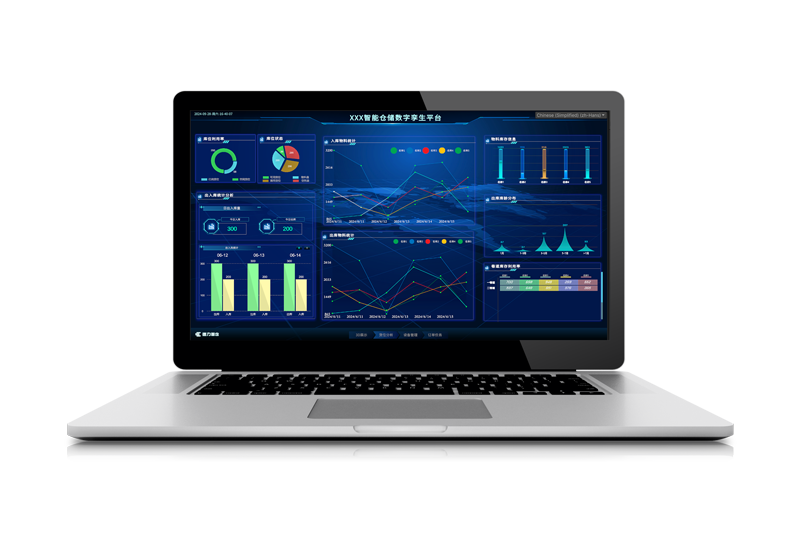
Check whether the Pallet Shuttle Robot can receive tasks, report inventory positions, and update movement status automatically. Operators should see clear alerts on a central dashboard, not chase errors across separate screens. The system must also support user permissions, audit trails, and secure remote access. Request a live demonstration using conditions similar to your warehouse. Test mixed pallet sizes, blocked locations, and network interruptions. Small details reveal large weaknesses.

A reliable supplier will explain software version control and future upgrade policies. It should clarify who owns operational data and how backups are restored. I have seen projects delayed because an interface worked in a presentation but failed during peak traffic. That experience deserves attention. No integration is perfectly painless. Ask how the team handles unexpected exceptions, training gaps, and custom requirements. A short pilot can expose compatibility problems before installation becomes expensive. Do not judge compatibility from a brochure alone. Test it with real workflows, real users, and realistic pressure.

Verify Safety Standards, Quality Control, and Reliability

How to Choose a Four Way Shuttle Robot Supplier?

Choosing a four-way shuttle robot supplier starts with verifiable safety evidence, not impressive demonstrations. Ask whether the system follows relevant machinery and industrial truck standards, such as ISO 3691-4 or EN 528, where applicable. Request the supplier’s risk assessment, safety circuit drawings, and validation records. Emergency stops, guarded transfer points, obstacle detection, and controlled braking need practical testing. Watch a loaded shuttle stop on a marked aisle. Paper compliance alone is insufficient.

Quality control should be visible from incoming components to final commissioning. A reliable supplier can explain how motors, sensors, batteries, and structural parts are inspected. Look for serial-number traceability, calibration records, welding checks, and documented software release control. Ask for factory acceptance tests using your pallet dimensions, load weight, temperature range, and expected travel cycles. Generic test data can hide site-specific problems. Request failure logs and corrective-action reports, not only polished performance charts. That question may feel uncomfortable.

Reliability claims should include measurable evidence: mean time between failures, availability targets, recovery times, and spare-parts lead times. Treat uptime percentages carefully; definitions often differ between suppliers. Speak with service engineers, not only sales staff. During a site visit, inspect cable routing, charging contacts, wheel wear, and aisle alignment. Ask how the system behaves after a sensor fault or network interruption. A good answer describes a safe state and a clear recovery procedure. No supplier is flawless. The better partner admits limitations, records lessons, and improves designs after real operating feedback.

How to Choose a Four Way Shuttle Robot Supplier

This suggested evaluation model gives the greatest weight to machine safety and risk reduction, followed by quality control and operational reliability. Ask suppliers to provide documented evidence such as ISO 12100 risk assessments, ISO 13849-1 safety-control validation, IEC 60204-1 electrical compliance, ISO 9001 quality procedures, FAT/SAT records, traceability documents, preventive-maintenance plans, and verified uptime or MTBF data.

Evaluate Pricing, Implementation Services, and After-Sales Support

How to Choose a Four Way Shuttle Robot Supplier?

Price should be compared beyond the robot’s purchase cost. Request a detailed quotation for racks, conveyors, software, installation, training, and spare parts. Ask whether integration with your WMS and WCS is included. Clarify payment stages and possible charges for site changes. A low initial price may hide expensive commissioning work. Check energy use, battery replacement cycles, and required maintenance hours. Small omissions become large costs.

Implementation services often decide whether the system performs well. Ask for a site survey, layout simulation, throughput calculations, and a documented project schedule. The supplier should define installation responsibilities clearly. Request factory testing before delivery and acceptance testing after commissioning. Test real pallets, mixed storage locations, barcode conditions, and emergency recovery procedures. Practical training should include operators, maintenance staff, and supervisors. It should not end with a presentation.

After-sales support needs measurable promises. Review response times, remote diagnostic methods, local technician coverage, and spare-parts availability. Ask for service records from similar warehouses, not only written references. A useful contract should explain uptime targets, software updates, preventive maintenance, and escalation procedures. Check how the supplier handles network failures and damaged sensors. No proposal is perfect. I would still question optimistic capacity figures during peak shifts. A pilot can reveal traffic conflicts, charging delays, or awkward manual tasks before full deployment. Experiences from the pilot should change the final design, even when that creates extra work.

Pallet Shuttle Robot for Automated Storage & Retrieval: Insights from MHI’s 2024 Industry Report and Interact Analysis

Pallet shuttle robots are becoming an important solution for automated storage and retrieval as warehouses respond to rising labor costs, limited floor space, and growing demands for faster order fulfillment. Insights from a 2024 material-handling industry report and independent market analysis indicate that companies are increasingly investing in flexible automation, particularly systems that improve storage density while maintaining reliable pallet movement. Shuttle technology supports deep-lane storage, reduces unnecessary travel, and enables consistent handling in high-throughput operations.

Designed for high-density storage, pallet shuttle robots can move palletized materials into and out of storage lanes with minimal manual intervention. Their compatibility with different pallet types allows facilities to adapt the system to varied inventory profiles and operational requirements. By making better use of vertical and horizontal space, these robots can help reduce warehouse expansion pressure while improving automated storage and retrieval efficiency. Integration with warehouse control systems also supports accurate inventory tracking, coordinated workflows, and more predictable throughput.

The technology is especially suitable for food and beverage, pharmaceutical, and chemical facilities, where organized storage, dependable handling, and efficient space utilization are essential. Temperature-controlled warehouses and operations with frequent pallet movements can benefit from automated shuttle solutions that limit travel time and support orderly product rotation. With scalable configurations and programmable operating patterns, pallet shuttle robots provide a practical path toward more responsive, space-efficient warehouse environments.

FAQS

What evidence should a shuttle robot supplier provide?

Request projects with similar pallet sizes, aisle widths, temperatures, and throughput demands. Ask for commissioning records and customer references. Catalogs are not enough.

How can I evaluate robot performance realistically?

Request cycle times across different travel distances. Test full and partial pallets during a busy shift. Watch direction changes in narrow aisles. Small delays can multiply quickly.

What should a live demonstration include?

Observe blocked-lane recovery, emergency stopping, obstacle detection, and controlled braking. Check whether the robot recovers safely without immediate operator intervention. Videos can hide weaknesses.

How should storage density be assessed?

Review aisle widths, pallet dimensions, fire clearances, and maintenance access. Request a layout showing usable pallet positions. Dense storage may reduce urgent pallet access.

Can the system support future expansion?

Ask how the software handles more robots, storage levels, and workstations. Request capacity models, documentation, and measurable acceptance criteria. Growth promises need evidence.

Which software and integration questions matter?

Discuss warehouse control software, management-system integration, traffic scheduling, and safety zones. Run practical data tests before approval. Integration may look easy.

How can safety and quality controls be verified?

Request risk assessments, safety circuit drawings, validation records, and factory acceptance tests. Check component inspections, calibration records, serial traceability, and software release controls. Generic test data may mislead.

How should reliability claims be examined?

Compare failure intervals, availability targets, recovery times, and spare-parts lead times. Inspect charging contacts, cable routing, wheel wear, and aisle alignment. No supplier is flawless. Admitted limitations can build more trust.

Conclusion

Choosing the right Four Way Shuttle Robot Supplier requires a clear understanding of your warehouse requirements, including storage capacity, load dimensions, throughput targets, space limitations, and future expansion plans. Evaluate each supplier’s experience, engineering capabilities, and ability to customize solutions for your operational environment. Compare robot performance, travel speed, positioning accuracy, storage density, energy efficiency, and system scalability to ensure the equipment can support both current and future demands.

It is also essential to examine the supplier’s software integration and compatibility with warehouse management and control systems. Confirm that the robots meet relevant safety standards and that the supplier follows strict quality control and reliability testing procedures. Finally, review the total investment, installation process, training, maintenance response, spare-parts availability, warranty terms, and long-term technical support. A dependable supplier should provide transparent communication and complete implementation services, helping your warehouse achieve stable, efficient, and sustainable automation.

Aria

Aria

Aria is a dynamic marketing professional specializing in logistics automation, with a deep understanding of the intricacies of intralogistics and advanced robotics technologies. With a commitment to excellence, Aria plays a crucial role in showcasing the company's innovative solutions, which......
Previous How to Choose a Tote ASRS System in 2026?