Most four-way shuttle projects start the same way. Three or four quotations arrive, someone builds a comparison sheet, and the lowest number gets the attention.
That sheet looks objective. Every supplier answered the same questions. The prices sit in the same column, in the same currency, for roughly the same equipment.
But a quotation is a list of what someone chose to price. It is not a description of what the project needs.
After sitting through enough of these comparisons, we have found that projects rarely fail because of the equipment. They fail because two quotations were never describing the same warehouse.
So before comparing suppliers, there is a harder question to settle. What are you actually buying — and how would you know if you did not get it?
Write the Operating Requirement Before You Read Any Quotation
Most buyers collect quotations first and write the requirement second, using the proposals to learn what the options are. That feels efficient. It also guarantees that every quotation will be structured differently, because each supplier will price the parts it is comfortable with.
Write the requirement first. Keep it short enough that a supplier can't hide behind it.
Record, as numbers, the pallet or tote formats and their loaded weights. Peak movements per hour during the busiest shift, in and out. The number of SKUs and how many positions each one occupies. The clear height under the lowest obstruction. Floor flatness and the column grid. The operating temperature range. The equipment the new system has to talk to. And how many shifts the plant really runs.
Then write a second list, and this one is harder.
Record the costs. Weekend overtime spent on stock counts. Forklift hours inside the freezer. Double handling when a pallet has to be moved out of the way before the one behind it can be reached. Write-offs after a mis-pick. Trucks waiting at the dock because the right pallet was not released.
Those numbers rarely appear in a project brief. They are usually the reason the project exists.
Here is the part that decides everything downstream. If you can't state your peak pallets per hour, no quotation is comparable. Not because suppliers are careless. A supplier cannot be blamed for solving the problem it was told about.
The Lowest Quote Is Usually the Least Complete One
Two quotations that differ by 30% are almost never pricing the same scope. They are pricing different definitions.
Take four phrases that appear in nearly every four-way shuttle proposal.
"WCS included." This might mean the supplier writes and owns the scheduling software. It might also mean the supplier resells a third-party platform and configures it. Both can work. They are not the same purchase, and they behave very differently when you want a change in year three.
"Installation and commissioning included." Ask where the boundary sits. Does it cover the rack? The steel platform? The conveyors? The power feed to the control cabinet? The network cabling inside the racking? We have seen the gap between two suppliers' definitions of "commissioning" exceed the price of a shuttle.
"One year warranty." One year from delivery, or one year from acceptance? On a project this size, those dates can sit six months apart. And what does it cover? The shuttle, the lifters, the racking, the software, or all four?
"Local service." Local to the country, or local to the site? Ask for a response time in hours.
None of those phrases is dishonest. They are just short. Short phrases are what a quotation is made of.
The costs that vanish from a shuttle comparison most often are not equipment costs at all. They are building and interface costs. Who owns the rack? That is where alignment tolerances live, and where two suppliers can each point at the other.
Then there is the cost that arrives later. Battery or supercapacitor replacement cycles. Wear parts: wheels, sensors. Lifter maintenance. Software licence renewal. Remote support, if you want it.
None of this means the cheapest quotation is the wrong one. A supplier with a narrower scope and lower overhead can legitimately be cheaper. That is a real possibility, not a sales objection. The problem is that you can't tell the difference from the total at the bottom of the page.
Check Verify the Manufacturer, Not the Catalogue
Once the numbers are comparable, the harder question is who is actually going to build this.
Suppliers in this market come in three shapes, and all three are legitimate. A manufacturer develops the shuttle and the scheduling software, and integrates the project itself. A trading company sources equipment and manages the project. A systems integrator designs the solution and subcontracts the hardware.
Each has a real advantage. A manufacturer controls its own quality and spare parts. A trading company can be more flexible on price and on mixed brands. An integrator may know your industry better than either.
The risk is not which shape you pick. It's not knowing which shape you picked.
So verify a few things directly.
Ask where the shuttle is assembled. Not where the company is registered. Where the machine is built. Then ask to see it.
Ask who writes the WCS. If the answer is a third party, get the name, and ask whether you will have a direct support path to that company.
Ask for the acceptance protocol from a completed project. Not the brochure. The document the customer signed.
Ask for a wear-parts list with lead times. Pick one item and ask how long it takes to ship. A supplier that can answer in minutes has a real parts process. A supplier that needs to check three times doesn't.
Visit a site that has been running more than eighteen months. Talk to the maintenance team, not the procurement team. Procurement signed the contract. Maintenance lives with it.
Then ask for something suppliers rarely volunteer. Ask them to demonstrate a task that failed. How was it detected, how was it recovered, and where is it logged?
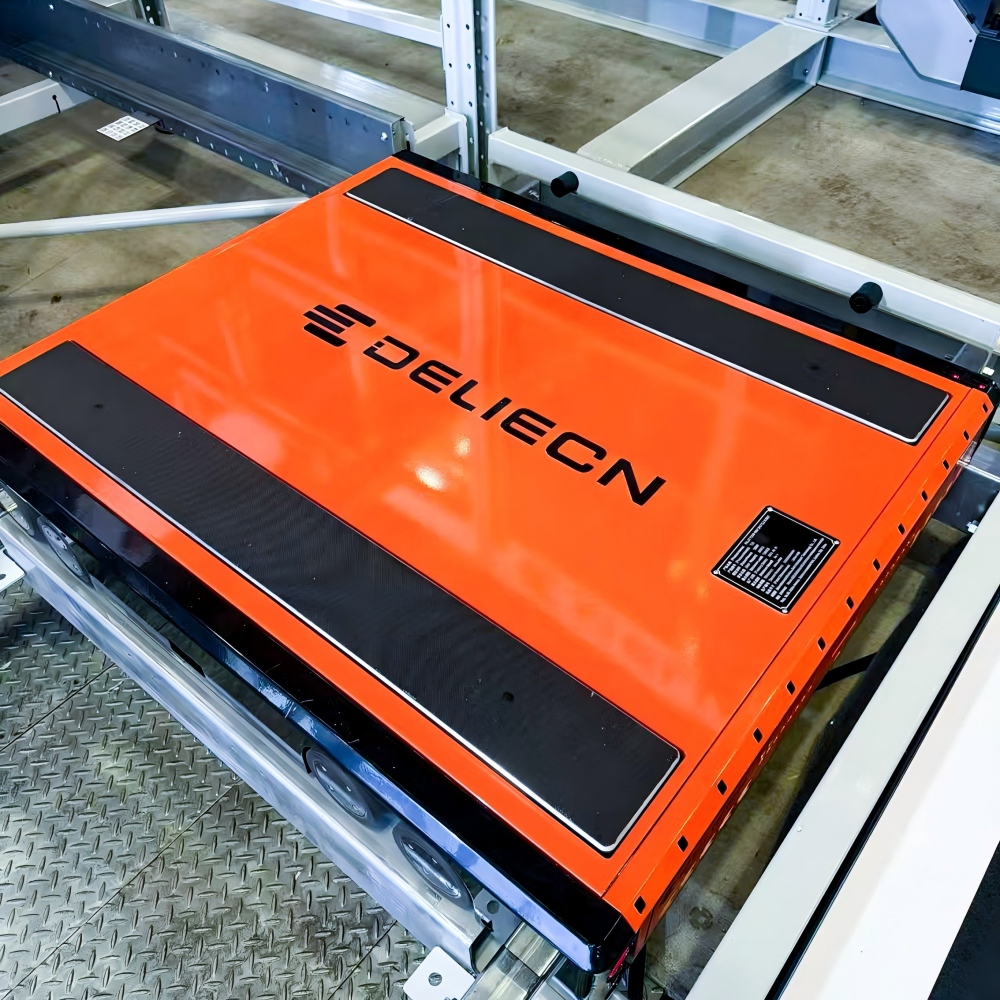
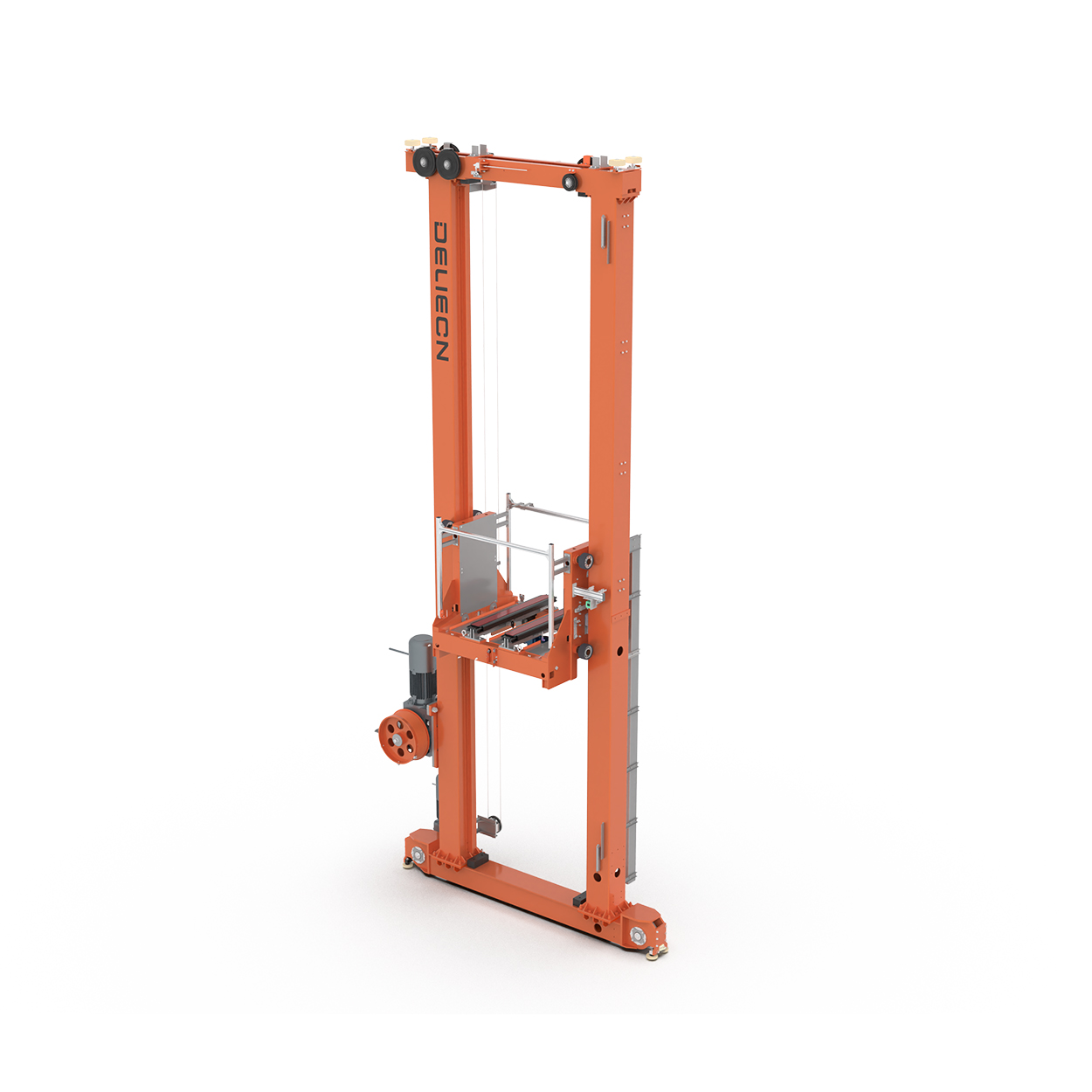
DELIECN builds the shuttle body, the lifting mechanism and the scheduling software in-house, and its pallet four-way shuttle uses a 125 mm body — the same detail that converted into an extra storage level in the example above. Whether it creates additional locations in your building depends on your clearances, your loads and your rack design. That is the honest answer, and it is the only one worth accepting from any supplier.
Verification is not about finding a supplier with no weaknesses. Every supplier has them. It is about knowing in advance which weakness you can live with. A manufacturer with strong hardware and a thin local service team is a different risk from an integrator with excellent service and hardware it doesn't control.
What the Comparison Is Actually For
Comparing four-way shuttle suppliers is not really a price exercise. Quotations usually land within a range where the difference is defensible either way.
It's an assumption exercise. Every proposal contains a set of them — about your peak, your pallet formats, your building, your maintenance capability, and how much risk the supplier is willing to carry.
The question is not which supplier quoted the lowest number. It is which supplier's assumptions you can still defend in year five, when the building is full, the peak has grown, and the person who signed the contract has moved on.
One question is worth keeping at the top of the comparison sheet. If the two cheapest suppliers swapped their service teams, would your decision change?
Pallet Shuttle Robots for Automated Pallet Storage and Retrieval: Insights from the MHI 2024 Annual Industry Report
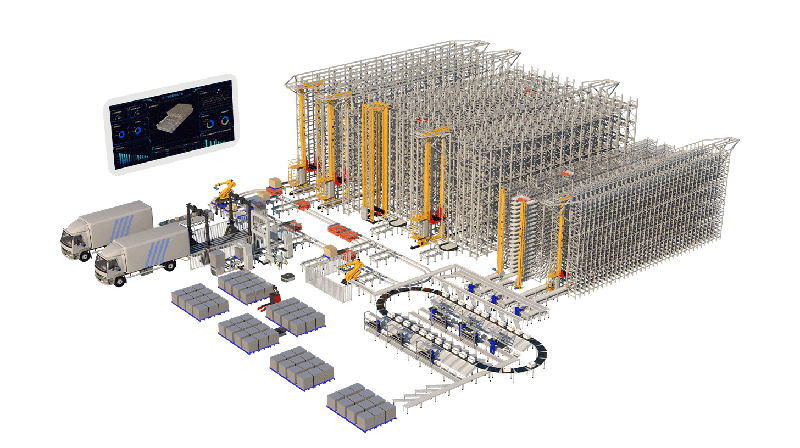
Pallet shuttle robots are becoming an important solution for Automated Pallet Storage and retrieval, particularly as warehouses seek higher density, faster handling, and better use of available space. Insights from the 2024 annual industry report highlight the growing importance of automation in managing inventory efficiently, reducing unnecessary travel within storage areas, and supporting more consistent warehouse operations. By moving pallets independently through deep-lane racking, shuttle systems can increase storage capacity while minimizing reliance on conventional forklift movements.
These robots are well suited to industries that handle large volumes of palletized goods, including food and beverage, pharmaceuticals, and chemicals. Their compatibility with various pallet types allows businesses to adapt automated storage and retrieval processes to different product specifications and operating requirements. In high-throughput facilities, pallet shuttle technology can help improve material flow, support organized inventory management, and make better use of cold-storage or high-density warehouse environments. Integration with warehouse control systems also enables more precise tracking of pallet locations and smoother coordination between storage, retrieval, and dispatch activities.

 Industries
 Services
 About Us
 AS/RS Handling Robot
 Vertical Storage Module
 Conveying Equipment
 Smart Warehousing System
 Warehouse Racking