Cold storage capacity is expensive.
Every additional square meter has to be built, insulated and continuously refrigerated. When frozen-food inventory grows, expanding the warehouse also means increasing the volume that needs to remain cold every day.
For food processors, however, space is only one part of the problem.
Employees still need to work in low-temperature conditions. Pallets have to move between production, storage and outbound areas. Inventory needs to remain accurate, and product movement needs to remain traceable throughout the warehouse process.
These were the main challenges behind the automated cold storage project for Hebei Ruideli Food.
The company processes more than 5,000 tons of mutton annually.
Its automated cold store covers approximately 2,400 m², operates at –25°C, and provides 3,484 standard pallet positions.
The project therefore had to solve several practical problems together:
store more pallets within the available cold-room footprint;
keep automated equipment operating under –25°C conditions;
reduce repeated manual handling inside the cold area;
connect production, storage and outbound operations;
maintain clear inventory visibility and traceability.
Why Space Utilization Matters More in Cold Storage
In a conventional warehouse, a wide forklift aisle mainly consumes floor area.
In a cold store, it also consumes refrigerated volume.
The same applies to unused vertical space.
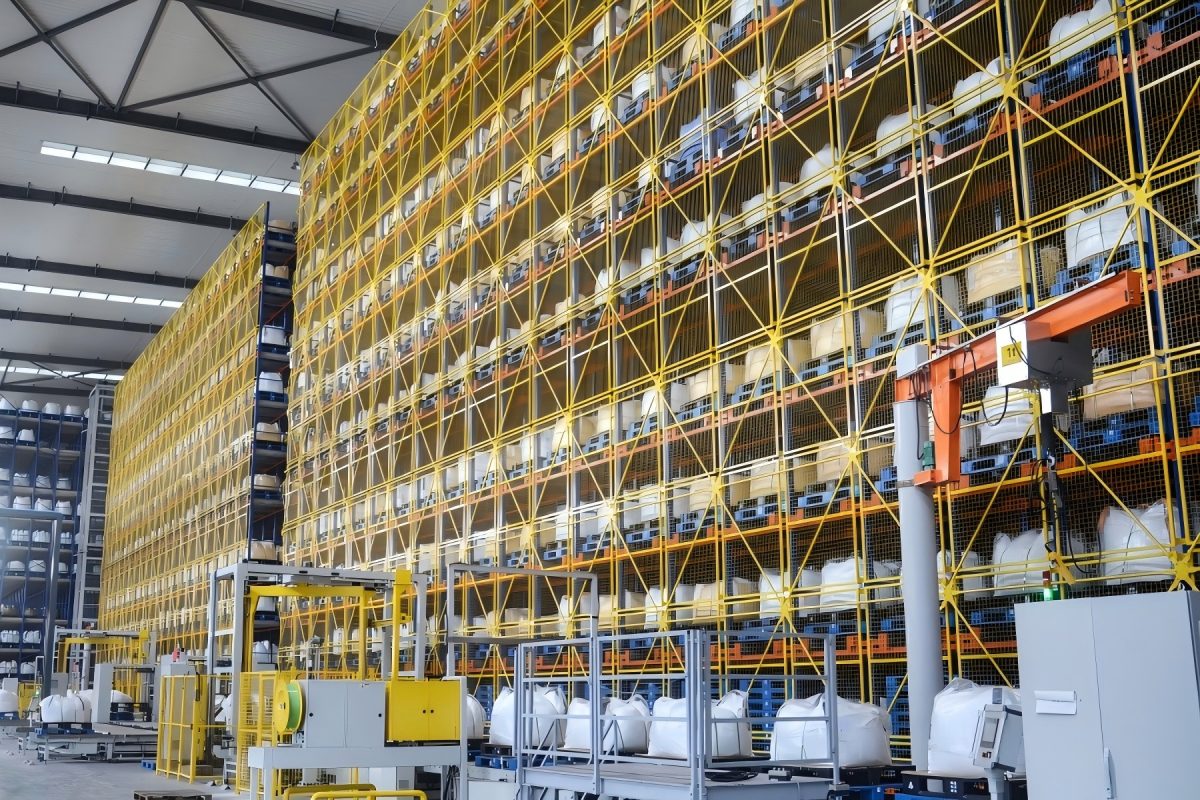
If a cold-storage building is nearly 10 meters high but much of that height is not used for storage, the refrigeration system is still cooling volume that does not hold additional inventory.
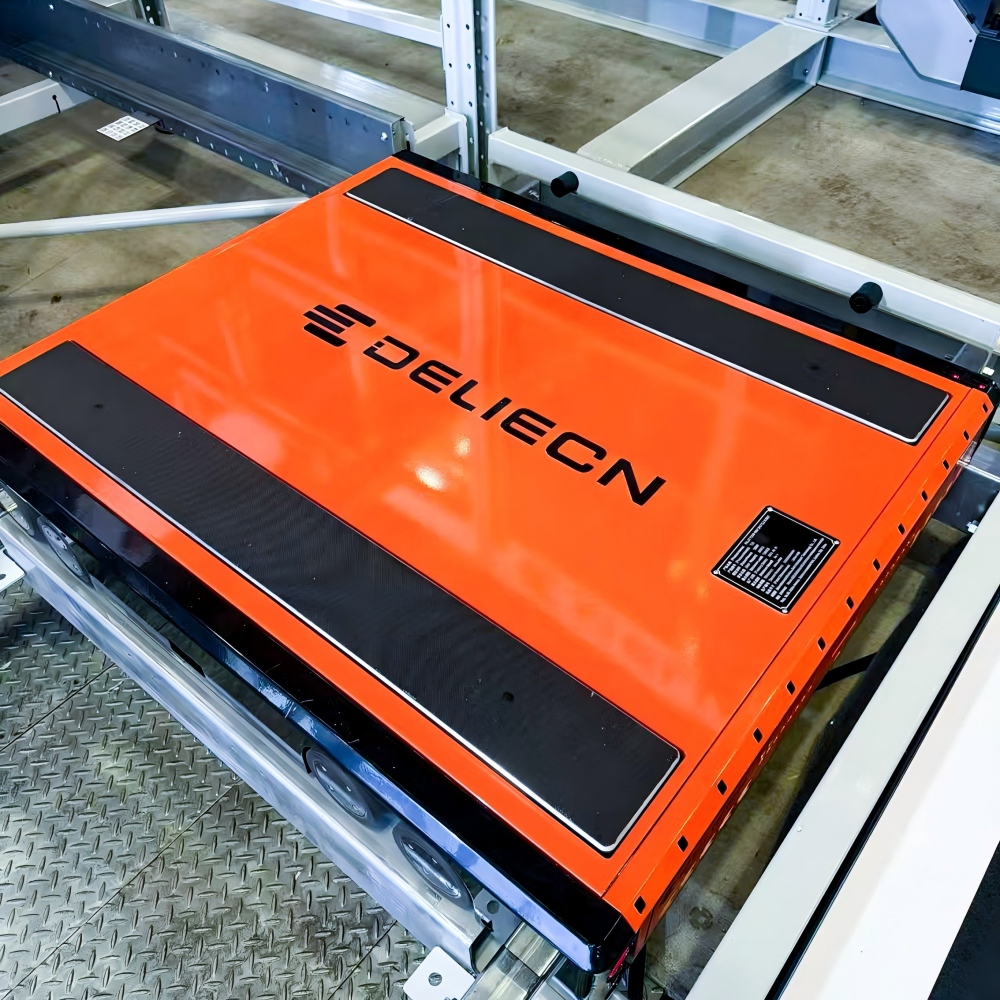
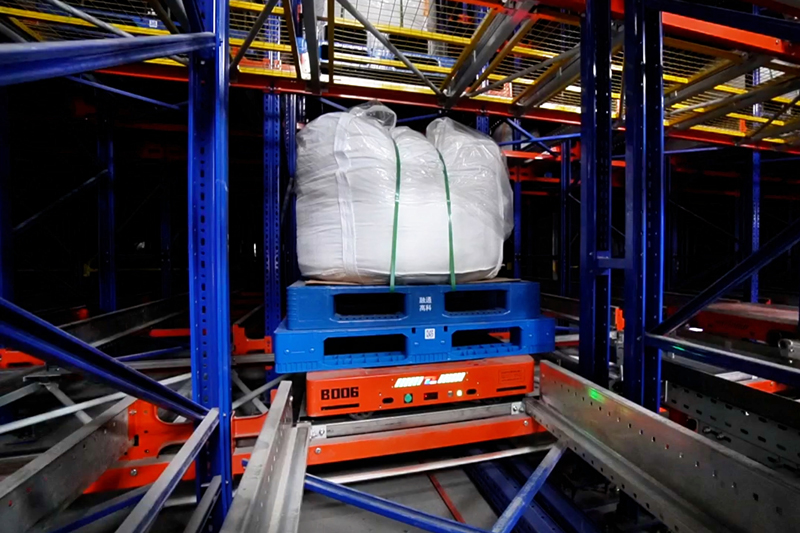
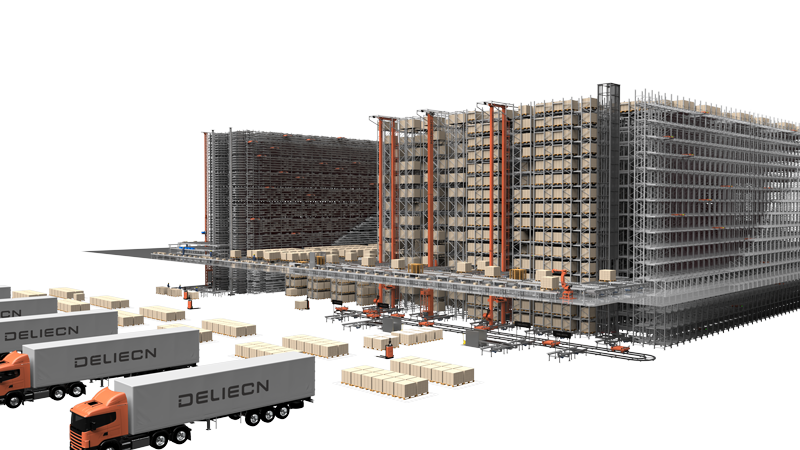
For the Ruideli project, DELIECN therefore adopted a Pallet Four-Way Shuttle AS/RS.
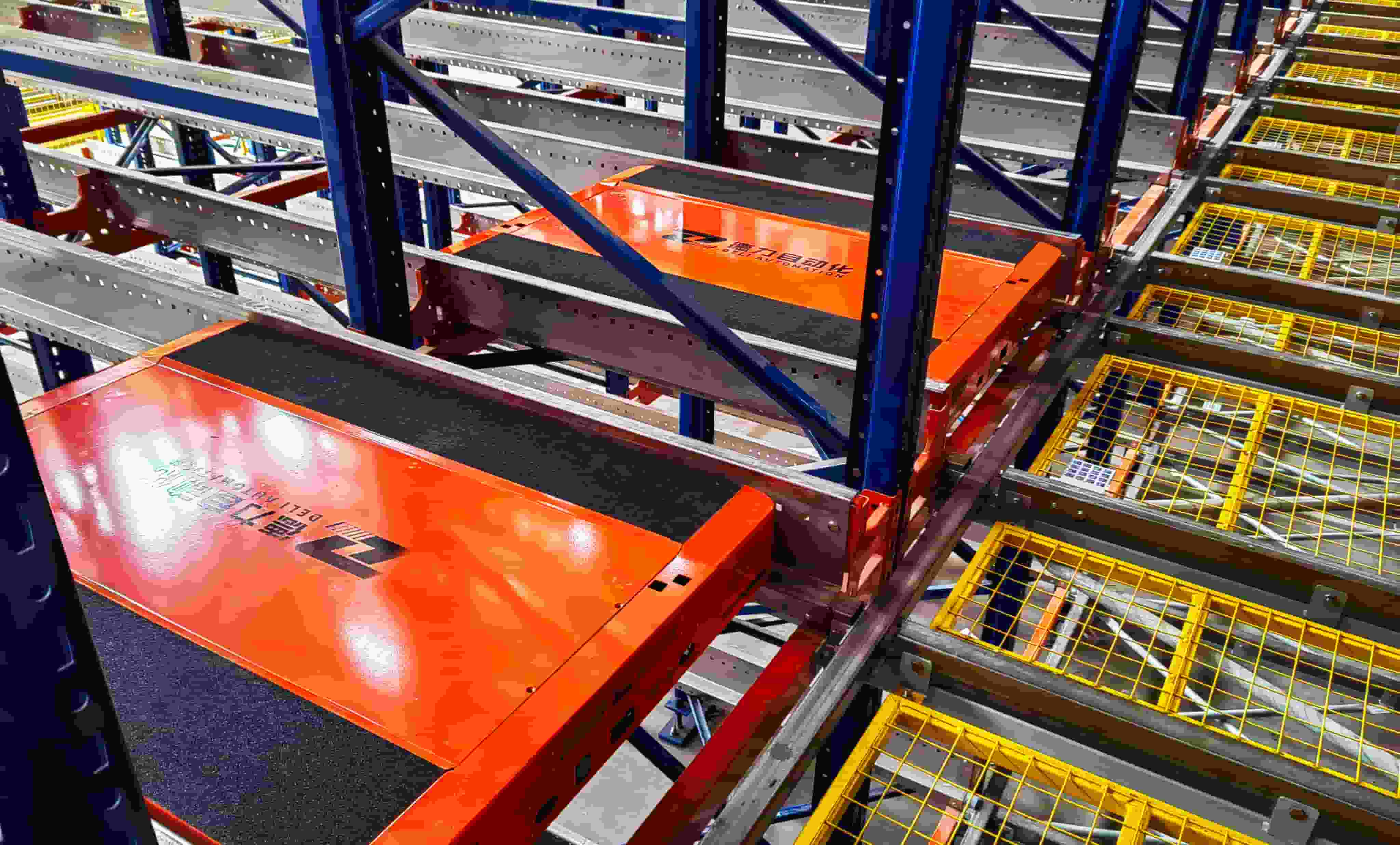
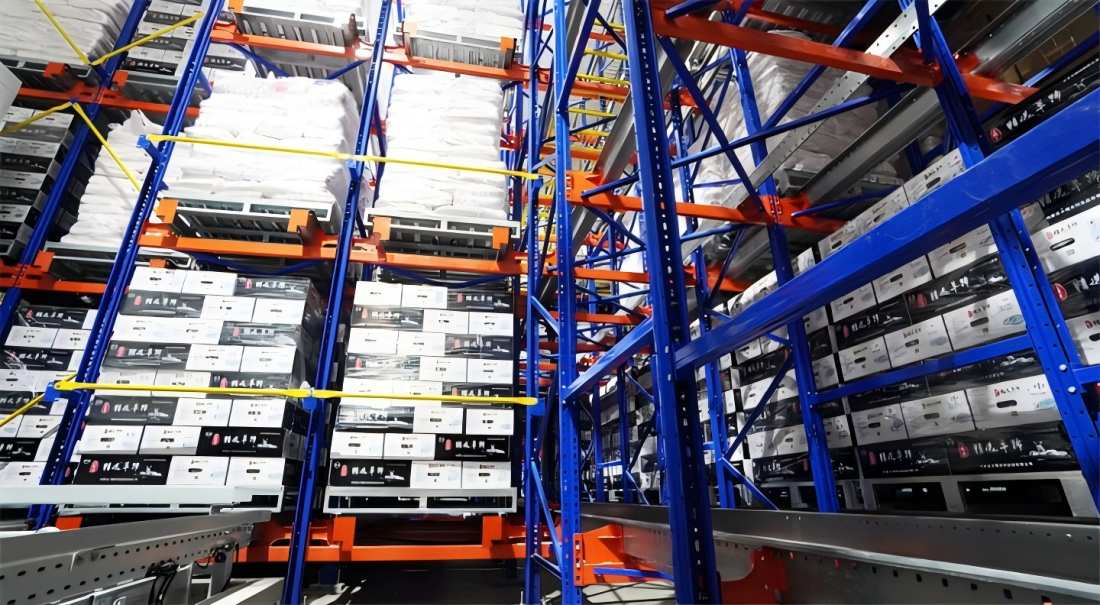
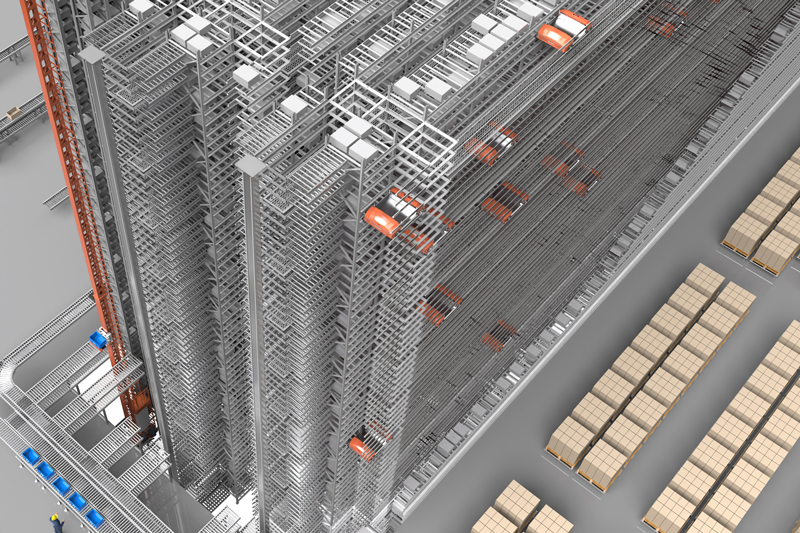
Instead of keeping wide forklift aisles throughout the storage area, pallets are stored in a high-density rack system.
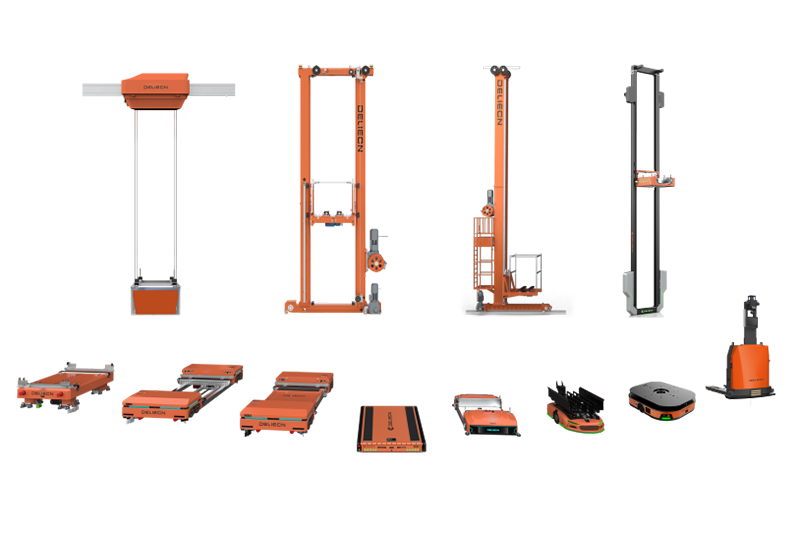
Pallet Four-Way Shuttle Robots move along both main and sub-aisles inside the rack, while Lifters connect different storage levels.
According to project reporting, space utilization reached approximately three times the previous level.
For the customer, that means more frozen inventory can be stored within the same refrigerated footprin
–25°C Changes the Requirements for Automation
A cold store is not simply an ambient warehouse operating at a lower temperature.
Low-temperature conditions place different requirements on mechanical, electrical and power components.
For the Ruideli project, the Pallet Four-Way Shuttle Robots are configured for cold-storage operation and work together with Pallet Lifters, conveyors and warehouse control software inside the low-temperature environment.
The important point is not simply whether one robot can move at –25°C.
The complete Storage And Retrieval process needs to remain suitable for repeated operation under the actual cold-room conditions.
For a food processor, stable operation matters because warehouse interruption can affect production, order preparation and cold-chain logistics at the same time.
Inventory Control Matters as Much as Physical Automation
A frozen-food warehouse needs to know more than how many pallets it contains.
It also needs clear information about what is stored, where it is located and which inventory should be released for the next task.
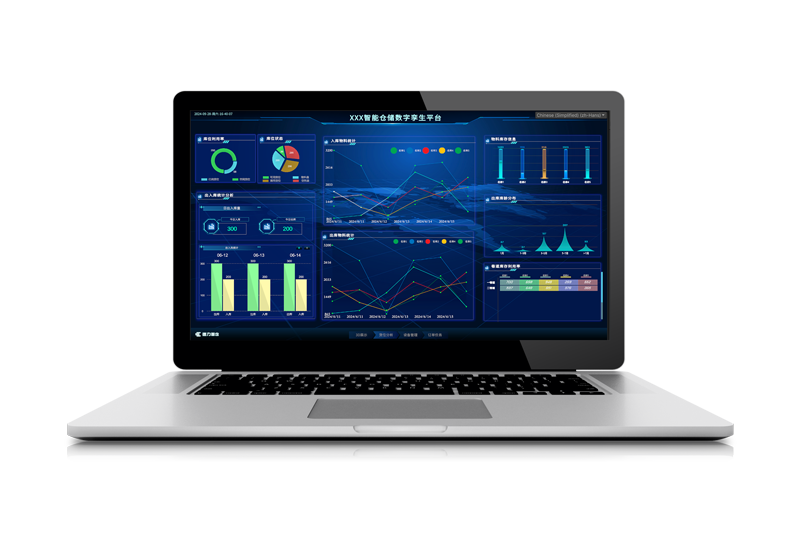
The project connects WMS with the customer's ERP.
WMS manages inventory, storage locations and warehouse tasks.
WCS coordinates Pallet Four-Way Shuttle Robots, Lifters and conveying equipment according to those tasks.
The warehouse can also apply FIFO rules according to inventory requirements.
Physical pallet movement is therefore connected with the corresponding warehouse information instead of relying on separate manual records.
This provides real-time inventory visibility and supports full-process traceability.
Reported system accuracy reaches up to 99.99%.
Why Traceability Matters in Frozen Food Storage
Traceability does not come from software alone.
It depends on keeping warehouse records aligned with the actual physical movement of the goods.
When a pallet enters storage, its information is associated with the warehouse task.
WMS assigns a location.
WCS coordinates the equipment movement.
The pallet remains associated with its storage position until another task moves it.
When outbound demand is created, inventory can be retrieved according to the configured warehouse rules.
The information flow therefore follows the physical pallet flow:
product information → pallet → storage location → equipment task → outbound record
For a food processor, this makes traceability part of normal warehouse operations rather than a separate administrative process.
What Changed After the Upgrade?
The completed project combines approximately 2,400 m² of automated cold storage with 3,484 standard pallet positions.
According to project reporting:
• space utilization reached approximately 3× the previous level;
• operational efficiency increased by more than 60%;
• system accuracy reaches up to 99.99%;
• WMS is integrated with ERP;
• inventory can be viewed in real time;
• warehouse movements can be traced through the system.
These results did not come from one machine.
Several parts of the system contribute to the overall result.
High-density racking makes better use of refrigerated space.
The 125 mm cold-storage shuttle preserves more vertical space for pallet storage.
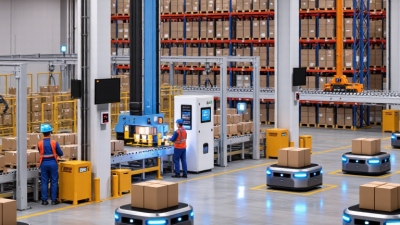
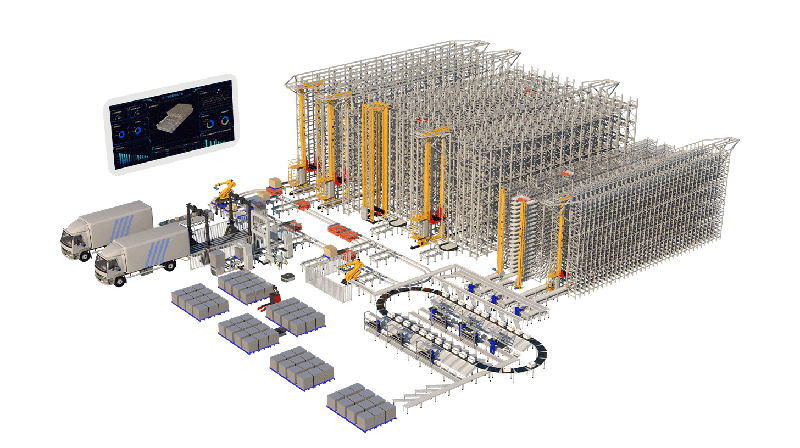
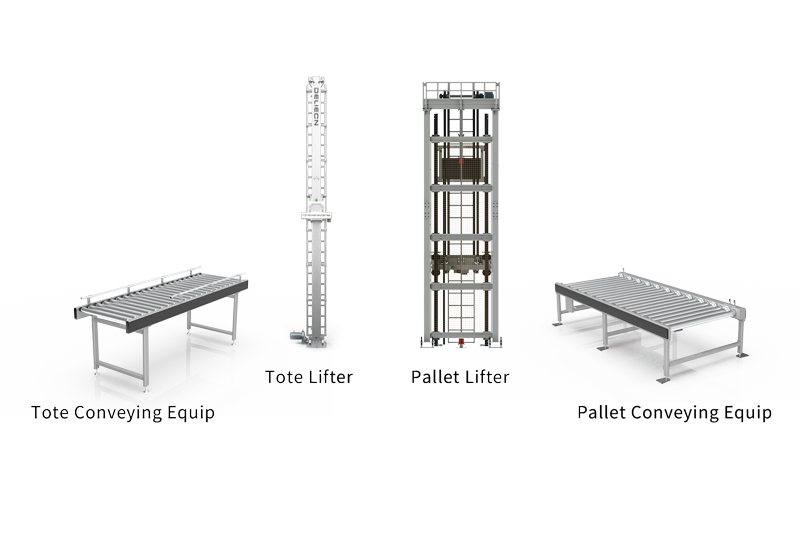
Lifters and conveyors connect different levels with inbound and outbound interfaces.
Automated pallet handling reduces routine manual work inside the –25°C environment.
WMS/WCS connects inventory information with equipment execution.
For the customer, the result is a cold-storage operation in which storage capacity, pallet handling and inventory management follow the same logistics process.
What Can Other Food Companies Learn from This Project?
A cold-storage automation project should not begin with robot speed.
It should begin with the actual warehouse conditions.
How much refrigerated space is currently occupied by forklift aisles?
How much clear height is available after refrigeration equipment and installation requirements are considered?
How often do employees need to enter the cold-storage area?
How are production and storage connected?
How are FIFO, inventory accuracy and traceability managed?
And can the selected equipment operate under the actual temperature conditions?
For Ruideli, the solution combines a cold-storage Pallet Four-Way Shuttle AS/RS, high-density racking, 125 mm shuttle robots, Pallet Lifters, conveyors and WMS/WCS.
The project shows that cold-storage automation is not simply about putting a robot into a freezer.
It is about designing storage density, low-temperature handling, inventory control and traceability around one material flow.

 Industries
 Services
 About Us
 AS/RS Handling Robot
 Vertical Storage Module
 Conveying Equipment
 Smart Warehousing System
 Warehouse Racking