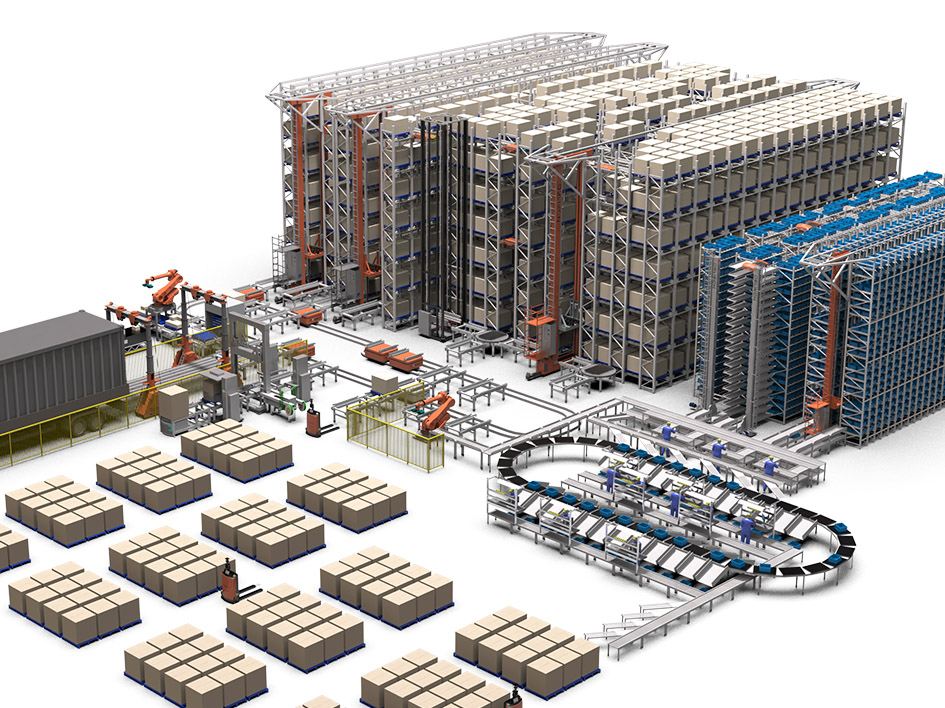
Small parts warehouses face a different challenge from pallet warehouses.
The main difficulty is usually not the weight of the goods, but the number of items that need to be managed.
Electronic components, spare parts, precision parts and production materials may involve thousands of SKUs, different turnover frequencies and frequent picking requirements.
In these applications, traditional floor-level storage often makes it difficult to balance space utilization and picking efficiency.
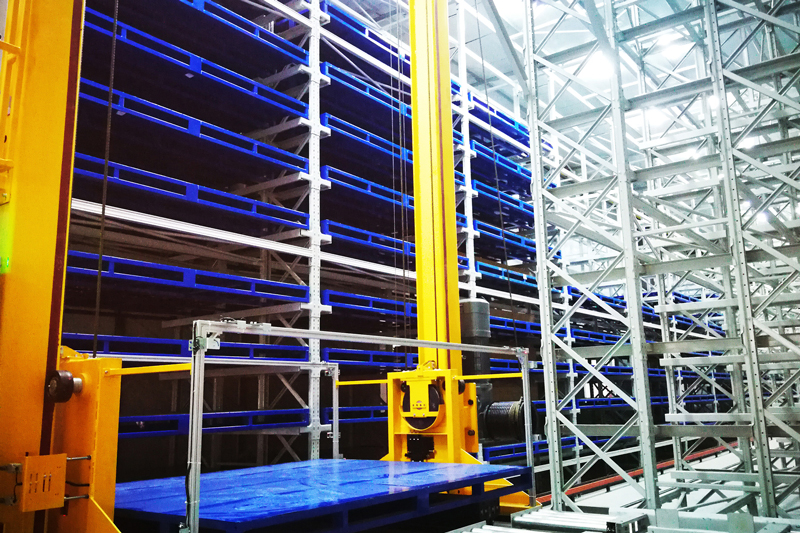
A Miniload Stacker Crane provides an automated storage solution for tote-based small-item logistics, helping manufacturers manage high SKU volumes with more organized Storage And Retrieval processes.
Why Small-Item Warehouses Need Different Storage Methods
Small components often have several characteristics:
- large SKU quantities;
- small unit loads;
- frequent inbound and outbound activities;
- different inventory turnover rates. materials to follow different storage strategies.
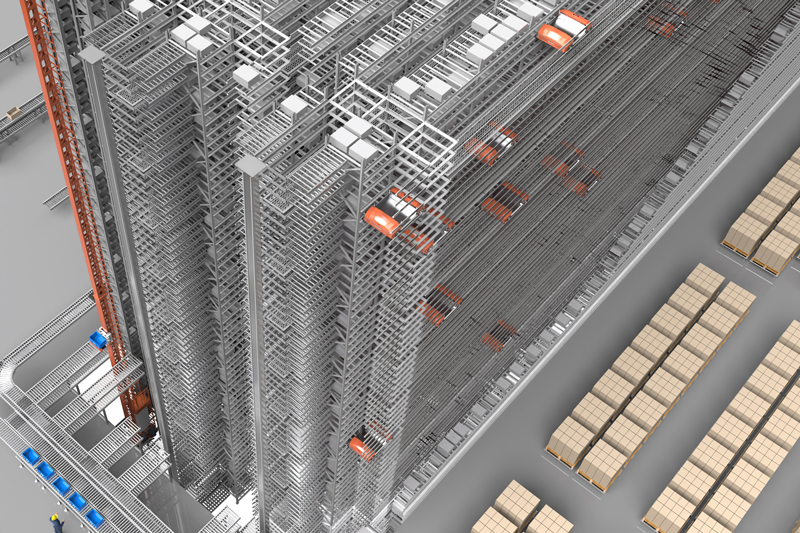
DELIECN Miniload Stacker Crane is designed for these applications, focusing on accurate tote handling and high-density vertical storage.
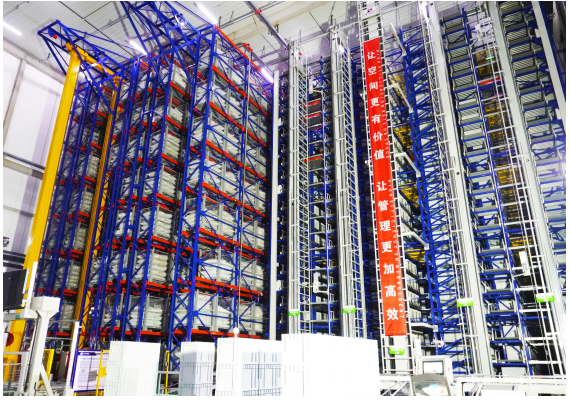
High-Density Storage for Multi-SKU Applications
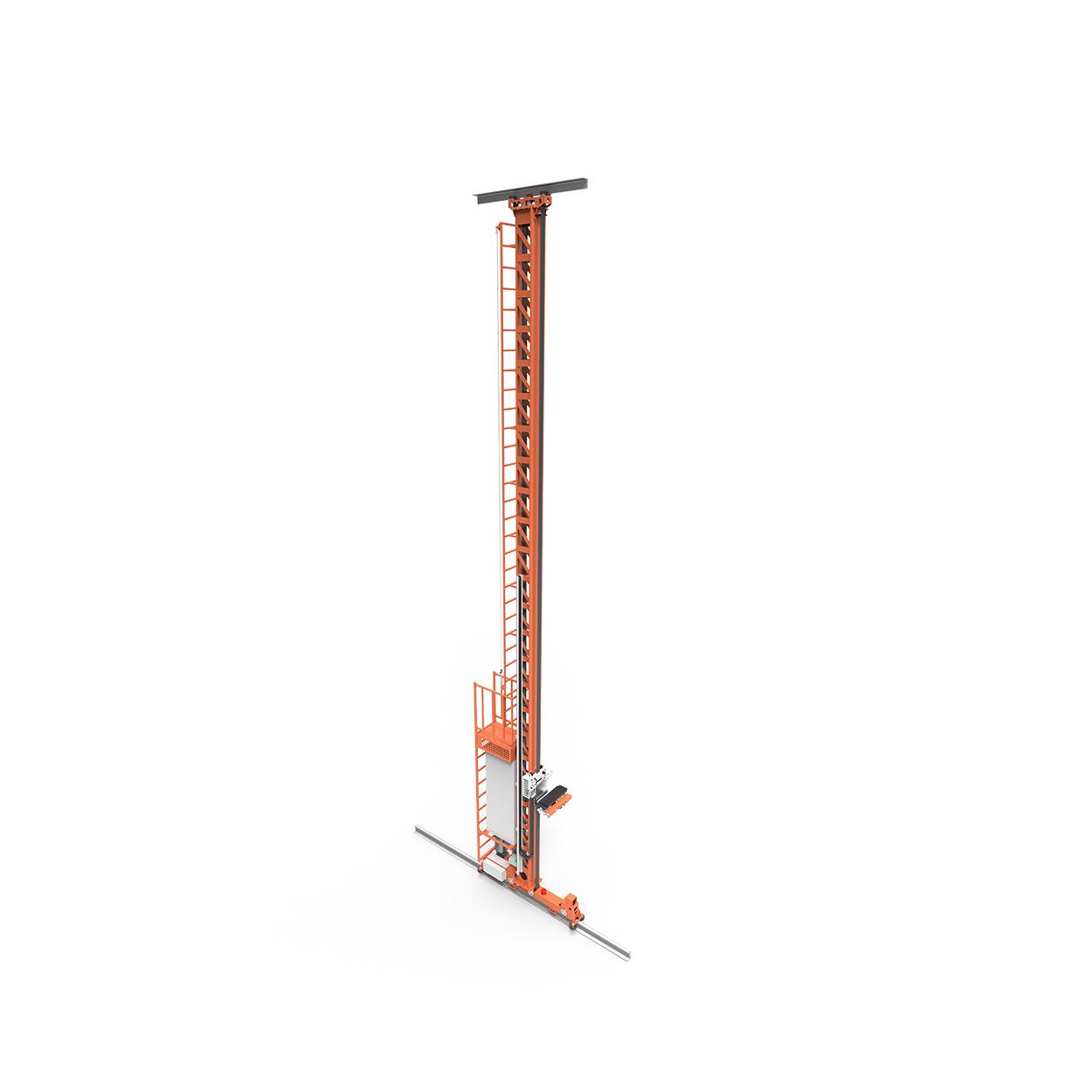
The core function of a Miniload Stacker Crane is automatic tote Storage And Retrieval.
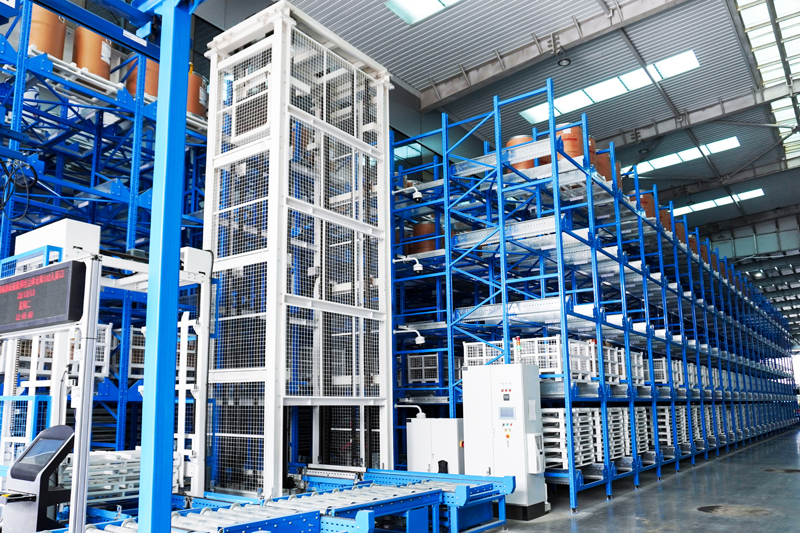
The system uses Stacker Crane equipment together with tote racking and warehouse software to complete:
- tote storage;
- tote retrieval;
- inventory location management;
- connection with picking stations.
DELIECN Miniload Stacker Crane supports:
- storage heights up to 24 m;
- load capacities up to 80 kg;
- travel speeds up to 240 m/min;
- lifting speeds up to 180 m/min;
- positioning accuracy up to ±3 mm.
These characteristics make it suitable for manufacturing environments where many small items need accurate and repeated handling.
Designed for Efficient Tote Handling
Small-item automation depends heavily on stable repeated operation.
The equipment needs to accurately identify and retrieve the correct tote while maintaining continuous operation.
DELIECN Miniload Stacker Crane can be configured according to different project requirements, including:
- tote dimensions;
- storage height;
- throughput requirements;
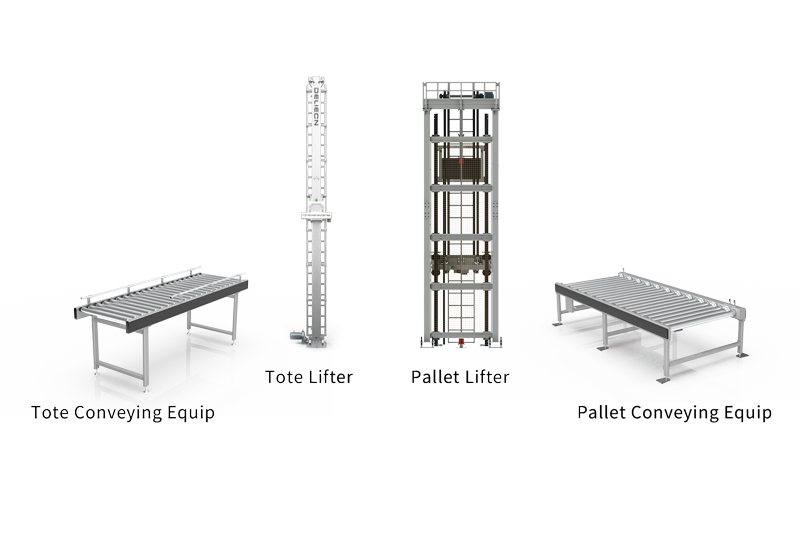
- connection with conveyors or picking stations.
Instead of manually searching for materials, operators can receive totes through automated retrieval processes, reducing unnecessary walking and searching activities.
Supporting Goods-to-Person Picking Processes
Many small-item warehouses require frequent order preparation.
A common operating process is:
Storage Area → Miniload Stacker Crane → Conveyor → Picking Station
The stacker crane retrieves the required tote and transfers it to the workstation.
Operators complete picking tasks at the workstation instead of moving through storage aisles.
This goods-to-person approach is often applied in scenarios requiring:
- high SKU management;
- frequent picking;
- accurate inventory control.
Miniload Stacker Crane and Mini-FlyBox: Different Solutions for Different Needs
Both Miniload Stacker Crane and Mini-FlyBox can be used for small-item storage, but they are based on different system concepts.
Miniload Stacker Crane
Mainly focuses on:
- tote automatic storage and retrieval;
- high-bay storage;
- stable point-to-point operation.
It is commonly applied when the warehouse requires structured storage and reliable tote handling.
Mini-FlyBox
Mainly focuses on:
- high-throughput tote storage;
- flexible tote movement;
- intensive goods-to-person scenarios.
The selection depends on factors such as SKU quantity, order frequency, throughput requirements and warehouse layout.
Integration with Warehouse Management Systems
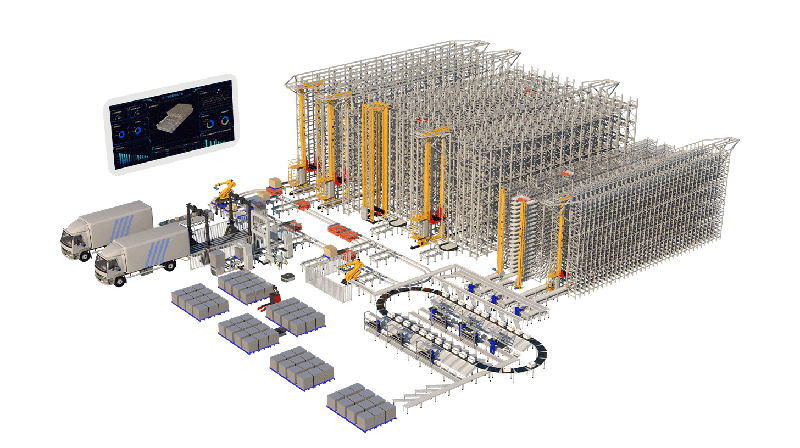
A Miniload Stacker Crane normally works as part of a complete warehouse automation system.
It can connect with:
It can connect with:
- conveyors;
- picking stations;
- WMS;
- WCS
The WMS manages inventory information and storage strategies.
The WCS coordinates equipment operation and task execution.
Through software coordination, tote storage and retrieval tasks can be managed according to actual business requirements.
Applications of DELIECN Miniload Stacker Crane
Typical applications include:
- electronic component warehouses;
- automotive parts warehouses;
- pharmaceutical material storage;
- precision manufacturing;
- spare parts logistics;
- small-item distribution centers.
For companies managing thousands of small components, Miniload Stacker Crane provides a structured approach to improve storage density and material accessibility.
Conclusion
Small-item warehouses require a different approach from pallet storage systems.
The challenge is not only storing more totes, but managing large numbers of SKUs accurately and efficiently.
DELIECN Miniload Stacker Crane combines automated tote storage, precise handling and software coordination to support complex small-item logistics.
By matching storage technology with actual material characteristics, manufacturers can build a more organized and scalable warehouse operation.

 Industries
 Services
 About Us
 AS/RS Handling Robot
 Vertical Storage Module
 Conveying Equipment
 Smart Warehousing System
 Warehouse Racking