When floor space is tight, adding more storage locations usually means making better use of aisle width and building height.
That is the problem DELIECN Mini-FlyBox was developed to solve.
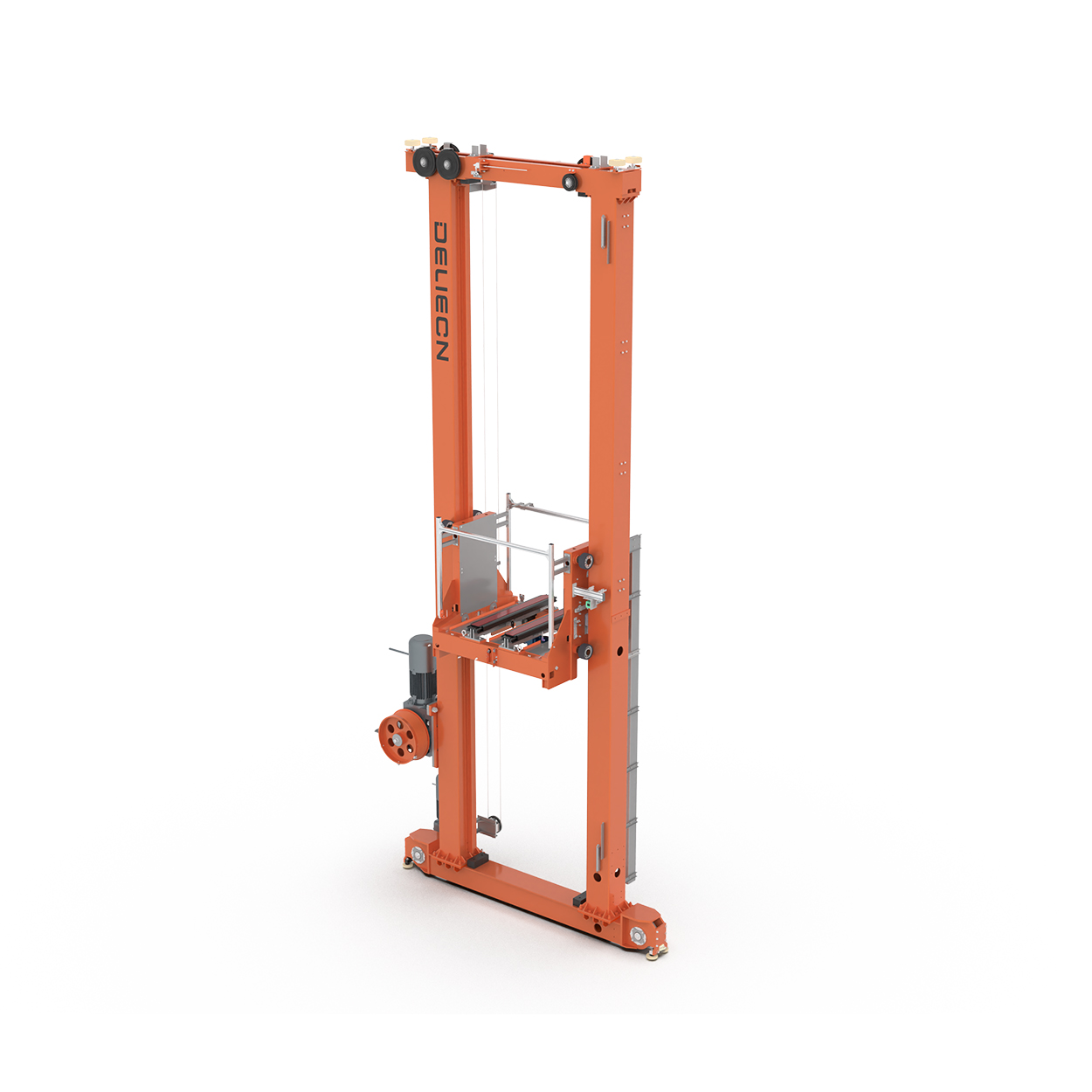
Mini-FlyBox is a compact tote AS/RS for high-density small-parts storage. It supports aisles as narrow as 860 mm, system heights up to 12 m, and tote loads up to 50 kg.
Its value is straightforward: use more of the building for storage without giving too much floor area to equipment aisles.
-
The two systems handle totes, but their mechanical architectures are different.
A Tote Four-Way Shuttle Robot travels along rack tracks in both main and sub-aisle directions and can switch between lanes inside the rack network.
Mini-FlyBox uses another approach.
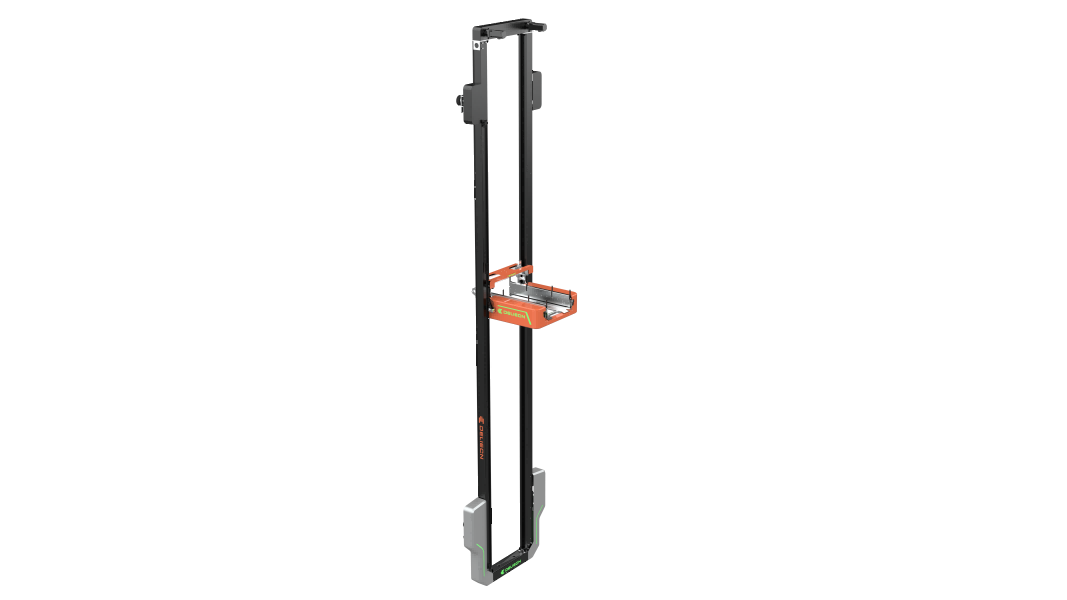
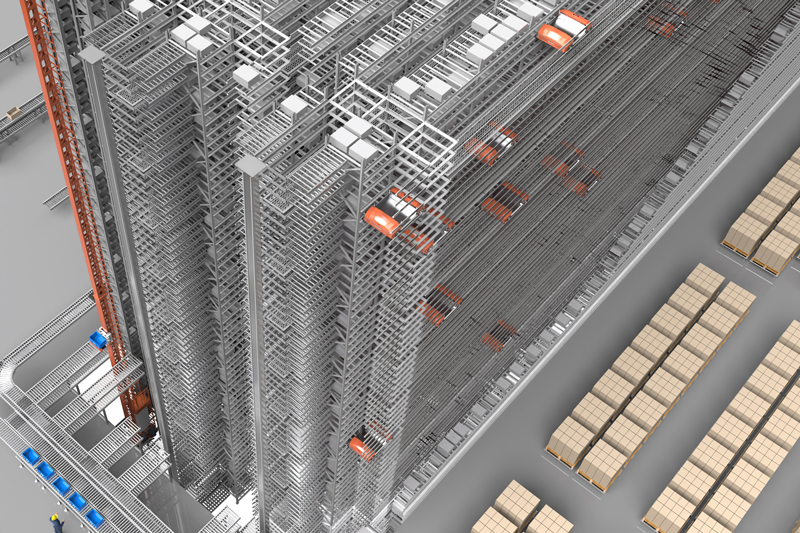
It integrates horizontal travel and vertical lifting into the Storage And Retrieval unit, working with horizontal tracks integrated into the racking.
The movement path is therefore more structured than a four-way shuttle network.
This makes Mini-FlyBox particularly relevant when the warehouse needs compact automated tote storage and aisle width is one of the main constraints.
DELIECN Mini-FlyBox supports:
- 1.aisle width down to 860 mm
- 2.system height up to 12 m
- 3.tote load up to 50 kg
- 4.single- or double-deep storage
- 5.conductor rail power supply
- 6.operating temperature from -25°C to +45°C
These are the main product parameters to keep in mind when evaluating the system.
Why the 860 mm Aisle Matters
In an existing factory, the building usually cannot be reshaped around the warehouse.
Columns are fixed. Production areas already occupy space. Fire-protection and access requirements have to be respected.
That means aisle width directly affects how many storage locations can fit into the remaining footprint.
With an operating aisle down to 860 mm, Mini-FlyBox can leave more of that footprint available for inventory.
For a high-SKU small-parts warehouse, this may be more important than comparing maximum machine speed.
The real question is often not “How fast can the machine move?”
It is “How many useful storage locations can we create in the building we already have?”
Use More Height Without Building a Very High Warehouse
Mini-FlyBox can be configured up to 12 meters high.
That makes it suitable for factories and component warehouses that want to automate vertical storage without moving into a 20- or 30-meter high-bay AS/RS.
Conventional shelving often leaves a large part of this vertical volume difficult to use efficiently.
Mini-FlyBox stores and retrieves totes automatically, allowing more of the existing building height to become usable storage.
For companies with limited expansion space, that can be more practical than adding another warehouse.
Single- or Double-Deep Storage
Mini-FlyBox supports both single-deep and double-deep layouts.
This allows the storage design to follow the inventory profile.
Fast-moving SKUs may require more direct access, while slower-moving or duplicate inventory may benefit from a denser arrangement.
The project does not have to use maximum density everywhere.
Storage depth can be planned around SKU activity, inventory quantity and retrieval demand.
Conductor Rail Power Supports a More Predictable Operating Routine
Mini-FlyBox uses conductor rail power supply.
Unlike battery-powered shuttle equipment, it does not need to stop operating for routine battery charging cycles.
This simplifies operating and capacity planning, especially in warehouses running long shifts.
It does not automatically increase total warehouse throughput, but it removes battery charging from the equipment availability calculation.
Connecting Storage with Picking or Production
Mini-FlyBox handles the Storage And Retrieval part of the process.
After a tote leaves storage, the downstream layout can be designed around the customer's operation.
A fixed conveyor route may suit warehouses with stable picking stations. In other projects, tote AMRs can provide more flexible transfer toward different picking or production areas.
WMS manages inventory, locations and order demand, while WCS coordinates Mini-FlyBox with surrounding material-handling equipment.
Where required, WMS can also integrate with ERP or MES through API interfaces.
This allows Mini-FlyBox to become the storage core of a wider small-parts workflow rather than operating as an isolated machine.
Where Mini-FlyBox Has the Strongest Advantage
Mini-FlyBox is not intended to replace every tote AS/RS.
Its strongest fit is more specific:
high SKU quantity, limited floor area, a need for narrow aisles, and a requirement to automate small-parts storage without building a large shuttle network.
For these projects, DELIECN Mini-FlyBox brings together four practical advantages:
860 mm narrow aisle, vertical storage up to 12 m, conductor rail power supply, and flexible connection with downstream picking or production.
The idea is simple:
use less aisle, use more height, and make more of the existing building available for automated tote storage.

 Industries
 Services
 About Us
 AS/RS Handling Robot
 Vertical Storage Module
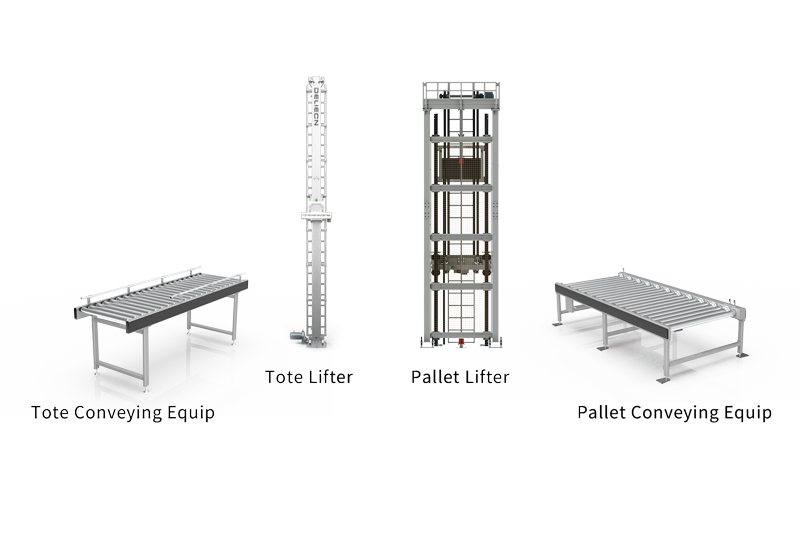 Conveying Equipment
 Smart Warehousing System
 Warehouse Racking