Leave Your Message
0%

The equipment quotation is often the most carefully examined number in a Warehouse Automation project. It may not be the number that decides whether the investment succeeds.

A warehouse paying for overflow storage has a different business case from one struggling to recruit night-shift workers. A manufacturer waiting for components has another. Each might purchase similar equipment, but the financial return comes from different changes to the operation.

Before requesting proposals, establish what the company is already paying for its warehouse limitations. Include expenses that have become so familiar that nobody associates them with a problem: weekend overtime, transfers between buildings, repeated stock checks and temporary labour retained throughout the year.

These records give the investment assessment somewhere solid to begin.

1.jpg

Agree on what the warehouse must deliver

Capacity is an obvious starting point, although it can lead the discussion in the wrong direction.

Suppose three proposals each provide 10,000 pallet positions. One uses floor stacking, another conventional racking, and the third an Automated Storage And Retrieval System. Their cumulative costs may diverge considerably over time as space, staffing and maintenance expenses accumulate.

The comparison is useful only if each proposal serves the same business.

Can all three release the required pallets during the dispatch window? How much capacity remains usable when batches become smaller? What happens when inbound deliveries coincide with outbound demand?

A dense layout may perform well with large quantities of identical goods and less well with many small batches. Empty positions inside partially occupied lanes still appear on a drawing. They may not be available for the next delivery.

This is why suppliers need transaction records, inventory profiles and peak demand data. An average daily pallet count leaves too much room for interpretation.

The 2025 MHI and Deloitte research found that 55% of surveyed supply chain leaders were increasing technology and innovation investment. That describes investment intentions across the survey population. A warehouse owner still needs to establish which changes will improve the economics of their particular operation. MHI, March 2025

Find the work missing from the price

A quotation should identify equipment, racking, software, installation, commissioning, freight, initial spare parts and after-sales support. Insurance, applicable duties and building preparation also belong somewhere in the budget, even when another contractor provides them.

The practical difficulty is comparing what suppliers have included.

“Software integration” might mean a standard interface, or it might include adapting that interface to the customer’s ERP, MES,and supporting changes during launch. “Installation completed” might mean machinery is assembled, with performance testing still ahead.

Ask each bidder to price the same scope and list exclusions explicitly.

Then examine construction quality. Rail alignment, rack tolerances, electrical workmanship and transfer-point installation affect how much adjustment the system needs later. A handover inspection cannot reveal every future problem, but documented checks and clear responsibility for remedial work reduce uncertainty.

The programme deserves equal scrutiny. Identify when installation ends, when live inventory enters and when the warehouse is expected to reach its agreed output. 

Consider a hypothetical purchase saving of $60,000. If additional storage and temporary staffing cost $20,000 per month, a three-month delay can absorb it before other consequences are counted. The example is deliberately simple; actual calculations should use the company’s own costs.

Beyond launch, include energy, preventive maintenance, spare parts, software support and technician visits. Clarify whether service fees cover labour, travel and components.

Future upgrades are harder to price precisely, but their charging basis can be agreed. Buyers should know what triggers additional licences, how interface changes are charged and whether expanding the installation requires replacing working equipment.

Follow each improvement through to its financial effect

Storage density does not have one fixed value.

For a company renting an overflow building, recovering enough capacity to end that lease can remove rent, handling and inter-site transport. For a business with unused space in an owned facility, the immediate saving may be much smaller.

ISD’s April 2026 ROI analysis discusses this distinction: the economic value of recovered space depends on its intended use. That is a useful reminder to connect layout improvements to an actual property or operating decision. ISD, April 2026

Labour requires the same discipline. Reduced overtime is measurable. Avoided recruitment can be modelled against a credible growth forecast. Moving employees from transport duties to inspection may improve productivity while leaving payroll unchanged.

Efficiency figures need a clear endpoint. A faster shuttle robot does not necessarily produce more completed orders if lifters, picking stations or loading operations remain constrained.

Use measures such as pallets dispatched per shift, order lines completed before cutoff and materials delivered to production on time. Include replenishment and normal exceptions in performance tests.

If additional capacity supports sales growth, calculate the contribution remaining after associated costs. Do not count the full sales value as a warehouse return.

Smaller improvements can also accumulate: fewer damaged loads, replacement deliveries, inventory investigations and urgent material movements. Historical records help quantify them without relying on broad industry averages.

Some benefits deserve recognition without forcing them into the cash-flow forecast. Separating people from forklift traffic and reducing heavy manual handling can improve safety and working conditions. Training operators for technical responsibilities can support workforce development.

Reliable fulfilment, inventory traceability and well-managed operations can strengthen customer confidence and brand reputation during audits and supplier reviews. Their value is real, although an arbitrary sales uplift would weaken the analysis.

Social and environmental benefits also need suitable measures. Track training outcomes, exposure to difficult working conditions and energy per unit handled. Higher storage density alone does not prove lower total energy consumption.

Read the supplier’s proposal as a set of assumptions

The investment model assumes that the installation will start on time, process a certain workload and remain affordable to maintain. Supplier assessment should test those assumptions.

Begin with product development. Ask to see a recent improvement and the operating problem behind it. Request test results, application limits and evidence from installations using that version.

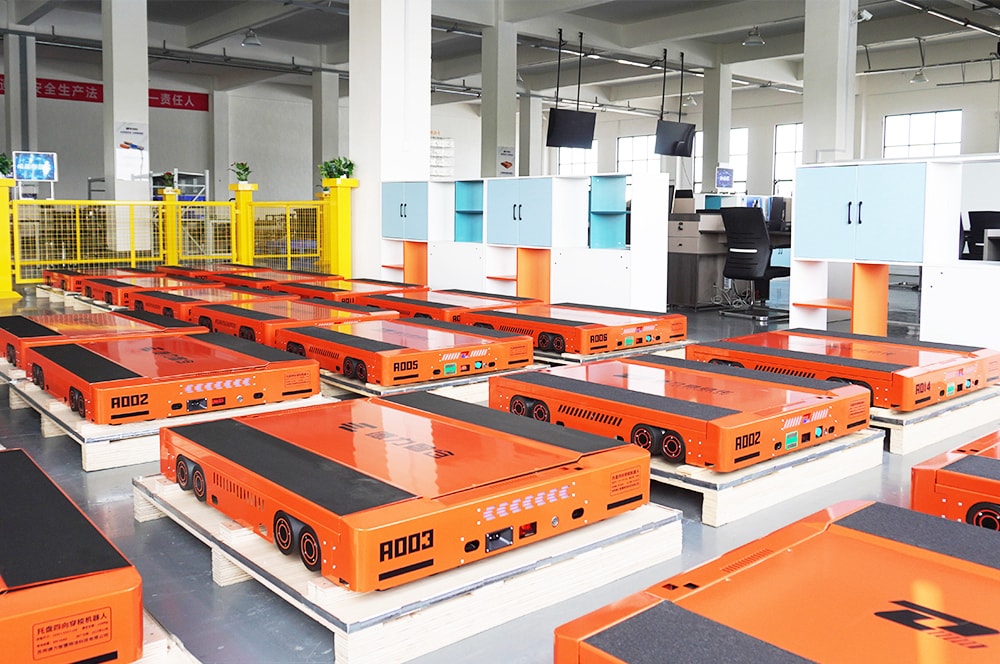
For example, DELIECN product range includes a pallet four-way shuttle with a 125 mm body height. In a height-constrained building, that detail deserves examination because it influences vertical storage design. Whether it creates additional usable locations depends on the complete arrangement, including loads, clearances and access.

The same scrutiny applies to dual-station tote shuttle robot. Handling two totes can improve particular tasks; the benefit must be evaluated against the intended order patterns and transfer capacity.

Industry experience becomes more informative when the questions are specific. Ask how the supplier handled irregular pallets, mixed batches, cold conditions or congested dispatch areas in comparable projects. Discuss commissioning difficulties and subsequent changes.

For a new industry, examine the investigation process: site observation, sample testing, risk assessment and validation before manufacture. Fast adaptation depends on how quickly unfamiliar requirements become verified engineering decisions.

Hardware and software capabilities meet at precisely these points. When assessing DELIECN as an equipment and software manufacturer, buyers can examine how its teams coordinate mechanical changes, control logic and warehouse processes.

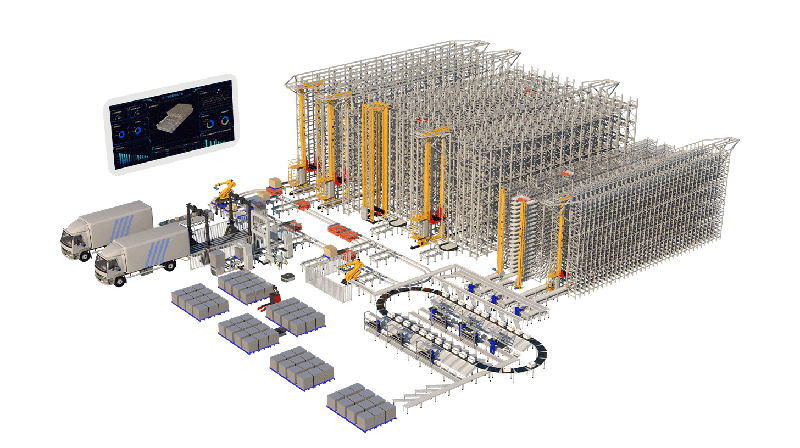
WMS integration with ERP and MES connects warehouse tasks with inventory and production requirements. WCS scheduling manages equipment movements and transfer priorities. The 3D Visualization Central Control System can help staff locate interruptions and understand operating status.

A useful demonstration includes a failed transfer or interrupted task. Watch how the issue is identified, recovered and recorded.

Factory inspections should cover manufacturing consistency and testing, while reference visits should establish how the installation performs after the supplier’s commissioning team has left. 

Make the approval survive a difficult year

Calculate payback, then examine discounted cash flows over an appropriate evaluation period. Include ramp-up, recurring service expenses and major replacements.

Run the model again with slower growth, lower utilisation and a delayed start. Avoid counting released labour both as eliminated payroll and as capacity supporting additional output.

The result should show which assumptions the investment depends on most. Those assumptions belong in technical discussions, acceptance tests and service agreements.

A supplier able to explain its design limits, demonstrate performance and price future support gives the buyer a stronger basis for approval. The financial case becomes credible when the proposed savings can be traced to changes the business can implement—and continue using.

Follow DELIECN on LinkedIn for project experience and practical insights into Automated Storage and material handling.

FAQS

: What costs should a warehouse automation budget include?

:Include equipment, software, installation, freight, spare parts and after-sales support. Future maintenance, interface changes and upgrades also affect the return, particularly when they fall outside the original quotation.

Does higher storage density always improve ROI?

The financial benefit depends on how the recovered space is used. Ending an overflow lease can produce measurable savings. Freeing space in an owned building may support future expansion without reducing current expenses. Compare usable capacity and required throughput together.

How can buyers check whether projected savings are realistic?

Trace each saving to an operating change: fewer overtime hours, lower external storage costs or reduced replacement shipments. Recalculate with slower growth and a delayed launch. Check that the same productivity improvement has not been counted twice.

What should buyers look for in a warehouse automation supplier?

Examine comparable operating projects, product improvements, manufacturing quality and software capabilities. Ask how the supplier validates unfamiliar requirements, supports older equipment and handles ERP/MES changes. Reference visits and clearly defined acceptance tests provide useful evidence of its ability to deliver.

Aria

Aria

Aria is a dynamic marketing professional specializing in logistics automation, with a deep understanding of the intricacies of intralogistics and advanced robotics technologies. With a commitment to excellence, Aria plays a crucial role in showcasing the company's innovative solutions, which......
Previous Why Choose a China Four Way Shuttle Supplier?