The question sounds straightforward, but the market has moved beyond a straightforward answer.
A few years ago, comparing Four Way Shuttle Systems often started with the robot: travel speed, load capacity, positioning accuracy, battery life, and price. Those specifications still matter. What has changed is how much confidence buyers place in them on their own.
A warehouse does not operate one robot under ideal conditions. It operates a storage system under changing order volumes, uneven inbound flows, maintenance windows, mixed inventory, and occasional equipment faults.
That distinction matters.
The 2026 MHI Annual Industry Report describes a broader change taking place in automation investment. Companies are becoming more disciplined about identifying the operational constraint first, then selecting the technology that produces measurable value. Capital is still available, but it is being subjected to closer scrutiny around payback, integration, risk, and scalability.
Four-way shuttle selection is moving in the same direction.
The best system is increasingly the one that fits the operating model, not the one that wins the specification table.
John Santagate, a well-known expert in robotics and supply chain automation, hits the nail on the head with this: “The best automation isn’t necessarily the most high-tech; it’s the one that actually matches your operation.” That’s super important to remember when you're looking at companies like DELIECN, DEMATIC, or SWISSLOG. Each of these companies approaches Shuttle Robot design, software control, and support differently. The real-world results? They all depend on the little details—like aisle width, tote/pallet sizes, or how quickly the system bounces back after a hiccup.
Start With the Constraint, Not the Shuttle
Consider two warehouses.
The first has a 20-meter building, standardized pallets, relatively predictable inbound and outbound flows, and a requirement for continuous high-volume movement.
The second is only seven meters high, uses several carrier sizes, and cannot waste vertical clearance.
Both may be technically suitable for four-way Shuttle Automation. They should not receive the same design.
The Toyota spare-parts project is a useful example of the second condition.
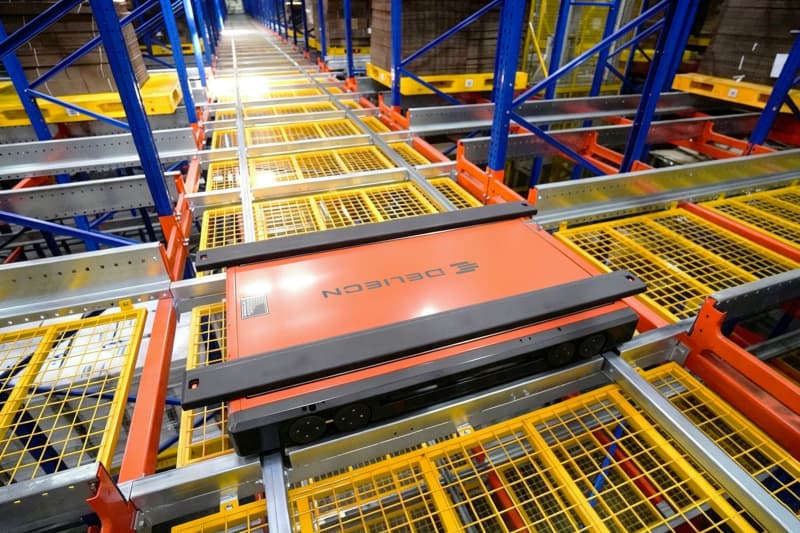
Its pallet storage area is approximately seven meters high. Five storage levels provide 3,091 pallet and cage positions, served by 14 Pallet Four-Way Shuttle Robots and four Lifters.
What shaped the design was not robot speed.
The first level had to accommodate loads around 1,675 mm high, while the upper levels handled carriers around 1,200 mm. Designing every level for the tallest load would have sacrificed usable cube.
The Shuttle System therefore had to operate within a rack geometry built around the actual carriers.
This is a practical way to judge a Four Way Shuttle System in 2026: does the supplier begin with the load profile and building constraint, or with a standard rack module?
The difference becomes expensive once steel is installed.
Throughput Is a System Number
Robot speed remains one of the most visible numbers in a quotation.
It is also one of the easiest numbers to overvalue.
A shuttle may travel at high speed and still spend time waiting for a Lifter. Another may reach a transfer point only to find the downstream conveyor occupied. Add twenty or thirty robots, and routing decisions begin to affect throughput as much as mechanical performance.
A DELIECN battery-material project operates on a much larger scale than the Toyota installation. The warehouse has 41,580 pallet locations, more than 30 Pallet Four-Way Shuttle Robots, and planned throughput of approximately 265 pallets per hour. Individual pallet loads exceed one ton.
At this scale, one useful question is not “How fast is the shuttle?”
It is “What happens when several shuttles want the same resource?”
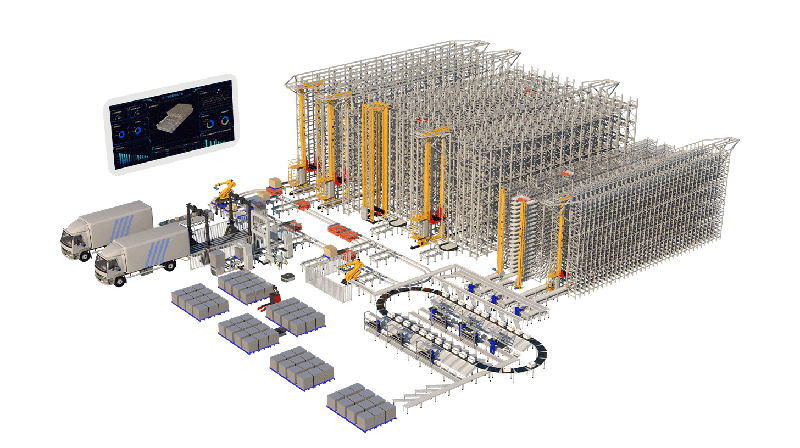
The system must keep traffic moving while coordinating Lifters, storage lanes, charging, inbound priorities, and outbound demand. If one robot becomes unavailable, the workload still has to be redistributed. If a transfer point becomes congested, adding another shuttle may simply create another vehicle waiting in line.
That is execution reality.
A mature supplier should be able to model it before the warehouse is built and explain where the next bottleneck appears as robot quantity increases.
That detail matters.
I have found that simple maintenance checks often prevent expensive delays. Still, software settings can require adjustment after installation. No system performs perfectly without trained staff, realistic testing, and clear recovery procedures.
The Best Hardware Is Often the Hardware That Gives the Design More Room
There is still meaningful innovation at the equipment level.
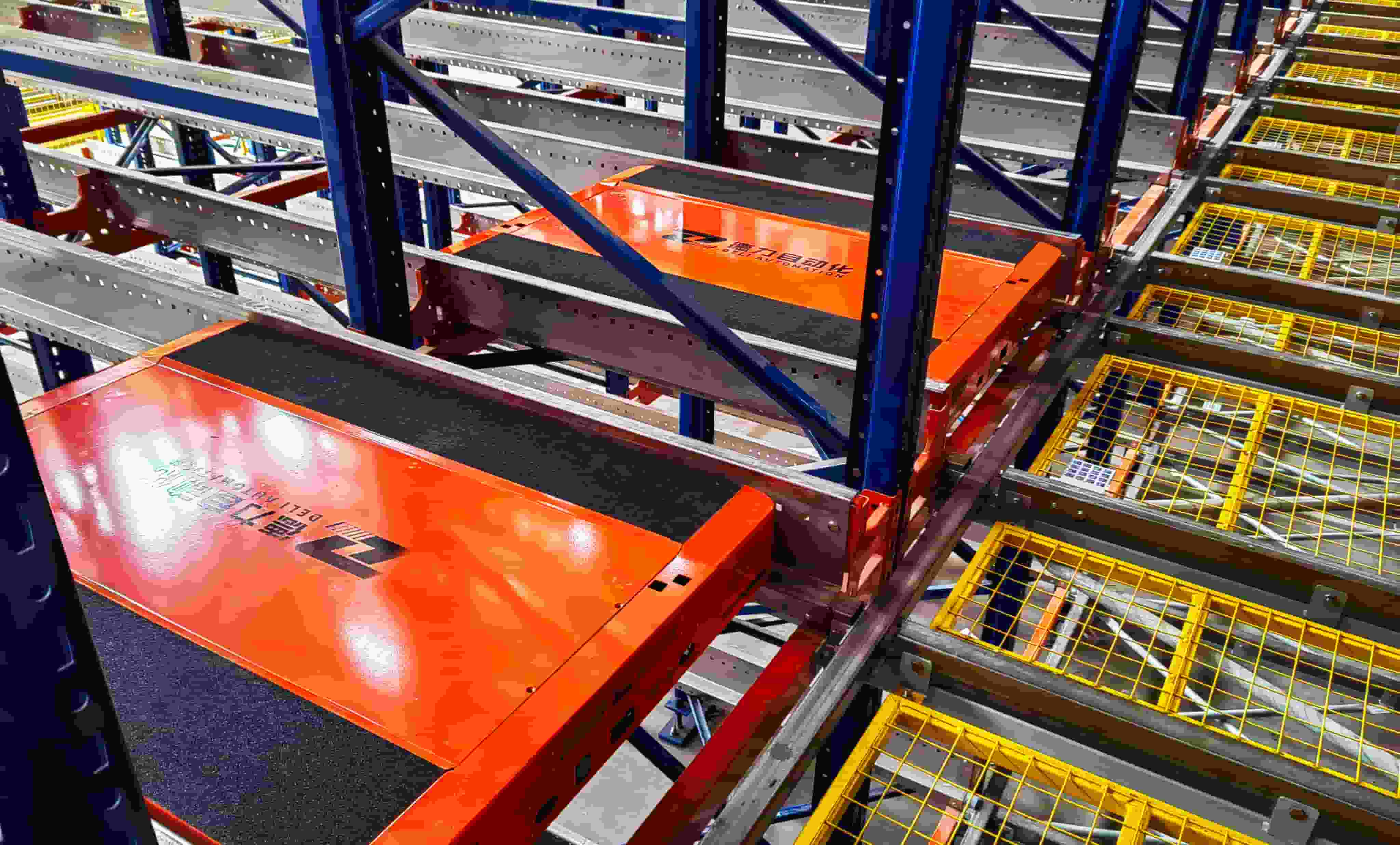
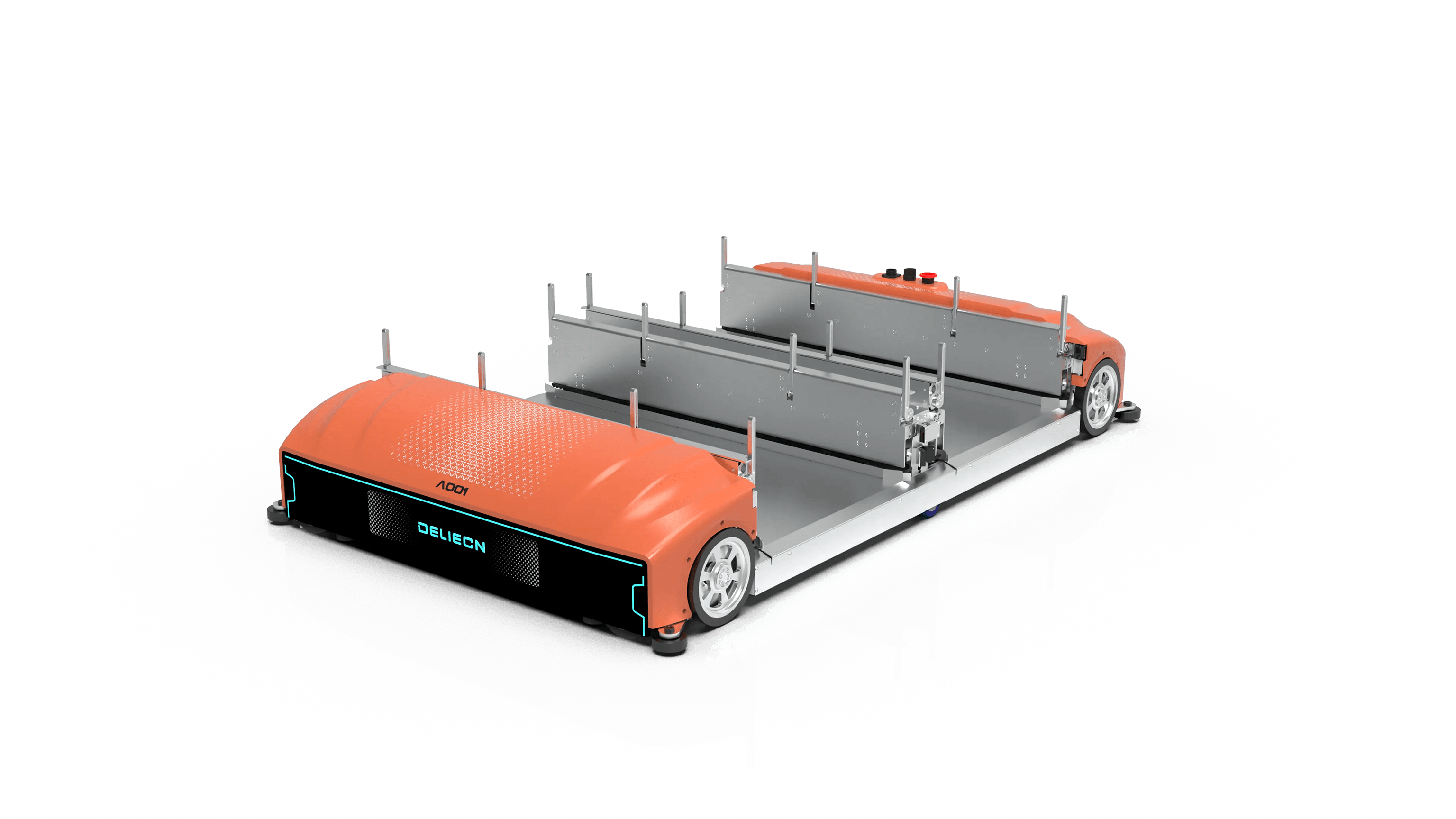
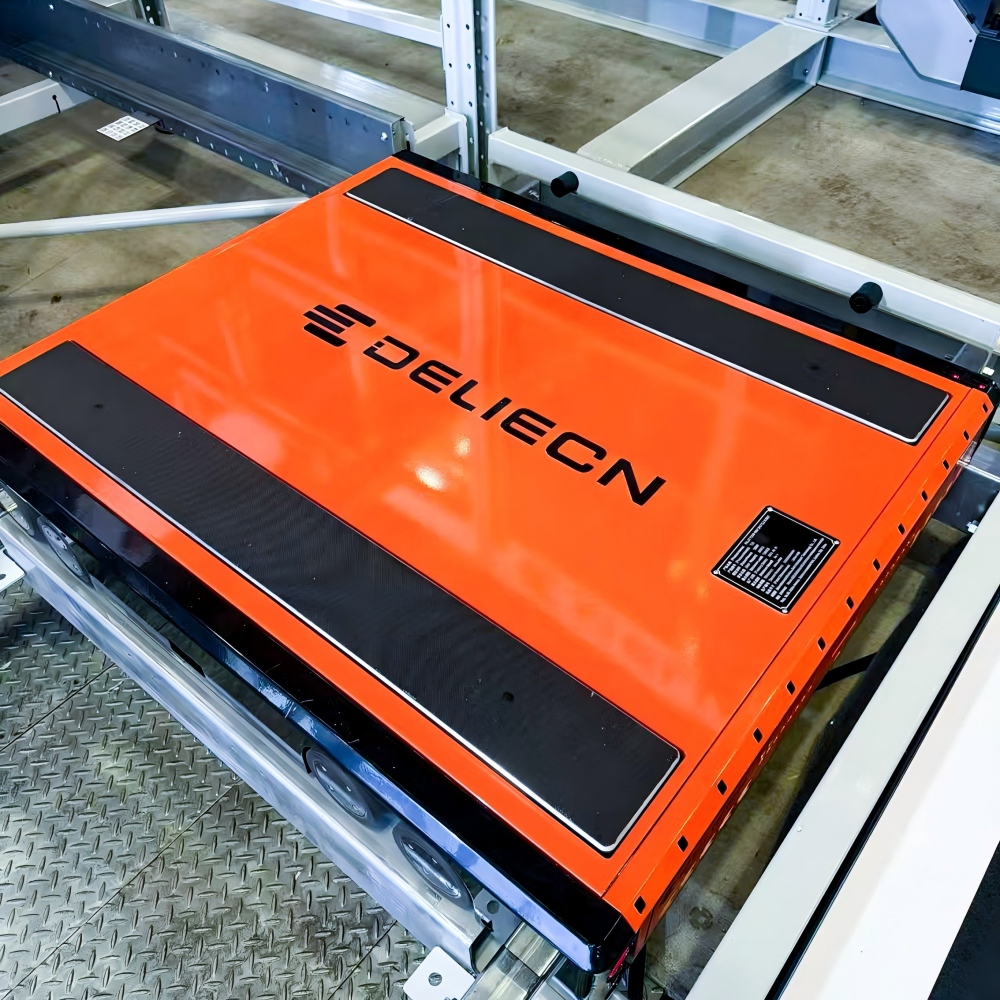
DELIECN has reduced its Pallet Four-Way Shuttle body height to approximately 125 mm, while supporting loads up to 1,500 kg. Mechanical lifting is used rather than a hydraulic lifting arrangement, and the platform is designed for positioning accuracy of approximately ±2 mm.
None of these figures, taken separately, determines whether the system is good.
Their importance appears when they change what the warehouse designer can do.
A lower vehicle profile can help recover vertical space in a building with restricted height. Heavy-load capability matters only if the rack, rail, Lifter, pallet condition, and braking characteristics are engineered for the same load. High positioning accuracy becomes valuable at transfer interfaces where repeated misalignment would interrupt automated operation.
This is a recurring pattern in automation: a specification creates value only when it removes a constraint somewhere else in the process.
The Real Test Often Starts After Commissioning
A new automated warehouse is usually easiest to understand during commissioning.
Engineers are still on site. Every alarm gets attention. If a shuttle stops, someone can quickly trace the task, check the control logic and explain what happened.
Six months later, the situation is different.
The project team may have left. The warehouse is running two or three shifts. Operators are dealing with inbound work, urgent outbound orders and equipment alarms at the same time. A manager sees that throughput has fallen, but no machine appears to have stopped.
That is when automation becomes harder to manage.
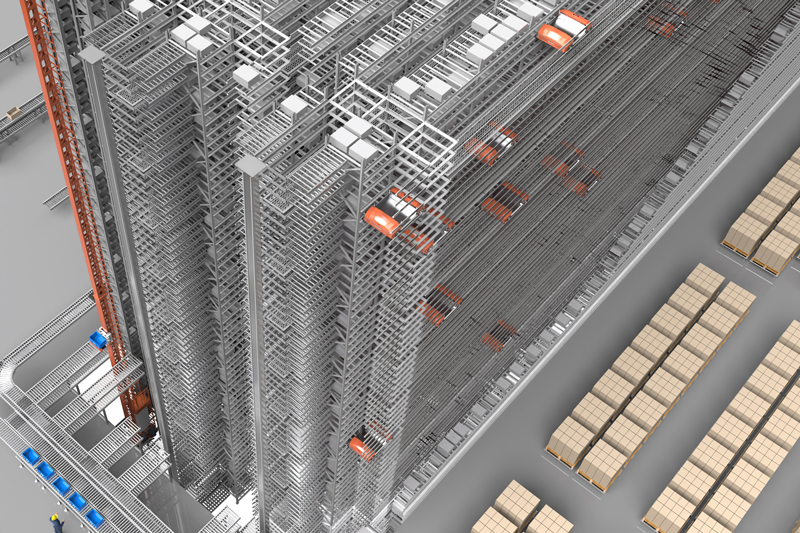
A four-way shuttle warehouse can have robots moving on several levels, Lifters changing levels, conveyors feeding pallets into the system and multiple tasks waiting at different transfer points. Standing in front of the rack tells you very little about what the complete system is doing.
This is one reason DELIECN has added a 3D Visualization Central Control System to a number of automated warehouse projects.
The screen is not there simply to make the control room look more digital.
Operators can see equipment positions, active tasks, inventory status and alarms against the actual warehouse layout. When something slows down, they can first see where the work is accumulating instead of immediately checking one machine after another.
That distinction sounds small until the warehouse is busy.
Suppose outbound performance falls for twenty minutes. None of the shuttle robots has failed. The Lifters are still running. There is no obvious red alarm on the screen.
The problem may have started earlier: pallets accumulated around one transfer point, several tasks were released into the same area, or one device needed longer than usual to complete a cycle.
In an automated warehouse, a slowdown does not always announce itself as a breakdown.
Sometimes it develops quietly.
Looking Back Can Be More Useful Than Looking at an Alarm List
Another issue appears when the problem has already passed.
A night-shift operator reports that the warehouse “became slow” at 2:15 a.m. By the time the morning team arrives, everything is normal again.
An alarm record may show several messages, but it does not necessarily show the sequence that produced them.
DELIECN 3D Visualization Central Control System supports historical playback. Engineers can return to a previous operating period and review what the equipment and tasks were doing at that time.
That is useful because troubleshooting often depends on sequence.
A shuttle waiting for a few seconds is not necessarily a problem. Five shuttles repeatedly waiting for the same transfer point may be.
One alarm may mean very little by itself. The same alarm appearing after a particular task pattern every few days deserves attention.
Being able to replay the operation makes these patterns easier to see.
For the warehouse team, this changes the conversation from:
“Which machine failed?”
to:
“What was happening in the system before performance dropped?”
Those are very different questions.
The second one usually leads to a better answer.
The same operating history can also help with maintenance. If one device begins generating more alarms, takes longer to complete a repeated movement or behaves differently from the previous month, the team has something concrete to investigate.
It does not mean that every failure can be predicted in advance. Warehouses are not that simple.
But there is a considerable difference between maintaining equipment with only a fault code and maintaining it with a record of how the system behaved before the fault appeared.
For a warehouse expected to run for ten years or longer, that difference becomes increasingly important.

 Industries
 Services
 About Us
 AS/RS Handling Robot
 Vertical Storage Module
 Conveying Equipment
 Smart Warehousing System
 Warehouse Racking