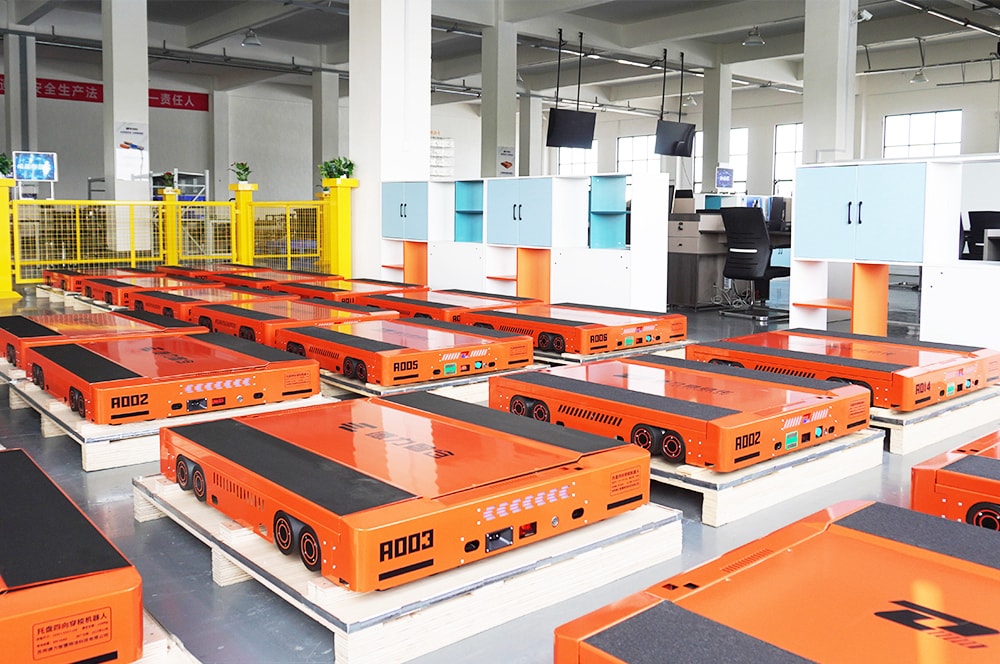
When a warehouse handles heavy industrial materials, the first question about a Pallet Shuttle Robot is often straightforward: how much weight can it carry?
For DELIECN's Ultra-Thin Pallet Four-Way Shuttle Robot, the standard rated load capacity is up to1,500 kg. For projects involving heavier pallets, a customized design targeting up to 2,000 kg can also be evaluated.
However, increasing the rated load is not simply a matter of installing a more powerful motor. The robot, pallet, racking structure, lifting equipment, and control system must all be designed to handle the same load safely.
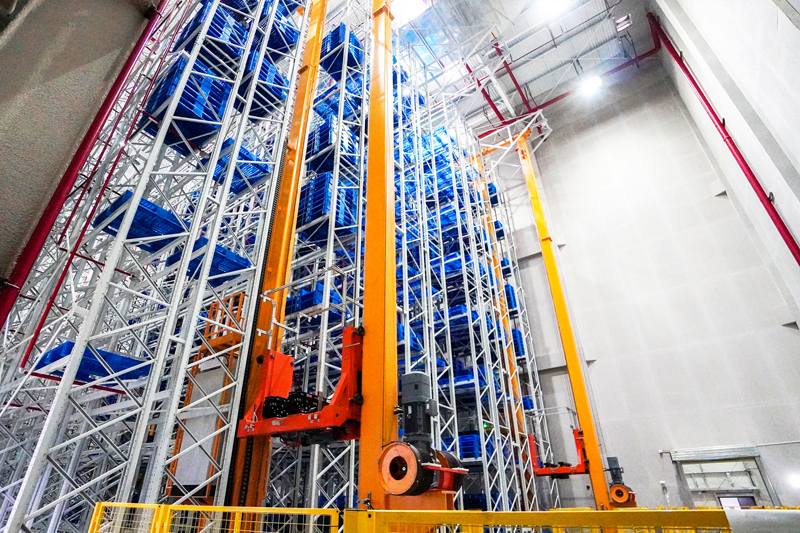
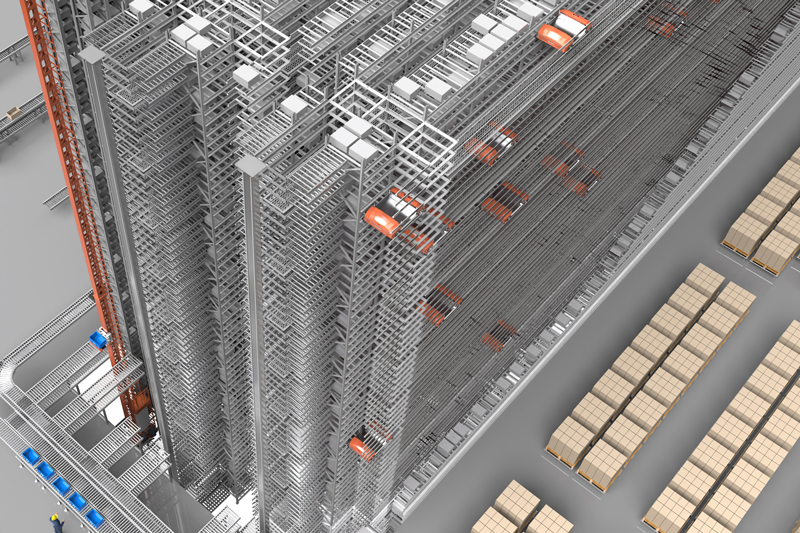
A refractory materials warehouse in Luoyang, China, provides a practical example. Its automated four-way Shuttle System handles pallet loads of up to 1,800 kg in a warehouse nearly 29 metres high. The project shows why heavy-load automation requires engineering across the entire system, not just the shuttle robot.
What Does a 1,500 kg Load Capacity Actually Mean?
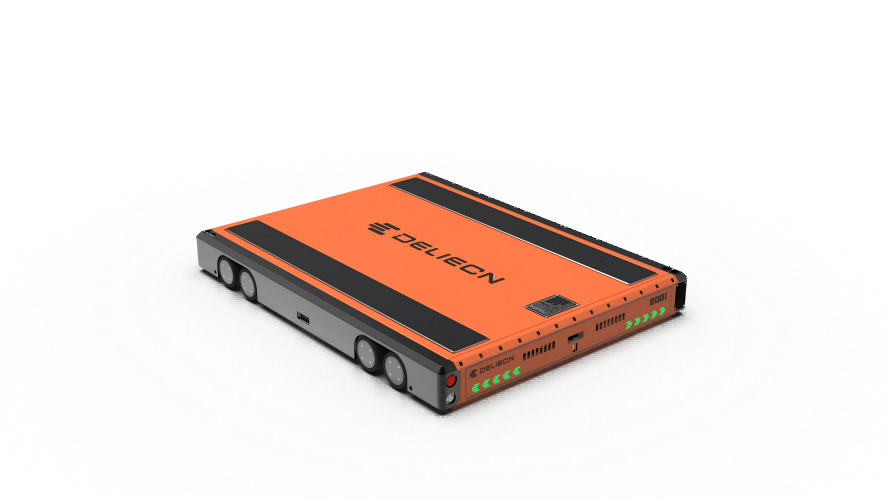
DELIECN's Ultra-Thin Pallet Four-Way Shuttle Robot is designed for high-density pallet storage, where equipment needs to operate within limited rack clearances while handling substantial loads.
Its published specifications include:
-
Maximum load capacity: 1,500 kg
-
Maximum travel speed: 120 m/min
-
Positioning accuracy: ±2 mm
-
Robot body height: 125 mm
-
Pallet compatibility: More than 95% of common pallet specifications
These figures describe different equipment capabilities. Maximum travel speed should not automatically be interpreted as the speed achieved under every load condition. Actual operating performance depends on the selected configuration, load, travel distance, acceleration, and operating cycle.
Load capacity also needs to be evaluated beyond the number on a product specification sheet.
A pallet with a stable, evenly distributed load is different from one carrying a heavy component with a high centre of gravity or significant overhang. The pallet bottom structure, load dimensions, weight distribution, and handling clearance all affect whether the unit can be transferred safely.
DELIECN uses multi-stage S-curve speed control to manage acceleration and deceleration more smoothly. This helps reduce sudden changes in movement that could affect load stability during transportation.
The important point is that a 1,500 kg rating represents a defined equipment capability. It does not mean every pallet weighing less than 1,500 kg is automatically suitable for automated handling.
A 1,800 kg Refractory Warehouse: Why Load Capacity Changes by Level
A functional refractory materials manufacturer in Luoyang faced a demanding storage requirement.
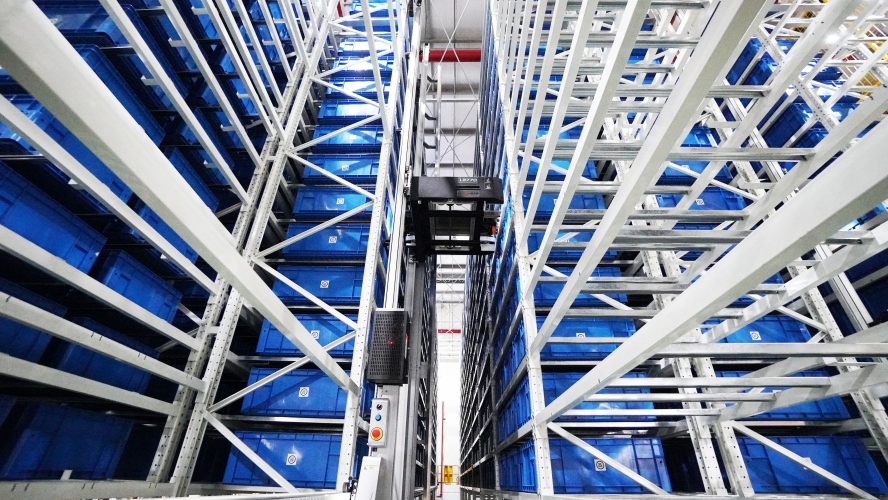
Its products included dense refractory materials, functional products, and graphite-containing crucibles. The warehouse needed to handle heavy pallet loads while making effective use of a building nearly 29 metres high.
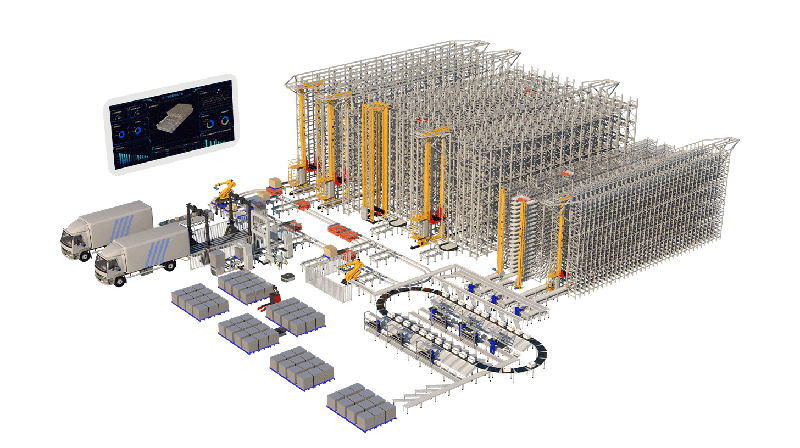
DELIECN developed a customized Pallet Four-Way Shuttle AS/RS rather than applying one identical load rating to every storage position.
Project Overview
-
Warehouse height: Nearly 29 m
-
Finished-goods warehouse: 2,244 pallet positions
-
Raw-material warehouse: 2,564 pallet positions
-
Maximum customized pallet load: 1,800 kg
-
Storage configuration: 15 levels
-
Pallet formats: 1,300 × 1,200 × 150 mm and 1,750 × 1,200 × 150 mm
Load Distribution by Storage Level
The project adopted a differentiated load plan:
| Storage levels | Maximum pallet load |
| Levels 1–6 | 1,800 kg |
| Level 7 | 1,300 kg |
| Levels 8–15 | 1,000 kg |
Why not use the same 1,800 kg rating at every level?
Because the structural requirements of a high-bay warehouse change with the load distribution and building height. The rack must support the stored pallets, while the lifting equipment must safely transfer loads between levels.
The rack structure therefore underwent finite element analysis, including structural modelling, load analysis, member checks, and evaluation of the lateral-force system.
The 29-metre level-changing lifter was also customized with reinforced columns, variable-frequency drive control, and a platform levelling mechanism.
These decisions were made together. A heavy-duty shuttle cannot compensate for a rack or lifter that has not been designed for the same load conditions.
Handling Different Pallet Sizes and Industrial Dust
The project also needed to accommodate two master pallet footprints and four different cargo heights.
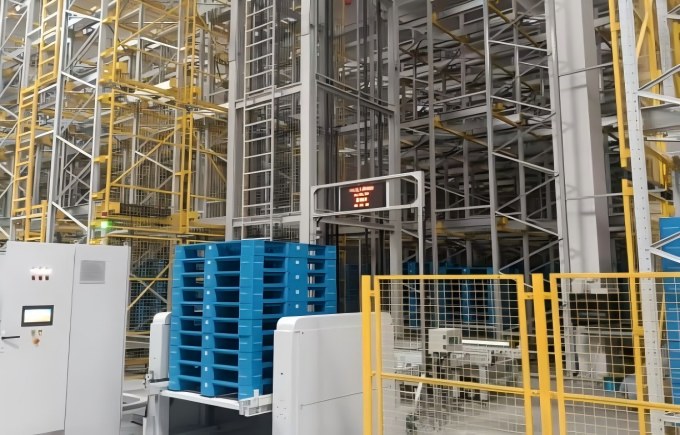
Pallet identification and dimensional checks were used at the infeed. Inside the storage system, location codes, over-dimension detection, and load-offset detection helped verify pallet positioning.
The project achieved positioning accuracy within ±2 mm.
Another practical consideration was graphite dust generated by the production process. DELIECN equipped the shuttle robot with an underbody rail-cleaning device to help maintain the running surface.
For this application, the cleaning device was not simply an additional feature. It addressed a site-specific operating condition that could otherwise affect long-term equipment reliability.
The project demonstrates that increasing load capacity requires attention to the actual material, storage environment, rack structure, and equipment interfaces.
Why Does Increasing Load Capacity Require More Than a Stronger Robot?
When moving from a standard 1,500 kg application towards a customized 2,000 kg design, several engineering factors need to be reviewed together.
1. Robot Structure and Motion Control
A heavier load changes the forces acting on the robot during lifting, acceleration, deceleration, and positioning.
Depending on the design, engineering adjustments may involve:
-
Chassis strength and structural reinforcement.
-
Drive and braking capacity.
-
Fork and lifting mechanism strength.
-
Wheel and rail contact conditions.
-
Acceleration and deceleration control.
-
Load stability during pickup and placement.
Simply increasing motor power does not resolve every issue. The robot must remain stable and controllable throughout repeated operating cycles.
2. Racking Structure and Load Distribution
The rack is responsible for supporting stored pallets over long operating periods.
A heavier load requires verification of the relevant beams, uprights, connections, rails, bracing, and overall structural stability.
The calculation must consider the actual load distribution and the number of occupied storage positions, rather than treating every rack level as an isolated component.
This is particularly important in high-bay warehouses, where structural design and load distribution influence the entire storage system.
3. Lifter Capacity and Transfer Accuracy
A pallet changing levels must be supported by a lifting system designed for its weight and dimensions.
For heavier loads, the lifter's structure, drive system, platform, braking, and levelling requirements need to be evaluated.
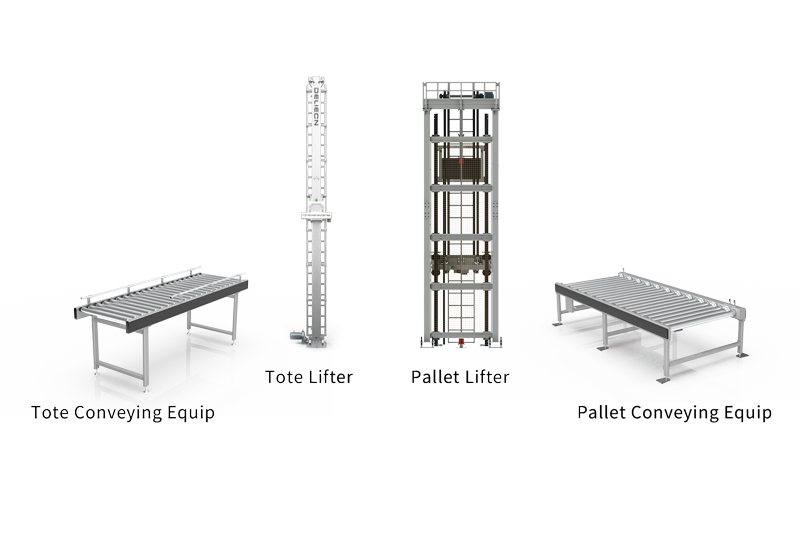
The transfer position must also remain consistent so that the pallet can move between the lifter, rack, conveyor, and shuttle without interference.
The Luoyang project illustrates this requirement through its customized 29-metre lifter and reinforced structural design.
4. Pallet and Load Compatibility
The pallet itself is part of the load-handling system.
Its bottom structure, dimensions, condition, load distribution, and centre of gravity all affect the handling result.
A heavy pallet that is damaged, deformed, or excessively offset may create problems even when its total weight is within the robot's nominal rating.
For customized applications, the pallet and cargo should therefore be assessed as one complete unit load.
5. Warehouse Software and Load Rules
Mechanical capability must also be reflected in warehouse management.
For example, the Luoyang project uses storage rules based on material specifications, pallet types, weight ranges, and location requirements.
This allows different load categories to be assigned to suitable storage positions rather than treating every available location as interchangeable.
The software rules help prevent a heavy pallet from being assigned to a position that was designed for a lower load.
Can a Pallet Four-Way Shuttle Robot Handle 2,000 kg?
A 2,000 kg target can be considered for customized engineering, but it should not be treated as a standard specification or a simple upgrade to an existing 1,500 kg robot.
Before confirming this capacity, the supplier needs to evaluate the complete load path:
-
The actual pallet and cargo weight.
-
Load dimensions and centre of gravity.
-
Robot structure and handling mechanism.
-
Rail and racking capacity.
-
Lifter structure and rated load.
-
Transfer equipment and operating conditions.
-
Required positioning and safety performance.
The final design should be supported by engineering calculations, appropriate testing, and project-specific acceptance criteria.
The 1,800 kg refractory project provides a verified reference for heavy-load customization. A 2,000 kg application, however, still needs its own engineering assessment. It should not be presented as an already delivered 2,000 kg project based on the 1,800 kg reference alone.
This distinction matters when comparing suppliers.
A higher number on a quotation is not proof that the complete warehouse system can safely handle that load.
When Is a 2,000 kg Shuttle Not Necessary?
A higher load rating is not always a better investment.
If the heaviest pallet in the warehouse weighs 800 kg or 1,000 kg, a standard 1,500 kg shuttle may already provide sufficient capacity.
If the real bottleneck is the lifter, conveyor, or outbound transfer station, increasing the robot's payload rating will not automatically improve system throughput.
Similarly, if pallet dimensions and load conditions vary significantly, standardizing the load carrier may provide more value than increasing the robot's rated capacity.
Before selecting a heavy-duty configuration, warehouse operators should consider:
-
Maximum and average pallet weight.
-
Number of heavy pallets stored.
-
Load distribution across rack levels.
-
Required inbound and outbound throughput.
-
Warehouse height and available space.
-
Future changes in material specifications.
-
Total investment in the robot, racking, and lifting equipment.
The objective is to select a system that meets actual operating requirements without adding unnecessary structural and equipment costs.
Why Choose a Manufacturer with System-Level Engineering Capabilities?
Heavy-load automation requires more than a robot that can move a specified weight.
The manufacturer or system integrator needs to understand how the robot interacts with the pallet, racking, lifter, conveyors, and warehouse software.
For customized projects, customers should ask for evidence of:
-
Previous heavy-load applications.
-
Equipment and structural design capabilities.
-
Load calculations and engineering documentation.
-
Manufacturing and quality-control processes.
-
Integrated testing and commissioning.
-
Spare parts and technical support arrangements.
A supplier should be able to explain not only the maximum rated load, but also the conditions under which that load can be handled safely.
This is particularly important when the project involves high storage levels, multiple pallet formats, dusty environments, or non-standard load dimensions.
Conclusion: Load Capacity Is an Engineering Decision, Not Just a Product Specification
For most standard pallet four-way shuttle applications, a rated load capacity of up to 1,500 kg is sufficient for a wide range of industrial materials.
When heavier pallets need to be stored, customized engineering can extend the application range. DELIECN's 1,800 kg refractory warehouse project demonstrates how this can be achieved through coordinated design of the shuttle robot, racking structure, lifter, pallet handling, and warehouse control.
For requirements targeting 2,000 kg, the complete system must be evaluated and validated before the capacity is confirmed.
The right question is therefore not simply how much weight a robot can carry.
It is whether the complete automated storage system can handle the customer's actual load safely, accurately, and reliably throughout daily operation.
DELIECN develops Pallet Four-Way Shuttle AS/RS solutions for standard and customized industrial applications, combining shuttle robot manufacturing, racking engineering, lifting equipment, system integration, and WMS/WCS coordination.
For heavy-load warehouse projects, contact DELIECN to discuss your pallet dimensions, load requirements, warehouse height, and operating conditions.

 Industries
 Services
 About Us
 AS/RS Handling Robot
 Vertical Storage Module
 Conveying Equipment
 Smart Warehousing System
 Warehouse Racking