Industries Smart Warehousing Solutions Tailored To Your Industry
With a comprehensive range of intralogistics, products, DELlECN helps you build efficient and Fully Automated Warehouse operations.
Services Maximizing the Value of Your Logistics
At DELIECN, service goes beyond product delivery. We provide consulting, planning, design, manufacturing, installation, commissioning, and after-sales support throughout the entire lifecycle.
About Us Efficient and Flexible Automated Warehousing Solutions
DELIECN supports clients across food and beverage, new energy, chemicals, pharmaceuticals, e-commerce, precision manufacturing, textiles, and energy industries with intelligent warehousing systems tailored to their goals and requirements.

A picking shift rarely fails loudly.
It fails in the ten seconds it takes to walk to a location and back, repeated a few hundred times, until the last order of the day leaves an hour late.
Goods-to-person picking attacks that walk directly. Instead of sending an operator through the building, storage and transport equipment bring the tote to a workstation, the picker takes the quantity required, and the tote returns to storage or moves on to its next task.
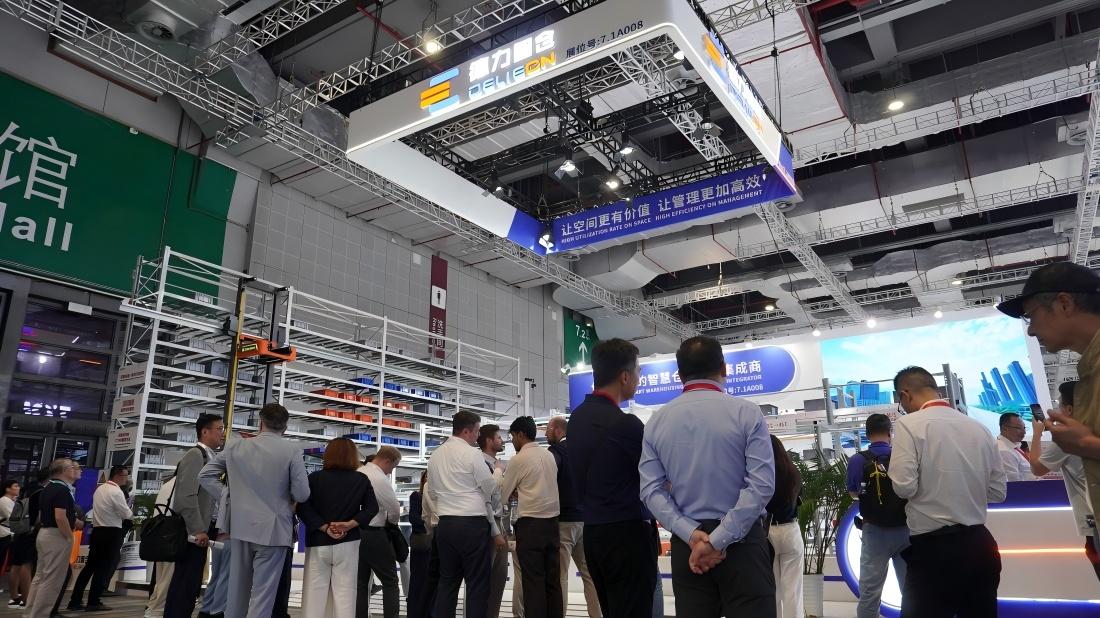
Three conversations at CIIF 2026 gave the idea some shape: a Polish distribution centre, a South Korean component plant, and an American visitor pricing a complete installation. The Toyota figures further down come from that project's commissioning record.

The Polish visitors described a distribution centre of roughly 3,000 m² with a 9 m building height, where manual picking consumed the shift and output stayed low. Their interest in Mini-FlyBox turned within a few minutes into a narrower question: how does the tote actually reach the person who picks from it?
That is the right question to open with.
A robot moving at speed inside a rack makes the better photograph; the tote waiting at the rack face is the one that costs money by Friday.
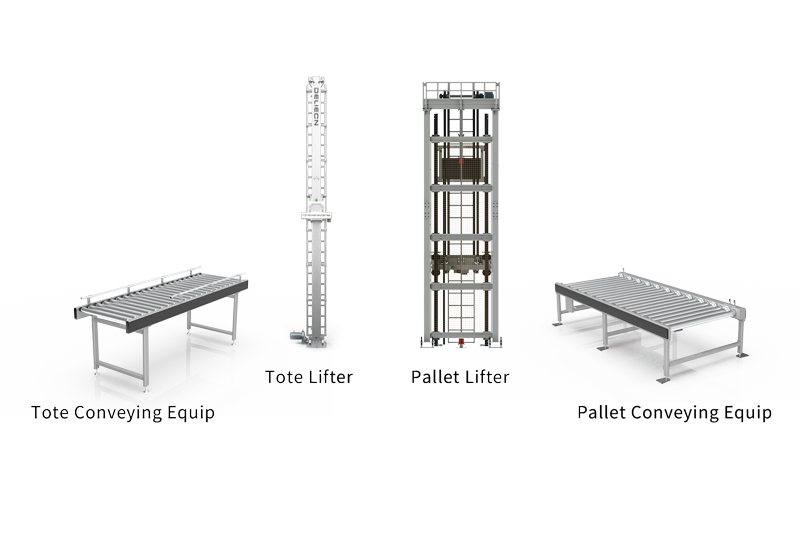
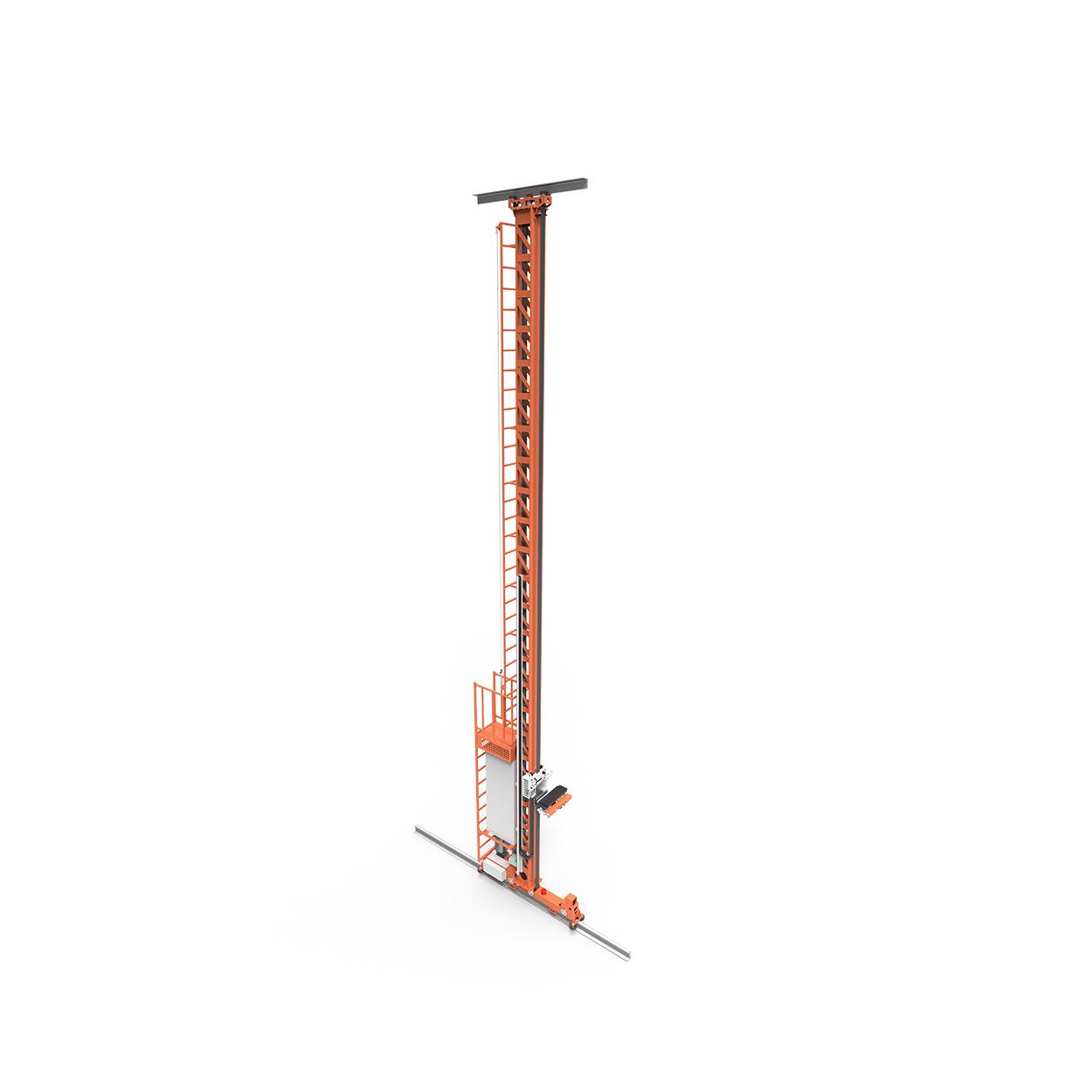
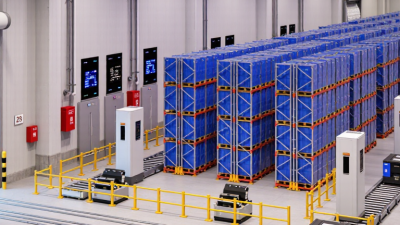
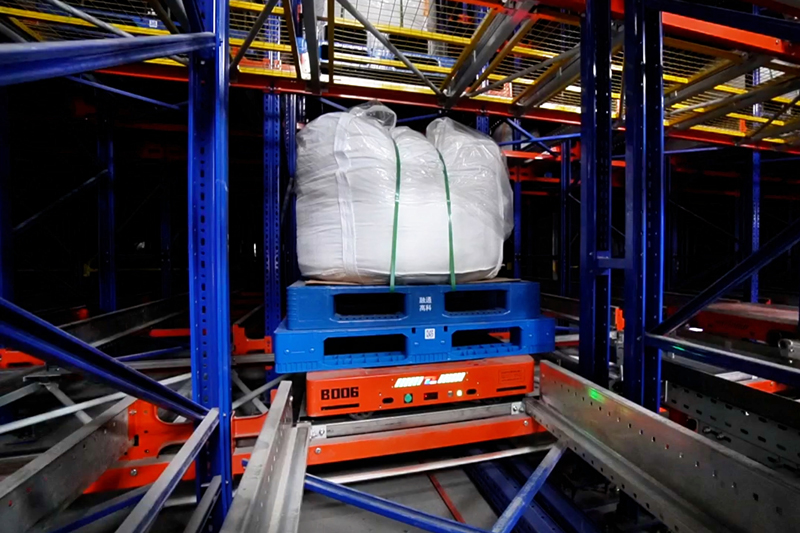
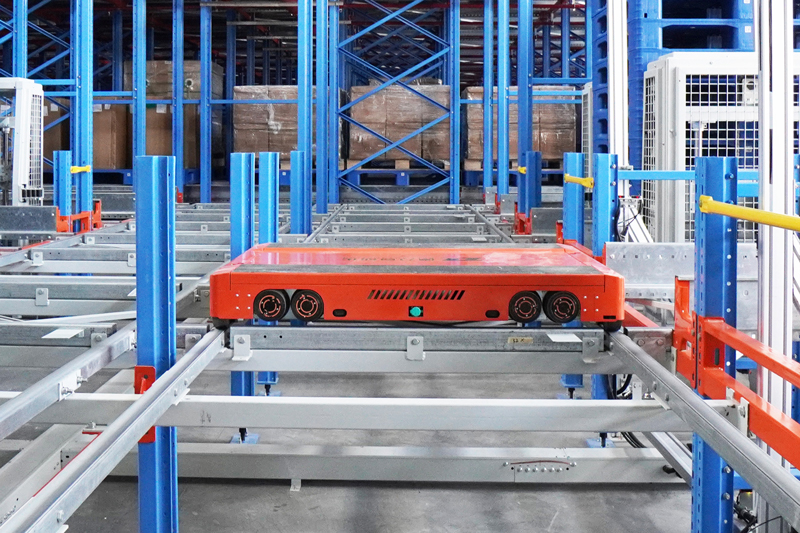
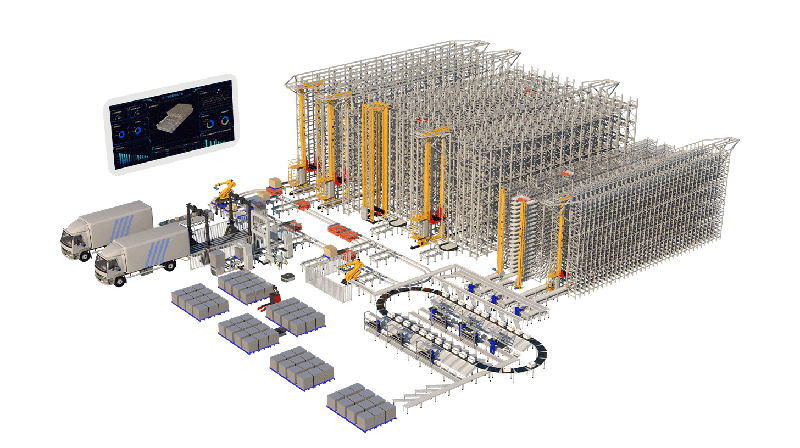
In a Mini-FlyBox layout, the robot retrieves the selected tote and hands it to a transfer point at the first rack level. A tote AMR or a conveyor carries it from there to the picking station. Once the operator has removed the required items, the tote travels back through the same handling equipment and is stored again. What this site gained was not speed inside the rack but a controlled supply of totes to a station, replacing a route an operator walked several times an hour. The 9 m height fitted as well, since the system is designed for buildings under 12 m and leaves room for a transfer level instead of spending every metre on storage.
The drawing could not answer the next question, which was how many tote presentations the operation needs in its busiest hour. Daily order totals hide the contention: replenishment, outbound picking and tote returns all draw on the same robots, the same transfer point and the same station, and the peak hour is the one period in which all three are running at once.
A South Korean visitor was planning an automated store for component totes, which put Mini-FlyBox in scope at its 50 kg load ceiling. Component stores are constrained by location count more than by volume: hundreds of part numbers, small quantities each, spread across locations an operator can only reach on foot.
Goods-to-person is a method of working rather than a piece of equipment. Racking, vehicles, transfer points and station layout follow from the goods, which is why two sites of the same size can end up needing differently shaped systems.
Four inputs settle most of that, and they are worth collecting before anyone draws racking. Tote dimensions, loaded weight and container condition; the number of SKUs and the locations each one needs; peak picking demand set against replenishment frequency; and the share of inventory that genuinely fits a tote. Building height, floor area and station space then constrain all four.
Anything outside the tote envelope needs its own route. Oversized parts, damaged containers and items that cannot be tipped belong on a pallet flow, and saying so during planning is cheaper than finding out at the first stocktake.
At the booth, Mini-FlyBox ran at 3.5 m/s and did what a demonstration is meant to do. Visitors stopped, photographed the carrier coming down the rack, and started describing their own buildings.
The mechanism behind that speed is less photogenic.
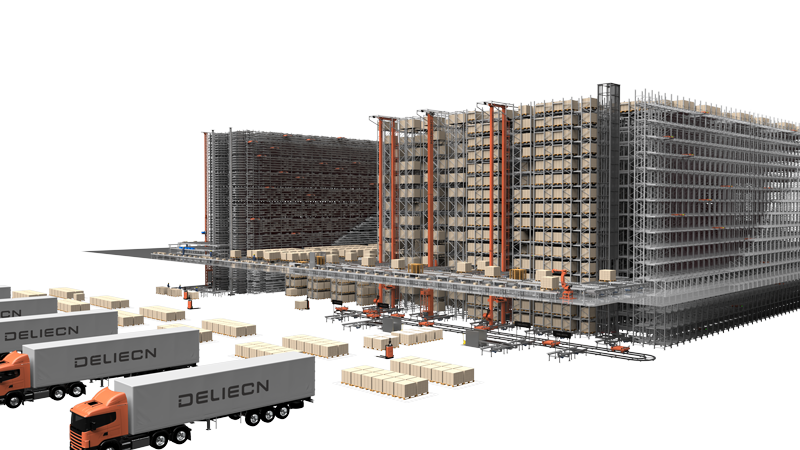
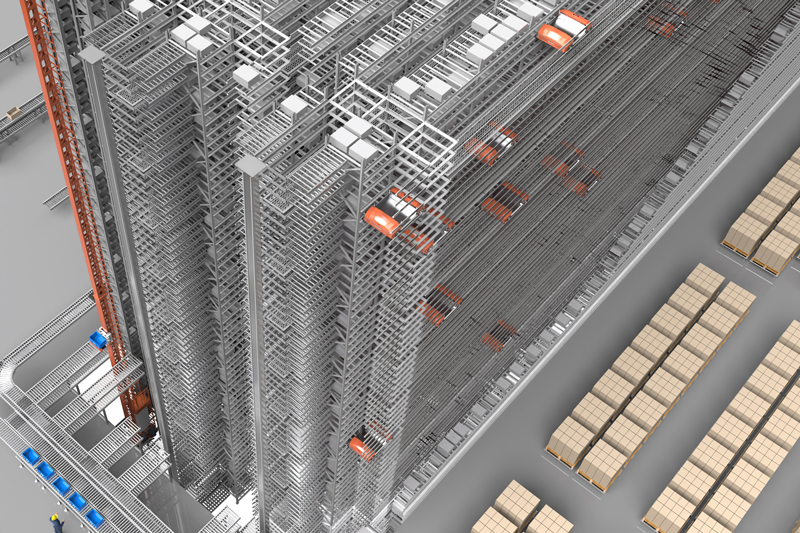
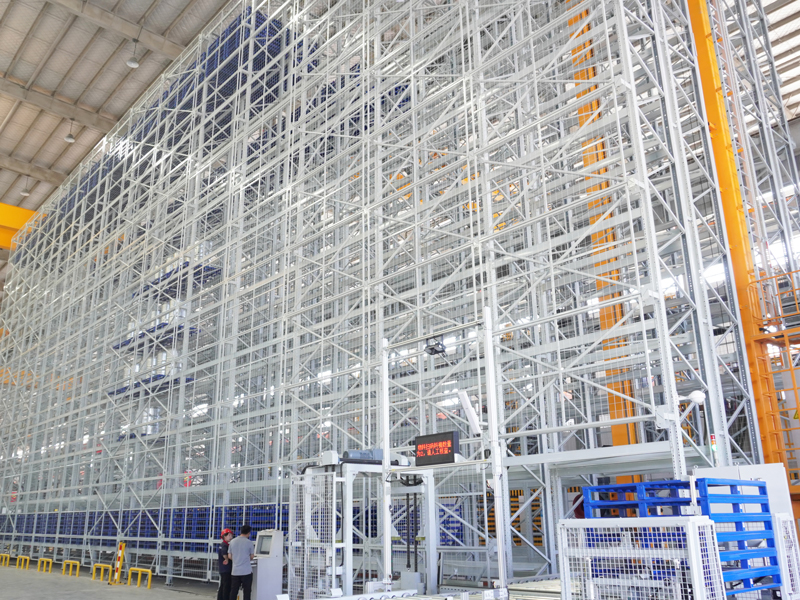
The travel rails sit inside the racking, so horizontal movement and level changes both happen within the rack frame, and aisles can be as narrow as 860 mm. In a building under 12 m, reclaimed aisle width converts into locations. Storage density can reach 3 to 10 times that of a conventional arrangement, a multiple that depends on tote size, building constraints and what the original layout already achieved.
Speed shortens a retrieval cycle, and retrieval cycles are easy to measure, which is why they appear in every quotation. Completed orders depend on something less tidy: whether totes arrive at consistent intervals, and whether an operator can process them without waiting.
The efficiency figure of around 80% that circulates in these discussions is worth whatever the baseline underneath it is worth. Same workload, same staffing basis, measured process, or the number is describing two changes at once.
For acceptance, count completed order lines per hour and put replenishment and tote returns inside that hour. Then run the exceptions through the same test: an empty location, an item discrepancy, a tote that arrives with the wrong contents. A station that performs well on a stream of single-line orders can behave differently in a mixed shift.
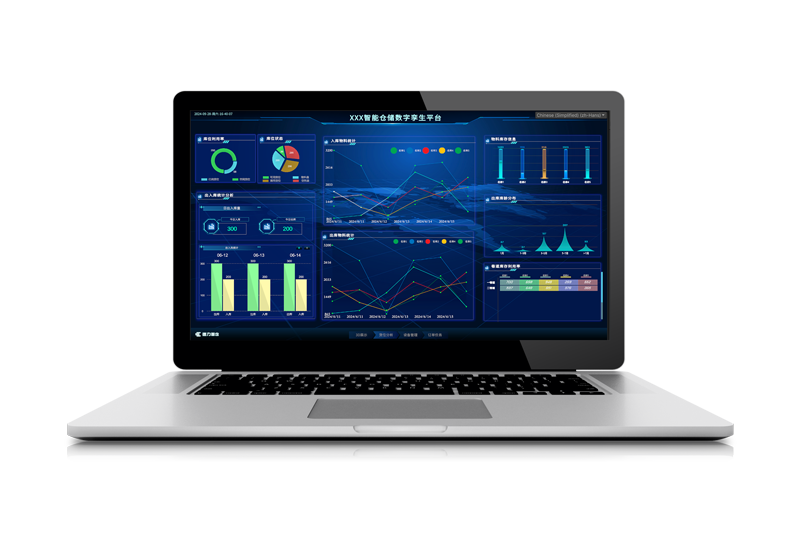
Software belongs in this assessment rather than in an annex. WMS and WCS integration has to link inventory requirements to equipment tasks, confirmations and recovery actions, and an operator needs a defined step for the pick that can't be completed.
An American visitor asked what a complete Mini-FlyBox installation costs. A useful answer needs the storage quantity and the handling workload first, because the same square metres can carry very different totals depending on how many locations are wanted and how many totes must move in a peak hour.
Both halves decide the number, and the second one is usually the one that moves it.
Scope belongs in the same table: racking, robots, software, installation, station connections, and the transfer equipment between rack and station. Maintenance, spare parts and support go there too, since they arrive every year after the invoice does.
Then compare the investment with a business decision rather than with another quotation. Will the added capacity remove an overflow lease, will shorter routes take overtime out of the peak week, and can the site absorb growth without a second shift?
One cost usually sits outside these tables.
Empty totes and recirculated containers consume handling capacity without producing an order line, so a layout that ignores the return path delivers a station that is sometimes starved and sometimes buried.
Eighteen DELIECN Mini-FlyBox robots serve the small-parts AS/RS at a Toyota automotive spare-parts centre, across more than 17,000 tote locations, at a handling capacity of 870 order lines per hour.
Divide one figure by the other. At 870 lines across 18 robots, each robot accounts for about 48 completed lines an hour, or roughly one line every 75 seconds in a balanced fleet. The same arithmetic puts close to 950 locations behind each robot.
Read together, those two numbers point at where capacity actually goes. The bottleneck usually sits between the robot and the station. A single robot's cycle time rarely decides the output; a station waiting for a tote, or a return path blocking the next retrieval does.
Power comes from a conductor rail, which supports 24/7 operation without battery-charging stops. Planned maintenance still needs a window, and that window belongs in the throughput calculation like any other task.
For lightweight tote inventories in buildings under 12 m, a goods-to-person picking system is worth testing against the site's own picking and space numbers rather than against a reference list. Toyota shows what the model carries; it does not show what a different order profile will need. A working configuration will be at CeMAT ASIA 2026 in Hall W3, Booth E4, which is where this conversation usually starts: tote dimensions first, peak-hour demand second.
The Polish site left with one question still open, and every tote project meets it eventually: how many presentations per hour the busiest shift can absorb. Answer that before the layout is frozen, and the rest of the design has something to stand on.
The best fit depends on your inventory, peak picking demand and building layout. For tote loads up to 50 kg in facilities under 12 m high, DELIECN Mini-FlyBox is an option for combining compact storage with goods-to-person picking.
Mini-FlyBox retrieves a tote and brings it to a first-level transfer point. A tote AMR or conveyor transports it to the picking workstation and returns it for storage after picking.
Yes, subject to a layout assessment. Its rack-integrated design supports aisles as narrow as 860 mm. Building columns, clear height, access requirements and workstation space determine the final configuration.
Yes. A Toyota automotive spare parts centre uses 18 Mini-FlyBox robots in its small-parts area, providing more than 17,000 tote locations and a handling capacity of 870 order lines per hour.
Pricing depends on storage capacity, required throughput, robot quantities, software and workstation connections. Sharing your warehouse drawing, tote specifications and peak workload allows DELIECN to prepare a project-specific proposal.